


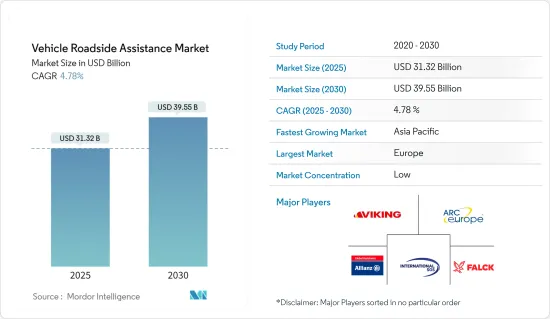
차량 로드사이드 어시스턴스 시장 규모는 2025년 313억 2,000만 달러, 2030년 395억 5,000만 달러로 예측되며, 예측 기간 중(2025-2030년) CAGR은 4.78%에 달할 것으로 예측됩니다.

차량 로드사이드 어시스턴스 시장은 고장이나 긴급 상황에 직면한 운전자에 대응합니다. 이 서비스는 즉시 도움을 제공하고 차량을 복구하거나 안전한 장소에 안전하게 도착하는 것을 목표로합니다. 일반적으로 전문가가 제공하거나 보험, 보증, 자동차 클럽 회원에게 번들로 제공되는 이러한 서비스는 펑크, 배터리 상승, 엔진 고장, 사고, 잠금 및 운전자 이동을 방해할 수 있는 기타 상황과 같은 일반적인 문제를 해결합니다. 시장에는 견인 이동, 연료 배달, 점프 스타트, 자물쇠 서비스 등 많은 서비스가 포함되어 고민하는 드라이버를 종합적으로 지원합니다.
자동차 보유량 증가, 신뢰할 수 있는 어시스턴스에 대한 요구 증가, 자동차 인구의 고령화로 시장이 확대되고 있습니다. 자동차 판매 증가와 안전성과 편의성에 대한 관심 증가는 이러한 성장을 더욱 강화하고 있습니다. 전문 지식과 수리 도구가 필요한 현대 자동차는 복잡성을 늘리고 있으며, 로드사이드 어시스턴스 서비스에 대한 수요를 부추기고 있습니다. 과제에는 응답 시간 개선, 서비스 품질 향상, 고객 선호도 변화 등이 있습니다. 그러나 시장에는 AI 배차 시스템, 전기자동차 지원, 커넥티드 차량 기술 등의 기회도 있습니다.
상용차 로드사이드 어시스턴스 시장 부문은 큰 성장을 이루려고 합니다. 이 카테고리에는 버스, 밴, 트럭 등 주로 상업적 목적으로 사용되는 다양한 차량이 포함됩니다. 이 시장의 확대는 물류의 급증, 운수부문, 전자상거래 산업의 융성 등 여러 요인에 의한 것으로, 상용차의 보유 대수 증가를 가져오고 있습니다.
기업은 문제를 신속하게 해결하기 위해 로드사이드 지원 서비스에 대한 투자를 늘리고 있습니다. 서비스 제공업체는 현재 대형차 견인에서 하역 관련 특수 지원에 이르기까지 상용차 오퍼레이터의 다양한 요구에 대응할 수 있도록 서비스 내용을 조정하고 있습니다.
또한, 기술적 진보는 이 부문의 성장에 중요한 역할을 합니다. 텔레매틱스를 GPS 추적 시스템과 통합하면 실시간 모니터링이 가능해져 로드사이드 어시스턴스 서비스의 신속한 대응과 효율성을 높일 수 있습니다. 또한, 전기 상용차의 채용이 증가하고 있기 때문에 배터리 충전 및 관리 솔루션을 포함한 전문적인 로드사이드 어시스턴스 서비스가 필요합니다.
또한 교통안전을 개선하고 차량 가동 중지 시간을 줄이기 위한 규제 체제와 정부의 이니셔티브도 시장을 확대하고 있습니다. 이러한 규제는 종종 상용차를 위한 로드사이드 어시스턴스 서비스의 이용을 의무화하여 수요를 촉진하고 있습니다.
유럽의 자동차 산업은 급속히 확대되고 있으며, 이 지역은 세계 차량 로드사이드 어시스턴스 시장에서 최고 수익원이 되고 있습니다. 급증하는 자동차 판매와 유럽 도로에 밀집하는 인구가 주로 이 성장의 원동력이 되고 있습니다. 1인당 소득 증가, 소비자 사치 지향, 일반적으로 높은 생활 수준 등의 다른 요인들도 이 지역의 로드사이드 어시스턴스 서비스에 대한 수요를 끌어올리고 있습니다. 또한 장거리 이동 증가와 로드 어시스턴스 서비스의 장점에 대한 의식 증가도 이러한 증가 추세에 기여합니다.
자동차 부문의 급속한 확대, 자동차 판매의 급증, 고급차 및 하이엔드 차량에 대한 현저한 친화성으로 인해 유럽 시장은 지배적일 뿐만 아니라 최대 시장 점유율을 차지하고 있습니다. 견고한 산업 단위의 존재, 풍부한 원재료 자원, 숙련된 노동력 및 기타 공헌 요인은 차량 로드사이드 어시스턴스 시장에서 유럽의 지위를 더욱 강화하고 있습니다. 독일은 유럽 국가에서 최고 주자이며, 이 분야에서 유럽의 주도적 지위를 확고히 하고 있습니다. 독일의 견고한 자동차 제조거점은 첨단 기술력과 함께 시장에서 중요한 선수로 자리 잡고 있습니다.
차량 로드사이드 어시스턴스 시장은 단편화되어 있으며 많은 기업이 존재합니다. 차량 로드사이드 어시스턴스 기업은 시장에서의 존재감을 높이고 진화하는 고객 수요에 부응하기 위해 적극적으로 전략을 채택하고 있습니다. 중요한 전략 중 하나는 배터리 점프 스타트, 타이어 교체, 연료 배달, 견인 서비스 등 보다 광범위한 지원 옵션을 포함한 서비스 제공의 확대입니다. 주요 기업은 Viking Assistance Group AS, ARC Europe SA, SOS International A/S, Allianz Global Assistance, Falck A/S 등입니다.
The Vehicle Roadside Assistance Market size is estimated at USD 31.32 billion in 2025, and is expected to reach USD 39.55 billion by 2030, at a CAGR of 4.78% during the forecast period (2025-2030).
The vehicle roadside assistance market caters to drivers facing breakdowns or emergencies. Its services aim to provide immediate aid, restore vehicles, or ensure they reach a secure location. Typically offered by specialized firms or bundled with insurance, warranties, or automotive club memberships, these services address common issues such as flat tires, dead batteries, engine failures, accidents, lockouts, and other situations that could impede drivers' journeys. The market encompasses many services, including towing, fuel delivery, jump-starts, and locksmith services, ensuring comprehensive support for distressed drivers.
The market is expanding due to rising vehicle ownership, a growing need for reliable assistance, and an aging vehicle population. Increased vehicle sales and a heightened focus on safety and convenience further fuel this growth. The rising complexity of modern vehicles, demanding specialized knowledge and repair tools, fuels the demand for roadside assistance services. The challenges include improving response times, service quality, and changing customer preferences. However, the market also presents opportunities like AI dispatch systems, electric vehicle support, and connected vehicle technologies.
The commercial vehicle roadside assistance market segment is poised for significant growth. This category encompasses various vehicles primarily utilized for commercial purposes, such as buses, vans, and trucks. Its expansion is attributed to multiple factors, including the upsurge in logistics, the transportation sector, and the flourishing e-commerce industry, which has led to an increase in the fleet size of commercial vehicles.
Companies are investing more in roadside assistance services to ensure swift issue resolution. Service providers are now tailoring their offerings to cater to the diverse needs of commercial vehicle operators, ranging from heavy-duty towing to specialized assistance related to cargo handling.
Additionally, technological advancements play a vital role in the growth of this segment. Integrating telematics with GPS tracking systems enables real-time monitoring, leading to swifter responses and heightened efficiency in roadside assistance services. Moreover, the increasing adoption of electric commercial vehicles necessitates specialized roadside assistance services, including battery charging and management solutions.
Furthermore, regulatory frameworks and government initiatives to improve road safety and reduce vehicle downtime also expand the market. These regulations often mandate the availability of roadside assistance services for commercial vehicles, thereby driving demand.
The European automotive industry is rapidly expanding, solidifying the region as the top revenue generator in the global vehicle roadside assistance market. Surging vehicle sales and the dense population on European roads primarily drive this growth. Other factors, including increasing per capita income, a penchant for luxury among consumers, and a generally high standard of living, are boosting the demand for roadside assistance services in the region. Additionally, the rise in long-distance travel and the growing awareness of the benefits of roadside assistance services contribute to this upward trend.
With its rapid automobile sector expansion, escalating vehicle sales, and a notable affinity for luxury and high-end vehicles, the European market not only dominates but also commands the largest market share. The presence of robust industrial units, ample raw resources, a skilled labor force, and other contributing factors further bolster Europe's position in the automobile roadside assistance market. Germany is the frontrunner among European nations, solidifying Europe's leading stance in this sector. Germany's solid automotive manufacturing base, coupled with its advanced technological capabilities, positions it as a critical player in the market.
The vehicle roadside assistance market is fragmented, with many players. Vehicle roadside assistance companies are actively adopting strategies to boost their market presence and cater to evolving customer demands. One key strategy is expanding service offerings to include a wider range of assistance options, such as battery jump-starts, tire changes, fuel delivery, and towing services. The key players include Viking Assistance Group AS, ARC Europe SA, SOS International A/S, Allianz Global Assistance, and Falck A/S.