중동 및 아프리카의 전기자동차 배터리 재료 시장 점유율 분석, 산업 동향 및 통계, 성장 예측(2025-2030년)
Middle East And Africa Electric Vehicle Battery Materials - Market Share Analysis, Industry Trends & Statistics, Growth Forecasts (2025 - 2030)
상품코드:1636279
리서치사:Mordor Intelligence
발행일:2025년 01월
페이지 정보:영문
라이선스 & 가격 (부가세 별도)
ㅁ Add-on 가능: 고객의 요청에 따라 일정한 범위 내에서 Customization이 가능합니다. 자세한 사항은 문의해 주시기 바랍니다.
ㅁ 보고서에 따라 최신 정보로 업데이트하여 보내드립니다. 배송기일은 문의해 주시기 바랍니다.
한글목차
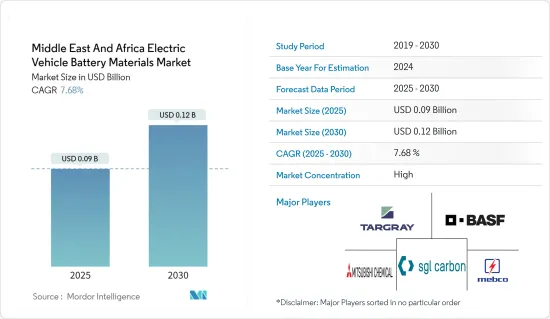
중동 및 아프리카의 전기자동차 배터리 재료 시장 규모는 2025년에 9,000만 달러로 추정되며, 예측 기간(2025-2030년) 동안 7.68%의 CAGR로 2030년에는 1억 2,000만 달러에 달할 것으로 예상됩니다.
주요 하이라이트
중기적으로는 전기자동차 판매량 증가와 정부 정책 및 지원 등의 요인이 예측 기간 동안 중동 및 아프리카 전기자동차 배터리 재료 시장의 가장 큰 촉진요인 중 하나가 될 것으로 예상됩니다.
반대로, 중동 및 아프리카의 전기자동차 배터리 재료 시장은 예측 기간 동안 원자재 생산 부족과 중요한 배터리 비축량 부족으로 인해 도전에 직면할 것입니다.
그러나 배터리 기술의 발전으로 인해 앞으로 시장에 많은 기회가 있을 것으로 예상됩니다.
사우디아라비아는 주목할 만한 성장세를 보이고 있으며, 예측 기간 동안 가장 높은 성장을 달성할 것으로 예상됩니다.
중동 및 아프리카의 전기자동차 배터리 재료 시장 동향
리튬이온 배터리가 시장을 독점
지속가능한 에너지를 촉진하기 위한 정부의 노력과 투자에 힘입어 중동 및 아프리카의 전기자동차(EV) 배터리 재료 시장에서 리튬이온 배터리 부문이 크게 성장하고 있습니다. 이 지역에서 전기자동차 보급이 확대됨에 따라 리튬이온 배터리는 높은 에너지 밀도, 긴 수명, 낮은 비용으로 인해 선호되는 선택지로 부상하고 있습니다.
아랍에미리트와 사우디아라비아 등의 국가들은 전기자동차로의 전환을 주도하고 있으며, 전기자동차 사용을 촉진하기 위한 정책과 보조금 정책을 시행하고 있으며, 그 결과 리튬이온 배터리에 대한 수요를 높이고 있습니다. 세계 자동차 대기업들이 급성장하는 시장에 주목하여 현지에 시설을 설립하고 최첨단 배터리 기술에 대한 수요를 증폭시킴으로써 이러한 전환은 더욱 가속화되고 있습니다.
지난 10년간 배터리 기술 및 제조 분야의 비약적인 발전은 전기자동차 부문에서 리튬이온 배터리의 보급을 촉진해 왔습니다. 이러한 기술 혁신은 비용을 절감할 뿐만 아니라 성능과 신뢰성을 향상시켜 리튬이온 배터리는 제조업체와 소비자 모두에게 최고의 선택이 되고 있습니다.
최근 리튬이온 배터리와 배터리 팩의 가격이 하락하여 최종사용자 산업에 매력적이어서 2022년에 일시적으로 상승한 후, 배터리 가격은 2023년에도 하락 추세를 이어갔습니다. 놀랍게도 리튬이온 배터리 팩의 비용은 14 % 하락하여 139 달러/kWh의 역사적 최저 수준인 139 달러/kWh에 도달했습니다.
또한, 중동 및 아프리카에서는 리튬이온 배터리 공급망을 강화하기 위한 전략적 제휴와 노력이 진행되고 있습니다. 이러한 노력에는 현지 기업과 세계 기업의 합작 투자, 기가팩토리 설립, 배터리 기술 혁신 및 생산 효율성에 특화된 연구 센터 설립 등이 포함됩니다.
예를 들어, 2023년 12월, 연방 전력부와 중국 생태환경부가 지켜보는 가운데 한 협정이 체결되었습니다. 이 협정은 중국 기업이 나이지리아에 1억 5,000만 달러 규모의 리튬이온 배터리 제조 시설을 설립하는 것을 촉진하는 것입니다. 이 협정은 유엔기후총회(COP28) 기간 중 두바이에서 체결되었습니다.
정부 및 산업계의 움직임뿐만 아니라 전기자동차의 환경적 이점에 대한 소비자의 인식이 높아지면서 리튬이온 배터리 부문의 성장을 촉진하고 있습니다.
이러한 신흥국 시장의 추세를 감안할 때, 리튬이온 배터리 부문은 향후 몇 년 동안 시장을 주도할 것으로 보입니다.
괄목할 만한 성장세를 보이는 사우디아라비아
사우디아라비아는 비전 2030이라는 국가적 프레임워크에 따른 대규모 투자, 전략적 이니셔티브, 야심찬 목표가 특징인 변혁의 여정 속에 있습니다. 사우디 정부는 경제 다각화, 석유 의존도 감소, 환경적 지속가능성 강화라는 광범위한 전략의 일환으로 전기자동차 도입을 추진하고 있습니다.
사우디 산업개발기금에 따르면, 사우디의 전기자동차 판매량은 2022-2023년 사이 44.2% 이상 급증할 것으로 예상되며, 이는 국민들 사이에서 전기자동차의 인기가 높아지고 있다는 것을 보여줍니다. 이러한 보급의 증가는 소비자의 선호도 변화를 보여줄 뿐만 아니라 전기자동차 배터리 재료 시장이 급성장하고 있다는 것을 보여줍니다. 이러한 발전에 따라 사우디아라비아는 국내 수요와 세계 전기자동차 판매 예측을 모두 충족시키기 위해 배터리 제조 공장 설립에 적극적으로 나서고 있습니다.
전기자동차 배터리 재료에 대한 수요 증가는 사우디의 전기 모빌리티 인프라를 강화하는 데 있어 매우 중요합니다. 사우디는 배터리 재료에 그치지 않고 제조시설, 연구센터, 대규모 충전 인프라를 포함한 종합적인 전기자동차 생태계의 기반을 구축하기 위해 노력하고 있습니다.
예를 들어, 2023년 1월, 배터리 재료 및 기술 분야의 세계 리더인 EV Metals Group(EVM)은 사우디아라비아의 자회사 EV Metals Arabia Company for Industry(EVM Arabia)가 주베일 얌브 왕립 위원회(RCJY)로부터 127 헥타르의 토지를 배정받았다고 발표했습니다.
이번 부지 배정은 EV Metals Group에게 중요한 이정표이며, 약 8억 9,900만 달러 규모의 투자를 통해 얌부 산업 도시에 야심찬 통합 배터리 화학단지 건설을 위한 부지를 확보하게 된 것입니다. 이 단지는 단순한 시설이 아니라 사우디를 미드스티림 중심지로 자리매김하기 위한 전략적 움직임이며, 특히 전기자동차 및 배터리 셀 제조에 필수적인 고순도 화학제품의 수요 증가에 대응하기 위한 것입니다.
또한, 사우디아라비아의 뛰어난 물류 인프라와 함께 사우디아라비아는 배터리 재료 및 완제품 수출에 있어 중요한 역할을 하고 있습니다. 이러한 전략적 우위를 바탕으로 중동 및 아프리카, 더 멀리 떨어진 시장까지 도달할 수 있어 세계 공급망에서 사우디아라비아의 입지를 확고히 하고 있습니다.
사우디아라비아는 이러한 발전과 전기자동차 부문의 모멘텀을 바탕으로 향후 몇 년 동안 크게 성장할 태세를 갖추고 있습니다.
중동 및 아프리카의 전기자동차 배터리 재료 산업 개요
중동 및 아프리카의 전기자동차 배터리 재료 시장은 반통합형입니다. 이 시장의 주요 기업으로는 Targray Technology International Inc., BASF SE, Mitsubishi Chemical Group Corporation, Middle East Battery Company, SGL Carbon 등이 있습니다.
기타 혜택
엑셀 형식의 시장 예측(ME) 시트
3개월간 애널리스트 지원
목차
제1장 소개
조사 범위
시장 정의
조사 가정
제2장 주요 요약
제3장 조사 방법
제4장 시장 개요
소개
2029년까지 시장 규모와 수요 예측(단위 : 달러)
최근 동향과 개발
정부 정책 및 규정
시장 역학
성장 촉진요인
전기자동차 판매 성장
정부 지원 정책 및 규정
성장 억제요인
중요 원료 매장량 부족
공급망 분석
산업의 매력 - Porter's Five Forces 분석
공급 기업의 교섭력
소비자의 협상력
신규 참여업체의 위협
대체품의 위협 제품·서비스
경쟁 기업 간의 경쟁 관계
투자 분석
제5장 시장 세분화
배터리 유형
리튬이온 배터리
납축배터리
기타
재료
양극
음극
전해액
분리막
기타
지역
사우디아라비아
아랍에미리트
나이지리아
카타르
이집트
남아프리카공화국
기타 중동 및 아프리카
제6장 경쟁 구도
M&A, 합작투자, 제휴, 협정
주요 기업의 전략
기업 개요
Targray Technology International Inc.
BASF SE
Mitsubishi Chemical Group Corporation
Yokogawa Electric Corporation
Umicore SA
Sumitomo Chemical Co., Ltd.
Middle East Battery Company
ENTEK International LLC
Arkema SA
SGL Carbon
기타 저명한 기업 리스트
시장 순위/점유율(%) 분석
제7장 시장 기회와 향후 동향
배터리 기술의 진보
ksm
영문 목차
영문목차
The Middle East And Africa Electric Vehicle Battery Materials Market size is estimated at USD 0.09 billion in 2025, and is expected to reach USD 0.12 billion by 2030, at a CAGR of 7.68% during the forecast period (2025-2030).
Key Highlights
Over the medium term, factors such as rising growth in electric vehicle sales and supportive government policies and regulations are expected to be among the most significant drivers for the Middle East and Africa Electric Vehicle Battery Materials Market during the forecast period.
Conversely, the Middle East and Africa Electric Vehicle Battery Materials Market faces challenges during the forecast period due to insufficient raw material production and critical battery reserves.
However, ongoing advancements in battery technology are anticipated to open up numerous opportunities for the market down the line.
Saudi Arabia is poised for notable growth, projected to achieve the highest growth during the forecast period, driven by intensified efforts to set up battery manufacturing facilities in the region.
Middle East And Africa Electric Vehicle Battery Materials Market Trends
Lithium-ion Batteries to Dominate the Market
Driven by government initiatives and investments promoting sustainable energy, the lithium-ion battery segment in the Middle East and Africa's electric vehicle (EV) battery materials market is set for substantial growth. As electric vehicle adoption rises in the region, lithium-ion batteries emerge as the favored option, due to their high energy density, extended cycle life, and decreasing costs.
Leading the charge in the shift to electric mobility, countries like the United Arab Emirates and Saudi Arabia are rolling out policies and subsidies to promote electric vehicle usage, consequently driving up the demand for lithium-ion batteries. This transition gains momentum as global automotive giants establish regional facilities, eyeing the burgeoning market and amplifying the demand for cutting-edge battery technologies.
Over the past decade, breakthroughs in battery technology and manufacturing have propelled the uptake of lithium-ion batteries in the electric vehicle sector. These innovations have not only slashed costs but also bolstered performance and reliability, making lithium-ion batteries a top choice for both manufacturers and consumers.
Recently, declining prices of lithium-ion batteries and cell packs have made them more attractive to end-user industries. After a brief uptick in 2022, battery prices continued their downward trend in 2023. Remarkably, lithium-ion battery pack costs dropped by 14%, reaching a historic low of USD 139/kWh.
Furthermore, the Middle East and Africa are witnessing strategic collaborations and initiatives to fortify the lithium-ion battery supply chain. These endeavors encompass joint ventures between local and global entities, establishing gigafactories and research centers dedicated to battery innovation and production efficiency.
For example, in December 2023, an agreement was inked under the watchful eyes of the Federal Ministry of Power and the China Ministry of Ecology and Environment. This pact facilitates a Chinese company's establishment of a USD 150 million lithium-ion battery manufacturing facility in Nigeria. The agreement was signed in Dubai during the United Nations Climate Conference, commonly known as COP28, as highlighted by the Rural Electrification Agency.
Beyond governmental and industrial moves, heightened consumer awareness regarding the environmental advantages of electric vehicles is propelling the lithium-ion battery segment's growth.
Given these developments, the lithium-ion battery segment is poised to lead the market in the coming years.
Saudi Arabia to Witness Significant Growth
Saudi Arabia is in the midst of a transformative journey, marked by significant investments, strategic initiatives, and ambitious objectives, all in line with the nation's Vision 2030 framework. As part of its broader strategy to diversify the economy, lessen its oil dependency, and bolster environmental sustainability, the Saudi government is championing the adoption of electric vehicles.
According to the Saudi Industrial Development Fund, electric vehicle sales in the country surged by over 44.2% from 2022 to 2023, highlighting the growing traction of electric vehicles among the populace. This rising adoption not only signals a shift in consumer preferences but also sets the stage for a burgeoning market for electric vehicle battery materials. In line with these developments, Saudi Arabia is actively working to set up battery manufacturing plants, aiming to meet both its domestic needs and global electric vehicle sales forecasts.
The increasing demand for electric vehicle battery materials is pivotal for fortifying the nation's electric mobility infrastructure. Saudi Arabia is not just stopping at battery materials; the country is laying down the groundwork for a comprehensive electric vehicle ecosystem, which encompasses manufacturing facilities, research centers, and an expansive charging infrastructure.
For instance, in January 2023, EV Metals Group (EVM), a global leader in battery materials and technology, announced that its Saudi subsidiary, EV Metals Arabia Company for Industry (EVM Arabia), has been allocated 127 hectares of land by the Royal Commission for Jubail and Yanbu (RCJY).
This land allocation is a significant milestone for EV Metals Group, marking the site of their ambitious integrated Battery Chemicals Complex in Yanbu Industrial City, backed by an estimated investment of USD 899 million. This complex is not just another facility; it's a strategic move to position the Kingdom as a central midstream hub, especially in meeting the rising demand for high-purity chemicals essential for electric vehicle and battery cell manufacturing.
Moreover, Saudi Arabia's prime location, coupled with its advanced logistics infrastructure, positions it as a key player in exporting battery materials and finished products. This strategic advantage extends its reach to markets across the Middle East, Africa, and further afield, cementing its stature in the global supply chain.
Given these developments and the momentum building in the electric vehicle sector, Saudi Arabia is poised for significant growth in the coming years.
Middle East And Africa Electric Vehicle Battery Materials Industry Overview
The Middle East and Africa Electric Vehicle Battery Materials Market is semi-consolidated. Some of the key players in this market (in no particular order) are Targray Technology International Inc., BASF SE, Mitsubishi Chemical Group Corporation, Middle East Battery Company, and SGL Carbon.
Additional Benefits:
The market estimate (ME) sheet in Excel format
3 months of analyst support
TABLE OF CONTENTS
1 INTRODUCTION
1.1 Scope of the Study
1.2 Market Definition
1.3 Study Assumptions
2 EXECUTIVE SUMMARY
3 RESEARCH METHODOLOGY
4 MARKET OVERVIEW
4.1 Introduction
4.2 Market Size and Demand Forecast in USD, till 2029
4.3 Recent Trends and Developments
4.4 Government Policies and Regulations
4.5 Market Dynamics
4.5.1 Drivers
4.5.1.1 Growing Electric Vehicle Sales
4.5.1.2 Supportive Government Policies and Regulations
4.5.2 Restraints
4.5.2.1 Lack of Critical Raw Material Reserves
4.6 Supply Chain Analysis
4.7 Industry Attractiveness - Porter's Five Forces Analysis
4.7.1 Bargaining Power of Suppliers
4.7.2 Bargaining Power of Consumers
4.7.3 Threat of New Entrants
4.7.4 Threat of Substitutes Products and Services
4.7.5 Intensity of Competitive Rivalry
4.8 Investment Analysis
5 MARKET SEGMENTATION
5.1 Battery Type
5.1.1 Lithium-ion Battery
5.1.2 Lead-Acid Battery
5.1.3 Others
5.2 Material
5.2.1 Cathode
5.2.2 Anode
5.2.3 Electrolyte
5.2.4 Separator
5.2.5 Others
5.3 Geography
5.3.1 Saudi Arabia
5.3.2 United Arab Emirates
5.3.3 Nigeria
5.3.4 Qatar
5.3.5 Egypt
5.3.6 South Africa
5.3.7 Rest of Middle East and Africa
6 COMPETITIVE LANDSCAPE
6.1 Mergers and Acquisitions, Joint Ventures, Collaborations, and Agreements