


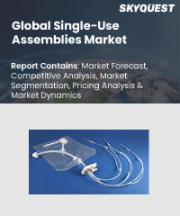
세계의 일회용 어셈블리 시장 규모는 2024년에 29억 5,000만 달러로 평가되며, 2025년 33억 5,000만 달러에서 2033년까지 91억 5,000만 달러로 성장할 전망입니다. 예측 기간(2026-2033년)의 CAGR은 13.4%로 예측됩니다.
사전 조립된 플라스틱 유체 경로 및 자체 완결형 시스템인 일회용 어셈블리 세계 시장은 바이오 제약 분야 수요 증가로 인해 성장세를 보이고 있습니다. 샘플링 병, 필터, 멸균 커넥터 등의 부품이 포함된 이 어셈블리는 바이오프로세싱 기술의 발전과 수탁제조업체(CMO)의 채택 확대로 촉진되는 바이오의약품 연구에 필수적인 요소입니다. 용출물 및 폐기물 관리와 관련된 규제 문제에도 불구하고 특히 팬데믹 대응 과정에서 두드러진 백신 및 치료제의 신속한 개발 요구로 인해 일회용 시스템에 대한 수요가 급증하고 있습니다. 또한 암과 감염성 질환의 발생률 증가로 인해 획기적인 백신 기술을 포함한 생물학 분야의 혁신이 촉진되고 있으며, 이해관계자들이 효과적인 치료 솔루션을 찾고 있는 가운데, 업계의 미래 전망은 더욱 견고해지고 있습니다.
세계 일회용 어셈블리 시장 성장 촉진요인
일회용 어셈블리의 일회용 특성은 교차 오염의 위험을 크게 줄이고 제품의 안전성과 품질을 전반적으로 향상시킵니다. 위생과 안전을 중시하는 산업에서 특히 중요한 응용 분야에서 무균 환경을 제공할 수 있다는 점에서 이러한 어셈블리는 널리 채택되고 있습니다. 재사용 부품과 관련된 건강 위험에 대한 인식이 높아짐에 따라 일회용 솔루션으로의 전환이 가속화되고 있으며, 조직 내에서는 소비자 안전을 최우선으로 하는 노력이 진행되고 있습니다. 그 결과, 엄격한 안전 기준을 유지하는 데 중점을 둔 다양한 분야에서 일회용 어셈블리에 대한 세계 수요가 지속적으로 증가하고 있으며, 필수적인 구성 요소로 자리 잡고 있습니다.
세계 일회용 어셈블리 시장 억제
재사용이 불가능한 일회용 제품의 본질적인 특성으로 인해 세계 일회용 어셈블리 시장은 일정한 문제에 직면해 있습니다. 이러한 제약으로 인해 조직은 기존 리소스의 최적화가 아닌 항상 새로운 어셈블리를 구매해야 하는 상황이 발생하여 장기적으로 운영비용이 증가할 수 있습니다. 또한 일회용품에 대한 의존도는 환경 폐기물을 크게 증가시켜 지속가능성을 중시하는 이해관계자들의 우려를 높이고 있습니다. 기업이 효율성과 선택에 따른 재정적, 생태적 영향 사이의 균형을 맞추기 위해 고심하는 가운데, 이러한 요인들은 시장 성장을 저해할 수 있으며, 이러한 우려를 해결하기 위해 업계내 혁신적인 솔루션이 필요하게 되었습니다.
세계 일회용 어셈블리 시장 동향
제약, 생명공학, 식품 가공 등의 산업 분야에서 일회용 어셈블리의 채택이 확대됨에 따라 세계 시장은 괄목할 만한 성장세를 보이고 있습니다. 이러한 추세는 제조 공정의 효율성과 교차 오염 위험 감소를 실현하는 일회용 시스템 고유의 유연성에 의해 촉진되고 있습니다. 기업이 업무 효율을 높이고 생산 병목현상을 해소하기 위해 노력하는 가운데, 일회용 어셈블리에 대한 수요는 지속적으로 증가하고 있습니다. 이러한 변화는 규제 준수와 지속가능성에 대한 관심이 높아짐에 따라 더욱 가속화되고 있으며, 빠르게 변화하는 시장에서 혁신을 통해 경쟁 우위를 유지하고자 하는 조직에게 일회용 기술은 필수적인 요소로 자리매김하고 있습니다.
Global Single-Use Assemblies Market size was valued at USD 2.95 Billion in 2024 and is poised to grow from USD 3.35 Billion in 2025 to USD 9.15 Billion by 2033, growing at a CAGR of 13.4% during the forecast period (2026-2033).
The global market for single-use assemblies, which are pre-assembled plastic fluid pathways and self-contained systems, is on a growth trajectory due to the increasing demand in the biologics sector. These assemblies, featuring components like sampling bottles, filters, and sterile connectors, are essential for biopharmaceutical research, facilitated by advancements in bioprocessing technologies and heightened adoption by Contract Manufacturing Organizations (CMOs). Despite regulatory challenges regarding leachables and waste management, the demand for single-use systems is surging, driven by the need for rapid vaccine and therapy development, particularly highlighted during pandemic responses. Additionally, rising incidences of cancer and infectious diseases are prompting innovations in biologics, including groundbreaking vaccine technologies, thereby strengthening the industry's future prospects as stakeholders seek effective treatment solutions.
Top-down and bottom-up approaches were used to estimate and validate the size of the Global Single-Use Assemblies market and to estimate the size of various other dependent submarkets. The research methodology used to estimate the market size includes the following details: The key players in the market were identified through secondary research, and their market shares in the respective regions were determined through primary and secondary research. This entire procedure includes the study of the annual and financial reports of the top market players and extensive interviews for key insights from industry leaders such as CEOs, VPs, directors, and marketing executives. All percentage shares split, and breakdowns were determined using secondary sources and verified through Primary sources. All possible parameters that affect the markets covered in this research study have been accounted for, viewed in extensive detail, verified through primary research, and analyzed to get the final quantitative and qualitative data.
Global Single-Use Assemblies Market Segments Analysis
Global Single-Use Assemblies Market is segmented by Product, Solution, Modality, Application, End User and region. Based on Product, the market is segmented into Bag Assemblies, Filtration Assemblies, Bottle Assemblies, Tubing Assemblies, Mixing Assemblies, Sampling Assemblies, Sensor Assemblies and Other Single-Use Assembly Products. Based on Solution, the market is segmented into Standard Solutions and Customized Solutions. Based on Modality, the market is segmented into Monoclonal Antibodies, Vaccines, Therapeutic Proteins & Peptides and Cell & Gene Therapies. Based on Application, the market is segmented into Filtration & Purification Applications, Aseptic Transfer, Storage Applications, Sampling Applications, Cell Culture, Formulation & Fill-Finish Applications and Mixing Applications. Based on End User, the market is segmented into Pharmaceutical & Biopharmaceutical Companies, Contract Research Organizations & Contract Manufacturing Organizations and Academic & Research Institutes. Based on region, the market is segmented into North America, Europe, Asia Pacific, Latin America and Middle East & Africa.
Driver of the Global Single-Use Assemblies Market
The inherent disposable characteristic of single-use assemblies significantly reduces the risk of cross-contamination, thereby improving the overall safety and quality of products. As industries prioritize hygiene and safety, these assemblies have gained popularity for their ability to provide a sterile environment, particularly in critical applications. This shift towards single-use solutions is driven by a heightened awareness of health risks associated with reusable components, prompting organizations to adopt practices that prioritize consumer safety. Consequently, the global demand for single-use assemblies continues to rise, making them an essential component in various sectors focused on maintaining stringent safety standards.
Restraints in the Global Single-Use Assemblies Market
The Global Single-Use Assemblies market faces certain challenges due to the inherent nature of single-use products, which do not allow for reusability. This limitation can lead to increased operational costs over time, as organizations may find themselves constantly purchasing new assemblies rather than optimizing existing resources. Additionally, the reliance on single-use items contributes significantly to environmental waste, raising concerns among stakeholders who prioritize sustainability. These factors can hinder market growth as companies balance efficiency with the financial and ecological implications of their choices, prompting a need for innovative solutions within the industry to address these concerns.
Market Trends of the Global Single-Use Assemblies Market
The Global Single-Use Assemblies market is experiencing significant momentum as industries, notably pharmaceuticals, biotechnology, and food processing, increasingly embrace these solutions. This trend is driven by the inherent flexibility of single-use systems, which streamline manufacturing processes and minimize cross-contamination risks. As companies seek to enhance operational efficiencies and reduce bottlenecks in production, the demand for single-use assemblies continues to rise. This shift is further fueled by the growing emphasis on regulatory compliance and sustainability, positioning single-use technology as an essential component for organizations aiming to innovate and maintain competitive advantages in a rapidly evolving marketplace.