차세대 단백질 가수분해물 시장 : 시장 기회, 성장 요인, 업계 동향 분석 및 예측(2025-2034년)
Next-Generation Protein Hydrolysates Market Opportunity, Growth Drivers, Industry Trend Analysis, and Forecast 2025 - 2034
상품코드:1885797
리서치사:Global Market Insights Inc.
발행일:2025년 11월
페이지 정보:영문 210 Pages
라이선스 & 가격 (부가세 별도)
ㅁ Add-on 가능: 고객의 요청에 따라 일정한 범위 내에서 Customization이 가능합니다. 자세한 사항은 문의해 주시기 바랍니다.
한글목차
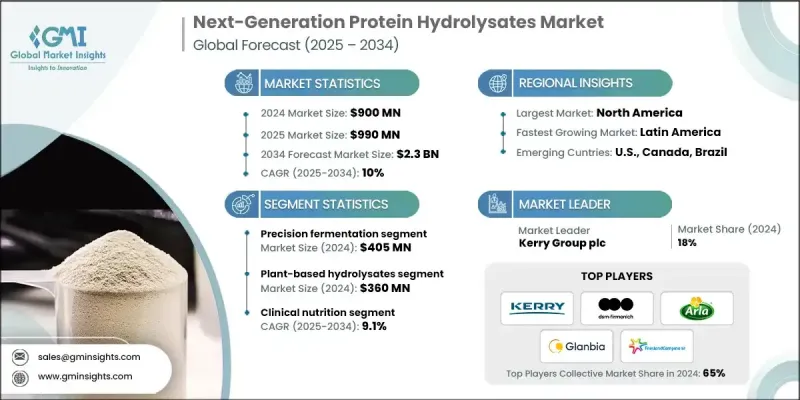
세계의 차세대 단백질 가수분해물 시장은 2024년에 9억 달러로 평가되었고, 2034년까지 연평균 복합 성장률(CAGR) 10%로 성장할 전망이며, 23억 달러에 이를 것으로 예측되고 있습니다.
소비자 및 의료 종사자가 대사 요구, 식사 제한, 전문적인 영양 프로그램에 적합한 성분 프로파일을 요구하는 경향이 강해지는 가운데, 개별 대응형 영양에 대한 수요가 제품의 채용을 가속시키고 있습니다. 세계적으로 확대되는 예방 의료 활동과 디지털 지도식 다이어트 시스템은 개인 처방에 속효성 펩티드 원료의 채용을 촉진하고 있습니다. 건강 의식 증가 및 기능성 식품의 인기는 시장의 기세를 더욱 향상시키고 있습니다. 여러 지역의 국내 보고서는 단백질 강화 식품 및 식품의 지속적인 성장을 강조하고 있으며, 높은 소화성 및 낮은 알레르겐 성에서 가수분해물 수요 기회를 창출하고 있습니다. 각 브랜드는 건강 지향 소비자와 클린 라벨 우선의 요구에 부응하기 위해 이러한 펩티드를 즉석 음용 수식, 영양 음료, 강화 간식, 임상 영양 제품에 통합하고 있습니다. 셀프 케어에 대한 투자 확대 및 단백질 풍부한 식품의 소매 유통 확대가 이 변화를 지지하고 있습니다. 정밀 발효 기술의 진보도 시장 발전에 영향을 주고 있으며, 일관된 펩티드 구조, 고순도화, 생물활성의 강화를 실현하는 동시에, 변동이 큰 기존 원료원에 대한 의존도를 저감하고 있습니다.
시장 범위
시작 연도
2024년
예측 기간
2025-2034년
시작 시 가치
9억 달러
예측 금액
23억 달러
CAGR
10%
정밀 발효 부문은 2024년 4억 500만 달러를 차지했습니다. 이 방법이 큰 점유율을 차지하는 이유는 생산자가 균일하고 기능성 펩티드를 공급하는 능력 및 흡수 특성의 향상에 의존하기 때문입니다. 이 방법의 확장성, 배치 간 변동의 저감, 클린 라벨 사양과의 호환성이, 의료 영양, 퍼포먼스 포뮬러, 특수 단백질 카테고리에서의 용도에 선호되는 루트가 되고 있습니다.
식물 유래 가수분해물 부문은 2024년에 3억 6,000만 달러에 달했습니다. 개발자가 알레르겐 프리, 지속가능성, 클린 라벨 대응 단백질에 대한 증가하는 수요에 부응하는 노력을 추진하면서, 이 부문은 큰 점유율을 차지하고 있습니다. 콩, 완두콩, 밀 및 쌀 유래의 광범위한 가수분해물 포트폴리오는 효율적인 생산을 가능하게 하고 라이프스타일 음료, 스포츠 제품 및 대사 영양을 위한 아미노산 조성의 최적화를 지원합니다. 급속하게 상품화가 진행되는 중성 풍미로 고용해성의 품종은 기존 브랜드와 신흥 브랜드 양쪽에 있어, 비건 및 플렉시탈리안용 제품 라인의 강화에 공헌하고 있습니다.
북미의 차세대 단백질 가수분해물 시장은 2024년에 38%의 점유율을 차지했으며, 그 대부분을 미국이 차지했습니다. 성장은 성숙한 영양 분야, 임상 영양 솔루션에 대한 강한 수요 및 여러 스포츠 성능 영양 기업의 존재에 의해 지원됩니다. 특히 고령자와 의료 처치로부터 회복기에 있는 개인용 의료 식이요법에서 가수분해 단백질의 진보가 더욱 수요 증가를 견인하고 있습니다. 소화하기 쉽고, 과민증이 있는 분들에게도 적합한 클린 라벨 단백질에 대한 관심의 고조가 시장 확대를 더욱 뒷받침하고 있습니다.
목차
제1장 조사 방법 및 범위
제2장 주요 요약
제3장 업계 인사이트
생태계 분석
공급자의 상황
이익률
각 단계에서의 부가가치
밸류체인에 영향을 주는 요인
혁신
업계에 미치는 영향요인
성장 촉진요인
맞춤 영양 솔루션에 대한 수요 증가
높아지는 건강 의식 및 기능성 식품의 동향
정밀 발효에 있어서의 기술적 진보
스포츠 및 퍼포먼스 영양 수요 증가
업계의 잠재적 위험 및 과제
높은 생산 비용 및 기술 투자의 필요성
복잡한 규제 승인 프로세스
차세대 기술의 장점에 대한 소비자의 인지도가 한정적임
시장 기회
지속가능한 단백질원의 개발
의약품 및 치료 용도의 확대
성장 가능성 분석
규제 상황
북미
유럽
아시아태평양
라틴아메리카
중동 및 아프리카
Porter's Five Forces 분석
PESTEL 분석
가격 동향
지역별
제품별
장래 시장 동향
기술 및 혁신 동향
현재의 기술 동향
신흥 기술
특허 상황
무역 통계(HS코드)(참고 : 무역 통계는 주요 국가에서만 제공됨)
주요 수입국
주요 수출국
지속가능성 및 환경면
지속가능한 대처
폐기물 감축 전략
생산에 있어서의 에너지 효율
환경에 배려한 대처
탄소발자국에 관한 고려 사항
제4장 경쟁 구도
서문
기업의 시장 점유율 분석
지역별
북미
유럽
아시아태평양
라틴아메리카
중동 및 아프리카
기업 매트릭스 분석
주요 시장 기업의 경쟁 분석
경쟁 포지셔닝 매트릭스
주요 발전
합병 및 인수
제휴 및 협업
신제품 발매
확대 계획
제5장 시장 추계 및 예측 : 기술 유형별(2021-2034년)
주요 동향
정밀 발효
효소 고정화 및 고도의 효소 가수분해
생물활성 펩티드의 추출
막 여과 및 분획
초임계 유체 처리
제6장 시장 추계 및 예측 : 단백질원별(2021-2034년)
주요 동향
식물 유래 가수분해물
콩 단백질 가수분해물
완두콩 단백질 가수분해물
쌀 단백질 가수분해물
밀 단백질 가수분해물
기타
동물 유래 가수분해물
유청 단백질 가수분해물
계란 단백질 가수분해물
콜라겐 가수분해물
해양 유래 가수분해물
물고기 단백질 가수분해물
갑각류 및 해조 유래 단백질
조류 및 해조 유래 가수분해물
미생물 유래 가수분해물
단세포 단백질
효모 및 세균 유래 단백질
곤충 유래 가수분해물
귀뚜라미 및 밀웜 유래 단백질
블랙 솔저 플라이
제7장 시장 추계 및 예측 : 용도별(2021-2034년)
주요 동향
임상영양학
스포츠 및 퍼포먼스 영양
단백질 파우더 및 블렌드
수분 보급 및 전해질
콜라겐 펩타이드 기반
에너지 젤 및 바
영유아 및 소아 영양
저 알레르기성 조제 분유
영유아 및 소아용 조제 식품
기능성 식음료
강화 스낵
식물 유래 음료
즉시 음료
기능성 주스
퍼스널케어 및 화장품
스킨 케어
헤어 케어
경구 및 경피 펩티드
기타
제8장 시장 추계 및 예측 : 지역별(2021-2034년)
주요 동향
북미
미국
캐나다
유럽
독일
영국
프랑스
스페인
이탈리아
기타 유럽
아시아태평양
중국
인도
일본
호주
한국
기타 아시아태평양
라틴아메리카
브라질
멕시코
아르헨티나
기타 라틴아메리카
중동 및 아프리카
사우디아라비아
남아프리카
아랍에미리트(UAE)
기타 중동 및 아프리카
제9장 기업 프로파일
Kerry Group plc
DSM-Firmenich
Arla Foods Ingredients
Glanbia Nutritionals
FrieslandCampina Ingredients
Tessenderlo Group
Fonterra
Perfect Day
Geltor
Kemin Industries
Carbery
NiHTEK
AJY
영문 목차
영문목차
The Global Next-Generation Protein Hydrolysates Market was valued at USD 900 million in 2024 and is estimated to grow at a CAGR of 10% to reach USD 2.3 billion by 2034.
Demand for tailored nutrition is accelerating product adoption as consumers and healthcare practitioners increasingly seek ingredient profiles aligned with metabolic needs, dietary sensitivities, and specialized nutrition programs. Globally expanding preventive health initiatives and digitally guided diet systems are encouraging the inclusion of fast-absorbing peptide ingredients in personalized formulations. Rising health consciousness and the popularity of functional foods continue to reinforce market momentum. National reports across multiple regions highlight ongoing growth in protein-fortified foods and beverages, creating opportunities for hydrolysates due to their high digestibility and reduced allergenic potential. Brands are incorporating these peptides into ready-to-drink formulas, nutrition beverages, fortified snacks, and clinical dietary products to appeal to wellness-focused buyers and clean-label priorities. Higher investment in self-care and broader retail access to protein-rich foods are supporting this shift. Advances in precision fermentation also influence market development by enabling consistent peptide structures, higher purity levels, and stronger bioactivity while decreasing dependency on variable conventional raw material sources.
Market Scope
Start Year
2024
Forecast Year
2025-2034
Start Value
$900 Million
Forecast Value
$2.3 Billion
CAGR
10%
The precision fermentation segment accounted for USD 405 million in 2024. This approach holds a sizable share because producers rely on its ability to deliver uniform, functional peptides with enhanced absorption properties. The method's scalability, reduced batch variation, and compatibility with clean-label specifications have made it a favored route for applications in medical nutrition, performance formulas, and specialty protein categories.
The plant-based hydrolysates segment reached USD 360 million in 2024. This segment commands a large share as developers work to meet rising interest in allergen-friendly, sustainable, and clean-label proteins. A wide portfolio of soy, pea, wheat, and rice hydrolysates enables efficient production and supports tailored amino acid compositions for lifestyle beverages, sports products, and metabolic nutrition. Their rapidly commercialized neutral-flavor and highly soluble varieties are strengthening vegan and flexitarian product lines across established and emerging brands.
North America Next-Generation Protein Hydrolysates Market held 38% share in 2024, with the United States contributing most of this share. Growth is supported by a mature nutrition sector, strong demand for clinical nutritional solutions, and the presence of multiple sports and performance nutrition companies. Advancements in hydrolyzed proteins for medical diets, especially for older adults and individuals recovering from medical procedures, are driving additional uptake. Rising interest in clean-label proteins that are easy to digest and suitable for those with sensitivities further reinforces market expansion.
Leading names in the Next-Generation Protein Hydrolysates Market include Glanbia Nutritionals, Kerry Group plc, DSM-Firmenich, FrieslandCampina Ingredients, Arla Foods Ingredients, Tessenderlo Group, Perfect Day, Geltor, GEA, Carbery, NiHTEK, Fonterra, and Kemin Industries. Companies competing in the Next-Generation Protein Hydrolysates Market are strengthening their positions by expanding R&D pipelines, building long-term partnerships, and investing in scalable production systems. Many firms are advancing precision fermentation and enhanced hydrolysis techniques to deliver peptides with predictable functionality, improved absorption, and consistent purity. Strategic collaborations with nutrition brands, healthcare organizations, and formulation specialists help accelerate product testing and commercial deployment. Manufacturers are also diversifying raw material sources to stabilize supply chains and broaden their clean-label offerings.
Table of Contents
Chapter 1 Methodology & Scope
1.1 Market scope and definition
1.2 Research design
1.2.1 Research approach
1.2.2 Data collection methods
1.3 Data mining sources
1.3.1 Global
1.3.2 Regional/Country
1.4 Base estimates and calculations
1.4.1 Base year calculation
1.4.2 Key trends for market estimation
1.5 Primary research and validation
1.5.1 Primary sources
1.6 Forecast model
1.7 Research assumptions and limitations
Chapter 2 Executive Summary
2.1 Industry 360° synopsis
2.2 Key market trends
2.2.1 Regional
2.2.2 Technology Type
2.2.3 Protein Source
2.2.4 Application
2.3 TAM Analysis, 2025-2034
2.4 CXO perspectives: Strategic imperatives
2.4.1 Executive decision points
2.4.2 Critical success factors
2.5 Future Outlook and Strategic Recommendations
Chapter 3 Industry Insights
3.1 Industry ecosystem analysis
3.1.1 Supplier Landscape
3.1.2 Profit Margin
3.1.3 Value addition at each stage
3.1.4 Factor affecting the value chain
3.1.5 Disruptions
3.2 Industry impact forces
3.2.1 Growth drivers
3.2.1.1 Rising demand for personalized nutritional solutions
3.2.1.2 Growing health consciousness & functional food trends
3.2.1.3 Technological advancements in precision fermentation
3.2.1.4 Increasing sports & performance nutrition
3.2.2 Industry pitfalls and challenges
3.2.2.1 High production costs & technology investment requirements
3.2.2.2 Complex regulatory approval processes
3.2.2.3 Limited consumer awareness of next-generation benefits