면역조절 단백질 가수분해물 시장 : 시장 기회, 성장 요인, 업계 동향 분석 및 예측(2025-2034년)
Immunomodulatory Protein Hydrolysates Market Opportunity, Growth Drivers, Industry Trend Analysis, and Forecast 2025 - 2034
상품코드:1876645
리서치사:Global Market Insights Inc.
발행일:2025년 11월
페이지 정보:영문 190 Pages
라이선스 & 가격 (부가세 별도)
ㅁ Add-on 가능: 고객의 요청에 따라 일정한 범위 내에서 Customization이 가능합니다. 자세한 사항은 문의해 주시기 바랍니다.
한글목차
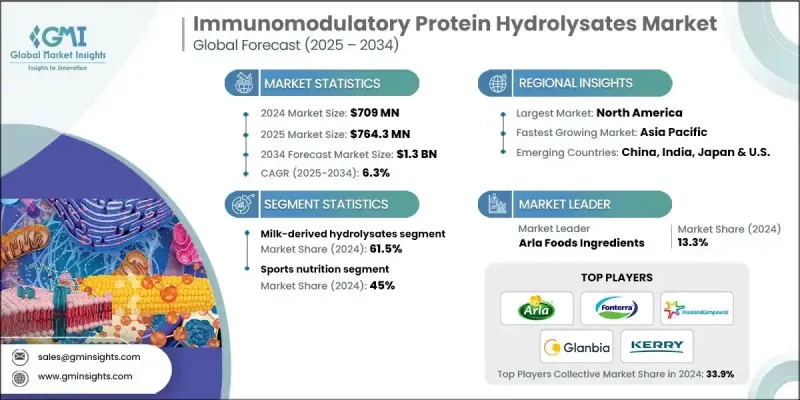
세계의 면역조절 단백질 가수분해물 시장은 2024년에 7억 900만 달러로 평가되었고, 2034년까지 연평균 복합 성장률(CAGR) 6.3%로 성장할 전망이며, 13억 달러에 이를 것으로 예측됩니다.
소비자의 면역 건강에 대한 관심 증가 및 면역 관련 질환에 대한 이해가 깊어지는 가운데 업계는 강한 성장세를 보이고 있습니다. 효소 처리에 의해 단백질을 단쇄의 생물활성 펩티드로 변환하여 생성되는 이러한 가수분해물은 방어 반응의 지원이나 염증의 완화를 통해 면역 활동의 조절에 적극적인 역할을 합니다. 면역 탄력성의 촉진, 감염증에 대한 취약성 감소, 회복 과정의 지원 등의 특성으로부터, 그 가치는 기능성 식품, 영양 보조 식품, 의약품 제제에 이르고 있습니다. 높은 생체이용률, 높은 안전성, 표적을 좁힌 면역 효과, 부작용의 적음도 수요를 뒷받침하고 있습니다. 천연 및 기능성 원료에 대한 관심의 고조가 채용을 촉진하는 한편, 개별화 영양학이나 예방적 웰니스의 성장이 큰 기회를 가져오고 있습니다. 면역위험이 높은 고령층 증가도 시장 확대에 기여하고 있습니다. 면역조절 작용을 강화한 신규 펩티드의 조사는 제품 혁신을 계속 추진하고 있으며, 음식 및 치료 분야의 제조업체 각사는 임상 현장에서의 면역 서포트를 목적으로 한 제제를 포함한 폭넓은 제품에 이러한 성분을 포함하고 있습니다.
시장 범위
시작 연도
2024년
예측 기간
2025-2034년
시작 시 가치
7억 900만 달러
예측 금액
13억 달러
CAGR
6.3%
우유 유래 가수분해물 부문은 강력한 과학적 뒷받침, 확립된 생산 능력, 오랫동안 인정된 면역조절 기능으로 2024년에 61.5%의 점유율을 차지했습니다. 주요 유제품 관련 제조업체는 신뢰할 수 있는 생물학적 활성 특성을 갖춘 일관된 고품질 가수분해물을 제공하기 위해 고급 효소 분해 공정에 투자하고 있습니다.
임상 및 의료 영양 부문은 면역 기능이 저하된 사람들과 특별한 의료 요구를 가진 개인을 위해 맞춤화된 전문 솔루션에 대한 수요에 견인되었으며, 2024년에는 21%의 점유율을 차지했습니다. 이 부문에는 집중 치료를 받고 있는 분, 노화에 따른 면역 기능의 저하가 보이는 노인, 자가면역 관련 과제가 있는 분들을 위한 영양 설계된 제품이 포함됩니다.
북미의 면역조절 단백질 가수분해물 시장은 42.1%의 점유율을 차지했으며, 기능성 영양에 대한 소비자의 높은 수용성과 성숙한 혁신 환경을 배경으로 2034년까지 연평균 복합 성장률(CAGR) 6.4%로 성장할 것으로 예측됩니다. 이 지역의 기업은 면역 지원 특성을 강화한 차세대 가수분해물의 개발을 위한 연구 개발에 많은 자원을 투입하고 있습니다.
세계의 면역조절 단백질 가수분해물 시장에 참여하는 주요 기업으로는 Arla Foods Ingredients, Azelis Group, Cargill, Incorporated, DSM-Firmenich, Fonterra (NZMP), FrieslandCampina Ingredients, Glanbia PLC, Hilmar Cheese Company, Inc., Kerry Group, PB Leiner, Roquette 및 Tatua 등이 있습니다. 면역조절 단백질 가수분해물 시장의 기업은 경쟁 우위를 강화하기 위해 몇 가지 전략적 노력을 추진하고 있습니다. 많은 기업들이 일관성, 순도, 생물활성 향상을 목적으로 한 효소 기술에 대한 대규모 투자를 우선하고 있습니다. 또한 새로운 펩티드 기능성의 특정과 임상 검증의 가속을 위해 공동 연구 프로그램의 확대도 진행하고 있습니다. 고령층이나 특정의 면역요구를 가지는 개인 등, 특정의 소비자층용으로 설계된 커스터마이즈형 가수분해물의 개발에 의해 제품 포트폴리오의 확충도 도모하고 있습니다. 기업은 안정적인 조달 및 효율적인 세계 유통을 보장하기 위해 공급망을 강화하기 위해 노력하고 있습니다.
목차
제1장 조사 방법 및 범위
제2장 주요 요약
제3장 업계 인사이트
생태계 분석
공급자의 상황
이익률
각 단계에서의 부가가치
밸류체인에 영향을 주는 요인
혁신
업계에 미치는 영향요인
성장 촉진요인
업계의 잠재적 위험 및 과제
시장 기회
성장 가능성 분석
규제 상황
북미
유럽
아시아태평양
라틴아메리카
중동 및 아프리카
Porter's Five Forces 분석
PESTEL 분석
가격 동향
지역별
제품 카테고리별
장래 시장 동향
기술 및 혁신 동향
현재의 기술 동향
신흥 기술
특허 상황
무역 통계(HS코드)(참고 : 무역 통계는 주요 국가에서만 제공됨)
주요 수입국
주요 수출국
지속가능성 및 환경면
지속가능한 대처
폐기물 감축 전략
생산에 있어서 에너지 효율
환경에 배려한 대처
탄소발자국에 대한 배려
제4장 경쟁 구도
서문
기업의 시장 점유율 분석
지역별
북미
유럽
아시아태평양
라틴아메리카
중동 및 아프리카
기업 매트릭스 분석
주요 시장 기업의 경쟁 분석
경쟁 포지셔닝 매트릭스
주요 발전
합병 및 인수
제휴 및 협력 관계
신제품 발매
사업 확대 계획
제5장 시장 추계 및 예측 : 제품별(2021-2034년)
주요 동향
우유 유래 단백질 가수분해물
유청 단백질 가수분해물
카제인 단백질 가수분해물
락토페린 가수분해물
식물 유래 단백질 가수분해물
콩 단백질 가수분해물
쌀 유래 단백질 가수분해물
완두콩 단백질 가수분해물
기타
해양 유래 단백질 가수분해물
생선 유래 단백질 가수분해물
조류 및 미세 조류 유래 가수분해물
해양 무척추동물 유래 가수분해물
동물 유래 단백질 가수분해물
계란 단백질 가수분해물
고기 단백질 가수분해물
콜라겐 가수분해물
기타 원료 유래 가수분해물
곤충 유래 단백질 가수분해물
미생물 유래 단백질 가수분해물
단세포 단백질 가수분해물
제6장 시장 추계 및 예측 : 용도별(2021-2034년)
주요 동향
스포츠 영양 용도
훈련 전 면역 지원
운동 후의 회복 및 항염증 작용
지구계 스포츠에 대한 용도
임상 및 의료 영양학 분야에 대한 용도
면역 결핍 환자에게 지원
암 치료 보조제
자가면역질환 관리
상처 치유 및 조직 수복
유아 영양 용도
저알레르기성 조제유의 개발
면역 시스템의 발달 지원
조산아용 특별 영양 식품
기능성 식음료
면역 강화 음료
기능성 유제품
베이커리 및 스낵 용도
의약품 용도
약물 전달 시스템
면역요법과의 병용
백신 애주번트
제7장 시장 추계 및 예측 : 가공 방법별(2021-2034년)
주요 동향
효소 가수분해
산 및 알칼리 가수분해
발효 유래 가수분해
첨단 가공 기술
제8장 시장 추계 및 예측 : 지역별(2021-2034년)
주요 동향
북미
미국
캐나다
유럽
독일
영국
프랑스
스페인
이탈리아
기타 유럽
아시아태평양
중국
인도
일본
호주
한국
기타 아시아태평양
라틴아메리카
브라질
멕시코
아르헨티나
기타 라틴아메리카
중동 및 아프리카
사우디아라비아
남아프리카
아랍에미리트(UAE)
기타 중동 및 아프리카
제9장 기업 프로파일
Arla Foods Ingredients
Azelis Group
Cargill
DSM-Firmenich
Fonterra(NZMP)
FrieslandCampina Ingredients
Glanbia PLC
Hilmar Cheese Company, Inc.
Kerry Group
PB Leiner
Roquette
Tatua
AJY
영문 목차
영문목차
The Global Immunomodulatory Protein Hydrolysates Market was valued at USD 709 million in 2024 and is estimated to grow at a CAGR of 6.3% to reach USD 1.3 billion by 2034.
The industry is experiencing strong momentum as consumers become more aware of immune health and gain a clearer understanding of immune-related conditions. These hydrolysates, created by enzymatically converting proteins into short, bioactive peptides, play an active role in helping regulate immune activity by either supporting defensive responses or moderating inflammation. Their value spans functional foods, dietary supplements, and pharmaceutical formulations because they promote immune resilience, help reduce vulnerability to infections, and contribute to recovery processes. Demand is also shaped by their high bioavailability, safety profile, targeted immune benefits, and minimal side effects. Rising interest in natural and functional ingredients continues to elevate adoption, while the growth of personalized nutrition and preventive wellness adds substantial opportunity. An expanding older population that faces higher immune risks is further contributing to market progression. Research efforts focusing on new peptides with enhanced immunomodulatory potential continue to stimulate product innovation, and manufacturers across food, beverage, and therapeutic categories are incorporating these ingredients into a wide range of formulations, including those explored for immune support in clinical settings.
Market Scope
Start Year
2024
Forecast Year
2025-2034
Start Value
$709 Million
Forecast Value
$1.3 Billion
CAGR
6.3%
The milk-based hydrolysates segment held 61.5% share in 2024 owing to strong scientific support, established production capabilities, and long-recognized immune modulation functions. Major dairy-linked producers have invested in advanced enzymatic processes to deliver consistent, high-quality hydrolysates with reliable bioactive characteristics.
The clinical and medical nutrition segment held a 21% share in 2024, driven by demand for specialized solutions tailored to individuals with compromised immunity or unique medical requirements. This segment includes nutritionally designed options for people undergoing intensive treatments, older adults with age-related immune decline, and individuals managing autoimmune-related challenges.
North America Immunomodulatory Protein Hydrolysates Market held 42.1% share and is projected to grow at a 6.4% CAGR through 2034, supported by strong consumer acceptance of functional nutrition and a well-developed innovation environment. Companies in the region are devoting substantial resources to research geared toward developing next-generation hydrolysates with enhanced immune-support properties.
Prominent companies participating in the Global Immunomodulatory Protein Hydrolysates Market include Arla Foods Ingredients, Azelis Group, Cargill, Incorporated, DSM-Firmenich, Fonterra (NZMP), FrieslandCampina Ingredients, Glanbia PLC, Hilmar Cheese Company, Inc., Kerry Group, PB Leiner, Roquette, and Tatua. Companies in the Immunomodulatory Protein Hydrolysates Market are pursuing several strategic actions to secure a stronger competitive position. Many are prioritizing large-scale investment in enzymatic technology to improve consistency, purity, and bioactivity. Firms are also expanding collaborative research programs to identify new peptide functionalities and accelerate clinical validation. Product portfolios are widening through the development of tailored hydrolysates designed for specific consumer groups, including aging populations and individuals with targeted immune needs. Businesses are reinforcing supply chains to ensure reliable sourcing and efficient global distribution.
Table of Contents
Chapter 1 Methodology & Scope
1.1 Market scope and definition
1.2 Research design
1.2.1 Research approach
1.2.2 Data collection methods
1.3 Data mining sources
1.3.1 Global
1.3.2 Regional/Country
1.4 Base estimates and calculations
1.4.1 Base year calculation
1.4.2 Key trends for market estimation
1.5 Primary research and validation
1.5.1 Primary sources
1.6 Forecast model
1.7 Research assumptions and limitations
Chapter 2 Executive Summary
2.1 Industry 3600 synopsis
2.2 Key market trends
2.2.1 Regional
2.2.2 Product
2.2.3 Application
2.2.4 Processing method
2.3 TAM Analysis, 2025-2034
2.4 CXO perspectives: Strategic imperatives
2.4.1 Executive decision points
2.4.2 Critical success factors
2.5 Future Outlook and Strategic Recommendations
Chapter 3 Industry Insights
3.1 Industry ecosystem analysis
3.1.1 Supplier landscape
3.1.2 Profit margin
3.1.3 Value addition at each stage
3.1.4 Factor affecting the value chain
3.1.5 Disruptions
3.2 Industry impact forces
3.2.1 Growth drivers
3.2.2 Industry pitfalls and challenges
3.2.3 Market opportunities
3.3 Growth potential analysis
3.4 Regulatory landscape
3.4.1 North America
3.4.2 Europe
3.4.3 Asia Pacific
3.4.4 Latin America
3.4.5 Middle East & Africa
3.5 Porter's analysis
3.6 PESTEL analysis
3.7 Price trends
3.7.1 By region
3.7.2 By product category
3.8 Future market trends
3.9 Technology and Innovation landscape
3.9.1 Current technological trends
3.9.2 Emerging technologies
3.10 Patent Landscape
3.11 Trade statistics (HS code) ( Note: the trade statistics will be provided for key countries only)
3.11.1 Major importing countries
3.11.2 Major exporting countries
3.12 Sustainability and environmental aspects
3.12.1 Sustainable practices
3.12.2 Waste reduction strategies
3.12.3 Energy efficiency in production
3.12.4 Eco-friendly initiatives
3.13 Carbon footprint consideration
Chapter 4 Competitive Landscape, 2024
4.1 Introduction
4.2 Company market share analysis
4.2.1 By region
4.2.1.1 North America
4.2.1.2 Europe
4.2.1.3 Asia Pacific
4.2.1.4 LATAM
4.2.1.5 MEA
4.3 Company matrix analysis
4.4 Competitive analysis of major market players
4.5 Competitive positioning matrix
4.6 Key developments
4.6.1 Mergers & acquisitions
4.6.2 Partnerships & collaborations
4.6.3 New Product Launches
4.6.4 Expansion Plans
Chapter 5 Market Estimates and Forecast, By Product, 2021-2034 (USD Million & Kilo Tons)
5.1 Key trends
5.2 Milk-derived protein hydrolysates
5.2.1 Whey protein hydrolysates
5.2.2 Casein protein hydrolysates
5.2.3 Lactoferrin hydrolysates
5.3 Plant-derived protein hydrolysates
5.3.1 Soy protein hydrolysates
5.3.2 Rice protein hydrolysates
5.3.3 Pea protein hydrolysates
5.3.4 Others
5.4 Marine-derived protein hydrolysates
5.4.1 Fish protein hydrolysates
5.4.2 Algae & microalgae hydrolysates
5.4.3 Marine invertebrate hydrolysates
5.5 Animal-derived protein hydrolysates
5.5.1 Egg protein hydrolysates
5.5.2 Meat protein hydrolysates
5.5.3 Collagen hydrolysates
5.6 Other source hydrolysates
5.6.1 Insect protein hydrolysates
5.6.2 Microbial protein hydrolysates
5.6.3 Single-cell protein hydrolysates
Chapter 6 Market Estimates and Forecast, By Application, 2021-2034 (USD Million & Kilo Tons)
6.1 Key trends
6.2 Sports nutrition applications
6.2.1 Pre-workout immune support
6.2.2 Post-exercise recovery & anti-inflammatory
6.2.3 Endurance sports applications
6.3 Clinical/medical nutrition applications
6.3.1 Immunocompromised patient support
6.3.2 Cancer therapy adjuvants
6.3.3 Autoimmune disease management
6.3.4 Wound healing & tissue repair
6.4 Infant nutrition applications
6.4.1 Hypoallergenic formula development
6.4.2 Immune system development support
6.4.3 Preterm infant specialized nutrition
6.5 Functional foods & beverages
6.5.1 Immune-boosting beverages
6.5.2 Functional dairy products
6.5.3 Bakery & snack applications
6.6 Pharmaceutical applications
6.6.1 Drug delivery systems
6.6.2 Immunotherapy combinations
6.6.3 Vaccine adjuvants
Chapter 7 Market Estimates and Forecast, By Processing Method, 2021-2034 (USD Million & Kilo Tons)
7.1 Key trend
7.2 Enzymatic hydrolysis
7.3 Acid/alkaline hydrolysis
7.4 Fermentation-derived hydrolysates
7.5 Advanced processing technologies
Chapter 8 Market Estimates and Forecast, By Region, 2021-2034 (USD Million & Kilo Tons)