


세계의 동물사료용 단백질 가수분해물 시장은 2024년에 18억 달러로 평가되었고, 2034년까지 연평균 복합 성장률(CAGR) 7.7%로 성장하여 39억 달러에 이를 것으로 예측됩니다.

이러한 시장 확대는 가축, 양식업, 가금류 사료의 성장 성능, 면역력 및 전반적인 건강 상태를 개선하기 위해 고품질 단백질 보충제에 대한 수요가 증가함에 따라 영향을 받고 있습니다. 동물용 사료 단백질 가수분해물은 동물성 단백질의 효소적 또는 화학적 분해에 의해 얻어지며, 우수한 소화성과 생물학적 활성으로 유명합니다. 축산 및 양식 산업이 성능 향상과 질병 저항성에 초점을 맞추고 있는 가운데, 사료 제조업체들은 기능성 첨가제로서 이러한 가수분해물을 점점 더 많이 채택하고 있습니다. 영양가 높고 건강 지향적인 동물 영양으로의 전환은 사료 배합의 미래를 형성하고 있습니다. 첨단 효소 가수분해 기술의 채택은 생산 효율 향상, 펩타이드 구조의 일관성 확보, 제조 비용 절감으로 시장을 더욱 강화하고 있습니다. 이러한 혁신을 통해 특정 기능적 이점을 가진 가수분해물을 생산할 수 있게 되어 동물의 건강과 성장을 가속하는 데 기여하고 있습니다. 지속 가능하고 영양이 풍부하며 생산성을 높이는 사료 원료에 대한 지속적인 노력은 전 세계적으로 동물사료용 단백질 가수분해물에 대한 수요를 지속적으로 증가시킬 것입니다.
| 시장 범위 | |
|---|---|
| 개시 연도 | 2024년 |
| 예측 기간 | 2025-2034년 |
| 시작 금액 | 18억 달러 |
| 예측 금액 | 39억 달러 |
| CAGR | 7.7% |
어류 유래 단백질은 2024년 5억 5,320만 달러 시장 규모를 형성했습니다. 우수한 영양가, 높은 아미노산 프로파일, 풍부한 생리활성 화합물로 인해 동물의 최적의 성장과 건강을 지원하는 이상적인 원료입니다. 수산업이 제공하는 풍부한 어류 제품은 제조업체에게 지속 가능하고 비용 효율적인 원료 공급원이 될 수 있습니다. 또한, 어류에서 추출한 영양소는 소화율과 기호성이 뛰어나 효율적이고 환경 친화적인 솔루션을 원하는 사료 제조업체들이 선호하는 선택이 되고 있습니다.
효소 가수분해 부문은 2024년 69.8%의 점유율을 차지하며 가장 효율적이고 환경적으로 지속 가능한 생산 방식으로서의 지위를 유지했습니다. 이 공정은 가수분해를 정밀하게 제어할 수 있기 때문에 영양학적 품질을 유지하면서 특정 생리활성 특성을 가진 펩타이드를 개발할 수 있습니다. 효소 가수분해의 온화한 작동 조건은 제품의 높은 안정성과 균일성을 보장합니다. 또한, 화학 공정에 비해 환경 친화적인 대안이며, 지속 가능하고 고성능의 동물 영양 성분에 대한 업계의 관심이 높아지는 추세에 발맞추어 친환경적인 대안이 될 수 있습니다.
북미 동물사료용 단백질 가수분해물 시장은 2025년부터 2034년까지 연평균 복합 성장률(CAGR) 7.8%를 보일 것으로 예측됩니다. 이 지역 시장 성장은 동물의 건강 상태, 장내 환경, 면역력에 대한 관심 증가에 힘입어 성장하고 있습니다. 동물사료에서 지속 가능한 천연 원료에 대한 선호도가 높아짐에 따라 미국 사료 제조업체들은 가수분해물 기반 배합을 적극적으로 채택하고 있습니다. 효소 처리 기술의 발전으로 소화성과 안정성이 향상되어 제조업체는 고품질의 친환경 제품을 생산할 수 있게 되었습니다. 이는 유기적이고 친환경적인 사료 생산에 대한 북미의 지속적인 추세와 일치합니다.
세계 동물사료용 단백질 가수분해물 시장의 주요 기업으로는 Symrise AG, Kerry Group, BioMarine Ingredients Ireland, Kemin Industries, SAMPI, Darling Ingredients, Titan Biotech, Copalis, Janatha Fish Meal, Empro Europe, Proliver 등이 있습니다. 동물사료용 단백질 가수분해물 시장의 주요 기업들은 세계 시장에서의 입지를 강화하기 위해 여러 전략에 집중하고 있습니다. 많은 기업들이 수율, 펩타이드 기능성, 영양 효과 향상을 위한 첨단 가수분해 기술에 투자하고 있습니다. 제품 포트폴리오와 지역적 입지를 확대하기 위해 전략적 제휴 및 합병도 추진하고 있습니다. 또한, 어류와 육류의 제품별 효율적 활용을 위해 지속가능한 조달과 순환형 경제 실천에도 힘쓰고 있습니다.
The Global Animal Feed Protein Hydrolysate Market was valued at USD 1.8 billion in 2024 and is estimated to grow at a CAGR of 7.7% to reach USD 3.9 billion by 2034.
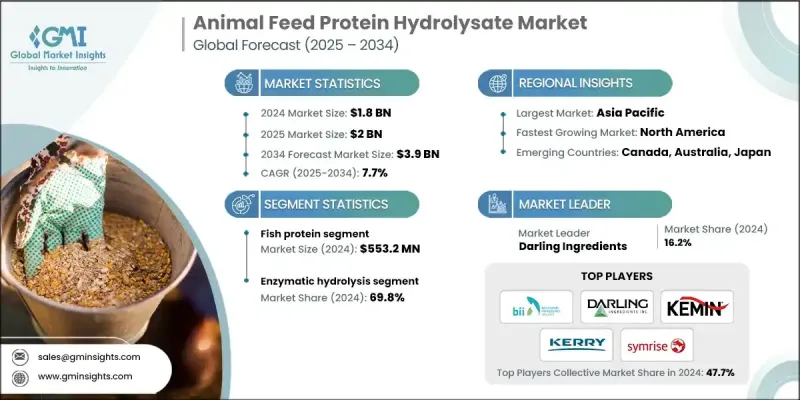
The market expansion is influenced by the increasing need for high-quality protein supplements in livestock, aquaculture, and poultry feed to boost growth performance, immunity, and overall health. Animal feed protein hydrolysates are derived from the enzymatic or chemical breakdown of animal proteins and are known for their superior digestibility and bioactivity. As the livestock and aquaculture industries continue to focus on performance enhancement and disease resistance, feed manufacturers are increasingly turning to these hydrolysates as functional additives. This transition toward more nutrient-dense and health-focused animal nutrition is shaping the future of feed formulation. The adoption of advanced enzymatic hydrolysis technologies has further strengthened the market by improving production efficiency, ensuring consistency in peptide structure, and reducing manufacturing costs. These innovations have made it possible to produce hydrolysates with specific functional benefits, promoting better animal health and growth. The continuous drive toward sustainable, nutrient-rich, and performance-boosting feed ingredients will keep fueling demand for animal feed protein hydrolysates globally.
| Market Scope | |
|---|---|
| Start Year | 2024 |
| Forecast Year | 2025-2034 |
| Start Value | $1.8 Billion |
| Forecast Value | $3.9 Billion |
| CAGR | 7.7% |
Fish protein generated USD 553.2 million in 2024. Its strong nutritional value, high amino acid profile, and abundance of bioactive compounds make it an ideal ingredient for supporting optimal growth and health in animals. The seafood industry's extensive supply of fish by-products offers a sustainable and cost-effective raw material source for manufacturers. In addition, fish-derived nutrients exhibit excellent digestibility and palatability, making them a preferred choice among feed producers seeking efficient and eco-friendly solutions.
The enzymatic hydrolysis segment accounted for a 69.8% share in 2024, maintaining its position as the most efficient and environmentally sustainable production method. This process allows for precise control of hydrolysis, enabling the development of peptides with specific bioactive properties while preserving nutritional quality. The mild operational conditions of enzymatic hydrolysis ensure high product stability and uniformity. Moreover, it is a greener alternative compared to chemical processes, aligning with the industry's growing focus on sustainable and high-performance animal nutrition ingredients.
North America Animal Feed Protein Hydrolysate Market is projected to grow at a CAGR of 7.8% between 2025 and 2034. The region's market growth is driven by the increasing focus on animal wellness, gut health, and immunity. With a rising preference for sustainable and natural ingredients in animal feed, U.S. feed producers are actively adopting hydrolysate-based formulations. Advancements in enzymatic processes have enhanced digestibility and stability, allowing manufacturers to create high-quality, environmentally friendly products. This aligns with North America's ongoing trend toward organic and eco-conscious feed production.
Prominent players in the Global Animal Feed Protein Hydrolysate Market include Symrise AG, Kerry Group, BioMarine Ingredients Ireland, Kemin Industries, SAMPI, Darling Ingredients, Titan Biotech, Copalis, Janatha Fish Meal, Empro Europe, and Proliver. Key companies in the Animal Feed Protein Hydrolysate Market are focusing on multiple strategies to reinforce their global market position. Many are investing in advanced hydrolysis technologies to improve yield, peptide functionality, and nutritional efficacy. Strategic collaborations and mergers are being pursued to expand product portfolios and regional presence. Firms are also emphasizing sustainable sourcing and circular economy practices to utilize fish and meat by-products efficiently.