


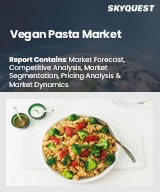
세계의 비건 파스타 시장 규모는 2024년에 2억 420만 달러로 평가되며, 2025년 2억 2,626만 달러에서 2033년까지 5억 1,395만 달러로 성장할 전망입니다. 예측 기간(2026-2033년)의 CAGR은 10.8%로 예측됩니다.
세계 비건 파스타 시장은 사회적, 건강, 환경적 요인에 힘입어 괄목할 만한 성장세를 보이고 있습니다. 특히 건강에 대한 관심이 높아지면서 소비자들은 저알레르기, 무콜레스테롤, 영양가 높은 대체 식품을 찾는 경향이 강해지고 있습니다. 동물성 단백질이 많은 식단과 음식 알레르기가 건강에 미치는 영향에 대한 인식이 높아지면서 비건 파스타와 같은 식물성 탄수화물에 대한 선호도가 변화하고 있습니다. 또한 윤리적, 환경적 관심도 매우 중요하며, 소비자들은 자신의 탄소발자국을 줄이고 동물 복지 문제에 대응하고자 합니다. 개인과 기관을 막론하고 비건과 플렉시테리언 식단에 대한 미디어의 관심이 높아지면서 식물성 식생활이 널리 보급되고 있습니다. 콩을 기반으로 한 대안과 고대 곡물 등 파스타 대체품의 혁신은 비건 파스타의 매력을 높이고 있으며, 건강 지향적인 소비자들에게 비건 파스타의 접근성과 인지도를 높이는 유통 경로의 확장을 촉진하고 있습니다.
세계 비건 파스타 시장 성장 촉진요인
세계 비건 파스타 시장의 주요 시장 성장 촉진요인 중 하나는 건강과 지속가능성에 대한 소비자의 인식이 높아지고 있다는 점입니다. 다양한 건강상 이점과 환경 부하 감소를 이유로 식물성 식단을 채택하는 사람들이 늘어나면서 비건 파스타에 대한 수요가 급증하고 있습니다. 이러한 추세는 유당 불내증 증가와 식습관 전반의 포용성으로의 전환, 다양한 식생활에 필요한 대체 식품을 찾는 소비자 동향에 의해 더욱 가속화되고 있습니다. 또한 제조 방법의 혁신으로 비건 파스타의 식감과 맛이 개선되면서 더 많은 소비자들이 비건 파스타를 찾게 되었고, 이는 시장 성장에 더욱 박차를 가하고 있습니다.
세계 비건 파스타 시장 성장 억제요인
세계 비건 파스타 시장의 주요 시장 성장 억제요인 중 하나는 기존 파스타 소비자들의 식물성 제품에 대한 인식과 수용도입니다. 많은 사람들이 밀로 만든 기존 파스타에 익숙해져 있으며, 맛, 식감, 영양가에 대한 우려로 비건 대체품으로 전환하는 것을 망설일 수 있습니다. 또한 시중에서 판매되는 비건 파스타의 품질이 다양하므로 소비자 경험에 일관성이 없어 주류로 수용되는 것을 더욱 방해하는 요인으로 작용합니다. 식물성 식단을 받아들이는 것에 대한 이러한 거부감과 특정 지역에서 비건 옵션에 대한 인식과 가용성의 잠재적 부족이 결합되어 시장 성장과 확장에 큰 도전이 되고 있습니다.
세계 비건 파스타 시장 동향
건강을 중시하는 소비자들이 기능성과 고단백질에 대한 관심이 높아지면서 전 세계 비건 파스타 시장은 변화의 시기를 맞이하고 있습니다. 병아리콩, 렌즈콩, 퀴노아, 아마란스 등 두류와 고대 곡물이 풍부하게 함유된 제품은 우수한 영양학적 특성으로 인해 수요가 증가하고 있습니다. 또한 무글루텐 제품 증가는 식이 제한이 있거나 소화가 잘 되는 대용품을 선호하는 사람들의 요구에 부응하고 있습니다. 각 브랜드는 활동적인 라이프스타일과 체중 관리 목표에 부합하는 제품 개발에 집중하고, 맛과 식감의 균형을 추구하는 방식에 대응하고 있습니다. 이러한 추세는 웰빙에 대한 광범위한 노력을 반영하고 있으며, 이 부문의 성장을 가속하고 소비자의 기대를 재정의하고 있습니다.
Global Vegan Pasta Market size was valued at USD 204.2 Million in 2024 and is poised to grow from USD 226.26 Million in 2025 to USD 513.95 Million by 2033, growing at a CAGR of 10.8% during the forecast period (2026-2033).
The global vegan pasta market is experiencing significant growth fueled by social, health, and environmental factors. Health considerations stand out as consumers increasingly seek low-allergen, cholesterol-free, and nutritious food alternatives. Rising awareness of the health implications linked to high animal protein diets and food allergies has shifted dietary preferences toward plant-based carbohydrates like vegan pasta. Additionally, ethical and environmental concerns are paramount, as consumers aim to reduce their carbon footprints and address animal welfare issues. Both individuals and institutions are increasingly adopting plant-based eating, supported by a robust media focus on vegan and flexitarian diets. Innovation in pasta alternatives, including legume-based options and ancient grains, has enhanced the appeal of vegan pasta, backed by expanding distribution channels that improve accessibility and visibility for health-conscious consumers.
Top-down and bottom-up approaches were used to estimate and validate the size of the Global Vegan Pasta market and to estimate the size of various other dependent submarkets. The research methodology used to estimate the market size includes the following details: The key players in the market were identified through secondary research, and their market shares in the respective regions were determined through primary and secondary research. This entire procedure includes the study of the annual and financial reports of the top market players and extensive interviews for key insights from industry leaders such as CEOs, VPs, directors, and marketing executives. All percentage shares split, and breakdowns were determined using secondary sources and verified through Primary sources. All possible parameters that affect the markets covered in this research study have been accounted for, viewed in extensive detail, verified through primary research, and analyzed to get the final quantitative and qualitative data.
Global Vegan Pasta Market Segments Analysis
Global Vegan Pasta Market is segmented by Category, Nature, Source, Product, Packaging, Sales Channel and region. Based on Category, the market is segmented into Fresh and Dried. Based on Nature, the market is segmented into Organic and Conventional. Based on Source, the market is segmented into Wheat, Rice, Legumes, Buckwheat, Oats and Other Sources. Based on Product, the market is segmented into Penne, Spaghetti, Elbows, Fettuccine & Linguine, Filled Pasta and Other Products. Based on Packaging, the market is segmented into Boxes, Trays and Packets & Pouches. Based on Sales Channel, the market is segmented into Offline Sales Channel and Online Sales Channel. Based on region, the market is segmented into North America, Europe, Asia Pacific, Latin America and Middle East & Africa.
Driver of the Global Vegan Pasta Market
One of the key market drivers for the global vegan pasta market is the rising consumer awareness regarding health and sustainability. As more individuals adopt plant-based diets for their numerous health benefits and lower environmental impact, the demand for vegan pasta options has surged. This trend is further compounded by increasing incidences of lactose intolerance and an overall shift towards inclusivity in dietary preferences, with consumers seeking alternatives that cater to diverse dietary needs. Furthermore, innovation in production methods, leading to improved texture and taste of vegan pasta, has attracted a broader audience, further bolstering market growth.
Restraints in the Global Vegan Pasta Market
One key market restraint for the global vegan pasta market is the perception and acceptance of plant-based products among traditional pasta consumers. Many individuals are accustomed to traditional pasta made from wheat and may be hesitant to switch to vegan alternatives due to concerns about taste, texture, and nutritional value. Additionally, the varying quality of vegan pasta available in the market can lead to inconsistent consumer experiences, further discouraging mainstream acceptance. This reluctance to embrace plant-based diets, combined with a potential lack of awareness or availability of vegan options in certain regions, poses significant challenges for market growth and expansion.
Market Trends of the Global Vegan Pasta Market
The Global Vegan Pasta market is experiencing a transformative shift as health-conscious consumers increasingly seek functional and high-protein options. Varieties enriched with legumes and ancient grains like chickpeas, lentils, quinoa, and amaranth are in demand due to their superior nutritional profiles. Additionally, the rise of gluten-free formulations caters to those with dietary restrictions and preferences for easily digestible alternatives. Brands are responding by innovating their offerings to align with active lifestyles and weight management goals, focusing on balancing taste and texture. This trend reflects a broader commitment to wellness, driving growth in the sector and redefining consumer expectations.