


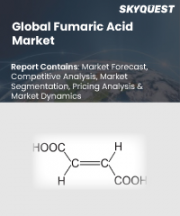
푸마르산 시장 규모는 2024년에 7억 9,000만 달러로 평가되었고, 2025년 8억 3,000만 달러에서 2033년까지 12억 8,000만 달러로 성장할 전망이며, 예측 기간(2026-2033년) CAGR은 5.5%를 보일 것으로 예측됩니다.
푸마르산은 사과, 포도 등 과일 및 채소에 함유된 천연 유래의 디카르복실산으로 식음료 분야에서 산미료, 향미증진제, pH 조절제로서 중요한 역할을 하고 있습니다. 그 용도는 식품 분야를 넘어 수지, 알키드 도료, 불포화 폴리에스테르 수지 제조 등 공업용으로도 확대되고 있습니다. 이 백색 결정성 분말은 물과 알코올 모두에 높은 용해도를 나타냅니다. 또한 푸마르산은 건선, 여드름, 색소침착 등의 증상에 대한 의료 치료에도 사용되어 건강상의 이점을 제공합니다. 섭취의 안전성을 인정받아 주요 규제 기관으로부터 승인을 받았으며, 이들 기관이 정한 일일 허용 섭취량으로 다양한 산업 분야에서 신뢰성과 범용성을 확인했습니다.
푸마르산 시장 성장 요인
푸마르산 시장의 성장을 크게 촉진하는 요인 중 하나는 가공 식품 및 음료에 대한 수요 증가입니다. 이 화합물은 탄산음료, 과즙음료, 제과 등 다양한 제품에서 산미료 및 향미증진제로 널리 사용되고 있습니다. 인구 증가, 식습관 변화, 도시화 진전 등의 요인이 전 세계 가공식품 및 음료 소비 확대에 기여하고 있습니다. 또한, 클린 라벨 제품에 대한 수요 증가와 자연식품 및 유기농 식품에 대한 수요 증가로 인해 푸마르산 시장은 가까운 미래에 더욱 확대될 것으로 예측됩니다.
푸마르산 시장 성장 억제요인
푸마르산 시장이 직면한 가장 큰 도전은 비슷한 기능성을 더 낮은 비용으로 제공하는 다양한 대체품의 존재입니다. 푸마르산은 식음료, 의약품, 산업용 등 다양한 분야에서 활용되고 있지만, 구연산, 사과산, 타르타르산, 숙신산 등의 대체품이 동등한 효과를 발휘하는 경우가 많습니다. 또한, 이러한 대안 중 일부는 더 안전하고 부작용이 적은 것으로 인식되어 소비자와 제조업체 모두에게 더 매력적인 선택이 되고 있습니다. 결과적으로 이러한 대체품의 보급은 향후 푸마르산 시장의 성장 전망을 저해할 수 있습니다.
푸마르산 시장 동향
푸마르산 시장에서는 식음료 분야 수요 증가에 힘입어 눈에 띄는 추세가 확인되고 있습니다. 이 분야에서 푸마르산은 베이커리 제품, 과즙 음료, 스포츠 음료 등 다양한 제품에서 중요한 산미료 및 향미증진제로 작용하고 있습니다. 이러한 수요 급증은 주로 소비자의 가공식품 선호도와 무알콜 음료에 대한 선호도 증가에 기인합니다. 또한, 식품 보존 및 유통기한 연장 등 푸마르산의 장점이 널리 알려지면서 의약품 및 퍼스널케어 제품을 포함한 다양한 분야에서 푸마르산의 채택이 촉진되어 시장의 잠재력과 용도의 다양성이 확대되고 있습니다.
Fumaric Acid Market size was valued at USD 0.79 Billion in 2024 and is poised to grow from USD 0.83 Billion in 2025 to USD 1.28 Billion by 2033, growing at a CAGR of 5.5% during the forecast period (2026-2033).
Fumaric acid, a naturally occurring dicarboxylic organic acid found in fruits and vegetables like apples and grapes, plays a vital role in the food and beverage sector as an acidulant, flavor enhancer, and pH regulator. Its applications extend beyond food, encompassing industrial uses such as the production of resins, alkyd paints, and unsaturated polyester resins. This white crystalline powder is highly soluble in both water and alcohol. Additionally, fumaric acid offers health benefits, being used in medical treatments for conditions like psoriasis, acne, and hyperpigmentation. Recognized as safe for consumption, it has received approval from major regulatory agencies, which have established acceptable daily intake levels, confirming its reliability and versatility across various industries.
Top-down and bottom-up approaches were used to estimate and validate the size of the Fumaric Acid market and to estimate the size of various other dependent submarkets. The research methodology used to estimate the market size includes the following details: The key players in the market were identified through secondary research, and their market shares in the respective regions were determined through primary and secondary research. This entire procedure includes the study of the annual and financial reports of the top market players and extensive interviews for key insights from industry leaders such as CEOs, VPs, directors, and marketing executives. All percentage shares split, and breakdowns were determined using secondary sources and verified through Primary sources. All possible parameters that affect the markets covered in this research study have been accounted for, viewed in extensive detail, verified through primary research, and analyzed to get the final quantitative and qualitative data.
Fumaric Acid Market Segments Analysis
Global Fumaric Acid Market is segmented by Type, Application, End Use, Extraction type and region. Based on Type, the market is segmented into Food Grade and Technical Grade. Based on Application, the market is segmented into Food Additives, Rosin-Sized Sheathing Paper, Unsaturated Polyester Resins, Alkyd Resins and Others. Based on End Use, the market is segmented into Food and Beverages Industry, Cosmetics Industry, Pharmaceutical Industry and Chemical Industry. Based on Extraction type, the market is segmented into Fumaria Officinalis, Maleic Anhydride and Fermentation. Based on region, the market is segmented into North America, Europe, Asia Pacific, Latin America and Middle East & Africa.
Driver of the Fumaric Acid Market
A significant catalyst for the growth of the fumaric acid market is the rising demand for processed foods and beverages. This compound is commonly utilized as an acidulant and flavor enhancer in a range of products, including carbonated drinks, fruit juices, and baked goods. Factors such as population growth, evolving dietary preferences, and increasing urbanization are contributing to the heightened consumption of processed food and beverages worldwide. Additionally, the trend towards clean label products, along with the escalating demand for natural and organic food options, is likely to further bolster the expansion of the fumaric acid market in the foreseeable future.
Restraints in the Fumaric Acid Market
A significant challenge facing the fumaric acid market is the presence of various substitutes that offer similar functionalities, often at a lower cost. Fumaric acid finds utility across multiple sectors, including food and beverages, pharmaceuticals, and industrial applications. However, alternatives such as citric acid, malic acid, tartaric acid, and succinic acid frequently provide comparable benefits. Additionally, some of these substitutes are perceived as safer and associated with fewer side effects, making them more appealing to consumers and manufacturers alike. Consequently, the proliferation of these alternatives may hinder the growth prospects of the fumaric acid market moving forward.
Market Trends of the Fumaric Acid Market
The fumaric acid market is witnessing a pronounced trend driven by the escalating demand from the food and beverage sector, where it functions as a vital acidulant and flavor enhancer across a diverse range of products, including baked goods, fruit juices, and sports drinks. This surge is largely attributed to consumer preferences for convenience foods and a rising inclination towards non-alcoholic beverages. Moreover, the growing recognition of fumaric acid's benefits, such as its role in food preservation and extending shelf life, is catalyzing its adoption in various other sectors, including pharmaceuticals and personal care, thereby broadening its market potential and application versatility.