조류 단백질 가수분해물 시장 : 시장 기회, 성장 요인, 업계 동향 분석 및 예측(2025-2034년)
Algae Protein Hydrolysates Market Opportunity, Growth Drivers, Industry Trend Analysis, and Forecast 2025 - 2034
상품코드:1885837
리서치사:Global Market Insights Inc.
발행일:2025년 11월
페이지 정보:영문 210 Pages
라이선스 & 가격 (부가세 별도)
ㅁ Add-on 가능: 고객의 요청에 따라 일정한 범위 내에서 Customization이 가능합니다. 자세한 사항은 문의해 주시기 바랍니다.
한글목차
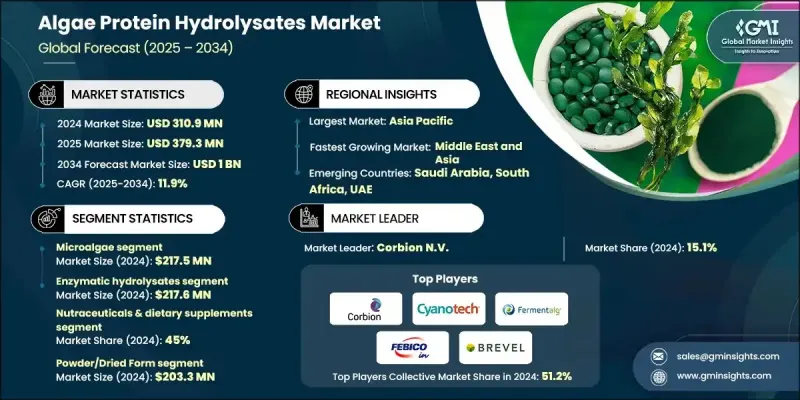
세계의 조류 단백질 가수분해물 시장은 2024년에 3억 1,090만 달러로 평가되었고, 2034년까지 연평균 복합 성장률(CAGR) 11.9%로 성장할 전망이며, 10억 달러에 이를 것으로 예측되고 있습니다.
영양가가 높고 지속가능한 방식으로 조달된 단백질 원료에 대한 관심 증가가 바이오프로세싱 기술의 혁신에 의한 제품 개발과 상업화의 가속과 맞물려 업계 동향을 바꾸고 있습니다. 조류 유래의 가수분해물은 소화성 향상, 용해성 개선, 뛰어난 아미노산 프로파일을 제공하기 위해 높게 평가되고 있습니다. 효소 처리 기술 발전, 반응 조건 최적화, 현대 여과 기술은 조류 유래 펩타이드의 순도, 수율 및 성능을 크게 향상시켰습니다. 첨단 배양 시스템, 생물 반응기 및 친환경 추출 방법의 통합은 깨끗한 라벨과 환경 친화적인 단백질 생산으로의 전환을 지원합니다. 업스트림 공정 및 다운스트림 공정에서의 효율성 향상은 조류 유래 원료의 확장성을 강화하는 동시에, 환경 부하 전체의 저감을 실현합니다. 재생가능한 자원으로서 조류의 매력이 높아짐에 따라 최소한의 담수로 기존의 농지를 사용하지 않고 성장할 수 있는 특성과 더불어 식품, 영양보조식품, 미용, 사료 용도에서의 채용을 더욱 가속화하고 있습니다. 조류의 탄소 고정에서 역할에 대한 인식 증가는 소비자 및 산업 부문 전반에 걸쳐 광범위한 수용과 관심에 기여합니다.
시장 범위
시작 연도
2024년
예측 연도
2025-2034년
시작 시 가치
3억 1,090만 달러
예측 금액
10억 달러
CAGR
11.9%
미세 조류 부문은 우수한 영양 밀도와 가공의 다양성으로 인해 2024년 2억 1,750만 달러를 차지했습니다. 미세 조류는 풍부한 단백질 함량과 높은 가치의 생물학적 활성 화합물로 보충제, 기능성 식품 및 퍼스널케어 제품에 대한 용도에서 계속 선호되고 있습니다. 연간 재배 가능성과 적은 자원 요건은 지속 가능하고 효율적인 단백질 대체물에 대한 세계 수요 증가를 지원합니다.
효소 가수분해물 부문은 2024년에 2억 1,760만 달러를 기록했으며, 시장에서 주요한 가공 방법으로서의 지위를 유지하고 있습니다. 효소 변환은 식품, 영양 보조 식품, 화장품 용도에 있어서 매우 중요한, 뛰어난 생물활성, 소화성, 용해성을 갖춘 고품질의 가수분해물을 제공하는 것으로 알려져 있습니다. 이 공정은 화학 폐기물을 최소화하고 환경 친화적인 제조에 대한 증가 기대에 부합하기 때문에 깨끗하고 기능적인 원료 생산에 가장 적합한 기술로 선택되었습니다.
미국의 조류 단백질 가수분해물 시장은 2024년 6,200만 달러로 평가되었습니다. 북미는 특히 건강 지향 제품 카테고리에서 식물 유래 및 대체 단백질에 대한 소비자의 강한 관심으로 계속 발전하고 있습니다. 이 지역은 확립된 규제 프레임워크 및 성숙한 소비자 기반의 혜택을 받아 조류 유래의 영양 및 기능성 원료의 성장을 지지하고 있습니다. 캐나다와 멕시코는 연구 프로그램의 확대와 사료 용도 분야에서의 혁신을 통해 더욱 기여하고 있으며, 전체 지역 시장 기반을 강화하고 있습니다.
목차
제1장 조사 방법 및 범위
제2장 주요 요약
제3장 업계 인사이트
생태계 분석
공급자의 상황
이익률
각 단계에서의 부가가치
밸류체인에 영향을 주는 요인
혁신
업계에 미치는 영향요인
성장 촉진요인
지속 가능한 단백질에 대한 수요 증가
영양면 및 기능면에서의 이점
생산에 있어서 기술적 진보
업계의 잠재적 위험 및 과제
높은 생산 및 가공 비용
확장성 및 공급망 상의 과제
시장 기회
기능성 식음료의 성장
화장품 및 퍼스널케어 분야에서의 확대
농업용 및 수산 사료 용도
성장 가능성 분석
규제 상황
북미
유럽
아시아태평양
라틴아메리카
중동 및 아프리카
Porter's Five Forces 분석
PESTEL 분석
기술 및 혁신 동향
현재의 기술 동향
신흥 기술
가격 동향
지역별
소스별
장래 시장 동향
기술 및 혁신 동향
현재의 기술 동향
신흥 기술
특허 상황
무역 통계(HS코드)(참고 : 무역 통계는 주요 국가에서만 제공됨)
주요 수입국
주요 수출국
지속가능성 및 환경면
지속가능한 대처
폐기물 감축 전략
생산에 있어서의 에너지 효율
환경에 배려한 대처
탄소발자국 고려
제4장 경쟁 구도
서문
기업의 시장 점유율 분석
지역별
북미
유럽
아시아태평양
라틴아메리카
중동 및 아프리카
기업 매트릭스 분석
주요 시장 기업의 경쟁 분석
경쟁 포지셔닝 매트릭스
주요 발전
합병 및 인수
제휴 및 협업
신제품 발매
확대 계획
제5장 시장 추계 및 예측 : 소스별(2021-2034년)
주요 동향
미세조류 유래 가수분해물
스피루리나(Arthrospira platensis) 가수분해물
클로렐라 불가리스 가수분해물
나노클로롭시스 가수분해물
헤마토코커스 풀비아리스 가수분해물
기타 미세 조류종
대형 조류 유래 가수분해물
갈조 유래 가수분해물
홍조 유래 가수분해물
녹조류 유래 가수분해물
혼합 조류 가수분해물
미세 조류 및 대형 조류의 조합
다종 혼합
제6장 시장 추계 및 예측 : 가수분해법별(2021-2034년)
주요 동향
효소 가수분해물
알칼레제를 이용한 가수분해
펩신에 의한 가수분해
트립신에 의한 가수분해
뉴트라아제 및 기타 프로테아제
다효소 시스템
화학 가수분해물
산 가수분해
알칼리 가수분해
복합화학 공정
열적 및 물리적 가수분해물
고온 가수분해
가압수해
초음파 보조 가수분해
마이크로파 가수분해
신흥 가수분해 기술
펄스전장(PEF) 처리
초임계 유체 추출
심공정 용매계
제7장 시장 추계 및 예측 : 용도별(2021-2034년)
주요 동향
뉴트라슈티컬 및 영양보조식품
캡슐 및 정제
분말 제형
액체 보충제
전문 건강 제품
식음료 용도
기능성 식품 및 강화 제품
단백질 보충제 및 스포츠 영양
음료 및 액체 제제
제빵 및 과자류 용도
유제품 대체품 및 식물 유래 제품
사료 및 수산 양식
수산 양식용 사료 첨가물
가축 사료 보충제
반려동물 식품 용도
가금 및 돼지의 영양 관리
화장품 및 퍼스널케어
안티 에이징 처방
피부 컨디셔닝 제품
헤어 케어 용도
기능성 화장품
제8장 시장 추계 및 예측 제품 형태별(2021-2034년)
분말 및 건조 가수분해물
분무 건조 분말
동결 건조 제품
드럼 건조 제제
액체 가수분해물
수용액
농축 제형
안정화 액체 시스템
캡슐화 및 안정화 형태
마이크로 캡슐화 제품
정제 및 압축 형태
코팅 및 보호 시스템
제9장 시장 추계 및 예측 : 지역별(2021-2034년)
주요 동향
북미
미국
캐나다
멕시코
유럽
독일
영국
프랑스
스페인
이탈리아
기타 유럽
아시아태평양
중국
인도
일본
호주
한국
기타 아시아태평양
라틴아메리카
브라질
멕시코
아르헨티나
기타 라틴아메리카
중동 및 아프리카
사우디아라비아
남아프리카
아랍에미리트(UAE)
기타 중동 및 아프리카
제10장 기업 프로파일
A4F AlgaFuel SA
Algaia Ltd.
Algalif Iceland ehf.
Algama Foods
Algosource Technologies SAS
Brevel Ltd.
Corbion NV
Cyanotech Corporation
FEBICO(Far East Bio-Tec Co., Ltd.)
Fermentalg SA
Fitoplancton Marino SL
Microphyt SAS
Necton SA
Ocean Rainforest Sp/F
Solar Foods Oy
AJY
영문 목차
영문목차
The Global Algae Protein Hydrolysates Market was valued at USD 310.9 million in 2024 and is estimated to grow at a CAGR of 11.9% to reach USD 1 billion by 2034.
Growing interest in nutrient-rich, sustainably sourced protein ingredients is reshaping industry dynamics as innovations in bioprocessing accelerate product development and commercialization. Algae-derived hydrolysates are becoming highly valued because they offer enhanced digestibility, improved solubility, and a strong amino acid profile. Advances in enzymatic processing, optimized reaction parameters, and modern filtration technologies have significantly improved the purity, yield, and performance of algae-based peptides. The integration of advanced cultivation systems, bioreactors, and eco-friendly extraction methods supports the shift toward clean-label and environmentally responsible protein production. Enhanced efficiency in upstream and downstream processes strengthens the scalability of algae-based ingredients while reducing overall environmental load. The rising appeal of algae as a renewable resource, combined with its ability to grow using minimal freshwater and without using traditional farming land, is further accelerating adoption across food, nutrition, beauty, and feed applications. Growing recognition of algae's role in carbon capture also contributes to broader acceptance and interest across consumer and industrial segments.
Market Scope
Start Year
2024
Forecast Year
2025-2034
Start Value
$310.9 Million
Forecast Value
$1 Billion
CAGR
11.9%
The microalgae segment accounted for USD 217.5 million in 2024, owing to superior nutrient density and processing versatility. Microalgae continue to be preferred for applications in supplements, functional foods, and personal care because of their substantial protein levels and high-value bioactive compounds. Their year-round cultivation potential and low resource requirements support increasing global demand for sustainable, efficient protein alternatives.
The enzymatic hydrolysates segment recorded USD 217.6 million in 2024 and remains the leading processing method in the market. Enzymatic conversion is recognized for delivering high-quality hydrolysates with excellent bioactivity, digestibility, and solubility, which are crucial for food, nutraceutical, and cosmetic applications. The process minimizes chemical waste and aligns with growing expectations for eco-conscious manufacturing, making it a preferred technology for producing clean and functional ingredients.
US Algae Protein Hydrolysates Market was valued at USD 62 million in 2024. North America continues to advance due to strong consumer interest in plant-derived and alternative proteins, especially within wellness-focused product categories. The region benefits from well-established regulatory frameworks and a mature consumer base that supports the growth of algae-derived nutritional and functional ingredients. Canada and Mexico further contribute through expanding research programs and innovation in feed applications, strengthening the region's overall market footprint.
Prominent businesses active in the Algae Protein Hydrolysates Market include Algama Foods, Corbion N.V., A4F AlgaFuel S.A., Fermentalg S.A., Brevel Ltd., Necton S.A., Algalif Iceland ehf., Microphyt SAS, Fitoplancton Marino S.L., Solar Foods Oy, Algosource Technologies SAS, Ocean Rainforest Sp/F, FEBICO, Cyanotech Corporation, and Algaia Ltd. Leading companies in the Algae Protein Hydrolysates Market enhance their competitiveness by expanding production capacity, improving cultivation efficiency, and investing heavily in advanced bioprocessing technologies. Many adopt sustainable extraction methods and develop optimized enzyme systems to create hydrolysates with superior nutritional and functional properties. Strategic alliances, joint ventures, and long-term supply agreements help broaden market access and secure consistent raw material availability. Firms also prioritize regulatory compliance, quality certification, and transparent sourcing to align with the growing demand for clean-label ingredients. Product diversification targeted at food, nutraceutical, cosmetic, and feed sectors strengthens revenue streams.
Table of Contents
Chapter 1 Methodology & Scope
1.1 Market scope and definition
1.2 Research design
1.2.1 Research approach
1.2.2 Data collection methods
1.3 Data mining sources
1.3.1 Global
1.3.2 Regional/Country
1.4 Base estimates and calculations
1.4.1 Base year calculation
1.4.2 Key trends for market estimation
1.5 Primary research and validation
1.5.1 Primary sources
1.6 Forecast model
1.7 Research assumptions and limitations
Chapter 2 Executive Summary
2.1 Industry 360° synopsis
2.2 Key market trends
2.2.1 Source
2.2.2 Hydrolysis method
2.2.3 Application
2.2.4 Product form
2.2.5 Regional
2.3 TAM Analysis, 2025-2034
2.4 CXO perspectives: Strategic imperatives
2.4.1 Executive decision points
2.4.2 Critical success factors
2.5 Future outlook and strategic recommendations
Chapter 3 Industry Insights
3.1 Industry ecosystem analysis
3.1.1 Supplier landscape
3.1.2 Profit margin
3.1.3 Value addition at each stage
3.1.4 Factor affecting the value chain
3.1.5 Disruptions
3.2 Industry impact forces
3.2.1 Growth drivers
3.2.1.1 Rising demand for sustainable proteins
3.2.1.2 Nutritional and functional advantages
3.2.1.3 Technological advancements in production
3.2.2 Industry pitfalls and challenges
3.2.2.1 High production and processing costs
3.2.2.2 Scalability and supply chain issues
3.2.3 Market opportunities
3.2.3.1 Growth in functional foods and beverages
3.2.3.2 Expansion in cosmetics and personal care
3.2.3.3 Agricultural and aquafeed applications
3.3 Growth potential analysis
3.4 Regulatory landscape
3.4.1 North America
3.4.2 Europe
3.4.3 Asia Pacific
3.4.4 Latin America
3.4.5 Middle East & Africa
3.5 Porter's analysis
3.6 PESTEL analysis
3.7 Technology and innovation landscape
3.7.1 Current technological trends
3.7.2 Emerging technologies
3.8 Price trends
3.8.1 By region
3.8.2 By source
3.9 Future market trends
3.10 Technology and innovation landscape
3.10.1 Current technological trends
3.10.2 Emerging technologies
3.11 Patent landscape
3.12 Trade statistics (HS code)( Note: the trade statistics will be provided for key countries only)
3.12.1 Major importing countries
3.12.2 Major exporting countries
3.13 Sustainability and environmental aspects
3.13.1 Sustainable practices
3.13.2 Waste reduction strategies
3.13.3 Energy efficiency in production
3.13.4 Eco-friendly initiatives
3.14 Carbon footprint consideration
Chapter 4 Competitive Landscape, 2024
4.1 Introduction
4.2 Company market share analysis
4.2.1 By region
4.2.1.1 North America
4.2.1.2 Europe
4.2.1.3 Asia Pacific
4.2.1.4 LATAM
4.2.1.5 MEA
4.3 Company matrix analysis
4.4 Competitive analysis of major market players
4.5 Competitive positioning matrix
4.6 Key developments
4.6.1 Mergers & acquisitions
4.6.2 Partnerships & collaborations
4.6.3 New product launches
4.6.4 Expansion plans
Chapter 5 Market Estimates and Forecast, By Source, 2021-2034 (USD Million) (Kilo Tons)