


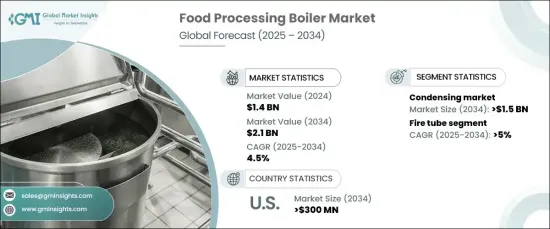
세계의 식품 가공 보일러 시장은 2024년에 14억 달러로 평가되었고 2025년부터 2034년까지 연평균 복합 성장률(CAGR) 4.5%로 확대될 것으로 예측됩니다.
이 성장은 특히 급속한 산업화가 진행되는 신흥 시장에서 에너지 효율적인 가열 시스템에 대한 수요가 높아지고 있는 것이 큰 요인이 되고 있습니다. 산업 인프라의 발전과 함께 에너지 절약에 대한 지속적인 중점화와 효율적인 증기 발생 기술의 광범위한 채택이 시장 성장을 더욱 가속화할 것으로 예상됩니다.
식품 가공 보일러는 요리, 저온 살균, 멸균, 세척 등 다양한 공정에 증기 및 온수를 공급하는 식품 제조업에 필수적입니다. 이 보일러는 엄격한 위생 및 안전 기준을 충족하도록 설계되었으며 식품의 품질과 안전을 보장합니다. 업계가 지속가능하고 저배출 가스 솔루션으로 전환함에 따라 기존의 가열 시스템에서 첨단 보일러로의 전환이 시장 동향에 큰 영향을 미칠 것으로 예상됩니다.
| 시장 범위 | |
|---|---|
| 시작 연도 | 2024년 |
| 예측 연도 | 2025-2034년 |
| 시작 금액 | 14억 달러 |
| 예측 금액 | 21억 달러 |
| CAGR | 4.5% |
콘덴싱 식품 가공 보일러 분야는 2034년까지 15억 달러를 창출할 것으로 예상됩니다. 에너지 효율적인 가열 기술을 촉진하는 정부의 우대 조치와 정책은이 부문의 성장의 주요 촉진요인입니다. 기술의 진보는 콘덴싱 보일러의 신뢰성, 성능, 유지 보수의 용이성을 높이고 다양한 식품 가공 용도에 선호되는 선택입니다. 또한 패키징된 가공식품에 대한 수요 증가와 식품안전·환경규제의 엄격화에 의해 이러한 선진보일러의 채용이 계속 추진될 것으로 생각되고 있습니다.
화관식 식품 가공 보일러 시장은 2034년까지 5%의 성장률을 나타낼 것으로 예상됩니다. 제조업체는 식품 가공 분야의 환경 규제 강화에 대응하기 위해 저 NOx 버너 등 최첨단 연소 기술 개발에 주력하고 있습니다. 이러한 가스 연소 시스템은 범용성이 높고 다양한 생산 수요에 대응할 수 있는 확장성을 갖추고 있으므로 공간에 제약이 있는 시설에 최적입니다.
미국의 식품 가공 보일러 시장은 2034년까지 3억 달러에 이를 것으로 예상됩니다. 이 성장의 원동력이 되고 있는 것은 식품 및 음료 섹터에 있어서의 에너지 효율이 높은 지속 가능한 솔루션에 대한 수요 증가입니다. 가공식품과 포장식품에 대한 소비자 수요가 계속 증가하고 있는 가운데, 조리, 살균, 포장 등의 용도에 있어서 보일러의 요구는 시장 확대를 더욱 촉진할 것으로 보입니다.
이러한 강력한 성장은 지속적인 혁신과 시장 변화와 함께 세계적인 식품 가공 보일러 산업을 재형성하여 향후 수년 동안 식품 제조 분야에서 중요한 선수가 될 것으로 예상됩니다.
The Global Food Processing Boiler Market, valued at USD 1.4 billion in 2024, is projected to expand at a CAGR of 4.5% from 2025 to 2034. This growth is largely driven by the rising demand for energy-efficient heating systems, particularly in emerging markets undergoing rapid industrialization. In addition to advances in industrial infrastructure, the ongoing emphasis on energy conservation and the widespread adoption of efficient steam generation technologies are expected to further accelerate market growth.
Food processing boilers are essential to the food manufacturing industry, providing steam or hot water for a wide range of processes such as cooking, pasteurization, sterilization, and cleaning. These boilers are engineered to meet stringent hygiene and safety standards, ensuring the quality and safety of food products. As the industry transitions toward more sustainable and low-emission solutions, the shift from traditional heating systems to advanced boilers will significantly influence market trends.
| Market Scope | |
|---|---|
| Start Year | 2024 |
| Forecast Year | 2025-2034 |
| Start Value | $1.4 Billion |
| Forecast Value | $2.1 Billion |
| CAGR | 4.5% |
The condensing food processing boiler segment is anticipated to generate USD 1.5 billion by 2034. Government incentives and policies promoting energy-efficient heating technologies are key drivers of this segment's growth. Technological advancements have boosted the reliability, performance, and ease of maintenance of condensing boilers, making them the preferred choice for a variety of food processing applications. Additionally, the increasing demand for packaged and processed foods, along with stricter food safety and environmental regulations, will continue to propel the adoption of these advanced boilers.
The fire tube food processing boiler market is projected to experience a growth rate of 5% through 2034. Manufacturers are focusing on developing cutting-edge combustion technologies, such as low-NOx burners, to comply with the tightening environmental regulations in the food processing sector. These gas-fired systems are highly versatile, offering scalability to meet varying production demands, making them ideal for facilities with space constraints.
The U.S. food processing boiler market is expected to reach USD 300 million by 2034. This growth is fueled by the increasing demand for energy-efficient and sustainable solutions within the food and beverage sector. As consumer demand for processed and packaged foods continues to rise, the need for boilers in applications such as cooking, sterilization, and packaging will further drive market expansion.
This robust growth, combined with ongoing innovations and market shifts, is set to reshape the global food processing boiler industry, making it a key player in the food manufacturing sector for years to come.