


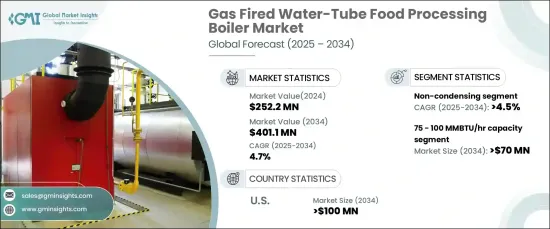
가스 연소 수관식 식품 가공 보일러 세계 시장은 2024년에 2억 5,220만 달러로 평가되며 2025-2034년간 연평균 4.7% 성장할 것으로 예상됩니다.
배출량 감소와 성능 향상을 목표로 한 보일러 기술의 발전과 함께 에너지 효율적이고 지속가능한 솔루션에 대한 수요가 증가하면서 산업 성장을 가속하고 있습니다. 주요 국가의 급속한 산업화와 에너지 인프라에 대한 투자 증가는 시장 확대에 더욱 기여하고 있습니다. 비용 효율적이고 친환경적인 솔루션을 제공하는 보일러 설계의 혁신은 예측 기간 동안 시장 성장 궤도를 강화할 것으로 예상됩니다.

가스 연소 수관식 식품 가공 보일러는 가스를 1차 연료로 사용하여 증기 또는 온수를 생산하는 산업용 시스템입니다. 에너지 효율이 높은 난방 기술의 채택과 첨단 디지털 시스템의 통합으로 수요가 증가하고 있습니다. 이러한 기술은 실시간 모니터링, 예지보전 및 운영 효율을 향상시켜 식품 가공 부문에 매력적인 솔루션이 될 수 있도록 합니다. 설계 및 기술의 끊임없는 혁신과 엄격한 환경 규제와 함께 에너지 소비와 온실가스 배출을 줄이려는 산업 전반에 걸쳐 이러한 보일러의 채택이 가속화되고 있습니다.
| 시장 범위 | |
|---|---|
| 시작 연도 | 2024년 |
| 예측 연도 | 2025-2034년 |
| 시작 금액 | 2억 5,220만 달러 |
| 예상 금액 | 4억 110만 달러 |
| CAGR | 4.7% |
75-100 MMBTU/hr의 가스 연소 수관식 보일러에 대한 수요는 2034년까지 7,000만 달러 이상에 달할 것으로 예상됩니다. 이러한 대용량 시스템은 대규모 운영을 지원하고, 에너지 사용을 최적화하고 배출을 최소화하여 지속가능성 목표를 지원할 수 있습니다. 기존 보일러 시스템 업그레이드에 대한 투자는 환경 기준의 발전과 함께 시장의 잠재력을 더욱 높일 것으로 예상됩니다. 또한, 운영자가 성능을 최적화할 수 있는 제어 시스템의 발전은 이러한 보일러의 채택을 촉진할 것으로 예상됩니다.
비응축식 가스 연소 수관식 보일러는 2034년까지 4.5% 이상의 성장률을 나타낼 것으로 예상됩니다. 이러한 보일러의 인기 증가는 운영 효율성과 정부 대기질 기준 준수에 중점을 둔 기술 발전으로 인한 것입니다. 이러한 보일러는 도시화, 식습관의 변화, 식품 안전에 대한 규제 강화 등을 배경으로 다양한 식품 가공 분야에 적용되고 있습니다.
미국 내 가스 연소 수관식 식품 가공 보일러 시장은 2034년까지 1억 달러 이상에 달할 것으로 예상됩니다. 엄격한 환경 규제와 시설 현대화를 위한 대규모 인프라 투자로 인해 시장이 활성화되고 있습니다. 효율적이고 배기가스 규제를 준수하는 시스템에 대한 수요 증가는 배기가스 저감 및 운영 최적화를 위한 기술 발전으로 인해 더욱 뒷받침되고 있습니다.
The Global Gas Fired Water-Tube Food Processing Boiler Market was valued at USD 252.2 million in 2024 and is projected to grow at a CAGR of 4.7% from 2025 to 2034. Increasing demand for energy-efficient and sustainable solutions, alongside advancements in boiler technology aimed at reducing emissions and improving performance, is driving industry growth. Rapid industrialization in key economies and growing investments in energy infrastructure further contribute to market expansion. Innovations in boiler designs that offer cost-effective and eco-friendly solutions are expected to strengthen the market's growth trajectory over the forecast period.
Gas-fired water-tube food processing boilers are industrial systems that generate steam or hot water by utilizing gas as the primary fuel source. The rising adoption of energy-efficient heating technologies combined with the integration of advanced digital systems is boosting demand. These technologies enable real-time monitoring, predictive maintenance, and enhanced operational efficiency, making these boilers an attractive solution for the food processing sector. Continuous innovation in design and technology, paired with stricter environmental regulations, is accelerating the adoption of these boilers across industries aiming to reduce energy consumption and greenhouse gas emissions.
| Market Scope | |
|---|---|
| Start Year | 2024 |
| Forecast Year | 2025-2034 |
| Start Value | $252.2 Million |
| Forecast Value | $401.1 Million |
| CAGR | 4.7% |
The demand for gas-fired water-tube boilers with a capacity of 75-100 MMBTU/hr is anticipated to exceed USD 70 million by 2034. These high-capacity systems cater to large-scale operations and support sustainability goals by optimizing energy use and minimizing emissions. Investments in upgrading existing boiler systems, combined with evolving environmental standards, are expected to further enhance market potential. Additionally, advancements in control systems that allow operators to optimize performance will drive the adoption of these boilers.
Non-condensing gas-fired water-tube boilers are set to experience a growth rate of over 4.5% through 2034. Their increasing popularity can be attributed to advancements in technology that focus on operational efficiency and compliance with government-mandated air quality standards. These boilers are being adopted across a variety of food processing applications, driven by urbanization, evolving dietary preferences, and heightened regulatory focus on food safety.
In the United States, the gas-fired water-tube food processing boiler market is projected to surpass USD 100 million by 2034. Strict environmental regulations and substantial infrastructure investments aimed at modernizing facilities are fueling the market. The growing demand for efficient, emission-compliant systems is further supported by technological advancements in emissions reduction and operational optimization.