


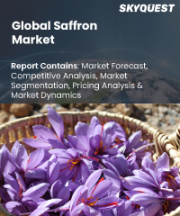
사프란 시장 규모는 2024년에 6억 88만 달러로 평가되었고, 2025년 6억 2,251만 달러에서 2033년까지 8억 2,609만 달러로 성장할 전망이며, 예측 기간(2026-2033년) CAGR은 3.6%를 보일 것으로 예측됩니다.
시장 동향에 따르면, 치료용 및 화장품 용도로 사프란에 대한 수요가 꾸준히 증가할 것으로 예측됩니다. 건강 효능으로 잘 알려진 사프란에는 항염증 작용과 항산화 작용을 하는 피크로크로신, 사프란닌, 크로신 등의 유효성분이 함유되어 있어 기억력 향상과 뇌 내 산화 스트레스 감소에 기여합니다. 또한, 천연 자외선 흡수제로서 화장품 분야에 활용되면서 그 매력을 더욱 높이고 있습니다. 전기 코와 이미지 처리를 포함한 혁신적인 가공 기술은 사프란 추출에 혁명을 가져왔으며, 기존 방식과 비교하여 상당한 시간 단축을 실현하고 있습니다. 그러나 세계 수요가 증가함에 따라 위조 행위가 증가하여 제품의 품질과 가격에 영향을 미치고 있습니다. 이러한 문제에도 불구하고, 사프란의 건강 효과에 대한 인식이 높아지면서 특히 미국 시장에서 사프란의 인기는 계속 높아지고 있습니다.
사프란 시장 성장 촉진요인
사프란은 수많은 잠재적 건강 효과로 인해 전통 의학에서 오랫동안 중요한 위치를 차지해 왔습니다. 크로신, 사포라닌, 피크로크로신 등의 화합물이 풍부하여 항산화 작용, 항염증 작용, 항우울 작용으로 높은 평가를 받고 있습니다. 이러한 약효에 대한 인식과 수요가 증가함에 따라 사프란을 함유한 건강보조식품과 허브 요법에 대한 수요는 계속 증가하고 있습니다. 건강 증진 효과에 대한 관심이 높아지면서 소비자들은 건강 유지와 전반적인 건강 증진을 위해 점점 더 자연 유래 대안을 찾는 경향이 있습니다. 사프란의 인기가 높아지면서 웰빙 산업에서 사프란의 중요성이 부각되고 있습니다.
사프란 시장 성장 억제요인
사프란 시장은 주로 이란, 스페인, 인도, 아프가니스탄 등 특정 지역에 재배가 집중되어 있는 지리적 제약으로 인해 큰 장벽에 직면해 있습니다. 이 지역들은 사프란의 성장에 필수적인 고유한 기후 조건과 토양을 가지고 있습니다. 결과적으로 이러한 제한된 지리적 분포는 공급량의 유한성을 초래하여 가격 변동과 시장 불안정의 원인이 될 수 있습니다. 사프란에 대한 수요는 여전히 높은 수준을 유지하고 있기 때문에 공급이 제한적인 상황에 따른 문제는 시장의 안정성을 저해하고 장기적으로 생산자와 소비자 모두에게 영향을 미칠 수 있습니다.
사프란 시장 동향
사프란 시장에서는 특정 건강 효과를 제공하는 기능성 식품에 사프란을 배합하여 건강 지향적인 소비자층에게 어필하는 것이 두드러진 추세입니다. 사프란이 함유된 각종 제품, 예를 들어 차, 에너지바, 건강보조식품, 영양 강화 음료 등이 이에 해당합니다. 천연 및 식물성 원료를 중시하는 제조업체들은 맛뿐만 아니라 건강 증진에도 도움이 되는 제품을 만들기 위해 혁신을 거듭하고 있습니다. 기분 개선 및 항산화 효과 등 사프란의 잠재적 건강 효과에 대한 인식이 높아지면서 수요가 더욱 증가하고 있으며, 사프란은 기능성 식품 부문에서 수요가 높은 원료로 자리매김하고 있습니다.
Saffron Market size was valued at USD 600.88 Million in 2024 and is poised to grow from USD 622.51 Million in 2025 to USD 826.09 Million by 2033, growing at a CAGR of 3.6% during the forecast period (2026-2033).
Market insights indicate a robust demand for saffron driven by its therapeutic and cosmetic applications. Renowned for its health benefits, saffron contains potent compounds like picrocrocin, safranin, and crocin, known for their anti-inflammatory and antioxidant properties, which can help improve memory and reduce oxidative stress in the brain. Its use in cosmetics as a natural UV absorber further enhances its appeal. Innovative processing technologies, including electric nose and image processing, are revolutionizing saffron extraction, significantly reducing time compared to traditional methods. However, rising global demand has led to increased adulteration, affecting product quality and price. Despite these challenges, heightened awareness of saffron's health benefits continues to boost its popularity, particularly in the U.S. market.
Top-down and bottom-up approaches were used to estimate and validate the size of the Saffron market and to estimate the size of various other dependent submarkets. The research methodology used to estimate the market size includes the following details: The key players in the market were identified through secondary research, and their market shares in the respective regions were determined through primary and secondary research. This entire procedure includes the study of the annual and financial reports of the top market players and extensive interviews for key insights from industry leaders such as CEOs, VPs, directors, and marketing executives. All percentage shares split, and breakdowns were determined using secondary sources and verified through Primary sources. All possible parameters that affect the markets covered in this research study have been accounted for, viewed in extensive detail, verified through primary research, and analyzed to get the final quantitative and qualitative data.
Saffron Market Segments Analysis
Global Saffron Market is segmented by Grade, Product Type, Form, Distribution Channel, Application and region. Based on Grade, the market is segmented into Grade I, Grade II, Grade III and Grade IV. Based on Product Type, the market is segmented into Organic and Traditional. Based on Form, the market is segmented into Liquid, Powder, Stigma, Petals and Stamen. Based on Distribution Channel, the market is segmented into B2B and B2C. Based on Application, the market is segmented into Food supplements,Cosmetics, Personal care products, Food & beverage and Others. Based on region, the market is segmented into North America, Europe, Asia Pacific, Latin America and Middle East & Africa.
Driver of the Saffron Market
Saffron has long held a prominent place in traditional medicine owing to its numerous potential health benefits. Rich in compounds such as crocin, safranin, and picrocrocin, saffron is celebrated for its antioxidant, anti-inflammatory, and antidepressant properties. As more individuals recognize and seek out these medicinal advantages, the demand for saffron-infused dietary supplements and herbal remedies continues to rise. This heightened awareness surrounding saffron's health-promoting qualities is driving the market, as consumers increasingly turn to natural alternatives to support their well-being and enhance their overall health. The growing popularity of saffron highlights its significance in the wellness industry.
Restraints in the Saffron Market
The saffron market faces significant constraints due to the geographical limitations of saffron cultivation, which is primarily concentrated in select regions such as Iran, Spain, India, and Afghanistan. These areas possess unique climatic and soil conditions that are essential for the successful growth of saffron. Consequently, this restricted geographical distribution results in a finite supply, which can cause price volatility and market fluctuations. As demand for saffron remains high, the challenges associated with its limited availability may hinder market stability and affect both producers and consumers in the long run.
Market Trends of the Saffron Market
The saffron market is witnessing a notable trend towards the incorporation of saffron into functional foods that provide targeted health benefits, appealing to a health-conscious consumer base. This includes a variety of saffron-infused products such as teas, energy bars, health supplements, and fortified beverages. With an emphasis on natural and plant-based ingredients, manufacturers are innovating to create products that not only enhance flavor but also promote wellness. The increasing awareness of saffron's potential health benefits, including its mood-enhancing and antioxidant properties, further fuels demand, positioning saffron as a sought-after ingredient within the functional food sector.