


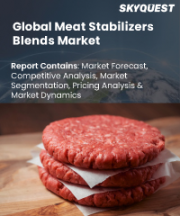
세계의 육류용 안정제 블렌드 시장 규모는 2024년에 29억 4,000만 달러로 평가되며, 2025년 30억 9,000만 달러에서 2033년까지 46억 달러로 성장할 전망입니다. 예측 기간(2026-2033년)의 CAGR은 5.1%로 예측됩니다.
세계 육류용 안정제 블렌드 시장은 육류 가공 부문의 성장에 힘입어 괄목할 만한 성장세를 보이고 있습니다. 이러한 블렌딩은 육류 제품의 식감, 외형적 매력, 유통기한을 개선하고 폐기물을 최소화하며 소비자 수요를 충족시킴으로써 제조업체와 소매업체에 가치를 창출하고 있습니다. 국제 식품 안전 기준을 준수하는 것은 육류 생산자에게 매우 중요하며, 안정제는 식품의 품질과 안전성을 유지하는 데 핵심적인 역할을 하므로 그 사용이 증가하고 있습니다. 또한 아시아, 남미 등 신흥 경제권에서 육류 소비가 급증하고 있으며, 생산자들이 이러한 역동적인 시장에서 품질 향상과 안전 규정 준수를 위해 노력하면서 육류 안정제 블렌드에 대한 수요가 더욱 증가하고 있습니다.
세계 육류용 안정제 블렌드 시장을 촉진하는 요인들
편리하고 RTE(Ready-to-eat) 고품질 육류 제품에 대한 수요 증가는 바쁘게 살아가는 소비자들의 라이프스타일 변화를 반영합니다. 육류용 안정제 블렌드는 이러한 가공육의 식감, 수분 유지력, 유통기한을 개선하는 데 필수적이며, 프리미엄 제품에 대한 소비자의 기대에 부응하는 역할을 하고 있습니다. 또한 전 세계에서 식품 안전에 대한 관심이 높아지고 엄격한 품질 규제가 강화되면서 제조업체들이 일관된 제품 품질을 보장하기 위해 육류용 안정제 채택을 촉진하고 있습니다. 안정제 블렌드를 제조 공정에 통합함으로써 기업은 이러한 규제를 효과적으로 준수하는 동시에 현대 시장의 요구에 부응하는 제품 공급을 강화할 수 있습니다.
세계 육류 안정제 블렌드 시장 성장 억제요인
세계 육류용 안정제 블렌드 시장의 가장 큰 제약은 천연자원에서 비롯되는 원료 가격의 변동성입니다. 이러한 변동은 블렌딩 비용을 증가시킬 수 있으며, 특히 소규모로 운영하는 제조업체의 경우, 블렌딩 비용을 증가시킬 수 있습니다. 또한 육류용 안정제의 배합과 적용은 최적의 결과를 얻기 위해 첨단 정밀도가 요구됩니다. 이러한 복잡성은 기술력이 제한적인 제조업체에게 도전이 될 수 있으며, 시장에서의 효과적인 경쟁력을 더욱 저해하고 전체 산업 성장에 영향을 미칠 수 있습니다.
세계 육류용 안정제 블렌드 시장 동향
세계 육류용 안정제 블렌드 시장은 소비자의 인식 개선과 클린 라벨 제품에 대한 선호도가 높아지면서 큰 변화를 경험하고 있습니다. 소비자들이 투명성과 건강 지향적 선택을 우선시하는 가운데, 인식할 수 있는 천연 원료로 만든 안정제 블렌드에 대한 수요가 증가하고 있습니다. 식물성 및 비건 육류 대체품의 급격한 인기에 대응하여 제조업체들은 식감, 수분 유지력 및 전체 제품 품질을 향상시키는 안정제 개발에 혁신을 거듭하고 있습니다. 이러한 추세는 건강하고 지속가능한 식품 선택에 대한 광범위한 움직임을 반영하고 있으며, 변화하는 소비자 기호에 적응하는 육류 안정제 시장은 지속적으로 성장할 것으로 예측됩니다.
Global Meat Stabilizers Blends Market size was valued at USD 2.94 Billion in 2024 and is poised to grow from USD 3.09 Billion in 2025 to USD 4.6 Billion by 2033, growing at a CAGR of 5.1% during the forecast period (2026-2033).
The global market for meat stabilizers blends is witnessing pronounced growth, primarily driven by the expanding meat processing sector. These blends enhance the texture, visual appeal, and shelf life of meat products, creating value for manufacturers and retailers by minimizing waste and satisfying consumer demands. Adhering to international food safety standards is critical for meat producers, and stabilizers are central to maintaining food quality and safety, leading to their increased usage. Additionally, rising economies in regions such as Asia and South America are experiencing a surge in meat consumption, further propelling the demand for meat stabilizers blends, as producers strive to elevate quality and comply with safety regulations in these dynamic markets.
Top-down and bottom-up approaches were used to estimate and validate the size of the Global Meat Stabilizers Blends market and to estimate the size of various other dependent submarkets. The research methodology used to estimate the market size includes the following details: The key players in the market were identified through secondary research, and their market shares in the respective regions were determined through primary and secondary research. This entire procedure includes the study of the annual and financial reports of the top market players and extensive interviews for key insights from industry leaders such as CEOs, VPs, directors, and marketing executives. All percentage shares split, and breakdowns were determined using secondary sources and verified through Primary sources. All possible parameters that affect the markets covered in this research study have been accounted for, viewed in extensive detail, verified through primary research, and analyzed to get the final quantitative and qualitative data.
Global Meat Stabilizers Blends Market Segments Analysis
Global Meat Stabilizers Blends Market is segmented by Product, Type, Function, Application, End User and region. Based on Product, the market is segmented into Natural stabilizers, Plant-based, Animal-based, Synthetic stabilizers, Phosphates, Hydrocolloids and Others. Based on Type, the market is segmented into Gum, Pectin, Carrageenan and Gelatin. Based on Function, the market is segmented into Color Stabilizer, Flavor Enhancer, pH Stabilizer, Emulsifier, Moisture Retention and Thickening Agent. Based on Application, the market is segmented into Processed meat, Sausages, Meat snacks, Frozen processed meat products, Cooked and canned meats, Hot dogs, Fresh meat, Beef, Poultry, Pork, Ready-to-eat meals and Others. Based on End User, the market is segmented into Meat Processing, Food Premixes, Foodservice, Pet Food and Others. Based on region, the market is segmented into North America, Europe, Asia Pacific, Latin America and Middle East & Africa.
Driver of the Global Meat Stabilizers Blends Market
The growing demand for convenient, ready-to-eat, and high-quality meat products reflects the changing consumer lifestyles characterized by busyness. Meat stabilizer blends are essential in improving the texture, moisture retention, and shelf life of these processed meat offerings, thereby fulfilling consumer expectations for premium products. Additionally, the rising emphasis on food safety and stringent quality regulations worldwide is propelling the adoption of meat stabilizers, as manufacturers strive to ensure consistent product quality. By integrating stabilizer blends into their processes, companies can effectively navigate these regulations while enhancing their product offerings to meet modern market demands.
Restraints in the Global Meat Stabilizers Blends Market
A significant constraint in the Global Meat Stabilizers Blends market is the volatility in the prices of raw materials, which are frequently derived from natural sources. This fluctuation can lead to increased costs for these blends, potentially making them less accessible for certain manufacturers, especially those operating on a smaller scale. Additionally, the formulation and application of meat stabilizers demand a high level of precision to achieve optimal outcomes. This complexity may pose challenges for manufacturers with limited technical skills, further hindering their ability to compete effectively in the market and impacting overall industry growth.
Market Trends of the Global Meat Stabilizers Blends Market
The Global Meat Stabilizers Blends market is experiencing a significant shift driven by rising consumer awareness and a growing preference for clean label products. As consumers prioritize transparency and health-conscious choices, there is an increasing demand for stabilizer blends made from recognizable, natural ingredients. In response to the surging popularity of plant-based and vegan meat alternatives, manufacturers are innovating to develop stabilizers that enhance texture, moisture retention, and overall product quality. This trend reflects a broader movement towards wholesome, sustainable food options, positioning the meat stabilizers market for continuous growth as it adapts to evolving consumer preferences.