ㅁ Add-on 가능: 고객의 요청에 따라 일정한 범위 내에서 Customization이 가능합니다. 자세한 사항은 문의해 주시기 바랍니다.
ㅁ 보고서에 따라 최신 정보로 업데이트하여 보내드립니다. 배송기일은 문의해 주시기 바랍니다.
한글목차
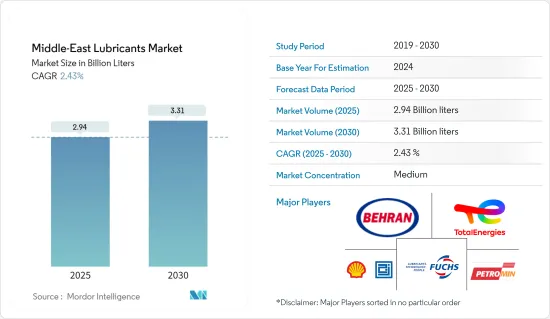
중동의 윤활유 시장 규모는 2025년에 29억 4,000만 리터로 추정되며, 예측기간(2025-2030년)의 CAGR은 2.43%로, 2030년에는 33억 1,000만 리터에 달할 것으로 예측됩니다.
COVID-19의 발생으로 제조업은 심각한 영향을 받았으며, 그 결과 2020년에는 윤활유 사용량이 감소했습니다. 그러나 많은 건설 프로젝트 및 기타 산업 활동이 회복됨에 따라 2021년에는 시장이 회복 국면을 맞이했습니다. 향후 몇 년간은 플러스 기조로 추이할 것으로 예상됩니다. 자동차 판매와 엔지니어링 제품 증가는 지난 2년간 시장 회복을 이끌어 왔습니다.
사우디아라비아, 이란, 아랍에미리트(UAE)의 산업 성장과 고성능 윤활유 사용 확대가 조사 대상 시장의 성장을 증대시키는 주요 원동력이 되고 있습니다.
반면에 고성능 윤활유의 비용 상승이 시장 성장을 방해할 것으로 예상됩니다.
합성 윤활유 및 바이오 윤활유의 개발은 향후 시장의 선호가 될 것으로 예상됩니다.
사우디아라비아는 윤활유의 최대 시장으로 부상하고 예측 기간 동안 가장 높은 CAGR을 나타낼 것으로 예측됩니다.
중동의 윤활유 시장 동향
자동차 부문이 시장을 독점
윤활유는 일반적으로 마모 감소, 부식 방지, 엔진 내부의 부드러운 작동 보장 등의 용도로 사용됩니다.
고연비 엔진 오일은 오일 누출 방지나 오일이 타는 것을 방지하는 특수한 특성으로 인해 큰 수요가 있습니다.
대부분의 소형차 및 대형차 디젤 엔진과 가솔린 엔진에는 10W40과 15W40의 점도 등급 오일이 사용되고 항공기 엔진에는 15W50 및 20W50과 같은 멀티급 오일이 일반적으로 사용됩니다.
자동차의 평균 차령은 수년에 걸쳐 일정한 비율로 증가하고 있으며, 이는 애프터마켓 보충유 시장에 있어서 좋은 기회입니다. 승용차의 평균 연령 상승과 신흥국의 도시 인구 증가는 수송용 윤활유 시장을 견인할 것으로 예상됩니다.
자동차 산업은 그 나라의 사회 경제 발전에 필수적입니다. 현지 자동차 산업 전문가에 따르면 세계 전기자동차 판매가 성장하고 있음에도 불구하고 사우디아라비아에서는 향후 15-20년간 내연 기관차(ICE)가 자동차의 대부분을 차지할 것으로 예상되고 있습니다.
사우디아라비아 자동차 산업을 지배하는 주요 기업으로는 30%의 점유율을 가진 Toyota, 26%의 점유율을 가진 현대와 KIA, 9%의 점유율을 가진 Renault-Nissan-Mitsubishi 등이 있습니다. General Motors, Ford, Fiat Chrysler Automobiles는 나머지 점유율을 차지합니다.
사우디아라비아는 '비전 2030'의 목표에 따라 현지 생산 능력을 개발하는 자동차 산업 국가 전략 목표를 달성하기 위해 자동차 부문의 현지화와 투자 기회 확대를 목표로 하고 있습니다.
이란의 자동차 시장은 오랜 기간 상승을 확인하고 있으며 국내 생산 수요가 증가하고 있습니다. 예를 들어 OICA에 따르면 이란의 자동차 생산 대수는 2022년에 19% 증가했으며, 2021년 승용차 생산 대수가 약 89만 4,000대였던 반면 2022년에는 106만 4,000대가 되었습니다.
국제 자동차 공업회(통칭 OICA)는 2022년 이란의 자동차 생산 대수의 성장을 세계 6위로 발표했습니다.
또한 유럽자동차공업회(ACEA)는 2022년에 이란을 세계 11위의 자동차 제조업체로 발표했습니다.
아랍에미리트(UAE)의 자동차 시장은 생산 및 판매 수요가 증가하고 자동차 등록 대수가 증가하고 있습니다.
산업계에 의하면 2023년 1월부터 9월까지 아랍에미리트의 자동차 등록 대수는 19만 3,698대로 전년 동기 대비 20.2% 증가했습니다.
또한 2022년 아랍에미리트 자동차시장의 신차 판매량은 40만대를 넘어 전년 대비 10% 증가했습니다. 이 성장은 인구 증가와 소득 상승으로 견인되며 앞으로도 계속될 것으로 예상됩니다.
따라서, 상기 요인은 예측 기간 동안 이 지역에서 조사 대상 시장의 성장을 증대시킬 것으로 예상됩니다.
사우디아라비아는 급성장이 기대
사우디아라비아는 중동에서 가장 큰 경제 강국입니다. 사우디아라비아의 경제는 주로 석유 산업에 의존합니다.
사우디아라비아는 GCC 최대 자동차 시장 중 하나입니다. 이 지역 자동차 시장의 약 80%를 승용차가 차지하고 있습니다.
사우디아라비아는 가정용 및 상업용 소비자의 전력 수요 증가에 효율적으로 대응하고 국내 에너지 믹스의 다양화를 지원하기 위해 전력 부문(발전, 변속기, 배전, 스마트 그리드)의 능력을 강화하고 있습니다.
에너지부에 따르면 사우디아라비아의 전력 및 재생 가능 에너지 프로젝트에 대한 지출은 2030년까지 2,930억 달러에 달할 전망입니다. 또한 2021년 12월 사우디아라비아의 에너지부는 2030년까지 에너지 공급에 380억 달러를 지출할 계획을 발표했습니다.
사우디아라비아는 빠르게 성장하는 에너지 소비국으로 부상했습니다. 이 나라의 전력 수요가 증가함에 따라 발전 인프라도 증가하고 있습니다. 이 나라에서는 증가하는 수요를 충족시키기 위해 2040년까지 발전 능력을 160GW까지 강화할 필요가 있다고 추정됩니다. 이를 달성하기 위해 정부는 발전에 약 50억 달러, 배전(D&T)에 약 40억 달러의 연간 투자를 계획하고 있습니다. 사우디아라비아의 신재생에너지발전계획은 2023년까지 신재생에너지의 발전량을 950만kW로 늘리는 것을 목표로 하고 있습니다.
지속적인 윤활은 베어링, 기어, 체인의 수명에 필수적입니다. 다른 기계 시스템과 마찬가지로 식품 공장의 가동 부품이 최적으로 작동하려면 적절한 윤활이 필요합니다. 오염, 습기, 고온, 습도는 모두 베어링, 체인 및 기어의 수명을 위협합니다. 사우디아라비아는 금속 산업에 많은 돈을 투자하고 있습니다. 세계철강협회에 따르면 2023년 사우디아라비아의 철강 생산량은 2022년 대비 약 0.8% 증가하여 약 990만 톤의 철강을 생산했습니다.
2023년 12월 사우디아라비아 정부는 철강 생산을 증가시키고 국내 수요의 대폭적인 증가에 대응하기 위해 철강 프로젝트에 약 120억 달러를 투자할 것이라고 발표했습니다. 프로젝트의 총 생산 능력은 약 620만 톤이 될 예정입니다.
네슬레는 2025년 제조 공장을 설립하고 3억 7,500만 SAR(9,972만 달러)의 초기 투자를 실시한 후, 연구 개발 프로그램을 갖춘 지역 센터와 중소기업 및 신흥 기업을 위한 최초의 비즈니스 인큐베이터를 설립할 것이라고 발표했습니다.
석유 및 가스 탐사는 상당한 양의 윤활유를 사용합니다. 이러한 요인으로 인해 아랍에미리트(UAE)에서는 예측 기간 동안 시장이 완만하게 견인될 것으로 예상됩니다.
중동 윤활유 산업 개요
중동의 윤활유 시장은 분할되어 있습니다. 주요 기업(순서부동)에는 TotalEnergies, Petromin, Aljomaih, Shell Lubricating Oil Company(JOSLOC), Behran Oil Co., FUCHS 등이 있습니다.
기타 혜택
엑셀 형식 시장 예측(ME) 시트
3개월간의 애널리스트 지원
목차
제1장 서론
조사 전제조건
조사 범위
제2장 조사 방법
제3장 주요 요약
제4장 시장 역학
촉진요인
사우디아라비아, 이란, 아랍에미리트(UAE)에서 산업 성장
고성능 윤활유의 이용 확대
기타 촉진요인
억제요인
고성능 윤활유의 비용 고
기타 억제요인
산업 가치사슬 분석
Porter's Five Forces 분석
공급기업의 협상력
구매자의 협상력
신규 참가업체의 위협
대체품의 위협
경쟁도
규제 시책 분석
제5장 시장 세분화(시장 규모(수량 기준))
그룹
그룹 I
그룹 II
그룹 III
그룹 IV(PAO)
나프텐
베이스 오일
바이오베이스 윤활유
광물유 윤활유
합성 윤활유
반합성 윤활유
제품 유형
엔진 오일
변속기 유압 작동유
금속가공유
일반 공업용 오일
기어 오일
그리스
프로세스 오일
기타 제품 유형(터빈유, 냉동기유, 항공유, 선박유, 변압기유)
최종 사용자 산업
발전
자동차 및 기타 운송 장비
중장비
음식
야금 금속가공
화학제조
기타 최종 사용자 산업(해양, 섬유, 제조, 석유 및 가스)
지역
사우디아라비아
이란
이라크
아랍에미리트(UAE)
쿠웨이트
기타 중동
제6장 경쟁 구도
M&A, 합작사업, 제휴, 협정
시장 점유율(%)**/랭킹 분석
주요 기업의 전략
기업 프로파일
Aljomaih And Shell Lubricating Oil Company Limited
AMSOIL INC.
Behran Oil Co.
Emarat
Exxon Mobil Corporation
FUCHS
GP Global MAG LLC
GULF OIL Middle East Limited(Gulf Oil International Ltd.)
Idemitsu Kosan Co., Ltd.
IRANOL(LLP)
Lubrex FZC
Pars Oil Company
Petromin
Saudi Arabian Oil Co.
Sepahan Oil Company
TotalEnergies
제7장 시장 기회와 앞으로의 동향
합성 윤활유와 바이오 베이스 윤활유의 개발
기타 기회
CSM
영문 목차
영문목차
The Middle-East Lubricants Market size is estimated at 2.94 billion liters in 2025, and is expected to reach 3.31 billion liters by 2030, at a CAGR of 2.43% during the forecast period (2025-2030).
Due to the COVID-19 outbreak, the manufacturing industry was severely affected, and this resulted in a decrease in the use of lubricants in 2020. However, with the recovery of many construction projects and other industrial activities, the market saw a recovery phase in the year 2021. It is expected to see a positive trend in the forecasted years. An increase in automotive sales and engineering goods has been leading the market recovery over the last two years.
The industrial growth in Saudi Arabia, Iran, and the United Arab Emirates and the growing usage of high-performance lubricants are the major driving factors augmenting the growth of the market studied.
On the flip side, costlier high-performance lubricants are expected to hinder the growth of the market.
Developments in synthetic and bio-based lubricants are projected to act as an opportunity for the market in the future.
Saudi Arabia emerged as the largest market for lubricants and is expected to register the highest CAGR during the forecast period.
Middle East Lubricants Market Trends
Automotive Sector to Dominate the Market
Lubricants are typically used for applications such as wear reduction, corrosion protection, and ensuring smooth operation of the engine internals.
High-mileage engine oils are experiencing great demand owing to specific properties, such as oil leak prevention and reduction in oil burn-off.
Most light and heavy vehicle diesel and gasoline engines use 10W40 and 15W40 viscosity grade oils, while multi-grade oils, such as 15W50 and 20W50, are commonly used for aircraft engines.
The average vehicle age has been increasing at a constant rate over the years, which is an opportunity in terms of the aftermarket refill market. The increasing average age of passenger cars and the growing urban population in developing countries is expected to drive the market for lubricants in transportation.
The automotive industry is essential to the country's socio-economic development. According to some local automotive industry experts, despite the growing electric vehicle sales worldwide, Saudi Arabia expects internal combustible engines (ICE) vehicles to make up the majority of cars driven in for the next 15-20 years.
Some of the major players controlling the automotive industry in the country include Toyota, with a 30% share, followed by Hyundai and KIA, with 26%, and Renault-Nissan-Mitsubishi, with 9%. General Motors, Ford, and Fiat Chrysler Automobiles comprise the remaining share.
Saudi Arabia aims to localize the automotive sector and increase investment opportunities to achieve the national strategy's objectives for the industry in developing local manufacturing capabilities in line with the goals of the Kingdom's Vision 2030.
The Iran automotive market has witnessed a rise over the historic period, with demand for production increasing in the country. For instance, according to the OICA, car manufacturing in Iran increased by 19% in 2022, as the country manufactured 1.064 million vehicles in 2022, while the passenger vehicles produced were around 894,000 units in 2021.
The International Organization of Motor Vehicle Manufacturers (known as OICA) ranked Iran sixth in the world in terms of car manufacturing growth in 2022.
Also, as per the European Automobile Manufacturers' Association (ACEA), the organization ranked Iran as the world's 11th largest automaker in 2022.
The United Arab Emirates automotive market has been experiencing a rise in vehicle registrations over the current period, with demand in production and sales increasing in the country.
As per industry sources, the country's automotive vehicle registration in the period January to September 2023 stood at 193,698, up 20.2% in comparison to the same period in the previous year.
Moreover, in 2022, the country's car market sold over 400,000 new cars, representing a 10% increase over the previous year. This growth is expected to continue in the coming years, driven by the country's growing population and rising incomes.
Thus, the factors above are expected to augment the growth of the market studied in the region during the forecast period.
Saudi Arabia is Expected to Experience a Surge in Growth
Saudi Arabia is the largest economy in the Middle East region. Saudi Arabia's economy is mainly dependent on the oil industry.
Saudi Arabia is one of the largest automotive markets in the GCC. Passenger cars account for approximately 80% of the region's automotive market.
Saudi Arabia is enhancing the capacity of its power sector (electricity generation, transmission, distribution, and smart grid) to meet increasing demand efficiently from residential and commercial consumers for electricity and to support the diversification of its domestic energy mix.
According to the Ministry of Energy, Saudi Arabia's spending on power and renewable energy projects is expected to reach USD 293 billion by 2030. Additionally, in December 2021, Saudi Arabia's Energy Minister announced the country's plan to spend USD 38 billion on energy distribution by 2030.
Saudi Arabia emerged as a rapidly growing energy consumer. With the increasing demand for electricity in the country, the power generation infrastructure has been growing. It is estimated that the country is required to increase its power generation capacity to 160 GW by 2040 to fulfill its increasing demand. To achieve this, the government is planning to make an annual investment of around USD 5 billion in generation and USD 4 billion in distribution (D&T). The National Renewable Energy Program in the country aims to increase the generation of renewable energy to 9.5 GW by 2023.
Consistent lubrication is vital to the life of bearings, gears, and chains. Like any mechanical system, moving parts in a food and beverage plant need proper lubrication to function optimally. Contamination, moisture, high temperatures, and humidity are all threats to bearing, chain, and gear service life. Saudi Arabia is heavily investing in metal industries. According to the World Steel Association, Saudi Arabia's crude steel production in 2023 observed an increase of about 0.8% as compared to 2022 and produced approximately 9.9 million metric tons of steel.
In December 2023, the Saudi Arabian government announced to investment of about USD 12 billion in steel projects to increase steel production and meet the significant growth in domestic demand. The project is planned to have a total production capacity of about 6.2 million tons.
Nestle has announced an initial investment of SAR 375 million (USD 99.72 million) with the establishment of a manufacturing plant in 2025, followed by a regional center with a research and development program and its first business incubator for small and medium-sized companies and start-ups.
A significant amount of lubricants are used in oil and gas exploration. These factors are expected to drive the market slowly over the forecast period in the United Arab Emirates.
Middle East Lubricants Industry Overview
The Middle-East lubricants market is fragmented. The major companies (in no particular order) include TotalEnergies, Petromin, Aljomaih, Shell Lubricating Oil Company (JOSLOC), Behran Oil Co., and FUCHS, among others.
Additional Benefits:
The market estimate (ME) sheet in Excel format
3 months of analyst support
TABLE OF CONTENTS
1 INTRODUCTION
1.1 Study Assumptions
1.2 Scope of the Study
2 RESEARCH METHODOLOGY
3 EXECUTIVE SUMMARY
4 MARKET DYNAMICS
4.1 Drivers
4.1.1 Industrial Growth in Saudi Arabia, Iran, and the United Arab Emirates
4.1.2 Growing Usage of High-performance Lubricants
4.1.3 Other Drivers
4.2 Restraints
4.2.1 Costlier High Performance Lubricants
4.2.2 Other Restraints
4.3 Industry Value Chain Analysis
4.4 Porter's Five Forces Analysis
4.4.1 Bargaining Power of Suppliers
4.4.2 Bargaining Power of Buyers
4.4.3 Threat of New Entrants
4.4.4 Threat of Substitute Products and Services
4.4.5 Degree of Competition
4.5 Regulatory Policy Analysis
5 MARKET SEGMENTATION (Market Size in Volume)
5.1 Group
5.1.1 Group I
5.1.2 Group II
5.1.3 Group III
5.1.4 Group IV (PAO)
5.1.5 Naphthenics
5.2 Base Stock
5.2.1 Bio-based Lubricant
5.2.2 Mineral Oil Lubricant
5.2.3 Synthetic Lubricant
5.2.4 Semi-synthetic Lubricant
5.3 Product Type
5.3.1 Engine Oil
5.3.2 Transmission and Hydraulic Fluid
5.3.3 Metalworking Fluid
5.3.4 General Industrial Oil
5.3.5 Gear Oil
5.3.6 Greases
5.3.7 Process oils
5.3.8 Other Product Types (Turbine oils, Refrigeration oils, Aviation oils, Marine oils, and Transformer oils)
5.4 End-user Industry
5.4.1 Power Generation
5.4.2 Automotive and Other Transportation
5.4.3 Heavy Equipment
5.4.4 Food and Beverage
5.4.5 Metallurgy and Metalworking
5.4.6 Chemical Manufacturing
5.4.7 Other End-user Industries (Marine, Textiles, Manufacturing, and Oil and gas)
5.5 Geography
5.5.1 Saudi Arabia
5.5.2 Iran
5.5.3 Iraq
5.5.4 United Arab Emirates
5.5.5 Kuwait
5.5.6 Rest of Middle-East
6 COMPETITIVE LANDSCAPE
6.1 Mergers and Acquisitions, Joint Ventures, Collaborations, and Agreements
6.2 Market Share (%)**/Ranking Analysis
6.3 Strategies Adopted by Leading Players
6.4 Company Profiles
6.4.1 Aljomaih And Shell Lubricating Oil Company Limited
6.4.2 AMSOIL INC.
6.4.3 Behran Oil Co.
6.4.4 Emarat
6.4.5 Exxon Mobil Corporation
6.4.6 FUCHS
6.4.7 GP Global MAG LLC
6.4.8 GULF OIL Middle East Limited (Gulf Oil International Ltd.)
6.4.9 Idemitsu Kosan Co., Ltd.
6.4.10 IRANOL (LLP)
6.4.11 Lubrex FZC
6.4.12 Pars Oil Company
6.4.13 Petromin
6.4.14 Saudi Arabian Oil Co.
6.4.15 Sepahan Oil Company
6.4.16 TotalEnergies
7 MARKET OPPORTUNITIES AND FUTURE TRENDS
7.1 Developments in Synthetic and Bio-based Lubricants