라틴아메리카의 유리병 및 요리용기 : 시장 점유율 분석, 산업 동향, 성장 예측(2025-2030년)
LA Glass Bottles And Containers - Market Share Analysis, Industry Trends & Statistics, Growth Forecasts (2025 - 2030)
상품코드:1630275
리서치사:Mordor Intelligence
발행일:2025년 01월
페이지 정보:영문
라이선스 & 가격 (부가세 별도)
ㅁ Add-on 가능: 고객의 요청에 따라 일정한 범위 내에서 Customization이 가능합니다. 자세한 사항은 문의해 주시기 바랍니다.
ㅁ 보고서에 따라 최신 정보로 업데이트하여 보내드립니다. 배송기일은 문의해 주시기 바랍니다.
한글목차
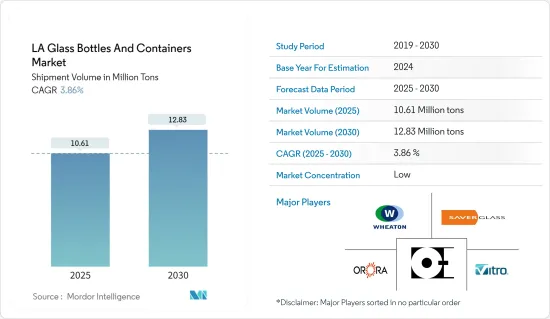
라틴아메리카의 유리병 및 유리용기 시장 규모는 출하량 기준으로 2025년 1,061만톤에서 2030년에는 1,283만톤으로 확대되었으며, 예측기간(2025-2030년)의 CAGR은 3.86%를 나타낼 전망입니다.
라틴아메리카 유리 용기 시장은 이 지역의 중산층 확대에 견인되어 강력한 성장을 이루고 있습니다. 이러한 추세는 최종 사용자 산업의 투자 증가를 유인하고 예측 기간 동안 시장 확대를 더욱 뒷받침할 것으로 보입니다.
주요 하이라이트
개발이 급속히 진행되는 라틴아메리카에서는 환경 친화적이고 지속 가능한 포장 솔루션에 대한 수요 증가가 성장의 주요 원동력이 되고 있습니다. 재활용 가능하고 재사용이 가능하며 환경 친화적인 유리 포장은 소비자와 제조업체 사이에서 지지를 얻고 있습니다.
음료 업계 수요 증가가 시장을 전진시키고 있습니다. 아르헨티나의 마약종합정책장관의 데이터에 따르면, 이 나라는 1인당 알코올 소비량이 선두를 달리고 있습니다. 브라질은 알코올 소비율이 높고, 이 동향을 반영하고 있습니다. 또한 우유와 주스 등의 무알코올 음료의 인기가 높아지고 있는 것도 이 지역의 유리병 및 유리용기 시장을 더욱 확대하고 있습니다.
경량 유리와 효율적인 재활용 방법과 같은 기술 혁신이 시장을 활성화하고 있습니다. 첨단 생산 기술, 특히 얇은 경량 유리 용기의 도입은 제조 공정을 간소화합니다. 특히 좁은 목 프레스 & 블로우 제조법은 라틴아메리카에서 생산되는 유리병의 경량화에 매우 중요한 역할을 합니다.
이 지역에서는 의약품을 포함한 다양한 최종 사용자 산업이 등장합니다. 급성장하는 브라질 의약품 부문은 중요한 촉진요인으로 두드러집니다. 지난 10년간 브라질은 다른 신흥 남미 시장에 중요한 공급업체로서의 입지를 굳혔습니다. 제약 산업의 생산 능력이 상승하는 경향이 있기 때문에 유리 포장에 대한 수요도 존재합니다.
그러나 시장은 경쟁하는 대체 제품에 의한 문제에 직면하고 있습니다. 소비자의 선호도가 보다 편리한 핸들링 솔루션으로 이동함에 따라 유연한 포장 옵션에 대한 수요가 증가하고 있습니다. 또한 플라스틱 포장 솔루션의 고급 포장은 유리 포장 분야에 주목할 만한 과제를 제시합니다.
라틴아메리카의 유리병 및 유리용기 시장 동향
유제품이 큰 점유율을 차지
라틴아메리카 유제품 시장은 세계에서 가장 빠르게 성장하는 시장 중 하나입니다. 보다 광범위한 번영이 유리에서 단단한 플라스틱과 금속으로 수요 변화를 뒷받침하고 있지만, 재사용 가능한 유리와 같은 부가가치가 높은 포장에 대한 수요는 여전히 높습니다. 리필 가능한 유리병은 이 지역의 소비자가 우유와 같은 음료를 더 저렴한 가격으로 구입할 수 있도록 해 왔습니다.
유리병은 주로 우유 포장에 사용됩니다. 우유와 같은 유제품의 맛을 다른 유형의 포장보다 훨씬 오래 유지할 수 있습니다. 이것은 유리가 내용물이 공기 및 기타 가능한 화학물질과 섞이기 어렵기 때문입니다.
National Geographic, 'Time', 'Business Insider', US Food and Drug Administration 등 신뢰할 수 있는 단체의 조사는 플라스틱 병의 단점을 강조하고, 특히 유리병의 장점을 강조하고 있습니다.
미국 농무부의 보고서에 따르면, 브라질과 멕시코는 라틴아메리카 우유를 가장 많이 생산하는 두 국가입니다. 2023년 브라질의 생유 생산량은 약 2,520만 톤에 이르렀고, 멕시코는 1,350만 톤이었습니다. 이는 2022년 2,470만 톤, 1,325만 톤이라는 각각의 숫자에서 상승한 것을 의미합니다.
시장은 우유 생산의 어려움도 눈에 띕니다. 농업·원예개발위원회가 2024년 11월에 보고한 것처럼, 우유 생산은 연초부터 저조한 경제 정세와 악천후에 휩쓸려 어려운 스타트를 끊었습니다. 동시에 많은 지역에서 9월 우유 생산량이 감소한 것으로 보고되었습니다. 특히 아르헨티나의 생유 생산량은 9월에 불과 1.9% 감소에 그쳤습니다. 아르헨티나의 우유 생산량은 작년의 숫자에서 크게 늦었습니다. 이 후퇴는 가혹한 기상 조건과 인플레이션의 만연으로 인한 유가 하락으로 인한 것입니다.
화장품 분야가 시장 성장을 견인
라틴아메리카에서는 스킨 케어, 헤어 케어, 향수를 포함한 화장품 포장 분야에서 하이 엔드의 고급품에 유리 포장이 선호되는 경향이 강해지고 있습니다. 이 동향은 유리가 제품의 우아함을 높이고 고급 제품의 지위를 높이기 때문에 기세를 늘리고 있습니다.
브라질과 같은 국가의 가처분 소득 증가는 고급 화장품에 대한 세계 수요에 박차를 가하고 있습니다. 브라질의 화장품 산업은 확대되고 있으며 세계에서 가장 급성장하고 가장 역동적인 산업 중 하나로 자리를 잡고 있습니다.
브라질 사람들은 외모를 정돈하고 개인화하는 것을 점점 더 우선시하고 있습니다. 지난 10년간 화장품 매출은 8%에서 10%로 급증했고, 브라질은 라틴아메리카에서 최고의 화장품 소비국이 되었습니다. 청소년의 그루밍에 대한 관심의 높이, 특히 남성의 그루밍에 대한 관심의 높이는 화장품에서 유리 포장 수요 증가를 뒷받침합니다.
브라질은 라틴아메리카의 미용과 개인 관리의 중심지이며 세계 최고의 화장품 시장입니다. 브라질 개인위생·향수·화장품 협회(ABIHPEC)의 데이터에 의하면, 이 섹터에 있어서 올해 첫 4개월 동안 수출이 17.2% 급증하고 2023년 4월에는 25.5%의 놀라운 증가율을 기록하는 등 이 분야의 역사적인 이정표가 세워지고 있습니다.
또한 국립통계·지역연구소에 따르면 2020년 멕시코에서 화장품, 향수, 화장실 제품의 연간 생산액은 1,247억 5,000만 MXN(70억 3,000만 달러)이었지만, 1,465억 1,000만 MXN(82 억 6,000만 달러)로 증가하고 있습니다. 따라서 화장품 및 기타 관련 제품의 매출이 증가하면 업계 전반에 걸쳐 유리 용기의 필요성이 높아집니다.
시장 성장을 가속하는 중요한 요인 중 하나는 국제 브랜드를 가진 화장품 회사의 인수가 증가하고 있다는 것입니다. 예를 들어, Evonik은 2023년 7월 지속가능한 화장품 활동의 혁신자인 아르헨티나의 Novachem사를 인수했습니다. Novachem 인수를 통해 Evonik은 퍼스널케어 시장 고객에게 더욱 혁신적이고 지속 가능한 솔루션을 제공할 수 있습니다.
라틴아메리카의 유리병 및 유리용기 산업 개요
유리는 오염 위험을 최소화하고 내용물을 손상으로부터 보호할 수 있기 때문에 제품 포장에 선호됩니다. 단단한 포장 솔루션으로 유리는 다양한 밀도, 크기 및 모양으로 내용물을 보호합니다.라틴아메리카에서는 건강, 선호도, 환경 안전성을 우선시하고, 신뢰할 수 있는 포장 옵션으로서 유리가 소비자에게 받아들여지고 있으며, 유리 시장의 성장이 가속화되고 있습니다.
라틴아메리카 유리 용기 시장은 세분화되어 있습니다. 지역 선수와 국제 공급업체는 가격과 중요한 경쟁 전략으로 고객을 끌어들여 시장 점유율을 경쟁하고 적당한 시장 경쟁으로 이어지고 있습니다. 주요 기업은 Vitro, SAB de CV, Owens-illinois Inc., Wheaton Brasil Group, Orora Limited 등이 있습니다.
기타 혜택 :
엑셀 형식 시장 예측(ME) 시트
3개월간의 애널리스트 서포트
목차
제1장 서론
조사의 전제조건과 시장 정의
조사 범위
제2장 조사 방법
제3장 주요 요약
제4장 시장 인사이트
시장 개요
PESTEL 분석 - 라틴아메리카 유리 용기 산업
포장용 유리 용기의 업계 표준과 규제
포장용 유리의 원재료 분석과 재료에 관한 고찰
용기 포장의 지속가능성 동향
라틴아메리카 유리 용기 용량과 입지
제5장 시장 역학
시장 성장 촉진요인
음료업계로부터 수요 증가
경량화나 효과적인 리사이클 등 최근의 혁신
시장 성장 억제요인
대체 제품과의 높은 경쟁
라틴아메리카 유리 용기 시장에 있어서의 라틴아메리카의 시장 포지셔닝 분석
무역 시나리오 - 라틴아메리카 유리 용기 산업의 수출입 패러다임의 역사와 현황 분석
제6장 시장 세분화
최종 사용자 산업별
음료
알코올 음료
와인 및 증류주
맥주 및 사이다
무알코올 음료
탄산음료
물
우유음료
기타 비알코올 음료
식품
화장품
의약품
기타 최종 사용자별
국가별
브라질
멕시코
아르헨티나
제7장 경쟁 구도
기업 프로파일
Vitro, SAB de CV
Wheaton Brasil Group
Orora Limited
Saverglass SAS
Owens-illinois Inc.
Ardagh Group SA
Verallia SA
Gerresheimer AG
제8장 보충 자료 : 라틴아메리카의 유리 용기 공장에 공급하는 주요 제조업체의 분석
제9장 시장 전망
KTH
영문 목차
영문목차
The LA Glass Bottles And Containers Market size in terms of shipment volume is expected to grow from 10.61 million tons in 2025 to 12.83 million tons by 2030, at a CAGR of 3.86% during the forecast period (2025-2030).
Latin America's Container Glass market is experiencing robust growth, driven by the region's expanding middle class. This trend is poised to attract increased investments from end-user industries, further bolstering the market's expansion during the forecast period.
Key Highlights
In Latin America, a region with several rapidly developing nations, the rising demand for eco-friendly and sustainable packaging solutions is a key growth driver. Glass packaging, being recyclable, reusable, and environmentally friendly, has gained favour among consumers and manufacturers.
The beverage industry's rising demand is propelling the market forward. Data from Argentina's Secretary of Integral Policy on Drugs highlights that the country leads in per capita alcohol consumption. Brazil mirrors this trend with its high alcohol consumption rates. Additionally, the increasing popularity of non-alcoholic beverages like milk and juices further broadens the region's market for glass bottles and containers.
Innovations like lightweight glass and efficient recycling methods are energizing the market. Advanced production techniques, especially the introduction of thin-walled and lightweight glass containers, have streamlined manufacturing processes. Notably, the Narrow Neck Press and Blow process has played a pivotal role in reducing the weight of glass bottles produced in Latin America.
Various end-user industries, including pharmaceuticals, are rising in the region. Brazil's rapidly expanding pharmaceutical sector stands out as a significant growth driver. Over the last ten years, Brazil has solidified its position as a critical supplier to other emerging South American markets. With the pharmaceutical industry's production capacity on the rise, the demand for glass packaging also exists.
However, the market faces challenges from competing substitute products. As consumer preferences shift towards more convenient handling solutions, there's a growing demand for flexible packaging options. Moreover, advancements in plastic packaging solutions present a notable challenge to the glass packaging sector.
Latin America Glass Bottles & Containers Market Trends
Dairy-based Products to Hold a Significant Share
Latin America's dairy market is one of the fastest-growing markets in the world. While broader prosperity has helped shift demand from glass to rigid plastic and metal, demand for value-added packaging like reusable glass is still high. Refillable glass bottles have long made beverages, like milk, more affordable for consumers in this region.
Glass bottles are mainly used for packaging milk. They preserve the flavour of dairy products, such as milk, much longer than other types of packaging. This is because glass is less likely to allow contents to mix with air or other possible chemicals.
Research from credible entities, including National Geographic, Time, Business Insider, and the US Food and Drug Administration, underscores the disadvantages of plastic bottles and especially highlights the benefits of glass bottles.
As the US Department of Agriculture reported, Brazil and Mexico are the top two milk-producing nations in Latin America. 2023 Brazil's milk production reached approximately 25.2 million metric tons, while Mexico's output was 13.5 million metric tons. This marks an uptick from their respective 2022 figures of 24.7 million metric tons and 13.25 million metric tons.
The market is also witnessing challenges in the production of milk. As the Agriculture and Horticulture Development Board reported in November 2024, milk production saw a tough start to the year marked by low economic confidence and adverse weather conditions. At the same time, many regions reported decreased volumes in September. Notably, milk production in Argentina saw a drop of only 1.9% in September. Argentina's milk production lagged significantly behind last year's figures. This setback was attributed to harsh weather conditions and the erosion of milk prices due to rampant inflation.
Cosmetics Sector to Drive the Market Growth
In Latin America, the cosmetic packaging segment, encompassing skincare, hair care, and perfumes, increasingly favours glass packaging for high-end luxury products. This trend is gaining momentum as glass enhances the product's elegance and elevates its premium status.
Rising disposable incomes in countries like Brazil fuel a global demand for premium cosmetic products. Brazil's cosmetics industry is expanding and has established itself as one of the fastest-growing and most dynamic in the world.
Brazilians are increasingly prioritizing grooming and personalization. Over the past decade, cosmetic product sales have surged from 8% to 10%, positioning Brazil as Latin America's top cosmetics consumer. The youth's keen interest in grooming, especially men, underscores the rising demand for glass packaging in cosmetics.
Brazil is Latin America's premier beauty and personal care hub and one of the prominent players in the world's leading cosmetics markets. Data from the Brazilian Association of Personal Hygiene, Perfumery and Cosmetics (ABIHPEC) highlights a historic milestone for the sector, with exports surging by 17.2% in the year's initial four months and a remarkable 25.5% jump in April 2023.
Further, According to the National Institute of Statistics and Geography, the annual production value of cosmetics, perfumes, and toiletries in Mexico in 2020 was MXN 124.75 billion (USD 7.03 billion), which has increased to MXN 146.51 billion (USD 8.26 billion). Therefore, a rise in sales of cosmetics and other related products would advance the need for container glass across the industry.
One of the significant factors driving the market's growth is the rise in the acquisition of cosmetic companies with international brands. For instance, in July 2023, Evonik acquired Novachem, an Argentinian innovator of sustainable cosmetic activities. Novachem will allow us to bring even more innovative and sustainable solutions to customers in the personal care market.
Latin America Glass Bottles & Containers Industry Overview
Glass is preferred for product packaging due to its ability to minimize contamination risks and protect contents from damage. As a rigid packaging solution, glass encompasses diverse densities, sizes, and shapes to safeguard its contents. The market offers various forms of container glass, prominently featuring bottles. In Latin America, the glass market is witnessing accelerated growth, driven by rising consumer acceptance of glass as a trusted packaging choice, prioritizing health, taste, and environmental safety.
The Latin American container glass market is fragmented. Regional players and international vendors compete for market share by attracting customers with prices and significant competitive strategies, leading to moderate market competition. Key players are Vitro, S.A.B. de CV, Owens-illinois Inc., Wheaton Brasil Group, Orora Limited, and others.
Additional Benefits:
The market estimate (ME) sheet in Excel format
3 months of analyst support
TABLE OF CONTENTS
1 INTRODUCTION
1.1 Study Assumptions and Market Definition
1.2 Scope of the Study
2 RESEARCH METHODOLOGY
3 EXECUTIVE SUMMARY
4 MARKET INSIGHTS
4.1 Market Overview
4.2 PESTEL ANALYSIS - Container Glass Industry in Latin America
4.3 Industry Standards and Regulations for Container Glass for Packaging
4.4 Raw Material Analysis & Material Considerations for Packaging
4.5 Sustainability Trends for Packaging
4.6 Container Glass Furnace Capacity and Location in Latin America
5 MARKET DYNAMICS
5.1 Market Drivers
5.1.1 Growing Demand from Beverage Industry
5.1.2 Recent Innovations Such as Lightweight and Effective Recycling
5.2 Market Restraint
5.2.1 High Competition From Substitute Products
5.3 Analysis of the Current Positioning of Latin America in the Latin America Container Glass Market
5.4 Trade Scenario - Analysis of the Historical and Current Export-Import Paradigm for the Container Glass Industry in Latin America
6 MARKET SEGMENTATION
6.1 By End-user Industry
6.1.1 Beverage
6.1.1.1 Alcoholic Beverages
6.1.1.1.1 Wines and Spirits
6.1.1.1.2 Beer and Cider
6.1.1.2 Non-Alcoholic Beverages
6.1.1.2.1 Carbonated Drinks
6.1.1.2.2 Water
6.1.1.2.3 Dairy-Based
6.1.1.2.4 Other Non-Alcoholic Beverages
6.1.2 Food
6.1.3 Cosmetics
6.1.4 Pharmaceuticals
6.1.5 Other End user verticals
6.2 By Country
6.2.1 Brazil
6.2.2 Mexico
6.2.3 Argentina
7 COMPETITIVE LANDSCAPE
7.1 Company Profiles
7.1.1 Vitro, S.A.B. de CV
7.1.2 Wheaton Brasil Group
7.1.3 Orora Limited
7.1.4 Saverglass SAS
7.1.5 Owens-illinois Inc.
7.1.6 Ardagh Group S.A.
7.1.7 Verallia SA
7.1.8 Gerresheimer AG
8 SUPPLEMENTARY COVERAGE - ANALYSIS OF MAJOR FURNACE SUPPLIERS TO CONTAINER GLASS PLANTS IN LATIN AMERICA