ㅁ Add-on 가능: 고객의 요청에 따라 일정한 범위 내에서 Customization이 가능합니다. 자세한 사항은 문의해 주시기 바랍니다.
ㅁ 보고서에 따라 최신 정보로 업데이트하여 보내드립니다. 배송기일은 문의해 주시기 바랍니다.
한글목차
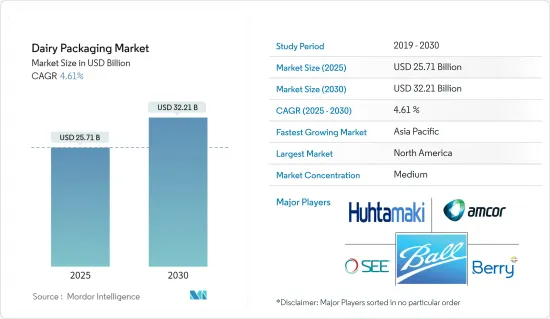
유제품 포장 시장 규모는 2025년에 257억 1,000만 달러로 추정되며, 예측 기간(2025-2030년) 동안 4.61%의 CAGR로 2030년에는 322억 1,000만 달러에 달할 것으로 예상됩니다.
주요 하이라이트
건강 스낵으로의 전환, 조리된 식품의 소비 증가, 온라인 쇼핑과 모바일 쇼핑의 부상으로 인해 식품 구매 및 소비 패턴이 변화하고 있습니다. 이러한 추세는 건강에 대한 관심 증가와 함께 유제품 시장에 큰 영향을 미칠 것으로 예상됩니다.
인구 증가와 식습관 변화로 인해 다양한 소매 채널을 통해 포장된 유제품을 이용할 수 있게 됨에 따라 시장 성장을 촉진할 것으로 보입니다. 또한, 단백질 기반 제품에 대한 소비자의 선호도가 높아짐에 따라 전 세계적으로 유제품 기반 품목의 채택이 증가할 것으로 예상됩니다.
유제품 업계의 세계 트렌드를 보면 제조업체들이 제품을 돋보이게 하기 위해 포장에 점점 더 많은 노력을 기울이고 있다는 것을 알 수 있습니다. 오늘날의 유제품 포장은 종종 눈길을 끄는 디자인과 무균 기능을 자랑합니다. 일본, 아시아태평양, 서유럽, 북미 등 주요 시장에서의 치열한 경쟁으로 인해 최종사용자는 유제품의 혁신적인 포장 전략을 채택하고 있습니다.
유제품 제조업체들은 국제 수출 능력 향상과 현지 생산을 통해 세계 유제품 무역에서 더 큰 점유율을 확보하기 위해 점점 더 많은 노력을 기울이고 있습니다. 이러한 추세는 보다 진보된 유제품 포장 솔루션에 대한 수요를 촉진하고 있습니다.
포장 유형의 다양화는 유제품 판매 확대에 있어 중요한 요소입니다. 예를 들어, 과거에는 주로 게이블 탑 카톤으로 판매되던 우유는 현재 휴대가 가능하고 브랜드에 적합한 플라스틱 병에 담겨 판매되는 경우가 많아 시간적 제약이 있는 소비자들에게 어필하고 있습니다.
그러나 유제품 포장 시장은 도전에 직면해 있습니다. 식품 가격에 영향을 받는 포장재 가격 변동은 시장 성장을 저해할 수 있습니다. 또한, 플라스틱 포장과 관련된 잠재적인 건강 위험에 대한 우려는 암 및 생식 관련 건강 문제로 이어지는 독소에 대한 우려와 같은 잠재적인 건강 위험에 대한 우려는 시장 확대의 장애물이되고 있습니다.
유제품 포장 시장 동향
우유가 가장 큰 시장 점유율을 차지
우유는 세계에서 가장 많이 소비되는 유제품입니다. 우유는 수분과 미네랄을 많이 함유하고 있기 때문에 보관에 큰 어려움이 있어 분유와 가공유가 널리 유통되고 있습니다. 이러한 특성으로 인해 원유는 매우 부패하기 쉬우며, 품질을 유지하고 유통기한을 연장하기 위해 첨단 보존 및 포장 기술이 필요합니다.
현재 우유 가공 기술로는 액체 우유를 병에 담아 4-8℃에서 보관하면 10-21일의 유통기한을 유지할 수 있습니다. 초고온(UHT) 처리와 같은 첨단 공정을 통해 냉장 보관 없이 포장된 우유의 유통기한은 최대 1년까지 연장되었습니다. 이러한 기술 발전은 우유 유통에 혁명을 가져왔고, 더 넓은 시장 진입과 낭비를 줄일 수 있게 되었습니다.
최근 몇 년 동안 특히 아시아에서는 지산지소(地産地消)의 추세가 강화되고 있습니다. 이러한 변화는 수입에 대한 의존도를 줄이고 국내 유제품 산업을 지원하기 위한 것입니다. 인도와 같은 국가가 전 세계 원유 생산량의 약 16%를 차지함에도 불구하고, 수요와 공급의 격차가 뚜렷하게 나타나고 있습니다. 이러한 격차는 신흥국 시장의 인프라 및 유통망 개선의 필요성을 강조하고 있습니다.
또한, 혁신적이고 친환경적인 우유 포장의 등장은 시장 매출 상승을 견인하고 있습니다. 이러한 추세는 병, 카톤, 파우치 등 다양한 포장 형태에 적용되고 있습니다. 예를 들어, Delamere Dairy는 2024년 7월, 외출이 잦은 소비자를 겨냥한 카토캔(CartoCan) 맛 우유 시리즈를 출시했습니다. 완전 재활용이 가능한 CartoCan은 플라스틱 폐기물을 줄이고 기존의 500ml 유리병을 대체할 수 있는 간편한 대안을 제공합니다.
미국 농무부 해외농업국에 따르면 세계 우유 생산량은 꾸준히 증가하고 있습니다. 세계 우유 생산량은 2017년 5억 1,160만 톤에서 2023년 약 5억 4,948만 톤으로 증가할 것입니다. 이러한 성장은 유제품에 대한 세계 수요 증가와 낙농 관행 및 기술 향상을 반영합니다.
유제품 업계에서 무균 포장에 대한 수요가 급증하고 있습니다. 전 세계 원유 생산량의 증가는 새로운 시장 기회를 창출할 것으로 보입니다. 또한 UHT 우유 소비의 급증으로 상징되는 소비자 행동의 변화도 눈에 띄게 나타나고 있습니다. 소비자들이 쇼핑에 가는 횟수를 줄이려고 노력하면서 유통기한이 긴 UHT 우유에 대한 수요가 급증하고 있습니다. 특히 유제품 솔루션에 대한 소비자의 선호도가 뚜렷하게 변화하고 있으며, 우유를 낱개 판매에서 대형 브랜드, 특히 대량 공급 브랜드의 팩 우유로 이동하고 있다는 점도 주목할 만한 변화입니다.
북미가 가장 큰 시장 점유율을 차지
북미는 우유, 치즈, 요구르트 등 유제품 생산 및 판매 증가로 인해 전 세계 유제품 포장 시장에서 가장 큰 점유율을 차지하고 있습니다. 미국에서는 특히 파르메산, 프로볼로네, 모짜렐라 등 치즈를 중심으로 유제품 소비가 증가하고 있으며, 이는 유제품 포장 시장을 견인할 것으로 예상됩니다. 이 지역의 선진적인 유제품 산업 인프라, 엄격한 식품 안전 규제, 편리하고 혁신적인 포장 솔루션에 대한 소비자 수요는 이 지역의 우위를 더욱 강화시키고 있습니다.
미국의 유제품 포장 시장은 포장 식품에 대한 소비자 선호도의 급격한 변화와 경제 상황의 영향을 크게 받고 있습니다. 유제품 포트폴리오의 대폭적인 확대, 특히 스포츠 영양, 캐주얼 사용자의 증가로 인해 시장은 더욱 성장할 것으로 예상됩니다.
건강 지향, 지속가능성에 대한 관심, E-Commerce의 부상과 같은 요인도 유제품 산업의 포장 트렌드를 형성하고 있습니다. 소비자들이 단백질이 풍부한 제품을 찾고 다양한 소매 채널을 통해 포장된 유제품을 쉽게 구할 수 있게 됨에 따라 유제품에 대한 전국적인 수용이 증가하고 시장이 발전할 것입니다.
미국 농무부에 따르면, 미국의 식용 원유 생산량은 2017년 2,154억 파운드(2,679억 1,000만 달러)에서 2023년 2,266억 파운드(2,818억 4,000만 달러)로 증가할 것으로 예상하고 있습니다. 이러한 원유 생산량 증가로 인해 늘어난 물량을 처리하고 유통하기 위해서는 소매, 대량, 유통 목적의 더 큰 포장 솔루션이 필요합니다. 원유 생산량의 증가는 제품의 신선도를 보장하고, 보관 기간을 연장하며, 다양한 유통 채널에서 다양한 소비자 기호에 대응할 수 있는 포장 기술에 대한 투자에 박차를 가하고 있습니다.
북미 시장에서의 지속적인 유제품 출시는 포장업체들이 이 지역에서 입지를 강화할 수 있는 좋은 기회가 될 것으로 보입니다. 2023년 9월, 북미 오르누아 식품은 편의성과 간식의 용이성을 위해 바로 먹을 수 있는 치즈 스틱을 특징으로 하는 최신 제품인 '케리골드 치즈 스낵(Kerry Gold Cheese Snacks)'을 출시하였습니다. 이러한 끊임없는 혁신은 시장에서 유제품 포장 옵션에 대한 수요를 증가시킬 것으로 보입니다.
유제품 포장 산업 개요
유제품 포장 시장은 여러 대기업에 의해 반쯤 고착화되어 있습니다. 많은 기업들이 혁신적이고 지속가능한 포장을 통해 새로운 계약을 체결하고 새로운 시장을 개척함으로써 시장에서의 입지를 강화하고 있습니다. Amcor Group GmbH, Sealed Air Corporation, Berry Global Inc., Ball Corporation 등이 이 시장을 주도하고 있습니다.
기타 혜택:
엑셀 형식의 시장 예측(ME) 시트
3개월간의 애널리스트 지원
목차
제1장 소개
조사 가정과 시장 정의
조사 범위
제2장 조사 방법
제3장 주요 요약
제4장 시장 개요
시장 개요
업계의 매력 - Porter's Five Forces 분석
공급 기업의 교섭력
구매자의 교섭력
신규 참여업체의 위협
경쟁 기업 간의 경쟁 관계
대체품의 위협
산업 밸류체인 분석
제5장 시장 역학
시장 성장 촉진요인
프로테인 기반 제품에 대한 소비자 기호 상승
소구분 패키지 채용 증가
시장 과제
원자재 비용 상승이 포장 제품 제조업체 성장을 저해할 가능성
제6장 시장 세분화
재료별
플라스틱
종이·판지
유리
금속
제품별
우유
치즈
냉동식품
요구르트
배양 제품
패키지 유형별
보틀
파우치
카톤·상자
봉투와 랩
기타 패키지 유형
지역별
북미
미국
캐나다
유럽
독일
영국
프랑스
이탈리아
아시아
중국
일본
인도
호주·뉴질랜드
라틴아메리카
브라질
아르헨티나
중동 및 아프리카
아랍에미리트
사우디아라비아
제7장 경쟁 구도
기업 개요
Huhtamaki Group
Berry Global Inc.
Amcor PLC
Ball Corporation
Altium Packaging
Saudi Basic Industries Corporation
International Paper Company
Winpak Ltd
Sealed Air Corporation
Stora Enso Oyj
Greiner Packaging international GmbH
제8장 투자 분석
제9장 시장 전망
ksm
영문 목차
영문목차
The Dairy Packaging Market size is estimated at USD 25.71 billion in 2025, and is expected to reach USD 32.21 billion by 2030, at a CAGR of 4.61% during the forecast period (2025-2030).
Key Highlights
The shift toward healthy snacking, increased consumption of ready-to-eat foods, and the rise of online and mobile shopping are transforming food purchasing and consumption patterns. These trends, combined with a growing focus on health-conscious eating, are expected to impact the dairy market significantly.
The expanding availability of packaged dairy products through various retail channels, driven by population growth and changing diets, will likely boost market growth. Additionally, increasing consumer preference for protein-based products is expected to enhance the adoption of dairy-based items globally.
Global trends in the dairy industry reveal that manufacturers are increasingly focusing on packaging to set their products apart. Today's dairy product packaging often boasts eye-catching designs and aseptic features. End users are adopting innovative packaging strategies for dairy products due to intense competition in key markets such as Japan, the broader Asia-Pacific region, Western Europe, and North America.
Dairy manufacturers increasingly focus on capturing a larger share of the global dairy trade through improved international export capabilities and local production. This trend has fueled the demand for more advanced dairy packaging solutions.
The diversification of packaging types has been a key factor in the expansion of dairy product sales. For example, milk, once available primarily in gable-topped cartons, is now often sold in portable, brand-friendly PET bottles, appealing to time-constrained consumers.
However, the dairy packaging market faces challenges. Price fluctuations in packaging materials, influenced by food prices, may hinder market growth. Additionally, concerns about the potential health risks associated with plastic packaging, including fears of toxins linked to cancer or reproductive health issues, pose obstacles to market expansion.
Dairy Packaging Market Trends
Milk Occupies the Largest Market Share
Milk is the most consumed dairy product globally. Its high moisture and mineral content pose significant storage challenges for vendors, leading to the prevalence of milk powder and processed milk in the trade. These characteristics make fresh milk highly perishable, necessitating advanced preservation and packaging techniques to maintain quality and extend shelf life.
Current milk processing technology allows liquid milk to be bottled and stored at 4-8°C to maintain a shelf life of 10 to 21 days. Advanced processes like ultra-high temperature (UHT) treatment have extended packaged milk's shelf life up to a year without refrigeration. This technological advancement has revolutionized milk distribution, allowing for broader market reach and reduced waste.
There has been a trend toward encouraging local production in recent years, particularly in Asia. This shift aims to reduce dependency on imports and support domestic dairy industries. A notable supply-demand gap persists despite countries like India contributing approximately 16% of global milk production. This discrepancy highlights the need for improved infrastructure and distribution networks in developing markets.
Moreover, the rise of innovative and eco-friendly milk packaging is boosting the market's top line. This trend spans multiple packaging formats, such as bottles, cartons, and pouches. For example, in July 2024, Delamere Dairy unveiled its CartoCan Flavoured Milk range, targeting on-the-go consumers. The fully recyclable CartoCan reduces plastic waste and offers a handy alternative to the conventional 500 ml glass bottle.
According to the USDA Foreign Agricultural Service, global cow milk production has steadily increased. Worldwide cow milk production rose from 511.6 million metric tonnes in 2017 to approximately 549.48 million metric tonnes in 2023. This growth reflects increasing global demand for dairy products and improvements in dairy farming practices and technologies.
The dairy industry is witnessing a surging demand for aseptic packaging. Rising global milk output is set to unlock new market opportunities. Also, there has been a remarkable shift in consumer behavior, highlighted by the soaring consumption of UHT milk. As consumers aim to reduce their trips to the store, the demand for UHT milk boasting an extended shelf life has surged. Notably, there has been a discernible shift in consumer preference within dairy solutions, moving from loose milk to packaged offerings from major brands, especially those supplying in bulk.
North America Occupies the Largest Market Share
North America holds the largest share of the global dairy packaging market, driven by increased production and sales of dairy products such as milk, cheese, and yogurt. In the United States, dairy product consumption has risen, particularly for cheese varieties like parmesan, provolone, and mozzarella, which is expected to boost the dairy packaging market. The region's advanced dairy industry infrastructure, stringent food safety regulations, and consumer demand for convenient and innovative packaging solutions further reinforce its dominance.
The US dairy packaging market is significantly affected by rapidly changing consumer preferences toward packaged food and economic conditions. The market is expected to grow further due to the substantial expansion of the dairy product portfolio, especially in sports nutrition, and increasing casual users.
Factors such as health consciousness, sustainability concerns, and the rise of e-commerce also shape packaging trends in the dairy industry. As consumers increasingly seek protein-rich products and packaged dairy goods become more accessible through diverse retail channels, the nationwide acceptance of dairy products is set to rise, driving the market forward.
According to the US Department of Agriculture, milk production for human consumption in the United States rose from GBP 215.4 billion (USD 267.91 billion) in 2017 to GBP 226.6 billion (USD 281.84 billion) in 2023. This higher milk production necessitates greater packaging solutions for retail, bulk, and distribution purposes to handle and distribute the increased volume. The growth in milk production has spurred investments in packaging technologies that ensure product freshness, extend shelf life, and meet diverse consumer preferences across various distribution channels.
Constant launches of dairy products in the North American market would also create a huge opportunity for packaging manufacturers to strengthen their presence in the region. In September 2023, Ornua Foods North America unveiled its latest offering, Kerrygold Cheese Snacks, featuring ready-to-eat cheese sticks designed for convenience and snacking ease. Constant innovations like this will drive up demand for dairy product packaging options in the market.
Dairy Packaging Industry Overview
The dairy packaging market is semi-consolidated, owing to several significant players. With innovative and sustainable packaging, many companies are increasing their market presence by securing new contracts and tapping new markets. Some of the major players in the market are Amcor Group GmbH, Sealed Air Corporation, Berry Global Inc., and Ball Corporation.
Additional Benefits:
The market estimate (ME) sheet in Excel format
3 months of analyst support
TABLE OF CONTENTS
1 INTRODUCTION
1.1 Study Assumptions and Market Definition
1.2 Scope of the Study
2 RESEARCH METHODOLOGY
3 EXECUTIVE SUMMARY
4 MARKET INSIGTHS
4.1 Market Overview
4.2 Industry Attractiveness - Porter's Five Forces Analysis
4.2.1 Bargaining Power of Suppliers
4.2.2 Bargaining Power of Buyers
4.2.3 Threat of New Entrants
4.2.4 Intensity of Competitive Rivalry
4.2.5 Threat of Substitute Product
4.3 Industry Value Chain Analysis
5 MARKET DYNAMICS
5.1 Market Drivers
5.1.1 Increasing Consumer Preference Towards Protein-based Products
5.1.2 Increasing Adoption of Packages Incorporating Small Portion Size
5.2 Market Challenges
5.2.1 Rising Raw Material Costs Could Hinder Growth for Packaging Product Manufacturers