


경량차 시장 규모는 예측 기간(2024-2029년) 동안 연평균 5.32%의 연평균 복합 성장률(CAGR)로 2024년 737억 2,000만 달러에서 2029년 979억 5,000만 달러로 성장할 것으로 예상됩니다.

경량화 자동차 시장은 세계 자동차 산업에서 중요하고 발전적인 부문입니다. 이 시장은 연비, 성능 및 환경 영향을 개선할 수 있는 전체 무게를 줄이는 재료와 기술로 설계된 자동차에 초점을 맞추었습니다.
연비 효율과 배기가스 규제 강화는 경량차 시장의 주요 촉진요인입니다. 각국 정부는 기후 변화에 대응하기 위해 더욱 엄격한 배출 기준을 부과하고 있으며, 자동차 제조업체들이 경량화 및 연비 개선 자동차를 생산하도록 장려하고 있습니다. 이러한 규제 환경은 소비자가 원하는 성능상의 이점과 복잡하게 얽혀 있습니다.
또한, 경량화된 자동차는 가속과 핸들링과 같은 동력 성능의 향상을 가져와 고성능 운전 경험을 중시하는 시장층에게 어필할 수 있습니다. 또한, 기술 발전도 중요한 역할을 하고 있습니다. 재료 과학과 공학의 발전으로 제조업체는 안전성과 기능성을 유지하면서 차량 무게를 줄여 규제와 소비자 요구를 모두 충족시킬 수 있게 되었습니다.
북미, 유럽, 아시아태평양은 각각 고유한 규제 상황, 경제 상황, 소비자 동향의 영향을 받아 경량차 시장의 최전선에 위치하고 있습니다. 예를 들어, 배출가스 규제가 엄격한 유럽은 경량차 기술의 중요한 원동력이 되고 있습니다. 이 지역 시장들은 전반적으로 더 가볍고 효율적인 자동차를 향한 전 세계적인 움직임에 기여하고 있습니다.
경량차 시장은 주로 경량화 차량에 대한 수요 증가로 인해 빠르게 발전하고 있습니다. 이 부문은 연비와 성능을 개선하고 환경에 미치는 영향을 줄이기 위해 첨단 소재와 설계 기술을 통해 차량 무게를 줄이는 데 초점을 맞추었습니다. 경량 차량으로의 전환은 지속가능성, 기술 발전, 소비자 선호도 변화와 같은 세계 트렌드에 대응하는 것입니다.
또한, 전 세계 배기가스 규제 강화와 연비 효율의 중요성이 높아지면서 경량화 자동차 시장의 큰 촉진요인으로 작용하고 있습니다. 전 세계 각국 정부가 온실가스 배출을 줄이기 위한 정책을 시행하면서 경량화가 중요한 전략으로 주목받고 있습니다. 경량 차량은 무거운 차량에 비해 연료 소비가 적고 오염물질 배출량이 적기 때문에 환경 규제가 강화되고 있는 시장에서 더욱 매력적입니다.
고강도 강철, 알루미늄, 마그네슘, 탄소섬유 등 신흥국 시장의 개척과 채택이 경량화 자동차 시장의 중심이 되고 있습니다. 또한, 컴퓨터 지원 엔지니어링 및 3D 프린팅과 같은 제조 및 설계의 혁신은 경량 소재를 보다 정밀하고 효율적으로 사용할 수 있게 함으로써 시장 성장을 더욱 촉진하고 있습니다.
또한, 전기차와 하이브리드 자동차의 부상도 경량화 자동차 시장의 큰 원동력이 되고 있습니다. 이러한 차량은 주행거리와 효율성을 극대화하기 위해 경량화가 매우 중요하며, 경량 설계는 전기자동차(EV)와 하이브리드 기술에 필수적인 요소로 자리 잡았습니다. 이러한 추세로 인해 전기 및 하이브리드 차량용으로 특별히 조정된 경량 소재 및 설계에 대한 투자와 혁신이 증가하고 있습니다.
이러한 추세는 전기 및 하이브리드 차량에 특화된 경량 소재와 설계에 대한 투자 및 기술 혁신 증가로 이어졌습니다. 이 시장은 보다 지속 가능하고 효율적인 운송 솔루션으로의 광범위한 전환에 중요한 역할을 할 것으로 예상되며, 지속적인 성장과 혁신이 예상됩니다.
역동적인 경제와 빠르게 발전하는 자동차 부문을 가진 아시아태평양은 세계 경량차 시장에서 매우 중요한 역할을 하고 있습니다. 이 지역의 특징은 중국, 일본, 인도, 한국 등의 국가들이 주도하는 자동차 생산과 소비가 많다는 점입니다.
연비와 성능을 향상시키기 위해 질량을 줄인 자동차에 초점을 맞춘 경량 자동차 부문은 다양한 시장 세력과 기술 혁신의 영향을 받아 이 지역에서 큰 성장을 이루고 있습니다.
아시아태평양의 경제 상황은 특히 중국, 인도와 같은 신흥 경제국의 강력한 성장으로 특징지어집니다. 이러한 성장은 구매력 향상과 중산층 증가로 이어지고 있으며, 이는 경량 차량을 포함한 자동차 수요를 촉진하고 있습니다. 이 지역의 경제 성장은 단순히 자동차 판매 증가에 그치지 않고, 경량 소재와 기술에 초점을 맞춘 자동차 연구개발에 대한 투자 확대도 포함합니다.
또한, 아시아태평양 기업들은 자동차의 안전과 성능을 저하시키지 않는 혁신적인 경량화 솔루션을 개발하기 위해 연구개발에 투자하고 있습니다. 여기에는 제조 공정의 발전과 차량 설계에 경량 부품을 통합하는 것이 포함됩니다.
도요타, 혼다, 현대, 타타모터스 등 아시아태평양의 주요 자동차 제조업체들은 경량차 시장에 많은 투자를 하고 있습니다. 이들 기업은 새로운 모델을 개발할 뿐만 아니라 재료 공급업체 및 기술 회사와 협력하여 경량 자동차 기술을 발전시키고 있습니다.
이러한 협력 관계는 기술 혁신을 촉진하고 경량화 소재 및 경량화 기술 관련 비용을 절감하는 데 필수적입니다.
경량차 시장은 통합되어 있으며, 경량차 시장의 주요 기업으로는 도요타자동차, 닛산자동차, 기아자동차, 현대자동차, 포드자동차 등을 들 수 있습니다.
자동차 제조업체는 주로 경량차 시장을 장악하고 있습니다. 또한 대형 복합재 제조 기업들과도 오랜 기간 협력 관계를 맺고 있습니다. 환경 보호를 위해 지속가능성과 저배출이 요구되는 가운데 많은 OEM이 전기자동차를 모델로 출시하고 있습니다. 업계는 성능과 주행거리의 최적 조합을 갖춘 전기자동차에 대한 투자와 개발을 모색하고 있습니다. 예를 들어
The Lightweight Cars Market size in terms of Equal-5.32 is expected to grow from USD 73.72 billion in 2024 to USD 97.95 billion by 2029, at a CAGR of 5.32% during the forecast period (2024-2029).
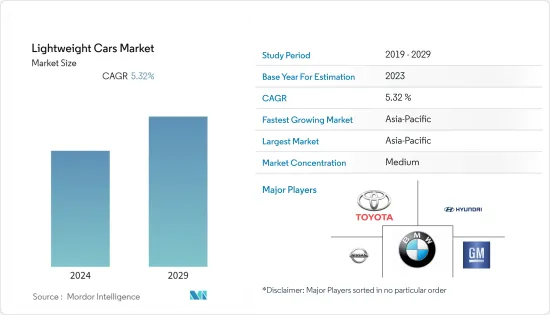
The lightweight material market represents a significant and evolving segment of the global automotive industry. This market focuses on vehicles designed with materials and technologies that reduce overall weight, leading to improvements in fuel efficiency, performance and environmental impact.
The push for fuel efficiency and emission regulations is a primary driver of the lightweight car market. Governments worldwide are imposing stricter emission standards to combat climate change, incentivizing manufacturers to produce lighter, more fuel-efficient vehicles. This regulatory landscape is intricately connected to performance benefits sought by consumers.
Furthermore, lighter vehicles offer enhanced dynamics like better acceleration and handling, appealing to a segment of the market that values a high-performance driving experience. Additionally, Technological Advancements play a crucial role. Developments in material science and engineering have enabled manufacturers to reduce vehicle weight without compromising on safety or functionality, thus addressing both regulatory and consumer demands.
Regions like North America, Europe and Asia-Pacific are at the forefront of the lightweight car market each influenced by their specific regulatory, economic and consumer landscapes. Europe, for instance, with its stringent emission regulations has been a significant driver of lightweight vehicle technology. These regional markets collectively contribute to a global movement towards lighter more efficient vehicles.
The lightweight vehicle market is rapidly evolving primarily driven by the increasing demand for lightweight passenger cars. This segment focuses on reducing vehicle weight through advanced materials and design techniques to enhance fuel efficiency, performance and reduce environmental impact.The shift towards lightweight vehicles is a response to global trends in sustainability, technological advancements and changing consumer preferences.
Furthremore, stricter global emission standards and the rising importance of fuel efficiency are significant drivers of the lightweight vehicle market. Governments worldwide are implementing policies to reduce greenhouse gas emissions leading to a focus on lightweighting as a key strategy.As lightweight vehicles consume less fuel and emit fewer pollutants compared to heavier counterparts making them increasingly attractive in markets with stringent environmental regulations.
The development and adoption of advanced materials such as high-strength steel, aluminum, magnesium and carbon fiber are central to the lightweight car market. These materials offer the necessary strength and durability while significantly reducing vehicle weight.Moreover, technological innovations in manufacturing and design, such as computer-aided engineering and 3D printing, have enabled more precise and efficient use of lightweight materials, further driving market growth.
Also, the rise of electric and hybrid vehicles has been a major catalyst for the lightweight vehicle market. In these vehicles, reducing weight is crucial for maximizing range and efficiency, making lightweight design an essential aspect of electric vehicle (EV) and hybrid technology.This trend has led to increased investment and innovation in lightweight materials and design specifically tailored for electric vehicle and hybrid vehicles.
The market is poised for continued growth and innovation playing a crucial role in the broader shift towards more sustainable and efficient transportation solutions.
The Asia-Pacific region with its dynamic economies and rapidly evolving automotive sector plays a pivotal role in the global lightweight car market. This region is characterized by its significant automotive production and consumption, driven by countries like China, Japan, India, and South Korea.
The lightweight car segment, focusing on vehicles designed with reduced mass for enhanced fuel efficiency and performance, is seeing substantial growth in this region, influenced by various market forces and technological innovations.
Asia-Pacific's economic landscape is marked by robust growth particularly in emerging economies such as China and India. This growth has led to increased purchasing power and a growing middle class which in turn fuels demand for automobiles, including lightweight vehicles.The region's economic expansion is not just limited to increased vehicle sales but also encompasses growing investments in automotive research and development, focusing on lightweight materials and technologies.
Moreover, the region is witnessing significant advancements in automotive technologies with a strong focus on developing lightweight materials such as high-strength steel, aluminum, magnesium and carbon fiber.Also, companies in Asia-Pacific are investing in research and development to create innovative lightweight solutions that do not compromise vehicle safety or performance. This includes advancements in manufacturing processes and the integration of lightweight components into vehicle design.
Major automotive players in the Asia-Pacific region such as Toyota, Honda, Hyundai, and Tata Motors are heavily invested in the lightweight car market. These companies are not only developing new models but also collaborating with material suppliers and technology firms to advance lightweight automotive technologies.
These collaborations are essential in driving innovation and reducing the costs associated with lightweight materials and technologies making them more accessible and viable for mass-market vehicles resulting in drive the growth of the market.
Lightweight Cars Market is consolidated, some of the major players in the lightweight car market are Toyota Motor Corporation, Nissan Motor Co. Ltd, Kia Motors Corporation, Hyundai Motor Co., and Ford Motor Company.
Auto manufacturers majorly dominate the market for lightweight cars. They also have a long-standing partnership with major composite manufacturing companies. With the need for sustainability and lower emissions to protect the environment, many OEMs are releasing electric vehicles on their models. The industry is looking to invest in and develop electric vehicles with the best combination of performance and a long travel range. For instance,