하이브리드 식물-동물 단백질 시스템 시장 : 기회, 성장 요인, 업계 동향 분석 및 예측(2025-2034년)
Hybrid Plant-Animal Protein System Market Opportunity, Growth Drivers, Industry Trend Analysis, and Forecast 2025 - 2034
상품코드:1885876
리서치사:Global Market Insights Inc.
발행일:2025년 11월
페이지 정보:영문 210 Pages
라이선스 & 가격 (부가세 별도)
ㅁ Add-on 가능: 고객의 요청에 따라 일정한 범위 내에서 Customization이 가능합니다. 자세한 사항은 문의해 주시기 바랍니다.
한글목차
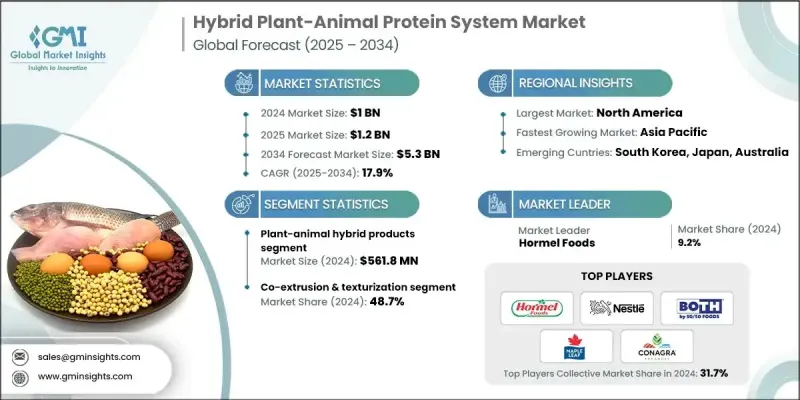
세계의 하이브리드 식물-동물 단백질 시스템 시장은 2024년에 10억 달러로 평가되었고, 2034년까지 연평균 복합 성장률(CAGR)은 17.9%를 나타낼 것으로 예측되며 53억 달러로 성장할 전망입니다.
이 시장은 식물성 단백질과 동물 유래 성분을 통합하여 영양적으로 균형 잡히고 환경 친화적이며 확장 가능한 단백질 공급원을 창출하는 혼합 단백질 시스템에 중점을 둡니다. 증가하는 세계 인구 수준과 식량 안보에 대한 압박은 하이브리드 단백질 형식에 대한 관심을 지속적으로 촉진하고 있습니다. 전 세계 정부는 기후 목표를 추진하기 위해 친환경적인 식품 생산 관행을 장려하고 있어 혁신적인 단백질 솔루션에 대한 수요를 강화하고 있습니다. 소비자들은 육류 섭취를 줄이면서도 동물성 제품을 계속 포함하는 유연한 식습관을 점점 더 채택하고 있어 하이브리드 단백질이 매력적인 절충안이 되고 있습니다. 북미는 선진 제조 역량과 규제 지원으로 현재 선도적 위치를 차지하고 있으며, 아시아태평양 지역은 소득 증가, 도시 생활 방식 변화, 지속가능성 문제에 대한 인식 제고에 힘입어 급속한 성장을 보이고 있습니다. 영양, 감각적 매력, 환경적 이점을 균형 있게 조화시키는 식품에 대한 수용도가 높아짐에 따라, 제조업체들은 효율성 향상, 자원 의존도 감소, 소비자 친숙도 유지가 가능한 하이브리드 단백질 혁신으로 방향을 전환하고 있습니다.
시장 범위
시작 연도
2024년
예측 기간
2025-2034년
시작 가치
10억 달러
예측 가치
53억 달러
CAGR
17.9%
식물-동물 하이브리드 제품 부문은 2024년 5억 6180만 달러를 창출했습니다. 이 부문은 하이브리드 제품이 유연한 제형을 제공하며, 익숙한 맛과 질감을 포기하지 않으면서 지속가능성을 원하는 소비자들의 공감을 얻어 강력한 입지를 유지하고 있습니다. 연구 및 가공 기술의 상당한 발전은 하이브리드 단백질 옵션의 관능적 및 영양적 특성을 향상시켜 다양한 식품 카테고리에서 입지를 확대하고 있습니다.
공압출 및 텍스처화 공정 부문은 2024년 48.7%의 점유율을 차지했습니다. 이러한 가공 방법은 기존 단백질 구조를 밀접하게 재현하는 섬유질의 고기 같은 질감을 생산할 수 있는 능력으로 시장을 주도하고 있습니다. 식물성 및 동물성 단백질을 응집력 있는 고품질 하이브리드 형태로 통합하는 능력은 더 나은 감각적 성능을 지원합니다. 이러한 공정의 확장성과 다중 성분 배합에 대한 적합성은 대량 생산을 운영하는 제조업체가 선호하는 기술로 자리매김하게 합니다.
북미의 하이브리드 식물-동물 단백질 시스템 시장은 2025년부터 2034년까지 연평균 복합 성장률(CAGR)은 17.9%로 성장할 것으로 전망됩니다. 지속 가능한 조달, 투명성, 윤리적 식품 생산에 대한 소비자 관심이 높아지면서 동물성 단백질의 영양 밀도와 식물성 단백질의 환경적 이점을 결합한 하이브리드 제품에 대한 수요가 증가하고 있습니다. 플렉시테리언 식습관과 천연, 클린 라벨 제품에 대한 선호도 증가는 기업들이 향상된 풍미, 질감 및 기능적 이점을 제공하는 하이브리드 제형을 개선하도록 장려하고 있습니다.
목차
제1장 조사 방법과 범위
제2장 주요 요약
제3장 업계 인사이트
생태계 분석
공급자의 상황
이익률
각 단계의 부가가치
밸류체인에 영향을 주는 요인
혁신
업계에 미치는 영향요인
성장 촉진요인
세계의 단백질 수요 증가와 식량 안보에 대한 우려
플렉시테리언 및 리듀세테리언 식단으로의 소비자 전환
지속가능성과 기후 변화완화 목표
업계의 잠재적 위험 및 과제
높은 생산 비용 및 가격 프리미엄 문제
소비자의 회의적 태도와 수용 장벽
시장 기회
식품 제조업체용 B2B 원료 시스템
배양육-식물성 하이브리드 상품화
성장 가능성 분석
규제 상황
북미
유럽
아시아태평양
라틴아메리카
중동 및 아프리카
Porter's Five Forces 분석
PESTEL 분석
기술과 혁신 동향
현재의 기술 동향
신흥기술
가격 동향
지역별
제품별
장래 시장 동향
특허 상황
무역 통계(HS코드)(참고 : 무역 통계는 주요 국가에서만 제공됨)
주요 수입국
주요 수출국
지속가능성과 환경면
지속가능한 대처
폐기물 감축 전략
생산의 에너지 효율
환경에 배려한 대처
탄소발자국 고려
제4장 경쟁 구도
소개
기업의 시장 점유율 분석
지역별
북미
유럽
아시아태평양
라틴아메리카
중동 및 아프리카
기업 매트릭스 분석
주요 시장 기업의 경쟁 분석
경쟁 포지셔닝 매트릭스
주요 발전
합병 및 인수
제휴 및 협업
신제품 발매
확대 계획
제5장 시장 추계 및 예측 : 제품별(2021-2034년)
주요 동향
식물-동물 하이브리드 제품
배양육-식물 하이브리드 제품
균단백질-동물 하이브리드 제품
곤충-식물 하이브리드 제품
미생물 발효-동물 하이브리드 제품
기타
제6장 시장 추계 및 예측 : 제조 공정별(2021-2034년)
주요 동향
공압출 및 텍스처화
발효
효소 변형
기타
제7장 시장 추계 및 예측 : 용도별(2021-2034년)
주요 동향
전체 근육 아날로그 하이브리드
스테이크 및 필레 대체품
커틀릿 및 찹 형태
기타
갈은/다진 하이브리드 제품
버거 패티
소시지 및 링크 제품
미트볼 및 크럼블
기타
가공 하이브리드 제품
너겟 및 텐더
성형 패티 및 커틀릿
스트립 및 바이트
기타
원료 하이브리드 시스템
단백질 분리물 및 농축물
텍스처화 식물성 단백질(TVP) 혼합물
기능성 단백질 원료
기타
즉석 하이브리드 식사
냉동 식사 형태
냉장 조리 형태
상온 보존 상품
밀 키트
기타
기타
제8장 시장 추계 및 예측 : 지역별(2021-2034년)
주요 동향
북미
미국
캐나다
유럽
독일
영국
프랑스
스페인
이탈리아
기타 유럽
아시아태평양
중국
인도
일본
호주
한국
기타 아시아태평양
라틴아메리카
브라질
멕시코
아르헨티나
기타 라틴아메리카
중동 및 아프리카
사우디아라비아
남아프리카
아랍에미리트(UAE)
기타 중동 및 아프리카
제9장 기업 프로파일
50/50 Foods, Inc
Cargill
Conagra Brands
Hormel Foods
ITC Limited
JBS
Maple Leaf Foods
Momentum Foods
Nestle SA
Rugenwalder Muhle
Tyson Foods
Vion Food Group
HBR
영문 목차
영문목차
The Global Hybrid Plant-Animal Protein System Market was valued at USD 1 billion in 2024 and is estimated to grow at a CAGR of 17.9% to reach USD 5.3 billion by 2034.
This market centers on blended protein systems that integrate plant proteins with animal-derived components to create nutritionally balanced, environmentally conscious, and scalable protein sources for future food supply needs. Growing global population levels and rising pressure on food security continue to push interest in hybrid protein formats. Governments around the world are promoting greener food production practices to advance climate goals, reinforcing demand for innovative protein solutions. Consumers are increasingly adopting flexible eating patterns that reduce meat intake while still incorporating animal-based products, making hybrid proteins an appealing compromise. North America currently leads adoption due to its advanced manufacturing capabilities and regulatory support, while Asia Pacific is witnessing rapid growth driven by higher incomes, urban lifestyle shifts, and rising awareness of sustainability challenges. This growing openness toward foods that balance nutrition, sensory appeal, and environmental benefits is steering manufacturers toward hybrid protein innovations that improve efficiency, reduce resource dependency, and maintain consumer familiarity.
Market Scope
Start Year
2024
Forecast Year
2025-2034
Start Value
$1 Billion
Forecast Value
$5.3 Billion
CAGR
17.9%
The plant-animal hybrid products segment generated USD 561.8 million in 2024. This segment holds a strong position because hybrid offerings provide adaptable formulations and resonate with consumers who want sustainability without sacrificing recognizable flavors and textures. Substantial advancements in research and processing technologies are enhancing the organoleptic and nutritional attributes of hybrid protein options, allowing them to gain traction across diverse food categories.
The co-extrusion and texturization processes segment accounted for a 48.7% share in 2024. These processing methods lead the market due to their ability to produce fibrous, meat-like textures that closely replicate traditional protein structures. Their capability to integrate plant and animal proteins into cohesive, high-quality hybrid formats supports better sensory performance. The scalability of these processes and suitability for multi-ingredient formulations make them preferred techniques for manufacturers operating at large production volumes.
North America Hybrid Plant-Animal Protein System Market is forecast to grow at a CAGR of 17.9% between 2025 and 2034. Rising consumer interest in sustainable sourcing, transparency, and ethical food production is prompting greater demand for hybrid products that combine the nutritional density of animal proteins with the environmental advantages of plant proteins. Flexitarian dietary habits and increasing preference for natural, clean-label products are encouraging companies to refine hybrid formulations that offer improved flavor, texture, and functional benefits.
Major players in the Hybrid Plant-Animal Protein System Market include Cargill, ITC Limited, Maple Leaf Foods, Conagra Brands, JBS, Tyson Foods, Momentum Foods, Vion Food Group, Rugenwalder Muhle, 50/50 Foods, Inc., Nestle S.A., and Hormel Foods. Companies are strengthening their presence in the Hybrid Plant-Animal Protein System Market by expanding R&D initiatives, advancing processing technologies, and forming strategic alliances with ingredient suppliers and food manufacturers. Many firms are developing next-generation texturization and blending techniques to achieve improved taste, nutritional balance, and consistent product quality. Investments in consumer research help companies tailor hybrid offerings to meet regional dietary preferences and sustainability expectations. Manufacturers are also diversifying their product portfolios to include hybrid options across meat alternatives, ready meals, and snack categories.
Table of Contents
Chapter 1 Methodology & Scope
1.1 Market scope and definition
1.2 Research design
1.2.1 Research approach
1.2.2 Data collection methods
1.3 Data mining sources
1.3.1 Global
1.3.2 Regional/Country
1.4 Base estimates and calculations
1.4.1 Base year calculation
1.4.2 Key trends for market estimation
1.5 Primary research and validation
1.5.1 Primary sources
1.6 Forecast model
1.7 Research assumptions and limitations
Chapter 2 Executive Summary
2.1 Industry 360° synopsis
2.2 Key market trends
2.2.1 Product trends
2.2.2 Production process trends
2.2.3 Application trends
2.2.4 Regional trends
2.3 TAM Analysis, 2025-2034
2.4 CXO perspectives: strategic imperatives
2.4.1 Executive decision points
2.4.2 Critical success factors
2.5 Future outlook and strategic recommendations
Chapter 3 Industry Insights
3.1 Industry ecosystem analysis
3.1.1 Supplier landscape
3.1.2 Profit margin
3.1.3 Value addition at each stage
3.1.4 Factor affecting the value chain
3.1.5 Disruptions
3.2 Industry impact forces
3.2.1 Growth drivers
3.2.1.1 Rising global protein demand & food security concerns