


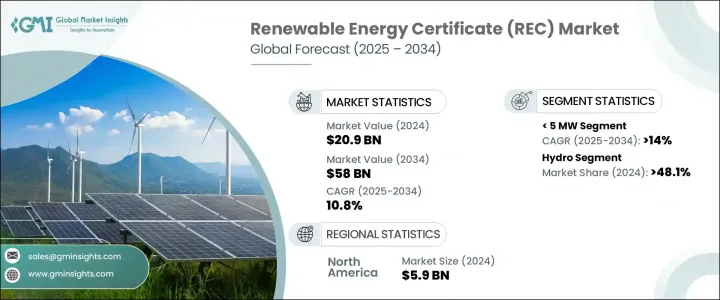
세계의 재생에너지 인증서 시장은 2024년에 209억 달러로 평가되었고 지속가능한 에너지에 대한 세계 수요 증가와 기업 및 소비자 환경에 대한 책임의식 증가를 배경으로 CAGR 10.8%를 나타내 2034년에는 580억 달러에 이를 것으로 추정되고 있습니다.
이러한 현저한 성장 궤도는 기술 혁신, 지원 정책, 보다 깨끗한 에너지 원으로 세계 에너지 전략의 변화의 조합에 의해 뒷받침됩니다.
첨단기술의 통합은 특히 투명성의 향상과 부정행위의 가능성의 저감에 있어서 시장운영을 현저하게 개선했습니다. 또한 국제 인증 프로토콜과 같은 표준화된 프레임 워크는 서로 다른 지리적 시장 간의 REC 발행과 거래를 간소화하고 국경을 넘는 거래를 보다 원활하고 효율적으로 만듭니다.
| 시장 범위 | |
|---|---|
| 시작 연도 | 2024년 |
| 예측 연도 | 2025-2034년 |
| 시작 금액 | 209억 달러 |
| 예측 금액 | 580억 달러 |
| CAGR | 10.8% |
재생에너지 인증서(REC)는 많은 국가에서 지지를 모으고 있으며, 보다 광범위한 지속가능성 목표의 일환으로 REC를 채용하는 기업과 개인이 늘고 있습니다. 탄소 중립의 목표 달성을 목표로 하는 기업에 있어서, 재생 가능 에너지 발전은 직접 발전하지 않고, 재생 가능 에너지를 서포트하기 위한 실용적이고 검증 가능한 수단을 제공합니다.
시장 세분화에서는 용량은 5MW, 5MW 초과 15MW 이하, 15MW 초과 30MW 이하, 30MW 초과로 분류됩니다. 이 중 5MW 부문은 2034년까지 14% 이상의 연평균 성장률을 나타내 예상되는 가장 빠른 성장을 보일 것으로 예상됩니다. 이 성장의 주된 요인은 기술 비용의 저하와 설치 효율의 세계의 향상에 의해 소규모 태양광 발전소의 도입이 일반적으로 되고 있기 때문입니다.
발전의 관점에서 시장은 바이오에너지, 태양광, 풍력, 수력, 폐기물 및 기타 카테고리로 분류됩니다. 조직을 통한 수력 발전의 도입을 장려하는 정부의 유리한 지원으로 인한 것입니다.
북미는 여전히 세계 REC 산업에서 중요한 기업이며, 시장 규모는 2022년에 50억 달러, 2023년에 54억 달러, 2024년에 59억 달러로 평가되었습니다. 탄소 감소 목표 달성에 중점을 두고 있기 때문에 REC는 지속가능성 인프라의 필수적인 부분이 되었습니다.
REC는 기업과 유틸리티 기업이 환경에 관한 의무와 사내 지속가능성 목표에 부합하는 중요한 메커니즘으로 작용하고 있습니다. 소비 설정을 변경하지 않고도 온실 가스 배출량을 줄이는 데 기여할 수 있습니다.
시장 리더십은 시장 점유율의 30% 이상을 차지하는 소수의 기업에 집중하고 있습니다. 기업의 이점은 전략적 관계, 장기 계약 및 지속적인 기술 진보로 강화되었습니다. 이러한 기업 중 상당수는 시장 투명성을 높이고 고객의 REC 포트폴리오 관리를 지원하기위한 혁신적인 도구 및 데이터 플랫폼을 도입했습니다.
The Global Renewable Energy Certificate Market was valued at USD 20.9 billion in 2024 and is estimated to grow at a CAGR of 10.8% to reach USD 58 billion by 2034, driven by growing global demand for sustainable energy and increasing awareness of environmental responsibility among corporations and consumers. This significant growth trajectory is fueled by a combination of technological innovations, supportive policies, and a shift in global energy strategies toward cleaner sources.
The integration of advanced technologies has notably improved market operations, particularly in enhancing transparency and reducing the chances of fraudulent activities. Blockchain is playing a key role by enabling secure, traceable REC transactions, which is critical for maintaining the authenticity and trustworthiness of certificates. Additionally, standardized frameworks such as international certification protocols have helped streamline the issuance and trading of RECs across different geographic markets, making cross-border trade smoother and more efficient.
| Market Scope | |
|---|---|
| Start Year | 2024 |
| Forecast Year | 2025-2034 |
| Start Value | $20.9 Billion |
| Forecast Value | $58 Billion |
| CAGR | 10.8% |
RECs continue to gain traction in numerous countries, with a growing number of businesses and individuals embracing them as part of broader sustainability goals. These certificates serve as official proof of the generation of a specific amount of electricity from renewable sources such as wind, solar, hydro, or biomass. For companies aiming to meet carbon neutrality goals, RECs provide a practical and verifiable path to support renewable energy without the need to generate it directly.
In terms of capacity segmentation, the market is categorized into installations of 5 MW, greater than 5 MW up to 15 MW, over 15 MW up to 30 MW, and those exceeding 30 MW. Among these, the 5 MW segment is expected to witness the fastest growth, with a projected CAGR of more than 14% through 2034. This growth is largely attributed to the increasing deployment of small-scale solar farms, which are becoming more common as technological costs decline and installation efficiency improves globally.
From a source perspective, the market is classified into categories such as bioenergy, solar, wind, hydro, waste, and others. Hydropower led the market in 2024, accounting for over 48.1% of total REC transactions. Its leading position is driven by favorable governmental support, which encourages hydro adoption through incentives and policy frameworks. Hydro energy's high efficiency and reliability make it an appealing option for nations looking to expand renewable capacity without sacrificing consistency in energy supply.
North America continues to be a significant player in the global REC industry, with the market valued at USD 5 billion in 2022, USD 5.4 billion in 2023, and USD 5.9 billion in 2024. The region's focus on transitioning toward clean energy and meeting ambitious carbon reduction targets has made RECs an integral part of its sustainability infrastructure. Increasing demand for RECs in North America is being shaped by compliance mandates, voluntary corporate commitments, and progressive energy procurement practices.
RECs serve as a critical mechanism for businesses and utilities to align with environmental mandates and internal sustainability goals. By acquiring RECs, organizations demonstrate their support for renewable power generation and contribute to reducing greenhouse gas emissions without altering their physical energy consumption setup. This flexibility has made RECs particularly attractive to enterprises seeking to enhance their environmental, social, and governance (ESG) profiles.
Market leadership is concentrated among a handful of firms that collectively hold over 30% of the market share. These include major players who have made substantial investments in digital platforms, international partnerships, and integrated energy trading networks. Their dominance is reinforced by strategic relationships, long-term contracts, and ongoing technological advancements. Many of these companies have also introduced innovative tools and data platforms aimed at increasing market transparency and supporting REC portfolio management for their clients.