Building Automation Systems Market, By System, By Application, By Geography
상품코드:1673887
리서치사:Coherent Market Insights
발행일:2025년 02월
페이지 정보:영문
라이선스 & 가격 (부가세 별도)
ㅁ Add-on 가능: 고객의 요청에 따라 일정한 범위 내에서 Customization이 가능합니다. 자세한 사항은 문의해 주시기 바랍니다.
한글목차
세계의 빌딩 자동화 시스템 시장은 2025년에 1,058억 7,000만 달러로 추정되며, 2032년에는 1,936억 6,000만 달러에 달할 것으로 예측되며, 2025-2032년에 CAGR 9.0%로 성장할 것으로 예측됩니다.
보고 범위
보고서 상세 내용
기준연도
2024년
2025년 시장 규모
1,058억 7,000만 달러
실적 데이터
2020-2024년
예측 기간
2025-2032년
예측 기간 : 2025-2032년 CAGR
9.00%
2032년 금액 예측
1,936억 6,000만 달러
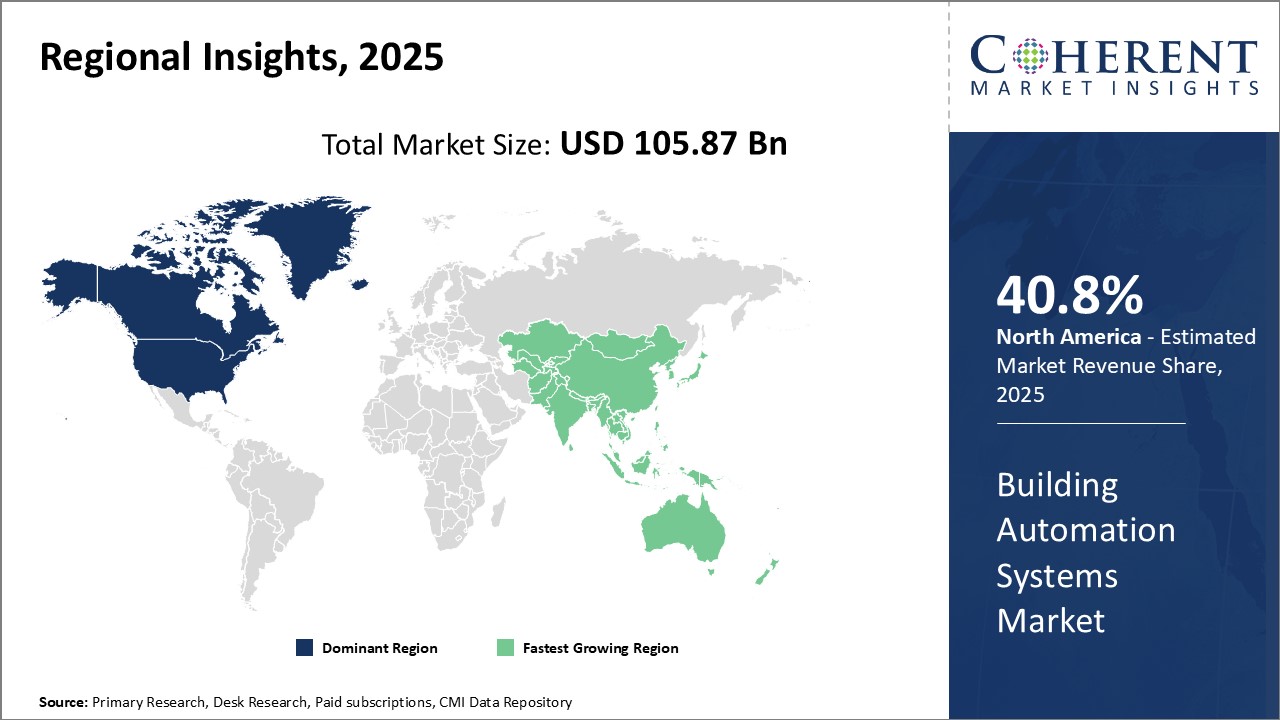
도표. 2025년 지역별 빌딩 자동화 시스템 시장 점유율(%)
빌딩 자동화 시스템은 건물의 난방, 환기, 공조, 조명, 기타 시스템을 원격으로 모니터링하고 제어하기 위해 설계된 전자기기의 지능형 네트워크입니다. 다양한 건물 기능의 중앙 집중식 제어를 가능하게 하고, 건물 운영을 최적화하여 에너지 효율 향상에 기여합니다. 연결 기술의 혁명으로 인해 공통의 통신 인프라에 다양한 빌딩 시스템을 통합하고, 클라우드 및 스마트폰과의 연결을 통해 원격 액세스 및 제어를 용이하게 하는 첨단 빌딩 자동화 시스템의 개발이 가능해졌습니다. 에너지 절약, 쾌적성, 지속가능성에 대한 관심이 높아지면서 이러한 시스템이 전 세계에서 확산되고 있습니다.
시장 역학
세계 빌딩 자동화 시스템 시장의 성장은 에너지 효율에 대한 수요 증가, 에너지 소비에 대한 정부의 엄격한 규제, 건설 산업의 성장, 급속한 도시화 등의 요인에 의해 주도되고 있습니다. 그러나 빌딩 자동화 시스템 도입에 소요되는 높은 초기 비용은 시장 성장을 저해하는 주요 요인으로 작용하고 있습니다. 사물인터넷(IoT) 기반 자동화 솔루션을 갖춘 스마트홈 및 상업용 빌딩의 인기가 높아지면서 시장 진출기업에게 유리한 기회를 제공할 것으로 예상됩니다. 빅데이터 분석의 부상과 저비용 센서의 가용성은 시장 성장을 더욱 촉진할 것으로 예상됩니다. 무선 프로토콜, 클라우드 컴퓨팅, 모빌리티 솔루션과 같은 연결 기술의 발전은 빌딩 시스템의 원활한 통합을 촉진할 것입니다.
본 조사의 주요 특징
세계의 빌딩 자동화 시스템 시장을 상세하게 분석했으며, 2024년을 기준 연도로 하여 예측 기간(2025-2032년) 시장 규모와 연평균 성장률(CAGR)에 대해 조사 분석하여 전해드립니다.
또한 다양한 부문에 걸친 잠재적 매출 기회를 밝히고, 이 시장의 매력적인 투자 제안 매트릭스를 설명합니다.
또한 시장 성장 촉진요인, 억제요인, 기회, 신제품 출시 및 승인, 시장 동향, 지역별 전망, 주요 기업의 경쟁 전략 등에 대한 주요 인사이트를 제공합니다.
이 보고서는 기업 하이라이트, 제품 포트폴리오, 주요 하이라이트, 재무 성과, 전략 등의 매개 변수를 기반으로 세계 빌딩 자동화 시스템 시장의 주요 기업 개요을 제공합니다.
이 보고서의 인사이트를 통해 마케팅 담당자와 기업 경영진은 향후 제품 출시, 유형 업그레이드, 시장 확대, 마케팅 전술에 대한 정보에 입각한 의사결정을 내릴 수 있습니다.
세계 빌딩 자동화 시스템 시장 보고서는 투자자, 공급업체, 제품 제조업체, 유통업체, 신규 시장 진출기업, 재무 분석가 등 이 산업의 다양한 이해관계자를 대상으로 합니다.
이해관계자들은 세계 빌딩 자동화 시스템 시장 분석에 사용되는 다양한 전략 매트릭스를 통해 의사결정을 용이하게 할 수 있습니다.
목차
제1장 조사의 목적과 전제조건
조사 목적
전제조건
약어
제2장 시장 전망
리포트 설명
시장의 정의와 범위
개요
COM(Coherent Opportunity Map)(COM)
제3장 시장 역학, 규제, 동향 분석
시장 역학
촉진요인
억제요인
시장 기회
규제 시나리오
산업 동향
합병과 인수
신시스템 출시/승인
COVID-19 팬데믹의 영향
제4장 세계의 빌딩 자동화 시스템 시장, 시스템별, 2020-2032년
서론
보안과 모니터링
난방, 환기, 공조(HVAC)
조명 솔루션
빌딩 에너지 관리
기타
제5장 세계의 빌딩 자동화 시스템 시장, 용도별, 2020-2032년
서론
상용
산업용
주택용
제6장 세계의 빌딩 자동화 시스템 시장, 지역별, 2020-2032년
서론
북미
유럽
아시아태평양
라틴아메리카
중동 및 아프리카
제7장 경쟁 구도
기업 개요
ABB Ltd.
Beckhoff Automation
Carrier Global Corporation
Cisco Systems, Inc.
Crestron Electronics, Inc.
Delta Controls
Emerson Electric Co.
Honeywell International Inc.
Hubbell Incorporated
Johnson Controls
Legrand
Lutron Electronics Co., Inc.
Schneider Electric SE
Siemens AG
Trane Technologies plc
제8장 운명의 수레바퀴
운명의 수레바퀴
COM(Coherent Opportunity Map)
제9장 참고 문헌과 조사 방법
참고 문헌
조사 방법
KSA
영문 목차
영문목차
Global Building Automation Systems Market is estimated to be valued at USD 105.87 Bn in 2025 and is expected to reach USD 193.66 Bn by 2032, growing at a compound annual growth rate (CAGR) of 9.0% from 2025 to 2032.
Report Coverage
Report Details
Base Year:
2024
Market Size in 2025:
USD 105.87 Bn
Historical Data for:
2020 To 2024
Forecast Period:
2025 To 2032
Forecast Period 2025 to 2032 CAGR:
9.00%
2032 Value Projection:
USD 193.66 Bn
Figure. Building Automation Systems Market Share (%), By Region 2025
Building automation systems are intelligent networks of electronic devices designed to remotely monitor and control heating, ventilation, air conditioning, lighting and other systems in buildings. They help improve energy efficiency by enabling centralized control of various building functions and optimizing building operations. Revolution in connectivity technologies has enabled development of advanced building automation systems capable of integrating different building systems on a common communication infrastructure and facilitating remote access and control through cloud and smartphone connectivity. Increased focus on energy conservation, comfort and sustainability is driving greater adoption of these systems globally.
Market Dynamics:
The global building automation systems market growth is driven by factors such as rising need for energy efficiency, stringent government regulations regarding energy consumption, growing construction industry and rapid urbanization. However, high upfront costs of implementing building automation systems is a major restraint for the market. Growing popularity of smart homes and commercial buildings equipped with Internet of Things (IoT) based automation solutions is expected to present lucrative opportunities for market players. Rise of big data analytics and availability of low-cost sensors are further expected to boost market growth. Advancements in connectivity technologies such as wireless protocols, cloud computing and mobility solutions will facilitate seamless integration of building systems.
Key features of the study:
This report provides in-depth analysis of the global building automation systems market, and provides market size (US$ Bn) and compound annual growth rate (CAGR%) for the forecast period (2025-2032), considering 2024 as the base year.
It elucidates potential revenue opportunities across different segments and explains attractive investment proposition matrices for this market
This study also provides key insights about market drivers, restraints, opportunities, new product launches or approval, market trends, regional outlook, and competitive strategies adopted by key players.
It profiles key players in the global building automation systems market based on the following parameters - company highlights, products portfolio, key highlights, financial performance, and strategies.
Key companies covered as a part of this study include ABB Ltd., Beckhoff Automation, Carrier Global Corporation, Cisco Systems, Inc., Crestron Electronics, Inc., Delta Controls, Emerson Electric Co., Honeywell International Inc., Hubbell Incorporated, Johnson Controls, Legrand, Lutron Electronics Co., Inc., Schneider Electric SE, Siemens AG, and Trane Technologies plc.
Insights from this report would allow marketers and the management authorities of the companies to make informed decisions regarding their future product launches, type up-gradation, market expansion and marketing tactics.
The global building automation systems market report caters to various stakeholders in this industry including investors, suppliers, product manufacturers, distributors, new entrants and financial analysts.
Stakeholders would have ease in decision-making through various strategy matrices used in analyzing the global building automation systems market.
Detailed Segmentation:
By System
Security & Surveillance
Heating, ventilation, and air conditioning (HVAC)
Lighting Solutions
Building Energy Management
Others
By Application
Commercial
Industrial
Residential
By Region
North America
Europe
Asia Pacific
Latin America
Middle East & Africa
Key Players Insights
ABB Ltd.
Beckhoff Automation
Carrier Global Corporation
Cisco Systems, Inc.
Crestron Electronics, Inc.
Delta Controls
Emerson Electric Co.
Honeywell International Inc.
Hubbell Incorporated
Johnson Controls
Legrand
Lutron Electronics Co., Inc.
Schneider Electric SE
Siemens AG
Trane Technologies plc
Table of Contents
1. Research Objectives and Assumptions
Research Objectives
Assumptions
Abbreviations
2. Market Purview
Report Description
Market Definition and Scope
Executive Summary
Market Snippet, By System
Market Snippet, By Application
Market Snippet, By Region
Coherent Opportunity Map (COM)
3. Market Dynamics, Regulations, and Trends Analysis
Market Dynamics
Drivers
Restraints
Market Opportunities
Regulatory Scenario
Industry Trend
Merger and Acquisitions
New System Launches/Approvals
Impact of COVID-19 Pandemic
4. Global Building Automation Systems Market, By System, 2020-2032 (US$ Bn)
Introduction
Market Share Analysis, 2025 and 2032 (%)
Y-o-Y Growth Analysis, 2020-2032
Segment Trends
Security & Surveillance
Introduction
Market Size and Forecast, 2020-2032, (US$ Bn)
Heating, ventilation, and air conditioning (HVAC)
Introduction
Market Size and Forecast, 2020-2032, (US$ Bn)
Lighting Solutions
Introduction
Market Size and Forecast, 2020-2032, (US$ Bn)
Building Energy Management
Introduction
Market Size and Forecast, 2020-2032, (US$ Bn)
Others
Introduction
Market Size and Forecast, 2020-2032, (US$ Bn)
5. Global Building Automation Systems Market, By Application, 2020-2032 (US$ Bn)
Introduction
Market Share Analysis, 2025 and 2032 (%)
Y-o-Y Growth Analysis, 2020-2032
Segment Trends
Commercial
Introduction
Market Size and Forecast, 2020-2032, (US$ Bn)
Industrial
Introduction
Market Size and Forecast, 2020-2032, (US$ Bn)
Residential
Introduction
Market Size and Forecast, 2020-2032, (US$ Bn)
6. Global Building Automation Systems Market, By Region, 2020-2032 (US$ Bn)
Introduction
Market Share Analysis, By Region, 2025 and 2032 (%)
Y-o-Y Growth Analysis, 2020-2032
North America
Regional Trends
Market Size and Forecast, By System, 2020-2032 (US$ Bn)
Market Size and Forecast, By Application, 2020-2032 (US$ Bn)
Market Share Analysis, By Country, 2025 and 2032 (%)
U.S.
Canada
Europe
Regional Trends
Market Size and Forecast, By System, 2020-2032 (US$ Bn)
Market Size and Forecast, By Application, 2020-2032 (US$ Bn)
Market Share Analysis, By Country, 2025 and 2032 (%)
Germany
U.K.
Spain
France
Italy
Russia
Rest of Europe
Asia Pacific
Regional Trends
Market Size and Forecast, By System, 2020-2032 (US$ Bn)
Market Size and Forecast, By Application, 2020-2032 (US$ Bn)
Market Share Analysis, By Country, 2025 and 2032 (%)
China
India
Japan
ASEAN
Australia
South Korea
Rest of Asia Pacific
Latin America
Regional Trends
Market Size and Forecast, By System, 2020-2032 (US$ Bn)
Market Size and Forecast, By Application, 2020-2032 (US$ Bn)
Market Share Analysis, By Country, 2025 and 2032 (%)
Brazil
Argentina
Mexico
Rest of Latin America
Middle East & Africa
Regional Trends
Market Size and Forecast, By System, 2020-2032 (US$ Bn)
Market Size and Forecast, By Application, 2020-2032 (US$ Bn)
Market Share Analysis, By Country, 2025 and 2032 (%)