


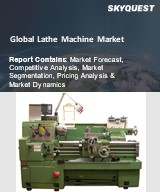
세계의 선반 시장 규모는 2024년에 263억 9,000만 달러로 평가되며, 2025년 274억 2,000만 달러에서 2033년까지 372억 4,000만 달러로 성장할 전망입니다. 예측 기간(2026-2033년)의 CAGR은 3.9%로 예측됩니다.
세계 선반 시장은 산업 자동화 및 정밀 제조 기법 증가 추세에 힘입어 큰 폭으로 확대될 것으로 예측됩니다. 선반은 제품의 균일성을 높이고 밸류체인의 효율성을 높이는 데 중요한 역할을 합니다. 시장 성장을 이끄는 주요 요인으로는 산업화 발전, 기술 혁신, 다양한 부문 수요 증가 등이 있습니다. 기존형 선반과 CNC 선반 모두 채택률이 증가하고 있으며, 기존형 선반은 소규모 산업에서 주류인 반면, CNC 유형은 첨단 제조 환경에 대응하고 있습니다. 제조업과 건설업의 회복, 자동차 산업의 급성장, 항공우주 분야의 확대는 선반 수요를 더욱 가속화시키고 있습니다. 또한 신흥 국가 소비자의 구매력 향상도 시장 확대를 촉진하고 있으며, 선반은 다양한 자동차 부품 및 항공우주 부품 제조에 필수적인 역할을 하고 있습니다.
세계 선반 시장을 촉진하는 요인
세계 선반 시장은 신흥 경제국, 특히 중국, 인도, 동남아시아 국가를 포함한 아시아태평양의 급격한 산업화 성장에 크게 영향을 받고 있습니다. 이러한 급속한 산업 성장은 선반 산업에 큰 기회를 가져다주고 있습니다. 이들 경제권이 제조 인프라에 대한 투자를 지속함에 따라 기계 부품에 대한 수요가 증가하여 시장 확대를 촉진하고 있습니다. 생산 능력의 향상과 첨단 공작기계에 대한 필요성이 결합되어 이 역동적이고 진화하는 시장에서의 성장 잠재력을 지원하고 있습니다.
세계 선반 시장 성장 억제요인
세계 선반 시장은 이러한 기계를 조작할 수 있는 숙련된 인력이 필요하므로 심각한 문제에 직면해 있습니다. 숙련된 기계공과 전문 지식을 갖춘 숙련된 기계공과 작업자는 선반의 최적 기능을 위해 필수적입니다. 자격을 갖춘 인력의 부족은 특히 노동력 부족과 기술 부족 문제에 직면한 지역에서 이러한 기계의 보급과 효과적인 활용을 저해할 수 있습니다. 이러한 제약은 생산 효율성에 영향을 미칠 뿐만 아니라 첨단 선반 기술을 활용하려는 기업에게 장벽이 되어 결국 시장내 성장과 혁신에 영향을 미칩니다.
세계 선반 시장 동향
세계 선반 시장은 인더스트리 4.0의 원칙이 널리 채택되면서 큰 변화를 경험하고 있습니다. 이러한 추세는 연결성과 자동화 강화에 중점을 두고 제조 공정에서 데이터베이스 의사결정으로 전환을 촉진하고 있습니다. 제조업체가 선반을 IoT 센서, 인공지능, 클라우드 기반 분석과 통합함으로써 성능 최적화 및 운영 효율성 향상을 기대할 수 있습니다. 이러한 기술적 진화를 통해 기계의 상태를 실시간으로 모니터링할 수 있을 뿐만 아니라 예지보전을 실현하여 다운타임을 줄이고 생산성을 향상시킬 수 있습니다. 그 결과, 선반 시장은 혁신과 효율성에 대한 노력을 반영하여 현대 제조 환경의 요구를 충족시키기 위해 빠르게 진화하고 있습니다.
Global Lathe Machine Market size was valued at USD 26.39 Billion in 2024 and is poised to grow from USD 27.42 Billion in 2025 to USD 37.24 Billion by 2033, growing at a CAGR of 3.9% during the forecast period (2026-2033).
The global lathe machine market is poised for significant expansion, driven largely by the increasing trend of industrial automation and precise manufacturing practices. Lathe machines play a crucial role in enhancing product uniformity and streamlining the value chain. Key factors propelling market growth include rising industrialization, technological advancements, and increasing demands from diverse sectors. Both conventional and CNC lathe machines are witnessing higher adoption rates, with conventional machines dominating small-scale industries while CNC variants cater to advanced manufacturing environments. The recovering manufacturing and construction sectors, alongside a booming automobile industry and an expanding aerospace sector, further accelerate lathe machine demand. Additionally, growing consumer purchasing power in emerging economies bolsters market expansion as lathe machines are essential in producing various automotive and aerospace components.
Top-down and bottom-up approaches were used to estimate and validate the size of the Global Lathe Machine market and to estimate the size of various other dependent submarkets. The research methodology used to estimate the market size includes the following details: The key players in the market were identified through secondary research, and their market shares in the respective regions were determined through primary and secondary research. This entire procedure includes the study of the annual and financial reports of the top market players and extensive interviews for key insights from industry leaders such as CEOs, VPs, directors, and marketing executives. All percentage shares split, and breakdowns were determined using secondary sources and verified through Primary sources. All possible parameters that affect the markets covered in this research study have been accounted for, viewed in extensive detail, verified through primary research, and analyzed to get the final quantitative and qualitative data.
Global Lathe Machine Market Segments Analysis
Global Lathe Machine Market is segmented by Type, Operation, Capacity, End User and region. Based on Type, the market is segmented into Vertical Lathes and Horizontal Lathes. Based on Operation, the market is segmented into Conventional Lathes and CNC Lathes. Based on Capacity, the market is segmented into Heavy Duty, Medium Duty and Low Duty. Based on End User, the market is segmented into Automotive, General Manufacturing, Precision Engineering, Transportation and Others. Based on region, the market is segmented into North America, Europe, Asia Pacific, Latin America and Middle East & Africa.
Driver of the Global Lathe Machine Market
The global lathe machine market is significantly influenced by the industrialization surge seen in emerging economies, particularly throughout the Asia-Pacific region, including nations such as China, India, and various Southeast Asian countries. This rapid industrial growth presents a substantial opportunity for the lathe machine sector. As these economies continue to invest heavily in their manufacturing infrastructure, there is an escalating demand for machine components, thereby propelling market expansion. The combination of increased production capabilities and the need for advanced machining tools underscores the potential for growth within this dynamic and evolving marketplace.
Restraints in the Global Lathe Machine Market
The global lathe machine market faces significant challenges due to the necessity of skilled labor for operating these machines. Proficient machinists and operators, equipped with specialized training and expertise, are essential for the optimal functioning of lathe machines. A shortage of qualified personnel can hinder the widespread adoption and effective use of these machines, particularly in areas grappling with workforce challenges or skill deficiencies. This limitation not only affects production efficiency but also poses obstacles for companies looking to leverage advanced lathe technology, ultimately impacting growth and innovation within the market.
Market Trends of the Global Lathe Machine Market
The Global Lathe Machine market is experiencing a significant transformation driven by the widespread adoption of Industry 4.0 principles. This trend emphasizes enhanced connectivity and automation, fostering a shift towards data-driven decision-making in manufacturing processes. As manufacturers integrate lathe machines with IoT sensors, artificial intelligence, and cloud-based analytics, they are poised to optimize performance and improve operational efficiency. This technological evolution not only facilitates real-time monitoring of machine health but also enables predictive maintenance, thereby reducing downtime and enhancing productivity. Consequently, the lathe machine market is rapidly evolving to meet the demands of modern manufacturing environments, reflecting a commitment to innovation and efficiency.