


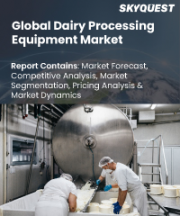
유제품 가공 장비 시장 규모는 2024년에 126억 달러로 평가되었고, 2025년 132억 4,000만 달러에서 2033년까지 197억 2,000만 달러로 성장할 전망이며, 예측 기간(2026-2033년) CAGR은 5.1%를 보일 것으로 예측됩니다.
유제품 가공 장비 시장은 우유, 버터, 치즈, 분유 등 다양한 유제품의 생산 및 가공에 필수적인 각종 기계를 망라하고 있습니다. 이 장비들은 원유 저장, 여과, 살균, 균질화, 냉각, 크림 분리, 포장과 같은 중요한 기능을 담당하고 있습니다. 유제품 가공업체는 농장과 소비자 사이의 중요한 중개자로서 원유를 고품질의 안전하고 편리한 상품으로 바꿔주는 역할을 합니다. 첨단 기술을 통해 생산자는 노동 강도를 줄이면서 우유 품질을 향상시킬 수 있습니다. 유제품이 세계 식품 산업을 지배하고 있는 가운데, 유제품 가공 부문은 생우유를 요구르트, 버터와 같은 즉석식품으로 전환하는 데 있어 매우 중요한 역할을 하고 있으며, 생산량 증가와 자동화 추세로 인해 시장은 큰 성장 잠재력을 가지고 있습니다.
유제품 가공 장비 시장 성장 촉진요인
세계 출산율의 지속적인 증가는 우유 및 유제품에 대한 수요를 크게 증가시킬 것으로 예측됩니다. 가공유, 분유, 단백질 농축액은 높은 영양학적 가치로 높은 평가를 받고 있으며, 건강한 성장을 가속하는 시리얼, 이유식, 유아용 조제분유에 필수적인 원료로 사용되고 있습니다. 영유아의 건강과 웰빙에 대한 관심이 높아짐에 따라 영유아의 양질의 영양 공급에 대한 관심이 높아지고 있으며, 이는 영아용 조제분유 소비 증가로 이어질 것으로 예측됩니다. 이러한 건강 의식과 영양 수요의 교차 움직임은 유제품 가공 장비 시장의 확대를 촉진할 것입니다.
유제품 가공 장비 시장 성장 억제요인
유제품 가공 장비 시장은 가공 기계를 효과적으로 가동하는 데 필요한 에너지 및 전력 비용의 상승으로 인해 심각한 제약에 직면해 있습니다. 유제품 제조에 필수적인 살균처리, 증발 등 주요 공정에는 막대한 열에너지가 필요합니다. 특히 살균처리는 전력과 각종 연료에 크게 의존하기 때문에 에너지 수요가 두드러집니다. 결과적으로 에너지 소비에 따른 비용 증가는 유제품 가공 사업의 재정적 지속가능성을 저해하고, 시장 내 투자 및 성장을 제한할 수 있습니다. 유제품 가공 분야 시장 발전을 지속하기 위해서는 이러한 에너지 비용 문제를 해결하는 것이 필수적입니다.
유제품 가공 장비 시장 동향
유제품 가공 장비 시장에서는 효율성 향상, 위생 기준 준수, 식품 안전성 강화 등의 요구를 배경으로 자동화의 발전이 두드러진 추세입니다. 첨단 자동화 기술은 생산 공정을 간소화하고 엄격한 위생 프로토콜을 보장하면서 제조 효율성을 최적화할 수 있도록 합니다. 이러한 변화는 인건비 최소화 및 인적 오류 감소를 통해 업무 생산성을 높일 뿐만 아니라 업계 내 경쟁력을 강화할 수 있습니다. 소비자가 식품 안전에 대한 관심이 높아짐에 따라 시장 수요를 충족하고 규제 기준을 준수하기 위해서는 유제품 가공 시설에 자동화 솔루션을 도입하는 것이 필수적이며, 이는 업계의 혁신과 지속가능성을 위한 길을 열어줄 것입니다.
Dairy Processing Equipment Market size was valued at USD 12.6 Billion in 2024 and is poised to grow from USD 13.24 Billion in 2025 to USD 19.72 Billion by 2033, growing at a CAGR of 5.1% during the forecast period (2026-2033).
The dairy processing equipment market encompasses a diverse array of machinery essential for producing and processing a wide range of dairy products, including milk, butter, cheese, and milk powders. These devices perform various critical functions, such as storage, filtering, pasteurizing, and homogenizing raw milk, along with chilling, cream separation, and packaging. Dairy processors serve as vital intermediaries between farms and consumers, transforming raw milk into high-quality, safe, and convenient goods. The adoption of advanced technology enables producers to enhance milk quality while reducing labor intensity. As milk-based products continue to dominate the global food industry, the dairy processing sector plays a pivotal role in converting raw milk into ready-to-consume items like yogurt and butter, driving significant market growth potential due to rising production and automation trends.
Top-down and bottom-up approaches were used to estimate and validate the size of the Dairy Processing Equipment market and to estimate the size of various other dependent submarkets. The research methodology used to estimate the market size includes the following details: The key players in the market were identified through secondary research, and their market shares in the respective regions were determined through primary and secondary research. This entire procedure includes the study of the annual and financial reports of the top market players and extensive interviews for key insights from industry leaders such as CEOs, VPs, directors, and marketing executives. All percentage shares split, and breakdowns were determined using secondary sources and verified through Primary sources. All possible parameters that affect the markets covered in this research study have been accounted for, viewed in extensive detail, verified through primary research, and analyzed to get the final quantitative and qualitative data.
Dairy Processing Equipment Market Segments Analysis
Global Dairy Processing Equipment Market is segmented by Type, Operation, Application, Distribution Channel and Region. Based on Type, the market is segmented into Pasteurizers, Homogenizers, Mixers, Blenders, Separators, Evaporators, Dryers, Membrane Filtration Equipment, Thermal Treatment Systems, Others. Based on Operation, the market is segmented into Automatic, Semi-Automatic. Based on Application, the market is segmented into Cheese, Processed Milk, Yogurt, Protein, Ingredients, Milk Powders, Others. Based on Distribution Channel, the market is segmented into Hypermarkets, Food Specialty Stores, Convenient Stores, Others. Based on Region, the market is segmented into North America, Europe, Asia Pacific, Latin America and Middle East & and Africa.
Driver of the Dairy Processing Equipment Market
The ongoing increase in global birth rates is likely to drive the demand for milk and dairy products significantly. Processed milk, milk powder, and protein concentrates are highly valued for their nutritional content, making them essential ingredients in cereals, baby food, and infant formulas that promote healthy growth. The emphasis on providing quality nutrition for infants contributes to heightened concerns about their health and wellness, which, in turn, is set to boost the consumption of infant formula. This growing intersection of health awareness and nutritional demands will enhance the expansion of the dairy processing equipment market.
Restraints in the Dairy Processing Equipment Market
The dairy processing equipment market faces significant constraints due to the rising costs associated with energy and power necessary for operating processing machinery effectively. Key processes such as pasteurization and evaporation, integral to dairy product preparation, require substantial thermal energy. This demand for energy is particularly pronounced in pasteurization, which relies heavily on electricity and various fuels. Consequently, the escalating expenses tied to energy consumption can hinder the financial viability of dairy processing operations, potentially limiting investments and growth within the market. Addressing these energy cost challenges will be essential for sustaining market development in the dairy processing sector.
Market Trends of the Dairy Processing Equipment Market
The Dairy Processing Equipment market is experiencing a significant trend towards increased automation, driven by the need for enhanced efficiency, compliance with health standards, and improved food safety. Advanced automation technologies are streamlining production processes, enabling dairy producers to optimize manufacturing efficiencies while ensuring rigorous sanitation protocols. This shift not only enhances operational productivity but also bolsters competitiveness within the sector by minimizing labor costs and reducing human error. As consumers increasingly prioritize food safety, the adoption of automated solutions in dairy processing equipment becomes essential for meeting market demands and adhering to regulatory standards, paving the way for innovation and sustainability in the industry.