


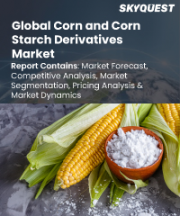
세계의 옥수수 및 옥수수 전분 파생품 시장 규모는 2024년에 780억 9,000만 달러로 평가되었고, 2025년 820억 7,000만 달러에서 2033년까지 1,221억 9,000만 달러로 성장할 전망이며, 예측 기간(2026-2033년) CAGR은 5.1%를 보일 것으로 예측됩니다.
옥수수 및 옥수수 전분 파생품 시장은 주로 음료 및 식품 분야에서 천연 및 유기농 원료에 대한 수요 증가와 바이오연료에 대한 수요 증가에 힘입어 크게 성장하고 있습니다. 이러한 유도체는 그 천연적 특성으로 인해 다양한 식음료 제품에 점점 더 많이 활용되고 있습니다. 또한, 제약 및 퍼스널케어 산업에서도 옥수수 전분 파생품가 점점 더 많이 사용되고 있습니다. 제약 분야에서는 결합제, 붕괴제, 충진제로서 중요한 역할을 하며, 퍼스널케어 제품에서는 증점제 및 유화제로 사용됩니다. 이러한 다각적인 수요는 해당 분야의 지속적인 시장 확대 가능성을 보여주고 있습니다.
세계 옥수수 및 옥수수 전분 파생품 시장 성장 촉진요인
세계 옥수수 및 옥수수 전분 파생품 시장은 주로 조리 시간이 짧고 바로 먹을 수 있는 간편식에 대한 수요 증가로 인해 주도되고 있습니다. 라이프스타일의 변화로 바쁜 스케줄을 소화해야 하는 직장인들이 늘어나면서 빠른 식사 해결책을 찾는 직장인들이 증가하고 있으며, 이로 인해 즉석식품, 포장 간식, 음료의 인기가 높아지고 있습니다. 또한, 도시화에 따라 슈퍼마켓과 대형마트가 증가하고 다양한 포장식품이 제공되면서 소비자들이 이러한 편리한 제품을 쉽게 찾아 구매할 수 있게 되었습니다. 가처분 소득 증가도 이러한 편의성을 중시하는 제품에 대한 수요 증가에 기여하며 시장 성장을 견인하고 있습니다.
세계 옥수수 및 옥수수 전분 파생 상품 시장 성장 억제요인
세계 옥수수 및 옥수수 전분 파생품 시장은 주요 원료인 옥수수에 대한 의존도가 높기 때문에 심각한 제약에 직면해 있습니다. 옥수수공급량과 가격 변동은 기후 조건, 해충 발생, 농업 정책의 변화 등 여러 요인의 영향을 받습니다. 가뭄이나 과도한 강우와 같은 악천후 현상은 옥수수 생산을 방해하여 공급 부족과 가격 상승을 초래할 수 있습니다. 또한, 옥수수 먹노린재, 애벌레 등의 해충 문제는 수확량에 악영향을 미쳐 공급량을 더욱 감소시킬 수 있습니다. 또한, 보조금 및 무역 정책을 포함한 농업 관련 정부 규제의 변화는 옥수수 시장 시장 역학을 변화시켜 옥수수 전분 및 그 파생 제품의 생산에 영향을 미칠 수 있습니다.
세계 옥수수 및 옥수수 전분 파생상품 시장 동향
건강과 웰빙에 대한 소비자의 인식이 높아지면서 식음료 제품에서 천연 및 유기농 원료에 대한 수요가 증가함에 따라 전 세계 옥수수 및 옥수수 전분 파생품 시장은 큰 변화를 겪고 있습니다. 천연 유래 원료로 인정받고 있는 옥수수와 그 유도체는 클린 라벨 성분으로 선호되고 있으며, 제품의 투명성을 높여 건강 지향적인 소비자층에게 어필하고 있습니다. 이러한 추세는 증점제, 글루텐 프리 대체품 등 다양한 용도로 활용되는 옥수수 전분의 다재다능함에 힘입어 더욱 가속화되고 있으며, 현대 소비자의 변화하는 기호에 부응하는 중요한 원료로 자리매김하고 있습니다.
Global Corn and Corn Starch Derivatives Market size was valued at USD 78.09 Billion in 2024 and is poised to grow from USD 82.07 Billion in 2025 to USD 122.19 Billion by 2033, growing at a CAGR of 5.1% during the forecast period (2026-2033).
The market for corn and corn starch derivatives is experiencing significant growth, primarily driven by the heightened demand for natural and organic ingredients in the food and beverage sector, alongside the rising need for biofuels. These derivatives are increasingly utilized in various food and beverage items for their natural properties. Additionally, there is a growing uptake of corn starch derivatives within the pharmaceutical and personal care industries. In pharmaceuticals, they serve vital functions as binders, disintegrants, and fillers, while in personal care products, they are employed as thickeners and emulsifiers. This multifaceted demand underscores the potential for sustained market expansion across these sectors.
Top-down and bottom-up approaches were used to estimate and validate the size of the Global Corn and Corn Starch Derivatives market and to estimate the size of various other dependent submarkets. The research methodology used to estimate the market size includes the following details: The key players in the market were identified through secondary research, and their market shares in the respective regions were determined through primary and secondary research. This entire procedure includes the study of the annual and financial reports of the top market players and extensive interviews for key insights from industry leaders such as CEOs, VPs, directors, and marketing executives. All percentage shares split, and breakdowns were determined using secondary sources and verified through Primary sources. All possible parameters that affect the markets covered in this research study have been accounted for, viewed in extensive detail, verified through primary research, and analyzed to get the final quantitative and qualitative data.
Global Corn and Corn Starch Derivatives Market Segments Analysis
Global Corn and Corn Starch Derivatives Market is segmented by Product, Function, Application and region. Based on Product, the market is segmented into Corn Starch, Corn Starch Derivatives, Corn Oil, Corn Flour, Corn Meal/Flakes/Grits and Corn Protein. Based on Function, the market is segmented into Thickening Agents, Stabilizers, Sweeteners and Other Functions. Based on Application, the market is segmented into Food & Beverage, Animal feed, Paper And Board, Pharmaceutical, Biodiesel, Textiles and Others. Based on region, the market is segmented into North America, Europe, Asia Pacific, Latin America and Middle East & Africa.
Driver of the Global Corn and Corn Starch Derivatives Market
The Global Corn and Corn Starch Derivatives market is primarily propelled by the increasing demand for convenience food items, which require minimal preparation and are quick to consume. The shift in lifestyle towards busier schedules has led to a growing population of working professionals seeking quick meal solutions, thereby boosting the popularity of ready-to-eat meals, packaged snacks, and beverages. Additionally, urbanization has spawned an increase in supermarkets and hypermarkets that offer diverse packaged food options, making it easier for consumers to find and purchase these convenient products. Rising disposable incomes further contribute to the escalating demand for such convenience-oriented offerings, reinforcing market growth.
Restraints in the Global Corn and Corn Starch Derivatives Market
The Global Corn and Corn Starch Derivatives market faces significant constraints due to the dependence on corn as the primary raw material. Variability in corn supply and pricing is influenced by multiple factors, including climate conditions, pest outbreaks, and agricultural policy changes. Adverse weather phenomena like droughts or excessive rainfall can disrupt corn production, resulting in supply shortages and price hikes. Additionally, pest issues, such as those caused by corn borers and armyworms, can negatively affect yield, further diminishing availability. Furthermore, fluctuations in government regulations regarding agriculture, including subsidies and trade policies, can also alter the corn market dynamics, thereby impacting the production of corn starch and its derivatives.
Market Trends of the Global Corn and Corn Starch Derivatives Market
The Global Corn and Corn Starch Derivatives market is witnessing a significant shift fueled by an increasing consumer focus on health and wellness, leading to a heightened demand for natural and organic ingredients in food and beverage products. Corn and its derivatives, recognized for their natural sourcing, are being favored as clean label components, enhancing product transparency and appealing to health-conscious consumers. This trend is further supported by the versatility of corn starch in various applications, including thickening agents and as a gluten-free alternative, positioning it as a crucial ingredient in meeting the evolving preferences of modern consumers.