


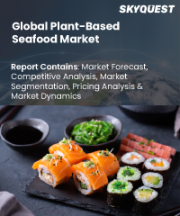
세계의 식물성 해산물 시장 규모는 2024년에 8,068만 달러로 평가되었고, 2025년 1억 1,481만 달러에서 2033년까지 19억 3,023만 달러로 성장할 전망이며, 예측 기간(2026-2033년) CAGR은 42.3%를 보일 것으로 예측됩니다.
식물성 해산물 세계 시장은 소비자들이 기존 해산물을 대체할 수 있는 건강하고 죄책감 없는 대안을 찾는 소비자들이 늘어나면서 크게 성장하고 있습니다. 이 혁신적인 제품들은 수은을 함유하지 않은 필수 단백질 공급원을 제공하는 동시에 남획과 해양 생태계에 미치는 영향에 대한 우려를 해결하고 있습니다. 식물성 해산물은 감소하는 어족자원에 대한 압력을 완화할 뿐만 아니라, 플라스틱 오염, 온실가스 배출 등 어업 관행에 따른 환경 문제를 줄이는 데에도 기여합니다. 또한, 바쁜 생활 방식과 편리하고 저렴한 가격의 식품에 대한 수요가 증가함에 따라 식물성 해산물은 소비자의 요구를 효과적으로 충족시키고 있습니다. 건강, 지속가능성, 편의성이라는 요소가 결합된 식물성 해산물은 시장의 주요 기업로 자리 잡으며 다양한 계층에서 확대와 매력을 이끌어내고 있습니다.
세계 식물성 해산물 시장을 이끄는 요인들
비건 채식의 보급 확대는 세계 식물성 해산물 시장의 성장을 견인하는 주요 요인입니다. 건강에 대한 인식이 높아지고 생활수준의 향상을 추구하는 태도에 영향을 받아 상당수의 인구가 비건 라이프 스타일을 채택하고 있습니다. 이러한 변화에는 환경적 지속가능성과 동물복지에 대한 인식이 높아진 것도 한 몫을 하고 있습니다. 남획과 해양 생태계에 미치는 영향에 대한 우려가 커지면서 소비자들은 지속 가능한 대안을 적극적으로 찾고 있습니다. 결과적으로, 식물성 식품을 선택하려는 이러한 집단적 움직임은 개인의 건강 선택을 반영할 뿐만 아니라 지구와 그 생물을 보호하려는 노력을 강조하고, 이를 통해 식물성 해산물 제품의 확장을 뒷받침하고 있습니다.
세계 식물성 해산물 시장 성장 억제요인
세계 식물성 해산물 시장은 잠재적인 영양 부족으로 인한 문제에 직면해 있습니다. 기존 해산물과 달리 식물성 대체품은 소비자의 식생활에 필수적인 필수 비타민과 단백질, 특히 중요한 아미노산이 부족할 수 있습니다. 이 단점은 보통 신선한 해산물에 풍부하게 함유된 특정 비타민, 미네랄, 식이섬유가 부족할 수 있다는 점입니다. 또한, 식물 유래 제품의 신선도 및 종합적인 품질에 대한 우려는 소비자 수용과 시장 확대를 더욱 방해할 수 있습니다. 결과적으로 이러한 영양 및 품질 관련 문제는 식물성 해산물 산업의 성장에 심각한 제약요인으로 작용할 수 있습니다.
세계 식물성 해산물 시장 동향
세계 식물성 해산물 시장에서는 혁신과 커뮤니티 참여에 대한 두드러진 추세를 볼 수 있습니다. 각 업체들은 전통 해산물의 맛과 식감을 재현한 제품을 제공하기 위해 노력하고 있습니다. 건강과 환경에 대한 관심이 중심이 되는 가운데, 이들 기업은 진화하는 식생활에 맞추어 지속가능한 대안을 제시함으로써 소비자 경험을 개선하는 데 주력하고 있습니다. 외식 산업에서 식물성 단백질에 대한 수요가 급증하는 것은 다양하고 진보된 대체품에 대한 수요 증가를 반영하고 있으며, 식물성 해산물 카테고리는 식품 산업에서 빠르게 성장할 것으로 예상되는 역동적인 분야로 자리매김하고 있습니다.
Global Plant-Based Seafood Market size was valued at USD 80.68 Million in 2024 and is poised to grow from USD 114.81 Million in 2025 to USD 1930.23 Million by 2033, growing at a CAGR of 42.3% during the forecast period (2026-2033).
The global market for plant-based seafood is experiencing significant growth as consumers increasingly seek healthy, guilt-free alternatives to traditional seafood. These innovative products offer a mercury-free source of essential proteins while addressing concerns related to overfishing and its impact on marine ecosystems. Plant-based seafood not only alleviates pressure on depleting fish stocks but also mitigates environmental issues associated with fishing practices, such as plastic pollution and greenhouse gas emissions. Additionally, with busy lifestyles and a growing need for convenient, affordable, and non-perishable food options, plant-based seafood meets consumer demands effectively. This convergence of health, sustainability, and convenience positions plant-based seafood as a key player in the market, driving its expansion and appeal among diverse demographics.
Top-down and bottom-up approaches were used to estimate and validate the size of the Global Plant-Based Seafood market and to estimate the size of various other dependent submarkets. The research methodology used to estimate the market size includes the following details: The key players in the market were identified through secondary research, and their market shares in the respective regions were determined through primary and secondary research. This entire procedure includes the study of the annual and financial reports of the top market players and extensive interviews for key insights from industry leaders such as CEOs, VPs, directors, and marketing executives. All percentage shares split, and breakdowns were determined using secondary sources and verified through Primary sources. All possible parameters that affect the markets covered in this research study have been accounted for, viewed in extensive detail, verified through primary research, and analyzed to get the final quantitative and qualitative data.
Global Plant-Based Seafood Market Segments Analysis
Global Plant-Based Seafood Market is segmented by Consumer, Product, Source, Distribution Channel and region. Based on Consumer, the market is segmented into Omnivore, Flexitarian, Vegetarian and Vegan. Based on Product, the market is segmented into Fish Products, Prawns and Shrimp Products and Crab Products. Based on Source, the market is segmented into Soy, Wheat, Pea, Canola, Lentil and Others. Based on Distribution Channel, the market is segmented into Supermarkets and Hypermarkets, Specialty Stores, HoReCa, Convenience Stores and Online Sales. Based on region, the market is segmented into North America, Europe, Asia Pacific, Latin America and Middle East & Africa.
Driver of the Global Plant-Based Seafood Market
The increasing popularity of veganism is a key driver of growth in the global plant-based seafood market. A significant portion of the population is adopting vegan lifestyles, influenced by heightened health awareness and a desire for improved living standards. This shift is accompanied by a growing consciousness regarding environmental sustainability and animal welfare. As concerns regarding overfishing and its effects on marine ecosystems become more pronounced, consumers are actively seeking sustainable alternatives. Consequently, this collective movement towards plant-based options not only reflects personal health choices but also emphasizes a commitment to protecting the planet and its inhabitants, thereby supporting the expansion of plant-based seafood products.
Restraints in the Global Plant-Based Seafood Market
The global plant-based seafood market faces challenges due to potential nutritional deficiencies. Unlike traditional seafood, plant-based alternatives may lack essential vitamins and proteins, including crucial amino acids that are vital for the consumer's dietary needs. This shortcoming can lead to gaps in specific vitamins, minerals, and fibers, which are typically abundant in fresh seafood. Additionally, concerns regarding the freshness and overall quality of plant-based options could further hinder consumer acceptance and market expansion. As a result, these nutritional and quality-related issues could pose significant restraints on the growth of the plant-based seafood industry.
Market Trends of the Global Plant-Based Seafood Market
The Global Plant-Based Seafood market is witnessing a significant trend towards innovation and community engagement, with companies striving to deliver products that replicate the taste and texture of traditional seafood. As health and environmental concerns take center stage, these firms are focused on enhancing the overall consumer experience by promoting sustainable alternatives that cater to evolving dietary preferences. The surge in demand for plant-based proteins within food service establishments reflects a growing appetite for diverse and cutting-edge alternatives, positioning the plant-based seafood category as a dynamic segment poised for rapid expansion in the food industry.