


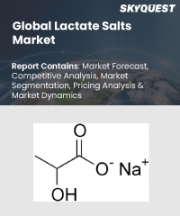
젖산염 시장 규모는 2024년에 4억 4,255만 달러로 평가되며, 2025년 4억 6,910만 달러에서 2033년까지 7억 4,768만 달러로 성장할 전망입니다. 예측 기간(2026-2033년)의 CAGR은 6%로 예측됩니다.
젖산염 시장은 그 다용도성과 친환경적 특성으로 인해 식품 및 음료, 의약품, 화장품 등 여러 산업 분야에서 괄목할 만한 성장세를 보이고 있습니다. 기업은 새로운 용도의 개발과 제품 품질 향상을 위해 연구개발에 대한 투자를 확대하고 있습니다. 또한 젖산염은 생분해성이며, 친환경적인 선택을 원하는 소비자의 니즈에 따라 지속가능한 제품에 대한 관심이 높아지면서 이 시장도 성장하고 있습니다. 주요 업체들 간의 치열한 경쟁은 변화하는 고객 선호도와 규제 기준에 적응하기 위한 혁신을 촉진하고 있습니다. 기업이 기존 화학물질과 첨가제를 대체할 수 있는 제품을 찾고 있는 가운데, 젖산염 시장 전망은 여전히 양호하며 지속적인 성장 기회가 예상됩니다.
젖산염 시장의 성장 요인
소비자의 건강과 웰빙에 대한 인식이 높아짐에 따라 젖산염 시장의 성장을 주도하는 주요 요인이 되고 있습니다. 더 건강하고 자연적인 선택을 적극적으로 추구하는 사람들 사이에서 젖산염은 나트륨 함량이 낮고 식품 방부제로서의 효과가 높기 때문에 점점 더 많은 지지를 받고 있습니다. 건강한 삶을 지향하고 클린 라벨 제품을 선호하는 이러한 동향은 특히 식품 및 음료 산업에서 건강 효과와 기능성을 인정받는 젖산염에 대한 수요를 여러 분야에서 증가시키고 있습니다.
젖산염 시장 성장 억제요인
원료, 특히 젖산의 가격 변동은 젖산염 시장에 큰 도전이 되고 있습니다. 이러한 변동은 생산 비용에 직접적인 영향을 미치고, 젖산염의 가격 책정을 불안정하게 만듭니다. 이러한 불확실성은 제조업체의 이익률 유지에 어려움을 초래하고, 결과적으로 생산자와 소비자 모두에게 안정적인 가격 책정과 안정적인 공급을 보장하기 어렵게 만듭니다. 결과적으로 원자재 비용의 예측 불가능성은 시장 성장을 저해하고, 젖산염 산업과 관련된 기업의 전략적 계획에 영향을 미쳐 결국 모든 이해관계자에게 불리한 환경을 조성할 수 있습니다.
젖산염 시장 동향
젖산염 시장은 식품 원료의 투명성과 지속가능성에 대한 요구가 높아지면서 소비자들이 자연 유래 및 클린 라벨 제품을 선호하는 경향이 강화됨에 따라 눈에 띄는 상승세를 보이고 있습니다. 이러한 소비자 기호 변화에 따라 특히 식품 및 음료 업계에서는 기존 제품을 재설계하고, 클린 라벨 기준에 맞추기 위해 젖산염을 첨가하는 움직임이 나타나고 있습니다. 건강 지향적이고 환경 친화적인 소비 패턴이 확산됨에 따라 젖산염의 천연 유래 특성이 점점 더 많이 인식되고 있으며, 다양한 용도로의 채택이 확대되고 있습니다. 이러한 추세는 현대 시장에서 보다 건강한 라이프스타일과 책임 있는 조달에 대한 광범위한 노력을 지원합니다.
Lactate Salts Market size was valued at USD 442.55 Million in 2024 and is poised to grow from USD 469.1 Million in 2025 to USD 747.68 Million by 2033, growing at a CAGR of 6% during the forecast period (2026-2033).
The Lactate Salts market is experiencing significant growth across multiple industries, including food and beverages, pharmaceuticals, and cosmetics, thanks to their versatile properties and eco-friendly profile. Companies are increasingly investing in research and development to discover new applications and improve product quality. This market is further benefiting from a rising trend towards sustainable products, as lactate salts are biodegradable and align with consumer demands for environmentally friendly options. Intense competition among key players is fostering innovation to adapt to changing customer preferences and regulatory standards. As businesses seek alternatives to traditional chemicals and additives, the outlook for the lactate salts market remains positive, suggesting sustained growth opportunities ahead.
Top-down and bottom-up approaches were used to estimate and validate the size of the Lactate Salts market and to estimate the size of various other dependent submarkets. The research methodology used to estimate the market size includes the following details: The key players in the market were identified through secondary research, and their market shares in the respective regions were determined through primary and secondary research. This entire procedure includes the study of the annual and financial reports of the top market players and extensive interviews for key insights from industry leaders such as CEOs, VPs, directors, and marketing executives. All percentage shares split, and breakdowns were determined using secondary sources and verified through Primary sources. All possible parameters that affect the markets covered in this research study have been accounted for, viewed in extensive detail, verified through primary research, and analyzed to get the final quantitative and qualitative data.
Lactate Salts Market Segments Analysis
Global Lactate Salts Market is segmented by Type, Grade, Manufacturing Process, Application, End-User and region. Based on Type, the market is segmented into Sodium Lactate, Calcium Lactate, Potassium Lactate, Magnesium Lactate and Others. Based on Grade, the market is segmented into Food Grade, Industrial Grade, Pharmaceutical Grade, Technical Grade and Others. Based on Manufacturing Process, the market is segmented into Fermentation, Chemical Synthesis, Electrolysis and Others. Based on Application, the market is segmented into Food and Beverages, Pharmaceuticals, Personal Care, Industrial and Others. Based on End-User, the market is segmented into Manufacturers, Distributors, Retailers, Consumers and Others. Based on region, the market is segmented into North America, Europe, Asia Pacific, Latin America and Middle East & Africa.
Driver of the Lactate Salts Market
The increasing awareness of health and wellness among consumers serves as a key catalyst for the growth of the lactate salts market. As people actively pursue healthier and more natural options, lactate salts are becoming increasingly favored due to their lower sodium levels and their effectiveness as preservatives in food products. This trend towards healthier living and a preference for clean label items is driving up the demand for lactate salts in multiple sectors, particularly within the food and beverage industry, where such ingredients are valued for their health benefits and functional properties.
Restraints in the Lactate Salts Market
The volatility in the prices of raw materials, particularly lactic acid, presents a considerable challenge for the lactate salts market. Such fluctuations can directly impact production costs, leading to instability in the pricing of lactate salts. This uncertainty complicates profit margin maintenance for manufacturers, which in turn creates difficulties for both producers and consumers regarding consistent pricing and reliable supply. As a result, the unpredictability in raw material costs can hinder market growth and affect strategic planning for companies involved in the lactate salts industry, ultimately creating a less favorable environment for all stakeholders.
Market Trends of the Lactate Salts Market
The Lactate Salts market is witnessing a significant upward trend as consumers prioritize natural and clean label products, driven by a growing demand for transparency and sustainability in food ingredients. This shift in consumer preferences prompts manufacturers to reformulate existing products, incorporating lactate salts to align with clean label standards, particularly within the food and beverage industry. As health-conscious and environmentally aware consumption patterns gain momentum, lactate salts are increasingly recognized for their naturally derived properties, fostering wider adoption across various applications. This trend underscores a broader commitment to healthier lifestyles and responsible sourcing in today's marketplace.