


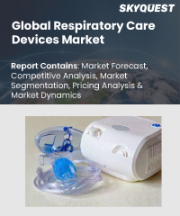
호흡 케어 기기 시장 규모는 2024년 231억 3,000만 달러로 평가되었고, 2025년 248억 9,000만 달러에서 2033년까지 447억 3,000만 달러로 성장할 전망입니다. 예측 기간(2026-2033년) CAGR은 7.6%로 성장이 예측되고 있습니다.
세계의 호흡 케어 기기 시장은 COPD, 천식, 수면 무호흡 증후군 등 호흡기 질환의 유병률 상승을 배경으로 큰 변혁기를 맞이하고 있습니다. 특히 휴대용 스마트 기기의 기술 혁신은 환자의 치료 성과와 치료 준수율의 향상에 기여하고 있습니다. 시장에는 다양한 호흡 케어 기기를 제공하는 주요 기업이 다수 진입하고 있어, 재택 치료 솔루션에 대한 현저한 이행 경향과 원격 환자 모니터링을 위한 선진 기기의 개발이 산업의 장래상을 형성하고 있습니다. 규제 프레임워크와 기준은 시장 역학에 영향을 미치는 데 매우 중요합니다. 또한 호흡기 질환의 이환율, 의료 인프라, 경제적 요인의 지역 격차도 시장 행동에 크게 영향을 미칩니다. 북미와 유럽은 확립된 의료 시스템을 유지하고 있는 반면, 아시아태평양에서는 의료 투자와 의식 증가를 배경으로 현저한 성장 가능성을 보여주고 있습니다.
호흡 케어 기기 시장 성장 촉진요인
만성 폐색성 폐질환(COPD)과 천식과 같은 호흡기 질환의 발생률 증가는 신뢰성 있는 모니터링 솔루션을 필요로 하는 이러한 질병으로 인해 호흡 케어 기기 수요를 크게 뒷받침하고 있습니다. 기술 혁신을 통해 휴대용 분무기 및 스마트 흡입기와 같은 고급 장비가 개발되어 환자의 치료 준수율 향상과 치료 결과를 개선할 수 있습니다. 또한 호흡기 건강에 대한 의식이 높아지고 세계 노화가 진행됨에 따라 이러한 필수 기기에 대한 수요가 더욱 증가하고 있습니다. 결과적으로 환자와 의료 제공업체 모두를 더 잘 지원하기 위해 호흡 케어 기술에 대한 관심과 투자가 현저하게 증가하고 있습니다.
호흡 케어 기기 시장 성장 억제요인
호흡 케어 기기 시장은 성장 가능성을 저해하는 몇 가지 심각한 제약에 직면하고 있습니다. 주요 우려 사항은 고도 호흡 모니터링 장비의 고비용이며 제한된 환자 수와 예산 제약으로 운영되는 의료 시스템에 대한 액세스를 제한합니다. 또한 규제 문제와 복잡한 승인 프로세스가 이러한 기기의 긴 리드 타임에 기여하여 시장 동향을 더욱 복잡하게 만들고 있습니다. 또한 각 지역의 경제적 불확실성과 의료 부문에 대한 재정적 압력이 결합되어 성장 전망을 둔화시키고 있습니다. 게다가 일회용 인공호흡기의 환경에 미치는 영향에 대한 우려가 높아지고 있어, 산업에 있어서 보다 지속가능한 제조 방법의 필요성이 부각되고 있습니다.
호흡 케어 기기 시장 동향
호흡 케어 기기 시장에서 원격 환자 모니터링과 원격 의료 솔루션에 대한 주목도가 높아지고 있는 것이 현저한 동향이 되고 있습니다. 이러한 변화는 환자가 가정의 편안한 환경에서 자신의 상태를 관리할 수 있는 혁신적인 호흡 모니터링 장비의 개발을 촉진하고 있습니다. IoT 지원 흡입기 및 고급 디지털 데이터 추적 플랫폼을 포함한 스마트 기술의 통합은 환자의 치료에 대한 참여와 치료 계획의 준수를 향상시킵니다. 게다가 컴팩트하고 휴대가능한 호흡 기기에 대한 수요가 증가함에 따라 환자의 이동성 및 유연성이 향상되어 궁극적으로 더욱 개별화되고 효과적인 호흡기 케어 접근법을 촉진하고 있습니다.
Respiratory Care Devices Market size was valued at USD 23.13 Billion in 2024 and is poised to grow from USD 24.89 Billion in 2025 to USD 44.73 Billion by 2033, growing at a CAGR of 7.6% during the forecast period (2026-2033).
The global market for Respiratory Care Devices is experiencing significant transformation driven by the rising prevalence of respiratory diseases such as COPD, asthma, and sleep apnea. Technological innovations, particularly in portable and smart devices, enhance patient outcomes and adherence to treatments. The market features numerous key players offering a diverse array of respiratory care devices. There is a notable trend toward home-based healthcare solutions and the development of advanced devices for remote patient monitoring, shaping the industry's future. Regulatory frameworks and standards are crucial in influencing market dynamics. Additionally, regional disparities in the prevalence of respiratory conditions, healthcare infrastructure, and economic factors significantly impact market behavior. While North America and Europe maintain well-established healthcare systems, the Asia-Pacific region exhibits considerable growth potential driven by increasing healthcare investments and awareness.
Top-down and bottom-up approaches were used to estimate and validate the size of the Respiratory Care Devices market and to estimate the size of various other dependent submarkets. The research methodology used to estimate the market size includes the following details: The key players in the market were identified through secondary research, and their market shares in the respective regions were determined through primary and secondary research. This entire procedure includes the study of the annual and financial reports of the top market players and extensive interviews for key insights from industry leaders such as CEOs, VPs, directors, and marketing executives. All percentage shares split, and breakdowns were determined using secondary sources and verified through Primary sources. All possible parameters that affect the markets covered in this research study have been accounted for, viewed in extensive detail, verified through primary research, and analyzed to get the final quantitative and qualitative data.
Respiratory Care Devices Market Segments Analysis
Global Respiratory Care Devices Market is segmented by Product, Disease Indication, End User, and region. Based on Product, the market is segmented into Therapeutic Respiratory Care Devices (PAP Devices (CPAP Devices, APAP Devices, BiPAP Devices), Ventilators (ICU Ventilators, High-end Ventilators, Mid-end Ventilators, Basic Ventilators), Portable/transportable Ventilators), Nebulizers (Jet Nebulizers, Mesh Nebulizers, Ultrasonic Nebulizers), Humidifiers (Heated Humidifiers, Passover Humidifiers), Oxygen Concentrators (Fixed Oxygen Concentrators, Portable Oxygen Concentrators), Inhalers (Metered-dose Inhalers (MDIs), Dry Powder Inhalers (DPIs)), Reusable Resuscitators, Nitric Oxide Delivery Units, Oxygen Hoods, Monitoring Devices (Pulse Oximeters, Pulse Oximeter Sensors, Pulse Oximeter Equipment), Capnographs, Gas Analyzers, Diagnostic Respiratory Care Devices (Spirometers, Polysomnography Devices (PSG Devices), Peak Flow Meters, Other Diagnostic Devices), Consumables & Accessories (Masks (Reusable Masks, Disposable Masks), Disposable Resuscitators, Tracheostomy Tubes, Breathing Circuits, Nasal Cannulae, and Other Consumables & Accessories). Based on Disease indication, the market is segmented into Chronic Obstructive Pulmonary Disease (COPD), Sleep Apnea, Asthma, Infectious Diseases, and Other Disease Indications. Based on End User, the market is segmented into Hospitals, Home Care Settings, Ambulatory Care Centers (ACCs), Other End Users. Based on region, the market is segmented into North America, Europe, Asia Pacific, Latin America and Middle East & and Africa.
Driver of the Respiratory Care Devices Market
The growing incidence of respiratory conditions, such as chronic obstructive pulmonary disease (COPD) and asthma, significantly fuels the demand for respiratory care devices, as these illnesses necessitate reliable monitoring solutions. Innovations in technology have led to the development of advanced devices, including portable nebulizers and smart inhalers, which enhance patient adherence and improve treatment outcomes. Additionally, heightened awareness surrounding respiratory health, alongside an increasingly aging global population, further contributes to the rising need for these essential devices. As a result, there is a notable surge in interest and investment in respiratory care technology to better support patients and healthcare providers alike.
Restraints in the Respiratory Care Devices Market
The Respiratory Care Devices market faces several significant restraints that hinder its growth potential. A primary concern is the high cost of advanced respiratory monitoring devices, which restricts access for healthcare systems operating with limited patient populations and budgetary constraints. Additionally, regulatory challenges and intricate approval processes contribute to lengthy lead times for these devices, further complicating market dynamics. Economic uncertainty in various regions, coupled with financial pressures on the healthcare sector, also dampens growth prospects. Furthermore, there is increasing concern regarding the environmental impact of disposable respirators, highlighting the need for more sustainable manufacturing practices in the industry.
Market Trends of the Respiratory Care Devices Market
The Respiratory Care Devices market is experiencing a notable trend driven by the increasing focus on remote patient monitoring and telehealth solutions. This shift is fostering the development of innovative respiratory monitoring devices that empower patients to manage their conditions from the comfort of their homes. The integration of smart technologies, including IoT-enabled inhalers and advanced digital data tracking platforms, enhances patient engagement and adherence to treatment plans. Additionally, the growing demand for compact and portable breathing apparatuses offers patients greater mobility and flexibility, ultimately promoting a more personalized and effective approach to respiratory healthcare management.