



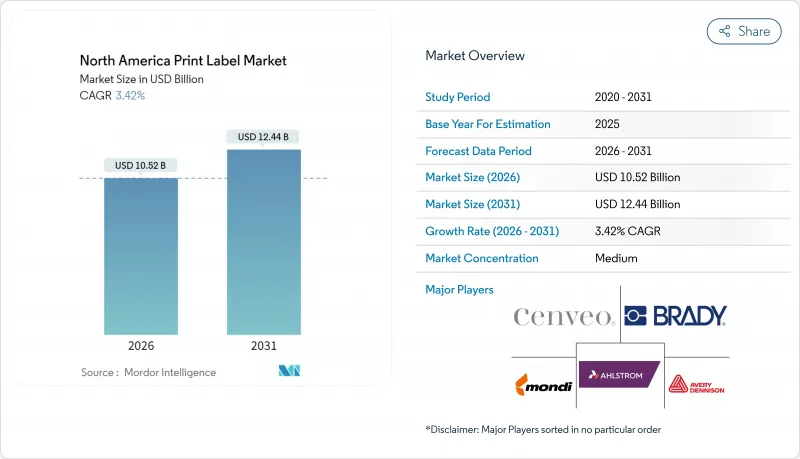
북미의 인쇄 라벨 시장 규모는 2026년에 105억 2,000만 달러로 추정되고 있습니다. 2025년 101억 7,000만 달러에서 성장하며, 2031년에는 124억 4,000만 달러에 이를 것으로 예측됩니다. 2026년부터 2031년까지는 CAGR 3.42%를 나타낼 전망입니다.
이러한 꾸준한 확장은 디지털 변환, 전자상거래 물류, 지속가능성에 대한 요구가 결합되어 컨버터의 경제성과 최종 사용자 수요를 재정의하는 성숙한 시장 환경을 반영합니다. 가변 데이터 워크플로우 도입 가속화는 공급망의 실시간 시각화를 지원하고 의료 분야에서 FDA 주도의 UDI 요건은 프리미엄 성장 분야를 지속하고 있습니다. 멕시코는 지역 생산 기지 역할을 하며, 비용 구조 최적화 및 리드 타임 단축을 목적으로 하는 제조업체의 이전으로 미국 국내 우위를 보완하고 있습니다. 플렉소 인쇄가 여전히 주류인 반면, 잉크젯 기술의 급속한 보급은 노동력 제약의 완화와 설치 폐기물의 감소를 실현하는 디지털 우선 운영으로의 결정적인 전환을 보여줍니다. 지속가능성은 재료선정을 재구축하고 있으며, 규제기준에 대한 기업의 포장목표가 엄격화되는 가운데, 라이너리스 기재와 바이오베이스 기재가 주목을 받고 있습니다.
원재료 가격 상승과 노동력 부족으로 오프셋 인쇄의 경제성이 저하되는 가운데 북미의 인쇄 라벨 시장에서 디지털 기술의 채용이 가속화되고 있습니다. 리코의 데이터에 의하면, 디지털 인쇄의 채산 분기점은 2010년의 A4 용지 2,000장에서 2025년에는 약 1만장으로 이행했습니다. 캐논의 「LabelStream LS2000」(2025년 하반기 발매)은 FSC 인증 대응 기재를 서포트해 VOC 배출을 삭감하는 고농도 수성 잉크를 채용해, 이 동향을 체현하고 있습니다. HP 캐나다에 따르면 대규모 커스터마이제이션을 요구하는 브랜드 수요에 견인되어 디지털 인쇄는 현재 점착 라벨 생산량의 10% 이상을 차지하고 있습니다. 컨버터는 재고비용을 절감하고, 고이익률의 단납기 및 소량 주문을 가능하게 하는 저스트 인 타임 모델로 이행하고 있습니다. 이러한 변화는 자본 배분을 재구성하고 설치 시 폐기물 및 판대가 높은 아날로그 인쇄기보다 모듈식으로 업그레이드할 수 있는 잉크젯 플랫폼을 선호합니다.
폭발적인 EC 성장과 함께, 배송 네트워크가 실시간 추적을 위한 직렬화된 QR 코드 및 데이터 매트릭스 코드를 요구하는 동안 가변 데이터에 대한 수요가 증가하고 있습니다. 아마존의 포장 효율화 프로그램은 재고 위치, 배송 경로, 고객 선호도 파라미터에 동적으로 적응하는 라벨을 추진하고 있습니다. API 지원 인쇄 시스템은 ERP 및 창고 관리 소프트웨어와 직접 연동하여 주문부터 배송까지의 사이클을 가속화하고 오류율을 줄입니다. 브랜드 회사는 배송 라벨에 홍보 컨텐츠와 로열티 혜택을 포함하여 마일리지를 마케팅 접점으로 전환합니다. 컨버터 기업에 있어서 가변 데이터 대응 능력은 서비스 제공의 차별화 요인이 되어 상품 가격 경쟁으로부터 이익률을 보호하는 역할을 합니다.
표준 접착제는 -40°F(약 -40°C) 이하에서 벗겨져 백신과 냉동 식품의 추적성을 위협합니다. 실리콘계 점착제와 PET 기재를 사용한 특수 극저온 라벨은 -196°C(약 -318°F)까지 접착성을 유지합니다만, 범용품의 2-3배의 비용이 듭니다. 얼룩말 Z-Xtreme 5000T는 사용 가능한 솔루션의 한 예이지만 가공업자는 낮은 마진의 신선한 식품을 운반하는 고객의 가격 감도의 높이를 지적합니다. 합리적인 가격의 고성능 접착제의 보급이 진행되지 않는 한, 이 기술적 과제는 콜드체인 성장 분야에서의 대응 가능한 수량을 제한하고 있습니다.
플렉소 인쇄는 2025년 시점에서 북미 인쇄 라벨 시장의 37.92%를 차지하고, 대량 생산되는 식품 및 음료 라인에 있어서 확고한 지위를 반영했습니다. 한편, 잉크젯 플랫폼은 CAGR 6.69%로 확대되고 있어 컨버터가 신속한 전환, 판재 폐기의 저감, 가변 데이터 대응을 요구하는 중, 디지털화로의 결정적인 이행을 나타내고 있습니다. 잉크젯 인쇄기와 관련된 북미의 인쇄 라벨 시장 규모는 총소유비용(TCO)이 하락함에 따라 2031년까지 2배 이상이 될 것으로 예측됩니다.
플렉소 유니트가 백지나 스포트니스를 도포해, 잉크젯 헤드가 4색 인쇄를 담당하는 하이브리드 워크 플로우가 등장하고 있어, SKU 전체의 로트 사이즈 경제성을 최적화하고 있습니다. Kodak의 PROSPER 7000 Turbo와 Fujifilm의 Jet Press FP790은 1,200dpi로 분당 50m의 고속 수계 시스템을 구현하여 기존 아날로그 기기와의 생산성 격차를 줄였습니다. 일렉트로포토그래피는 불투명한 백색과 브랜드를 상징하는 메탈릭색을 필요로 하는 소량의 화장품·영양보조식품 용도에서는 여전히 유효하지만, 평방 피트당 잉크 비용이 광범위한 채용을 제한하고 있습니다.
감압 접착 라벨은 용도의 다양성으로부터 2025년 시점에서 북미 인쇄 라벨 시장의 36.35%를 차지했지만, 라이너리스 대체품이 6.98%라는 가장 빠른 CAGR을 기록하고 있습니다. E커머스의 필필먼트 센터에서는 롤 당 라벨 수가 40% 증가하여 운송 비용이 50% 삭감되는 이점에서 라이너리스를 중시하고, 소매업체는 점포 뒤의 폐기물 제로화 시책에 대응하기 위해 같은 형식을 채용하고 있습니다. 슈링크 슬리브와 스트레치 슬리브는 표준 리사이클 공정에서 박리하는 CCL사의 EcoFloat 폴리올레핀 슬리브 등 리사이클성 향상의 기술 혁신에 의해 진전하고 있습니다. 인몰드 라벨은 내찰상성이 최우선인 내구 소비재 분야에서 틈새 존재감을 유지하고 있습니다.
RFID 및 NFC 오버레이 호환 멀티 파트 추적 라벨은 엄격한 의약품 및 산업 분야에서 활용됩니다. 프리미엄 맥주와 정신 카테고리에서는 전통적인 브랜딩 미학에서 젖은 접착제 라벨이 계속 사용되고 있지만, 알루미늄 캔의 보급에 따라 점유율이 감소하고 있습니다. 라이너리스의 규모 확대에 따라, 예측 기간 중반에는 감압 접착 라벨의 출하량이 두드러질 가능성이 있어, 컨버터 기업은 용도 포트폴리오의 다양화, 혹은 양 포맷에 대응하는 인쇄·부착 자동화 시스템의 도입이 요구될 것입니다.
North America print label market size in 2026 is estimated at USD 10.52 billion, growing from 2025 value of USD 10.17 billion with 2031 projections showing USD 12.44 billion, growing at 3.42% CAGR over 2026-2031.
This steady expansion reflects a maturing landscape in which digital transformation, e-commerce logistics, and sustainability mandates collectively redefine converter economics and end-user demand. Accelerating adoption of variable-data workflows supports real-time supply-chain visibility, while FDA-driven UDI requirements in healthcare sustain premium growth niches. Mexico's role as a regional production hub complements the United States' domestic dominance, as manufacturers relocate to optimize cost structures and shorten lead times. Flexography remains dominant, yet inkjet's rapid gains signal a decisive pivot toward digital-first operations that alleviate labor constraints and cut setup waste. Sustainability continues to reshape material selection, with linerless and bio-based substrates gaining traction as corporate packaging goals tighten against regulatory benchmarks.
Digital adoption in the North America print label market accelerates as offset economics weaken under rising raw-material prices and labor shortages. Ricoh data show the digital crossover point shifting from 2,000 A4 prints in 2010 to roughly 10,000 prints in 2025. Canon's LabelStream LS2000, slated for H2 2025, exemplifies the trend with high-density aqueous inks that support FSC-compliant substrates and reduce VOC emissions. HP Canada notes digital now accounts for more than 10% of pressure-sensitive label volumes, driven by brand demand for customization at scale. Converters transition toward just-in-time models that slash inventory costs and enable premium, short-run orders with higher margins. The resulting shift restructures capital allocation, favoring modular, upgradeable inkjet platforms over analog presses with high setup waste and plate costs.
Explosive e-commerce growth boosts variable-data requirements as fulfillment networks demand serialized QR and data-matrix codes for real-time tracking. Amazon's packaging-efficiency programs drive labels that adapt dynamically to inventory location, shipping route, and customer preference parameters. API-ready printing systems integrate directly with ERP and warehouse software, accelerating order-to-ship cycles and reducing error rates. Brands now embed promotional content or loyalty incentives inside shipping labels, turning the last mile into a marketing touchpoint. For converters, variable-data capability differentiates service offerings and insulates margins against commodity price competition.
Standard adhesives delaminate below -40 °F, jeopardizing traceability for vaccines and frozen food. Specialty cryogenic labels using silicone-based adhesive and PET facestocks maintain adhesion down to -196 °C but cost 2-3 times more than commodity products. Zebra's Z-Xtreme 5000T illustrates available solutions, yet converters cite price sensitivity among customers shipping low-margin perishable goods. The technical challenge limits addressable volume in cold-chain growth segments pending broader adoption of affordable, high-performance adhesives.
Other drivers and restraints analyzed in the detailed report include:
For complete list of drivers and restraints, kindly check the Table Of Contents.
Flexography captured 37.92% of the North America print label market share in 2025, reflecting its entrenched role in large-volume food and beverage lines. Inkjet platforms, however, are accelerating at a 6.69% CAGR, signaling a decisive move toward digitization as converters seek quick changeovers, reduced plate waste, and variable-data capability. The North America print label market size attached to inkjet presses is expected to more than double by 2031 as the total cost of ownership declines.
Hybrid workflows are emerging where flexo units lay white or spot varnish while inkjet heads manage four-color builds, optimizing run-length economics across SKUs. Kodak's PROSPER 7000 Turbo and Fujifilm's Jet Press FP790 exemplify high-speed, water-based systems that reach 50 m/min at 1,200 dpi, closing the productivity gap versus legacy analog machines. Electrophotography remains relevant for small-batch cosmetics and nutraceutical applications requiring opaque whites and brand-centric metallics, though ink cost per square foot limits broader adoption.
Pressure-sensitive solutions held 36.35% of the North America print label market size in 2025, owing to application versatility, but linerless alternatives are registering the fastest 6.98% CAGR. E-commerce fulfillment centers value linerless for 40% more labels per roll and 50% lower transport cost, while retailers adopt the format to meet zero-waste back-of-store initiatives. Shrink and stretch sleeves advance on recyclability innovations such as CCL's EcoFloat polyolefin sleeve, which delaminates in standard recycling processes. In-mold labels maintain a niche presence in durable consumer goods where scuff resistance is paramount.
Multi-part tracking labels supporting RFID or NFC overlays serve regulated pharma and industrial sectors. Wet-glue labels persist in premium beer and spirits categories for heritage branding aesthetics but lose share as aluminum can adoption surges. As the linerless scale improves, pressure-sensitive volumes could plateau mid-forecast, pressuring converters to diversify application portfolios or integrate print-and-apply automation that accommodates both formats.
The North America Print Label Market Report is Segmented by Printing Technology (Offset Lithography, Gravure, Flexography, Screen, and More), Label Type (Wet-Glue Labels, Pressure-Sensitive Labels, Linerless Labels, and More), Substrate Material (Paper, Plastic, and More), End-User Industry (Food, Beverage, Healthcare, Cosmetics, Household, and More), and Geography. The Market Forecasts are Provided in Terms of Value (USD).