인도의 전기자동차 배터리 제조 장치 시장 : 점유율 분석, 산업 동향 및 통계, 성장 예측(2025-2030년)
India Electric Vehicle Battery Manufacturing Equipment - Market Share Analysis, Industry Trends & Statistics, Growth Forecasts (2025 - 2030)
상품코드:1636459
리서치사:Mordor Intelligence
발행일:2025년 01월
페이지 정보:영문
라이선스 & 가격 (부가세 별도)
ㅁ Add-on 가능: 고객의 요청에 따라 일정한 범위 내에서 Customization이 가능합니다. 자세한 사항은 문의해 주시기 바랍니다.
ㅁ 보고서에 따라 최신 정보로 업데이트하여 보내드립니다. 배송기일은 문의해 주시기 바랍니다.
한글목차
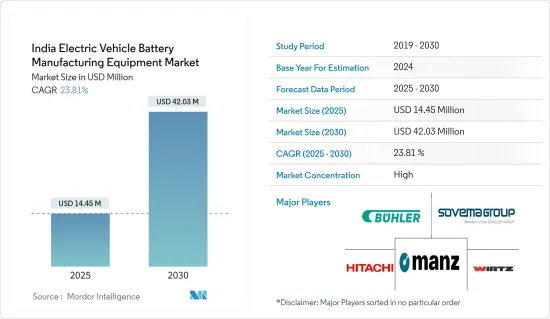
인도의 전기자동차 배터리 제조장치 시장 규모는 2025년에 1,445만 달러로 추정되며, 예측기간(2025-2030년)의 CAGR은 23.81%로, 2030년에는 4,203만 달러에 달할 것으로 예측됩니다.
주요 하이라이트
중기적으로는 배터리 제조를 위한 정부의 정책과 투자 증가, 배터리 원료 비용의 저하가 예측 기간 중의 전기자동차 배터리 제조 장치 수요를 견인할 것으로 예상됩니다.
반면에 신흥경제국의 기술 노하우 부족은 전기자동차 배터리 제조장치 시장의 성장을 크게 억제할 수 있습니다.
그럼에도 불구하고 생산 능력 확대, 기술 진보 강화, 비용 절감 등 전기자동차의 장기적인 야심적 목표는 가까운 미래에 전기자동차 배터리 제조 장치 시장의 기업에게 큰 기회를 가져올 것으로 예상됩니다.
인도 전기자동차 배터리 제조 장비 시장 동향
배터리 원재료 비용의 저하가 시장을 견인
인도의 전기자동차(EV) 배터리 제조업계는 원재료 비용의 저하로 변화의 시기를 맞이하고 있습니다. 리튬, 코발트, 니켈, 흑연 등 주요 원재료가 하락하고 있습니다. 이 가격 하락은 전체 생산 비용을 낮출 뿐만 아니라 EV 배터리를 더욱 저렴한 가격으로 만들고 EV 시장의 성장을 가속하고 있습니다.
리튬 이온(Li-ion) 배터리는 전기자동차(EV) 시장 혁명의 최전선에 있으며 배터리 제조 기술 혁신에 박차를 가해 왔습니다. 최근, 리튬 이온 배터리의 세계의 가격은 대폭 하락해, 이 동향은 앞으로도 계속될 것으로 보여지고 있습니다. 이 가격 하락은 더 많은 소비자가 전기자동차를 합리적인 가격으로 구입할 수 있도록하는 데 중요한 역할을합니다.
예를 들어, Bloomberg NEF는 2023년 리튬 이온 배터리 가격이 현저하게 하락하고 있다고 강조했습니다. 가격은 139달러/kWh까지 하락했고 13% 하락을 반영했습니다. 앞으로도 이 하락세는 계속되어 2025년에는 113달러/kWh, 2030년에는 80달러/kWh까지 하락할 것으로 예측되고 있습니다.
게다가 인도는 리튬, 코발트, 니켈 등 중요한 재료의 안정적이고 윤리적인 공급을 확보하기 위해 협조적인 노력을 하고 있습니다. 그러나, 이 추구에는 과제가 따라옵니다. 원재료의 어려움을 다루기 위해 인도는 국내 매장량을 탐구하고 국제적인 협력 관계를 구축하려고 합니다. 이 나라의 초점은 EV용 배터리 재료의 급증하는 수요를 충족시키기 위해 광물 자원을 활용하는 것입니다.
예를 들어, 2023년 2월, 인도 지질 조사소(GSI)는 쟌무 카슈미르주 리시(Rasi) 지역의 Salal-Haimana 지역에서 590만 톤으로 추정되는 리튬 매장량을 발견했습니다. 비철금속인 리튬은 배터리의 에너지 저장 시스템이나 전기자동차(EV)의 배터리에 빠뜨릴 수 없습니다. 이 발견은 EV용 리튬 수요 증가에 대응하는 것으로, 전기자동차 배터리 제조 설비에 대한 요구를 증대시키는 것입니다.
게다가, 대체 재료와 배터리 화학에 대한 탐구는 고가의 원료에 대한 의존도를 감소시킵니다. 이러한 변화는 비용을 줄일 뿐만 아니라 배터리 생산의 지속가능성과 효율성을 향상시킵니다. 기업은 또한 배터리의 성능과 수명을 더욱 향상시키는 새로운 재료를 발견하기 위한 R&D에 투자하고 있습니다.
예를 들어, 2023년 11월, EV 배터리 분야에서 유명한 SK On Co.는 배터리 재료의 선두 제조업체인 BASF SE와 제휴했습니다. 양사의 공동 임무는 북미와 아시아태평양 시장을 대상으로 리튬 이온 배터리용 첨단 재료를 개척함으로써 특히 인도에 주력하고 있습니다. 이 제휴는 양사 시장 포지션을 강화할 뿐만 아니라, 환경 대응 자동차 섹터가 주춤하고 있는 이 시기에 실현되었습니다. 이러한 진보는 배터리 가격을 낮추고 EV용 배터리 제조 장치에 대한 수요를 당분간 높일 것으로 보입니다.
이러한 프로젝트와 혁신은 예측 기간 동안 지역 전체의 원재료 비용을 낮추고 전기자동차 배터리 제조 장비 수요를 증가시킬 가능성이 높습니다.
리튬 이온 배터리가 시장을 독점
인도에서는 리튬 이온 배터리의 상승이 전기자동차(EV) 배터리 제조 장비 산업을 크게 형성하고 있습니다. EV용 리튬 이온 배터리 수요가 높아짐에 따라, 특수한 제조 장치의 요구도 높아지고 있습니다. 여기에는 전극을 제조하는 기계, 셀을 조립하는 기계, 형성 및 에이징 공정을 실시하는 기계, 배터리 팩을 조립하는 기계 등이 포함됩니다. 인도에서는 EV의 판매 대수가 현저하게 증가하고 있으며, 그와 병행하여 배터리 수요도 급증하고 있기 때문에 효율적이고 스케일러블한 생산을 확보하기 위한 고도의 제조 장치가 급무인 것이 부각되고 있습니다.
예를 들어 국제에너지기구(IEA)의 보고에 따르면 2023년 인도 전기차 판매 대수는 8만 2,000대에 이르며 2022년 대비 70.8%, 2019년 대비 119배라는 경이적인 성장을 보였습니다. 예측에 따르면 EV의 판매 대수는 앞으로도 급증하고 이 지역의 배터리 제조 장치에 대한 수요는 더욱 높아집니다.
게다가 현지 투자와 세계 기술 제공업체와의 파트너십 모두를 배경으로 최첨단 제조 시설을 수립하기 위한 협력적인 노력이 이루어지고 있습니다. 이러한 움직임은 기술 혁신을 추진하고 생산 능력을 향상시키고 첨단 에너지 저장 솔루션에 대한 수요 증가에 대응합니다.
예를 들어, Ola Electric은 2024년 7월 타밀 나두의 기가팩토리에 1억 달러를 투자하고 국산 리튬 이온 배터리를 생산할 계획을 발표했습니다. 이 회사는 내년 초에 한국과 중국의 수입품에서 자체 제조 배터리 셀로 이행할 의향입니다. 이러한 움직임은 국내 배터리 생산을 뒷받침하고 나아가 제조장치 수요를 높일 것으로 예상됩니다.
국내 EV용 배터리 생산을 강화하기 위해 인도 정부는 일련의 정책과 인센티브를 도입했습니다. 여기에는 제조 장비에 대한 보조금, 세제 우대 조치, 배터리 기술 연구 개발 지원 등이 포함됩니다.
예를 들어, 정부는 2023년에 야심찬 EV 판매 목표를 세우고, 2030년까지 자가용 차량의 30%, 상용차의 70%, 이륜차 및 삼륜차의 80%를 전기화하는 것을 목표로 하고 있습니다. 또한 1kWh당 10,000 인도루피(120달러)부터 15,000 인도루피(180달러)까지 보조금 우대조치도 도입되었습니다. 이러한 노력으로 EV의 생산과 판매가 촉진될 뿐만 아니라 향후 수년간 배터리 제조장치 수요도 대폭 증가할 전망입니다.
결론적으로 정부의 지원과 업계의 기세로 인도에서 전기자동차 배터리 제조 장비 수요는 당분간 크게 증가할 것으로 예상됩니다.
인도 전기자동차 배터리 제조 장비 산업 개요
인도의 전기자동차 배터리 제조 장치는 적당히 통합되어 있습니다. 주요 기업(순부동)는 Manz AG, Wirtz Manufacturing, Buhler AG, Sovema Group SpA, Hitachi Ltd. 등입니다.
기타 혜택:
엑셀 형식 시장 예측(ME) 시트
3개월간의 애널리스트·지원
목차
제1장 서론
조사 범위
시장의 정의
조사의 전제
제2장 주요 요약
제3장 조사 방법
제4장 시장 개요
소개
2029년까지 시장 규모 및 수요 예측(단위: 달러)
최근 동향과 개발
정부의 규제와 정책
시장 역학
성장 촉진요인
배터리 제조를 위한 정부의 정책과 투자
배터리 원재료 비용의 저하
억제요인
신흥 경제 국가의 기술 노하우 부족
공급망 분석
PESTLE 분석
투자 분석
제5장 시장 세분화
프로세스별
혼합
코팅
캘린더
슬릿·전극 가공
기타 프로세스
배터리별
리튬 이온
납축 배터리
니켈 수소 배터리
기타 배터리
제6장 경쟁 구도
M&A, 합작사업, 제휴, 협정
주요 기업의 전략
기업 프로파일
Manz AG
Hitachi Ltd.
Wirtz Manufacturing India Pvt. Ltd.
Buhler AG
Sovema Group SpA
Tata Chemicals
Luminous Power Technologies
kaya Power Group
ACME Cleantech Solutions
Inobat
기타 유명 기업 일람
시장 랭킹 분석
제7장 시장 기회와 앞으로의 동향
전기차의 장기적인 야심적 목표
JHS
영문 목차
영문목차
The India Electric Vehicle Battery Manufacturing Equipment Market size is estimated at USD 14.45 million in 2025, and is expected to reach USD 42.03 million by 2030, at a CAGR of 23.81% during the forecast period (2025-2030).
Key Highlights
Over the medium term, rising government policies and investments towards battery manufacturing and a decline in the cost of battery raw materials are expected to drive the demand for electric vehicle battery manufacturing equipment during the forecast period.
On the other hand, the shortage of technological know-how in developing economies can significantly restrain the growth of the electric vehicle battery manufacturing equipment market.
Nevertheless, the long-term ambitious targets for electric vehicles like scaling up production capacity, enhancing technological advancements, and reducing costs are expected to create significant opportunities for electric vehicle battery manufacturing equipment market players in the near future.
India Electric Vehicle Battery Manufacturing Equipment Market Trends
Decline in the Cost of Battery Raw Materials Drives the Market
India's electric vehicle (EV) battery manufacturing industry is undergoing a transformation, driven by falling raw material costs. Key materials such as lithium, cobalt, nickel, and graphite have seen price reductions. This decline is not only lowering overall production costs but also making EV batteries more affordable, thus fueling the growth of the EV market.
Lithium-ion (Li-ion) batteries have been at the forefront of the electric vehicle (EV) market revolution, spurring innovations in battery production. In recent years, global prices for lithium-ion batteries have dropped significantly, a trend that's set to continue. This price dip has played a crucial role in enhancing the affordability and accessibility of electric vehicles for a wider consumer base.
For instance, Bloomberg NEF highlighted that, lithium-ion battery prices in 2023 marked a notable decline. Prices fell to USD 139/kWh, reflecting a 13% drop. Looking ahead, projections indicate this downward trend will continue, with prices expected to hit USD 113/kWh by 2025 and dive to USD 80/kWh by 2030, driven by relentless technological and manufacturing advancements.
Moreover, India is making concerted efforts to ensure a stable and ethical supply of vital materials like lithium, cobalt, and nickel. However, this pursuit is fraught with challenges. To address the raw material conundrum, India is exploring its domestic reserves and establishing international collaborations. The country's focus is on harnessing its mineral wealth to meet the burgeoning demand for EV battery materials.
For instance, in February 2023, the Geological Survey of India (GSI) discovered lithium reserves estimated at 5.9 million tonnes in the Salal-Haimana region of Jammu and Kashmir's Reasi district. Lithium, a non-ferrous metal, is crucial for battery energy storage systems and electric vehicle (EV) batteries. This find is set to cater to the rising lithium demand for EVs, subsequently amplifying the need for equipment in electric vehicle battery manufacturing.
Additionally, the exploration of alternative materials and battery chemistries is diminishing the dependence on costly raw materials. This shift not only curtails expenses but also enhances the sustainability and efficiency of battery production. Companies are also investing in research and development to discover new materials that can further boost battery performance and longevity.
For instance, in November 2023, SK On Co., a prominent player in the electric vehicle battery arena, teamed up with BASF SE, a leading battery materials producer. Their joint mission is to pioneer advanced materials for lithium-ion batteries, targeting markets in North America and the Asia-Pacific, with a keen focus on India. This partnership not only strengthens their market position but also comes at a time when the green automobile sector is witnessing a slowdown. Such advancements are poised to drive down battery prices and elevate the demand for EV battery manufacturing equipment in the foreseeable future.
Such type of projects and inovations are likely to decline the cost of raw materials across the region and rising demand of EV battery manufacturing equipment during the forecast period.
Lithium-Ion Battery Type Dominate the Market
In India, the rise of lithium-ion batteries has significantly shaped the electric vehicle (EV) battery manufacturing equipment industry. As the demand for lithium-ion batteries in EVs grows, so does the need for specialized manufacturing equipment. This includes machinery for producing electrodes, assembling cells, conducting formation and aging processes, and putting together battery packs. With a notable increase in EV sales in India, the parallel surge in battery demand highlights the urgent need for advanced manufacturing equipment to ensure efficient and scalable production.
For instance, in 2023, the International Energy Agency (IEA) reported electric vehicle sales in India reached 82,000 units, marking a 70.8% increase from 2022 and an astonishing 119-fold jump from 2019. Projections indicate a continued surge in EV sales, further driving the demand for battery manufacturing equipment in the region.
Moreover, there's a concerted effort to establish cutting-edge manufacturing facilities, backed by both local investments and partnerships with global technology providers. The focus is on producing high-quality lithium-ion batteries, a move set to drive innovation, enhance production capacity, and meet the growing appetite for advanced energy storage solutions.
For instance, in July 2024, Ola Electric unveiled plans to invest USD 100 million in its Tamil Nadu gigafactory, aiming to produce indigenous lithium-ion batteries. The company intends to transition to its battery cells by early next year, moving away from current imports from Korea and China. Such strides are anticipated to boost the country's battery production and, in turn, elevate the demand for manufacturing equipment.
In a bid to strengthen domestic EV battery production, the Indian government has introduced a suite of policies and incentives. These include subsidies for manufacturing equipment, tax incentives, and support for battery technology research and development.
For instance, in 2023, the government set ambitious EV sales targets: by 2030, they aim for 30% of private cars, 70% of commercial vehicles, and a remarkable 80% of two and three-wheelers to be electric. Additionally, subsidy incentives have been introduced, ranging from INR 10,000 per kWh (USD 120) to INR 15,000 per kWh (USD 180). These initiatives are poised to not only boost EV production and sales but also significantly heighten the demand for battery manufacturing equipment in the coming years.
In conclusion, with the government's backing and the industry's momentum, the demand for EV battery manufacturing equipment in India is set to witness a substantial rise in the foreseeable future.
India Electric Vehicle Battery Manufacturing Equipment Industry Overview
India's electric vehicle battery manufacturing equipment is moderately consolidated. Some key players (not in particular order) are Manz AG, Wirtz Manufacturing, Buhler AG, Sovema Group S.p.A, Hitachi Ltd., among others.
Additional Benefits:
The market estimate (ME) sheet in Excel format
3 months of analyst support
TABLE OF CONTENTS
1 INTRODUCTION
1.1 Scope of the Study
1.2 Market Definition
1.3 Study Assumptions
2 EXECUTIVE SUMMARY
3 RESEARCH METHODOLOGY
4 MARKET OVERVIEW
4.1 Introduction
4.2 Market Size and Demand Forecast in USD, till 2029
4.3 Recent Trends and Developments
4.4 Government Policies and Regulations
4.5 Market Dynamics
4.5.1 Drivers
4.5.1.1 Government Policies and Investments towards battery manufacturing
4.5.1.2 Decline in cost of battery raw materials
4.5.2 Restraints
4.5.2.1 Dearth of technological know-how in developing economies
4.6 Supply Chain Analysis
4.7 PESTLE ANALYSIS
4.8 Investment Analysis
5 MARKET SEGMENTATION
5.1 Process
5.1.1 Mixing
5.1.2 Coating
5.1.3 Calendering
5.1.4 Slitting and Electrode Making
5.1.5 Other Process
5.2 Battery
5.2.1 Lithium-ion
5.2.2 Lead-Acid
5.2.3 Nickel Metal Hydride Battery
5.2.4 Other Batteries
6 COMPETITIVE LANDSCAPE
6.1 Mergers and Acquisitions, Joint Ventures, Collaborations, and Agreements
6.2 Strategies Adopted by Leading Players
6.3 Company Profiles
6.3.1 Manz AG
6.3.2 Hitachi Ltd.
6.3.3 Wirtz Manufacturing India Pvt. Ltd.
6.3.4 Buhler AG
6.3.5 Sovema Group S.p.A
6.3.6 Tata Chemicals
6.3.7 Luminous Power Technologies
6.3.8 kaya Power Group
6.3.9 ACME Cleantech Solutions
6.3.10 Inobat
6.4 List of Other Prominent Companies
6.5 Market Ranking Analysis
7 MARKET OPPORTUNITIES AND FUTURE TRENDS
7.1 Long-term ambitious targets for electric vehicles