


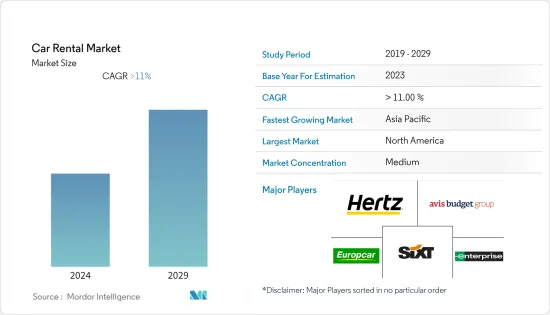
렌터카 시장 규모는 2024년에 1,321억 달러로 추정되며, 2029년에는 2,201억 달러에 달할 것으로 예측되며 예측 기간 중(2024-2029년) CAGR은 10.75% 이상으로 성장합니다.
COVID-19 팬데믹은 전 세계 여행 및 관광에 큰 영향을 미쳤습니다. 이는 렌터카 및 승차 공유 운송 부문에 큰 영향을 미쳤습니다. 팬데믹은 기업의 신용등급 강등과 시장 변동성을 초래했습니다. 그러나 규제가 완화되면서 시장은 회복세를 보이기 시작했습니다.
또한 칩 부족은 2021년 세계 자동차 생산을 방해하고, 소비자들은 렌터카 서비스가 제공하는 정비 및 소유 비용 절감을 고려하여 렌터카로 전환했습니다.
렌트카 시장의 긍정적인 성장 궤적은 관광객과 비즈니스 여행객 증가, 건강 문제로 인한 소비자 선호도 변화, 렌터카 디지털 플랫폼의 편리성 등 다양한 요인에 의해 촉진되고 있습니다.
또한 레저와 출장을 결합하는 경향이 증가하고 있으며, 특히 젊은 비즈니스 여행객들이 직원들의 정착을 촉진하기 위해 기업에 채택되고 있습니다. 또한 각 지역의 자동차 구매 및 운전에 대한 정부 규제가 강화되고 있는 것도 렌터카 사업 확대에 힘을 실어주고 있습니다.
온라인 렌탈 플랫폼이 증가함에 따라 렌터카 산업의 인기가 높아지고 있습니다. 인구의 60% 이상이 인터넷에 접속할 수 있다는 사실은 시장 성장에 크게 기여할 것으로 예상됩니다.
향후 수년간 세계 여행 및 관광 산업의 번영으로 인해 시장은 계속 호조를 유지할 것으로 예상됩니다.
정보기술의 도입이 진행됨에 따라 렌터카 업계는 변화하고 있으며, 사업자들은 고객에게 더 나은 서비스를 제공할 수 있게 되었습니다. 여기에는 최적화된 기업 및 고객 정보 관리의 활용과 편리한 인터넷 예약 용도의 개발이 포함됩니다.
온라인 예약 모델은 비콘과 근거리무선통신(NFC)의 응용을 식별하는 최전선에 있으며, Zipcar와 BlaBlaCar와 같은 새로운 기업은 카셰어링과 같은 혁신적인 비즈니스 모델을 사용하고 텔레매틱스와 같은 기술을 채택하여 이익을 얻고 있습니다. 기술을 채택함으로써 이익을 얻고 있습니다. 우버(Uber)와 리프트(Lyft)는 모바일 기술과 기기를 활용하여 소비자의 개인 교통 수요에 더 잘 대응하고 있습니다. 이러한 노력은 렌터카 산업을 파괴하는 데 기여하고 있습니다.
또한 온라인 예약은 차량 대여자의 서류 확인, 차량에 대한 정보 제공, 특정 장소로의 차량 반납 및 인수 등의 서비스, 계약서 전자 서명, 현금 없는 거래 등 다양한 목적으로도 활용되고 있습니다. 또한 기존에는 컴퓨터로 하던 다양한 활동을 스마트폰으로 하는 사용자들의 의존도가 높아진 것도 고객의 렌터카 경험을 크게 변화시키는 데 도움이 되고 있습니다.
Enterprise a Car 및 Europ Car와 같은 렌터카 회사들도 스페인의 관광 공항에서 렌터카 서비스 운영을 확대함으로써 이 분야에서의 입지를 강화하고 있습니다. 주요 업체들은 스페인에서 강력한 입지를 구축하고 있으며, 최신 개발 및 공격적인 전략을 채택하지 않아 밴 렌터카 시장은 부진한 수요를 목격하고 있습니다.
이는 Sixt SE, Uber, Avis와 같은 업계 기업이 고객이 포트폴리오에서 차량을 쉽게 선택하고 예약할 수 있는 모바일 앱을 출시하여 고객이 쉽게 차량을 선택하고 예약할 수 있는 종합적인 수요 지향적 모빌리티 솔루션의 가용성이 증가함에 따라 더욱 강화되고 있습니다.
북미는 2024-2029년 시장 우위를 유지할 것으로 예상됩니다. 이 지역 시장 성장에 영향을 미치는 주요 요인 중 하나는 국내외를 막론하고 레저 및 출장 여행자 수가 증가하고 있다는 점입니다.
또한 렌탈 서비스에 대한 소비자의 지속적인 선호도 변화와 Avis Budget Group, Enterprise Rent-a-Car와 같은 이 지역의 유명 서비스 프로바이더의 존재는 매출 창출 전망을 가속화할 것으로 예상됩니다. 최근 서비스 프로바이더들의 적극적인 노력으로 일부 도시에서는 이러한 서비스 이용이 증가하고 있습니다. 예를 들어
2023년 6월, Turo와 같은 P2P 렌터카를 북미에 도입할 계획을 밝혔습니다. 고객은 시간 단위 또는 하루 단위로 대여할 수 있으며, 대여한 차량을 수령한 장소에서 반납할 수 있습니다.
또한 이 지역 소비자들 사이에서 전기자동차의 보급이 확대되고 저배출가스에 대한 관심과 인식이 높아지는 것도 시장을 자극하는 주요 요인 중 하나입니다. 또한 미국인의 70% 이상이 전기자동차에 투자하기 전에 전기자동차를 시승해 볼 수 있는 방법으로 전기자동차 대여를 선호하고 있습니다.
이러한 모든 요인들이 결합되어 2024-2029년 이 지역 시장 성장에 활력을 불어넣을 것으로 예상됩니다.
렌트카 시장은 세분화되어 있으며, 수많은 국제 및 국내 기업이 전 세계에서 사업을 운영하고 있습니다. 주요 업체로는 Enterprise Rent-A-Car, The Hertz Corporation, Sixt SE, Europcar, Avis Budget Group 등이 있습니다. 이들 업체들은 고객 기반을 확보하고 수익성을 극대화하기 위해 서비스를 강화하는 데 주력하고 있습니다. 협업은 업계 업체들이 시장에서의 입지를 강화하기 위해 시행하고 있는 중요한 전략이기도 합니다. 예를 들어
The Car Rental Market size is estimated at USD 132.10 billion in 2024, and is expected to reach USD 220.10 billion by 2029, growing at a CAGR of greater than 10.75% during the forecast period (2024-2029).
The COVID-19 pandemic significantly impacted travel and tourism across the world. This had a huge effect on car rental and the ride-and-share transport segment. The pandemic resulted in company rating downgrades and market volatility. However, the market started showing resilience once the restrictions were eased.
Additionally, the chip shortage hampered global vehicle production in 2021, and consumers shifted toward car rental, considering the cost-saving offered by car rental services in terms of maintenance and ownership.
The positive growth trajectory of the car rental market is fueled by various factors, including the increasing number of tourists and business travelers, changes in consumer preferences due to health concerns, and the convenience of digital platforms for car hire.
Further, the increasing trend of combining leisure with business trips, particularly by younger business travelers, is being adopted by companies to promote staff retention. Additionally, the stringent government regulations on car buying and driving across different regions also favor the expansion of the car rental business.
The popularity of the car rental industry is rising as the number of online rental platforms increases. The fact that more than 60% of the population has access to the internet is anticipated to contribute significantly to the market's growth.
In coming years, the market is expected to continue thriving on a positive track owing to the flourishing travel and tourism industry worldwide.
Increased adoption of information technology is transforming the car rental industry and enabling operators to deliver improved services to their customers. This includes the utilization of optimized corporate and customer information management and the development of convenient internet booking applications.
The online booking model is at the forefront of identifying applications for beacons and near-field communications (NFC). Newer players, like Zipcar and BlaBlaCar, are benefiting from using innovative business models such as car-sharing and adopting technologies such as telematics. Uber and Lyft are using mobile technologies and devices to better meet consumers' personal transportation needs. These initiatives are contributing to the disruption of the car rental industry.
Further, online booking also serves a variety of purposes, such as verification of documents of the renter, offering information to the renter regarding the car, services like drop and pick-up of the rented car at a certain place, e-signing contracts, and cashless transactions. Additionally, the rising dependence of users on smartphones to carry out a variety of activities traditionally done by personal computers has significantly helped transform the car rental experience for customers.
Rental companies, such as Enterprise a Car and Europ Car, have also strengthened their position in the sector by expanding their operation of vehicle rental services in Spain's tourist airport. Though key companies have a strong presence in the country, they have not adopted the latest developments or active strategies, so the van rental market is witnessing slow demand.
This is further enhanced by the increased availability of comprehensive demand-oriented mobility solutions. Industry players such as Sixt SE, Uber, and Avis have launched their mobile apps, which allow customers to easily choose vehicles from a portfolio and carry out bookings.
North America is expected to retain its dominance in the market between 2024 and 2029. The rising number of leisure and business trips across the region, both locally and internationally, is among the prominent factors influencing the growth of the regional market.
Further, a continuous shift in consumer preference toward rental services and the presence of prominent service providers in the region, like Avis Budget Group and Enterprise Rent-a-Car, are expected to accelerate the revenue generation prospects. Recently, the usage of these services increased in several cities, fueled by increased initiatives by service operators. For instance,
In June 2023, Uber Technologies Inc. disclosed its plan to bring Turo-like peer-to-peer car rental to North America. Customers will be able to rent by the hour or the day and can drop off the rented vehicle wherever it was picked up.
In addition, the rising adoption of electric cars and growing concerns and awareness of lower emissions among consumers in the region are some of the major factors fueling the market. Moreover, over 70% of Americans prefer to rent an EV as a way to test drive the technology before investing in it.
All these factors combined are expected to provide a boost to the positive market growth of the region between 2024 and 2029.
The market is fragmented, with numerous international and domestic companies operating across the world. Key participants include Enterprise Rent-A-Car, The Hertz Corporation, Sixt SE, Europcar, and Avis Budget Group. The primary focus of these players is on enhancing their services to gain a customer base and maximize profitability. Collaboration is another key strategy implemented by industry players to strengthen their positions in the market. For instance,