Public Safety and Security Market by Solution (Critical Communication, Biometric Security, Surveillance, Emergency & Disaster, Cybersecurity), Application (Homeland, Critical Infrastructure, Healthcare & Medical), and Region - Global Forecast to 2030
상품코드:1873969
리서치사:MarketsandMarkets
발행일:2025년 10월
페이지 정보:영문 589 Pages
라이선스 & 가격 (부가세 별도)
ㅁ Add-on 가능: 고객의 요청에 따라 일정한 범위 내에서 Customization이 가능합니다. 자세한 사항은 문의해 주시기 바랍니다.
한글목차
세계의 공공안전 및 보안 시장 규모는 2025년 5,750억 5,000만 달러에서 2030년에는 9,818억 4,000만 달러에 이를 것으로 예상되며, 예측 기간에 CAGR로 11.3%를 나타낼 것으로 전망됩니다.
시장은 여러 요인에 의해 견인되고 있습니다.
조사 범위
조사 대상 기간
2019-2030년
기준 연도
2024년
예측 기간
2025-2030년
단위
100만 달러/10억 달러
부문
제공, 배포 방식, 용도, 지역
대상 지역
북미, 유럽, 아시아태평양, 중동, 아프리카, 라틴아메리카
2024년 7월, 델리 주 정부는 공공안전 강화를 위해 도시 전역에 5만 대의 추가 CCTV 카메라를 설치할 계획을 발표했습니다. 이것은 범죄 억제와 실시간 모니터링을 보장하는 모니터링 인프라에 대한 관심 증가를 보여줍니다. 동시에 AI, IoT, 5G 기술의 발전이 공공안전 업무에 혁명을 일으키고 있습니다. 이러한 혁신을 통해 긴급 대응 가속화, 예측 경찰 활동 및 효율적인 자원 배분이 가능합니다. 이러한 진행은 진화하는 위협에 대처하기 위한 보다 스마트하고 통합된 보안 솔루션으로의 세계 마이그레이션을 반영합니다.
안전 시스템이 감시 카메라 및 추적 장치에서 데이터를 활용하는 동안 개인 정보 보호에 대한 우려가 커지고 있습니다. 개인 데이터의 관리 불량은 악용이나 사회적인 불신감으로 이어질 수 있습니다. 안전과 개인의 권리 사이의 균형은 정부와 기관에 여전히 어려움이 있어 시장 성장을 억제하고 있습니다.
"클라우드 사이버 보안 부문이 예측 기간에 가장 높은 CAGR을 나타낼 것으로 예측됩니다."
공공안전 및 보안 시장에서 클라우드 보안 부문이 급속히 확대되고 있습니다. 이는 디지털 플랫폼과 커넥티드 시스템에 대한 의존도가 높아지고 있기 때문입니다. 공공기관과 긴급 서비스는 실시간 데이터 관리, 데이터 무결성 확보, 사고 대응 향상을 목적으로 보안 클라우드 환경으로의 업무 마이그레이션을 가속화하고 있습니다. 대규모 정보 유출 및 랜섬웨어 공격이 빈번하게 진행되는 동안 사이버 위협으로부터 기밀 정보를 보호해야 할 필요성이 증가하고 있다는 점이 이러한 수요를 뒷받침하고 있습니다. 2024년 5월, FBI는 공공 부문 기관에 대한 사이버 공격이 전년 대비 25% 초과 증가했다고 보고하여 보다 강력한 보호의 긴급성 증대를 강하게 나타냈습니다.
클라우드 기반 솔루션은 확장성과 유연성을 제공하므로 증가하는 도시 인구를 관리하는 정부와 지자체에게 매력적인 선택이 되었습니다. 법 집행 기관, 재해 대응 팀, 국가 안보 기관이 첨단 디지털 툴을 채택하는 가운데 클라우드 보안은 가장 빠르게 성장하는 분야로 부상하고 있습니다.
"관리 서비스 부문이 예측 기간에 가장 높은 CAGR을 나타낼 것으로 예측됩니다."
공공안전 및 보안 시장에서 관리 서비스 부문이 가장 빠르게 성장하고 있습니다. 이는 조직이 복잡한 보안 업무를 처리할 때 서비스 제공업체에 의존하기 때문입니다. 위협 증가, 진화하는 사이버 리스크 및 지속적인 모니터링에 대한 수요는 기관과 기업에 신속한 대응 시간과 탄력성 향상을 목적으로 관리 서비스를 채택하도록 촉구하고 있습니다. 2024년 3월 세계조사에서는 공공기관의 약 65%가 중요한 인프라 보호를 강화하기 위해 외부 위탁 모니터링에 투자하고 있다고 보고되었습니다.
이러한 변화는 비용 효율성, 전문 지식 및 실시간 업데이트의 필요성에 의해 추진되고 있으며, 관리 서비스 제공업체는 내부 팀보다 효과적으로 이를 제공할 수 있습니다. 물리적 보안, 모니터링 및 사이버 보안의 통합 관리를 제공함으로써 이러한 서비스는 지속성과 변화하는 규제 준수를 보장합니다. 2025년에 디지털 전환이 가속되는 가운데, 공공·민간 기관이 기밀 자산의 보호를 우선하고 있기 때문에 매니지드 서비스에의 의존도가 높아질 것으로 예측됩니다.
"법 집행·정보기관 부문이 예측기간에 국토안전보장에서 최대 시장 규모를 차지할 것으로 전망됩니다"
법 집행 및 정보기관 부문은 국가와 지역의 보호 전략의 핵심을 이루기 위해 공공안전 및 보안 시장에서 가장 큰 점유율을 차지합니다. 테러리즘, 조직 범죄, 사이버 범죄를 포함한 위협이 증가함에 따라 각국 정부는 첨단 기술과 통합 정보 네트워크에 대한 투자를 선호하도록 촉구되고 있습니다. 2025년 4월 유럽 연합은 공공 보안 자금의 60% 이상이 법 집행 연계와 인텔리전스 데이터 공유 강화를 향하고 있다고 발표했습니다.
본 보고서에서는 세계의 공공안전 및 보안 시장에 대해 조사 분석하여 주요 성장 촉진요인과 억제요인, 경쟁 구도, 미래 동향 등의 정보를 제공합니다.
목차
제1장 서론
제2장 조사 방법
제3장 주요 요약
제4장 주요 인사이트
공공안전 및 보안 시장의 기업에 있어서 매력적인 성장 기회
공공안전 및 보안 시장 : 제공별
공공안전 및 보안 시장 : 솔루션별
공공안전 및 보안 시장 : 서비스별
공공안전 및 보안 시장 : 프로페셔널 서비스별
공공안전 및 보안 시장 : 용도별
공공안전 및 보안 시장 : 배포 모드별
공공안전 및 보안 시장 : 긴급 및 재해 관리별
공공안전 및 보안 시장 : 생체 인식 보안별
공공안전 및 보안 시장 : 감시 및 모니터링별
공공안전 및 보안 시장 : 액세스 제어 및 경계 보안별
공공안전 및 보안 시장 : 사이버 보안별
공공안전 및 보안 시장 : 국토 보안별
공공안전 및 보안 시장 : 중요 인프라 보안별
시장투자 시나리오
제5장 시장 개요와 업계 동향
서론
시장 역학
성장 촉진요인
성장 억제요인
기회
과제
사례 연구 분석
공공안전 및 보안의 진화
밸류체인 분석
생태계 분석
Porter's Five Forces 분석
주요 이해관계자와 구매 기준
고객사업에 영향을 주는 동향/혼란
가격 설정 분석
주요 기업의 평균 판매 가격 : 솔루션별(2024년)
참고 가격 분석 : 제공별
기술 분석
주요 기술
보완 기술
인접 기술
특허 분석
관세 및 규제 상황
공공안전 및 보안제품과 관련된 관세
규제 프레임워크
규제기관, 정부기관, 기타 조직
공공안전 및 보안 시장에서의 모범 사례
기술 로드맵
무역 분석
수입 데이터
수출 데이터
주요 회의 및 이벤트(2026년)
비즈니스 모델 분석
투자 및 자금조달 시나리오
공공안전 및 보안 시장에 대한 생성형 AI의 영향
주요 이용 사례와 시장의 장래성
상호접속된 인접 생태계에 대한 생성형 AI의 영향
미국 관세의 영향(2025년) - 공공안전 및 보안 시장
서론
주요 관세율
가격의 영향 분석
국가/지역에 미치는 영향
최종 이용 산업에 대한 영향
제6장 공공안전 및 보안 시장 : 제공별
서론
솔루션
중요 통신 네트워크
비상 및 재난 관리
접근 통제 및 경계 보안
생체 인식 보안
감시 및 모니터링 시스템
사이버 보안
서비스
전문 서비스
매니지드 서비스
제7장 공공안전 및 보안 시장 : 배포 모드별
서론
On-Premise
클라우드
제8장 공공안전 및 보안 시장 : 용도별
서론
국토 안보
비상 및 재난 서비스
의료 및 의료 비상사태
핵심 인프라 보안
제9장 공공안전 및 보안 시장 : 지역별
서론
북미
북미 시장 성장 촉진요인
북미의 거시경제 전망
미국
캐나다
유럽
유럽 시장 성장 촉진요인
유럽의 거시 경제 전망
영국
독일
프랑스
이탈리아
스페인
기타 유럽
아시아태평양
아시아태평양 시장 성장 촉진요인
아시아태평양의 거시 경제 전망
중국
일본
인도
호주 및 뉴질랜드(ANZ)
싱가포르
기타 아시아태평양
중동 및 아프리카
중동 및 아프리카 시장 성장 촉진요인
중동 및 아프리카의 거시 경제 전망
중동
아프리카
라틴아메리카
라틴아메리카의 공공안전 및 보안 시장 성장 촉진요인
라틴아메리카의 거시 경제 전망
브라질
멕시코
기타 라틴아메리카
제10장 경쟁 구도
서론
주요 참가 기업의 전략/강점(2023-2025년)
수익 분석(2020-2024년)
기업 평가 및 재무 지표
시장 점유율 분석(2024년)
브랜드 비교
기업 평가 매트릭스 : 주요 기업(2024년)
기업 평가 매트릭스 : 스타트업/중소기업(2024년)
경쟁 시나리오
제11장 기업 개요
주요 기업
SIEMENS
MOTOROLA SOLUTIONS
GENERAL DYNAMICS
HUAWEI
IBM
CISCO
HONEYWELL
AIRBUS
L3HARRIS TECHNOLOGIES
ATOS
HEXAGON AB
THALES
ERICSSON
ELBIT SYSTEMS
NEC
JOHNSON CONTROLS
AXIS COMMUNICATIONS
SAAB AB
IDEMIA
BOSCH SECURITY
EVERBRIDGE
GENETEC
TELEDYNE FLIR
SUN RIDGE SYSTEMS
SECOM PLC
TELTRONIC
SECURE PASSAGE
FOTOKITE
VEOCI
CITYSHOB
IOTAS
OPTASENSE
VERKADA
WESTMINSTER GROUP PLC
INTRADO
RAVE MOBILE SAFETY
ALLEGION PLC
FEDERAL SIGNAL CORPORATION
제12장 인접 시장
인접 시장 소개
제한 사항
물리적 보안 시장
중요 인프라 보호 시장
제13장 부록
KTH
영문 목차
영문목차
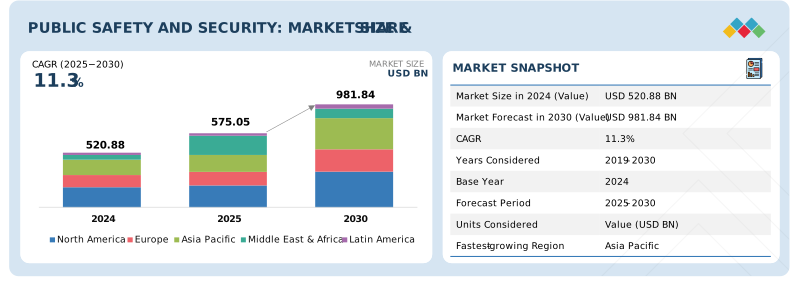
The global public safety and security market size is projected to grow from USD 575.05 billion in 2025 to USD 981.84 billion by 2030 at a compound annual growth rate (CAGR) of 11.3% during the forecast period. The public safety and security market is propelled by several key factors.
Scope of the Report
Years Considered for the Study
2019-2030
Base Year
2024
Forecast Period
2025-2030
Units Considered
Value (USD Million/USD Billion)
Segments
Offering, Deployment Mode, Application, and Region
Regions covered
North America, Europe, Asia Pacific, Middle East & Africa, Latin America
In July 2024, the Delhi government announced plans to install 50,000 additional CCTV cameras across the city to enhance public safety. This highlights the growing emphasis on surveillance infrastructure to deter crime and ensure real-time monitoring. Simultaneously, advancements in artificial intelligence, Internet of Things, and 5G technologies are revolutionizing public safety operations. These innovations enable faster emergency responses, predictive policing, and more efficient resource allocation. These developments reflect a global shift toward smarter, more integrated security solutions to address evolving threats.
As safety systems increasingly utilize data from surveillance cameras and tracking devices, privacy concerns are growing. Mismanagement of personal data can lead to misuse and public distrust. Balancing safety and individual rights remains a challenge for governments and agencies, thus restraining market growth.
"Cloud cybersecurity segment is expected to grow at the highest CAGR during the forecast period"
The cloud security segment is expanding rapidly in the public safety and security market due to rising reliance on digital platforms and connected systems. Public agencies and emergency services are increasingly shifting operations to secure cloud environments to manage real-time data, ensure data integrity, and improve incident response. The demand is fueled by the need to protect sensitive information from cyber threats, as large-scale breaches and ransomware incidents are becoming increasingly common. In May 2024, the FBI reported that cyberattacks on public sector entities had increased by more than 25% compared to the previous year, highlighting the growing urgency for stronger safeguards.
Cloud-based solutions also offer scalability and flexibility, which makes them attractive for governments and city administrations managing growing urban populations. As law enforcement, disaster response teams, and national security agencies adopt advanced digital tools, cloud security is emerging as the fastest-growing area.
"Managed services segment is expected to grow at the highest CAGR during the forecast period"
The managed services segment is experiencing the fastest growth in the public safety and security market as organizations increasingly rely on service providers to handle complex security operations. Rising threats, evolving cyber risks, and the demand for continuous monitoring are driving agencies and enterprises to adopt managed services for faster response times and improved resilience. In March 2024, a global survey reported that nearly 65% of public agencies were investing in outsourced monitoring to enhance the protection of critical infrastructure.
This shift is driven by the need for cost efficiency, specialized expertise, and real-time updates, which managed service providers can deliver more effectively than in-house teams. By offering integrated management of physical security, surveillance, and cybersecurity, these services ensure continuity and compliance with changing regulations. As digital transformation accelerates in 2025, the reliance on managed services is expected to increase as public and private entities prioritize safeguarding sensitive assets.
"Law enforcement & intelligence segment is expected to hold the largest market by homeland security region during the forecast period"
The law enforcement and intelligence segment holds the largest share in the public safety and security market because it forms the backbone of national and local protection strategies. Growing threats, including terrorism, organized crime, and cybercrime, have prompted governments to prioritize investments in advanced technology and integrated intelligence networks. In April 2025, the European Union announced that over 60% of its public security funding was directed toward strengthening law enforcement cooperation and intelligence data sharing.
Similarly, in December 2024, the United States Department of Homeland Security reported that real-time intelligence sharing between agencies increased by 35% compared to the previous year. These developments underscore the pivotal role of intelligence-driven policing and surveillance systems in facilitating rapid responses and crime prevention. Law enforcement agencies are also embracing tools such as artificial intelligence and analytics to improve predictive capabilities, making them the dominant segment within this evolving market.
Breakdown of Primaries
The study draws insights from a range of industry experts, including component suppliers, Tier 1 companies, and OEMs. The break-up of the primaries is as follows:
By Company Type: Tier 1 - 40%, Tier 2 - 32%, and Tier 3 - 28%
By Region: North America - 40%, Europe - 31%, Asia Pacific - 19%, Middle East & Africa - 7%, Latin America - 3%
Major vendors in the global public safety and security market include Motorola Solutions (US), Cisco (US), Siemens (Germany), Honeywell (US), Axis Communications (Sweden), Thales (France), Atos (France), IBM (US), Ericsson (Sweden), Eaton (Ireland), Elbit Systems (Israel), General Dynamics (US), NEC (Japan), Johnson Controls (US), Lockheed Martin (US), Securitas AB (Sweden), Saab AB (Sweden), Teledyne FLIR (US), IDEMIA (France), Bosch Security (Germany), Barrier1 Systems (UK), Genetec (Canada), CityShob (India), Everbridge (US), Fotokite (Switzerland), iOTAS (US), OptaSense (UK), Secure Passage (US), Teltronic (Spain), Veoci (US), Verkada (US), Westminster Group plc (UK), Intrado Corporation (US), Rave Mobile Safety (US), Allegion plc (Ireland), Federal Signal Corporation (US), Sun Ridge Systems (US), SECOM plc (Japan), and OnSolve (US).
The study includes an in-depth competitive analysis of the key players in the public safety and security market, their company profiles, recent developments, and key market strategies.
Research Coverage
The report segments the public safety and security market and forecasts its size, offering (solutions and services), deployment mode (on-premises and cloud), and application (homeland security, emergency & disaster services, critical infrastructure security, and healthcare & medical emergency).
The study also includes an in-depth competitive analysis of the market's key players, their company profiles, key observations related to product and business offerings, recent developments, and key market strategies.
Key Benefits of Buying the Report
The report will help market leaders/new entrants with information on the closest approximations of revenue numbers for the overall public safety and security market and its subsegments. This report will help stakeholders understand the competitive landscape and gain valuable insights to better position their businesses and plan suitable go-to-market strategies. The report also helps stakeholders understand the market pulse and provides information on key market drivers, restraints, challenges, and opportunities.
The report provides insights into the following pointers:
Analysis of key drivers (rising instances of terrorist activities and breaches, increasing investment in public safety measures for smart cities, the growing trend of IoT in public safety, need for security training and awareness), restraints (violation of privacy, high installation and maintenance costs for public safety and security systems), opportunities (emergence of big data analytics in public safety and security, integration of technologies, such as AI, ML, and analytics, in border and
public security, adoption of cloud computing technologies in the public safety industry, convergence of multiple physical security systems), and challenges (lack of efficient storage and data management capacities, integration of logical and physical components of security systems, incapabilities of legacy systems)
Product Development/Innovation: Detailed insights on upcoming technologies, research & development activities, and new product & service launches in the public safety and security market
Market Development: Comprehensive information about lucrative markets - analyzing the public safety and security market across varied regions
Market Diversification: Exhaustive information about new products & services, untapped geographies, recent developments, and investments in the public safety and security market
Competitive Assessment: In-depth assessment of market shares, growth strategies, and service offerings of leading players in public safety and security market strategies, including Motorola Solutions (US), Cisco (US), Siemens (Germany), Honeywell (US), and Atos (France)
TABLE OF CONTENTS
1 INTRODUCTION
1.1 STUDY OBJECTIVES
1.2 MARKET DEFINITION
1.2.1 INCLUSIONS AND EXCLUSIONS
1.2.1.1 Solution: Inclusions and exclusions
1.2.1.2 Service: Inclusions and exclusions
1.2.1.3 Application: Inclusions and exclusions
1.3 MARKET SCOPE
1.3.1 MARKET SEGMENTATION AND REGIONS COVERED
1.3.2 YEARS CONSIDERED
1.4 CURRENCY CONSIDERED
1.5 STAKEHOLDERS
1.6 SUMMARY OF CHANGES
2 RESEARCH METHODOLOGY
2.1 RESEARCH DATA
2.1.1 SECONDARY DATA
2.1.2 PRIMARY DATA
2.1.2.1 Breakup of primaries
2.1.2.2 Key industry insights
2.2 DATA TRIANGULATION
2.3 MARKET SIZE ESTIMATION
2.3.1 TOP-DOWN APPROACH
2.3.2 BOTTOM-UP APPROACH
2.4 MARKET FORECAST
2.5 RESEARCH ASSUMPTIONS
2.6 RESEARCH LIMITATIONS
3 EXECUTIVE SUMMARY
4 PREMIUM INSIGHTS
4.1 ATTRACTIVE GROWTH OPPORTUNITIES FOR PLAYERS IN PUBLIC SAFETY AND SECURITY MARKET
4.2 PUBLIC SAFETY AND SECURITY MARKET, BY OFFERING
4.3 PUBLIC SAFETY AND SECURITY MARKET, BY SOLUTION
4.4 PUBLIC SAFETY AND SECURITY MARKET, BY SERVICE
4.5 PUBLIC SAFETY AND SECURITY MARKET, BY PROFESSIONAL SERVICE
4.6 PUBLIC SAFETY AND SECURITY MARKET, BY APPLICATION
4.7 PUBLIC SAFETY AND SECURITY MARKET, BY DEPLOYMENT MODE
4.8 PUBLIC SAFETY AND SECURITY MARKET, BY EMERGENCY & DISASTER MANAGEMENT
4.9 PUBLIC SAFETY AND SECURITY MARKET, BY BIOMETRIC SECURITY
4.10 PUBLIC SAFETY AND SECURITY MARKET, BY SURVEILLANCE & MONITORING
4.11 PUBLIC SAFETY AND SECURITY MARKET, BY ACCESS CONTROL & PERIMETER SECURITY
4.12 PUBLIC SAFETY AND SECURITY MARKET, BY CYBERSECURITY
4.13 PUBLIC SAFETY AND SECURITY MARKET, BY HOMELAND SECURITY
4.14 PUBLIC SAFETY AND SECURITY MARKET, BY CRITICAL INFRASTRUCTURE SECURITY
4.15 MARKET INVESTMENT SCENARIO
5 MARKET OVERVIEW AND INDUSTRY TRENDS
5.1 INTRODUCTION
5.2 MARKET DYNAMICS
5.2.1 DRIVERS
5.2.1.1 Rising instances of terrorist activities and security breaches
5.2.1.2 Need for security training and awareness
5.2.1.3 Increasing investment in public safety measures for smart cities
5.2.1.4 Growing trend of IoT in public safety
5.2.2 RESTRAINTS
5.2.2.1 High installation and maintenance costs
5.2.2.2 Violation of privacy
5.2.3 OPPORTUNITIES
5.2.3.1 Emergence of big data analytics
5.2.3.2 Adoption of cloud computing technologies
5.2.3.3 Integration of advanced technologies in border and public safety operations
5.2.3.4 Convergence of multiple public safety and security systems
5.2.4 CHALLENGES
5.2.4.1 Lack of efficient storage and data management capacities
5.2.4.2 Integration of logical and physical components of security systems
5.2.4.3 Incapabilities of legacy systems
5.3 CASE STUDY ANALYSIS
5.3.1 CISCO HELPED SAN LUIS POTOSI CITY IMPROVE PHYSICAL SECURITY OF CITIZENS
5.3.2 HONEYWELL INTELLIGENTLY SECURED AND TRANSFORMED PRISTINA INTERNATIONAL AIRPORT
5.3.3 UNIQUE IDENTIFICATION AUTHORITY OF INDIA USES NEC BIOMETRIC IDENTIFICATION SYSTEM FOR OVER ONE BILLION PEOPLE
5.3.4 DUBLIN AIRPORT IMPLEMENTED VIDEO MANAGEMENT SYSTEM OF ADT
5.3.5 HEATHROW UNIFIES AIRPORT OPERATIONS AND SECURITY WITH GENETEC'S SCALABLE PLATFORM
5.4 EVOLUTION OF PUBLIC SAFETY AND SECURITY
5.5 VALUE CHAIN ANALYSIS
5.6 ECOSYSTEM ANALYSIS
5.7 PORTER'S FIVE FORCES ANALYSIS
5.7.1 THREAT OF NEW ENTRANTS
5.7.2 THREAT OF SUBSTITUTES
5.7.3 BARGAINING POWER OF SUPPLIERS
5.7.4 BARGAINING POWER OF BUYERS
5.7.5 INTENSITY OF COMPETITIVE RIVALRY
5.8 KEY STAKEHOLDERS AND BUYING CRITERIA
5.8.1 KEY STAKEHOLDERS IN BUYING PROCESS
5.8.2 BUYING CRITERIA
5.9 TRENDS/DISRUPTIONS IMPACTING CUSTOMER BUSINESS
5.10 PRICING ANALYSIS
5.10.1 AVERAGE SELLING PRICE OF KEY PLAYERS, BY SOLUTION, 2024
5.10.2 INDICATIVE PRICING ANALYSIS, BY OFFERING
5.11 TECHNOLOGY ANALYSIS
5.11.1 KEY TECHNOLOGIES
5.11.1.1 Surveillance and analytics
5.11.1.2 Real-time monitoring and emergency control
5.11.1.3 Biometrics
5.11.1.4 Cyber-physical security
5.11.1.5 IoT and smart sensors
5.11.2 COMPLEMENTARY TECHNOLOGIES
5.11.2.1 AI and ML
5.11.2.2 Big data and analytics
5.11.2.3 Cloud computing
5.11.2.4 5G and edge computing
5.11.2.5 Wearables
5.11.3 ADJACENT TECHNOLOGIES
5.11.3.1 Digital twin
5.11.3.2 Connected mobility
5.11.3.3 Blockchain
5.12 PATENT ANALYSIS
5.12.1 LIST OF TOP PATENTS IN PUBLIC SAFETY AND SECURITY MARKET, 2023-2025
5.13 TARIFF AND REGULATORY LANDSCAPE
5.13.1 TARIFF RELATED TO PUBLIC SAFETY AND SECURITY PRODUCTS
5.13.2 REGULATORY FRAMEWORK
5.13.2.1 General Data Protection Regulation (GDPR)
5.13.2.2 Sarbanes-Oxley (SOX) Act
5.13.2.3 Health Insurance Portability and Accountability Act (HIPAA)
5.13.2.4 Health Information Technology for Economic and Clinical Health (HITECH)
5.13.2.5 Payment Card Industry Data Security Standard (PCI DSS)
5.13.3 REGULATORY BODIES, GOVERNMENT AGENCIES, AND OTHER ORGANIZATIONS
5.14 BEST PRACTICES IN PUBLIC SAFETY AND SECURITY MARKET
5.15 TECHNOLOGY ROADMAP
5.16 TRADE ANALYSIS
5.16.1 IMPORT DATA
5.16.2 EXPORT DATA
5.17 KEY CONFERENCES AND EVENTS IN 2026
5.18 BUSINESS MODEL ANALYSIS
5.19 INVESTMENT AND FUNDING SCENARIO
5.20 IMPACT OF GENERATIVE AI ON PUBLIC SAFETY AND SECURITY MARKET
5.20.1 TOP USE CASES AND MARKET POTENTIAL
5.20.1.1 Key use cases
5.20.2 IMPACT OF GEN AI ON INTERCONNECTED AND ADJACENT ECOSYSTEMS
5.20.2.1 Big data and video analytics
5.20.2.2 Cybersecurity
5.20.2.3 Drones
5.20.2.4 Cloud computing
5.20.2.5 Contactless biometrics
5.21 IMPACT OF 2025 US TARIFF - PUBLIC SAFETY AND SECURITY MARKET
5.21.1 INTRODUCTION
5.21.2 KEY TARIFF RATES
5.21.3 PRICE IMPACT ANALYSIS
5.21.3.1 Strategic shifts and emerging trends
5.21.4 IMPACT ON COUNTRY/REGION
5.21.4.1 US
5.21.4.2 Europe
5.21.4.3 Asia Pacific
5.21.5 IMPACT ON END-USE INDUSTRIES
6 PUBLIC SAFETY AND SECURITY MARKET, BY OFFERING
6.1 INTRODUCTION
6.1.1 OFFERING: PUBLIC SAFETY AND SECURITY MARKET DRIVERS
6.2 SOLUTIONS
6.2.1 CRITICAL COMMUNICATION NETWORK
6.2.1.1 Advancing public safety through reliable critical communication networks
6.2.1.2 Land mobile radio (LMR)
6.2.1.2.1 Analog LMR
6.2.1.2.2 Digital LMR (TETRA, P25, DMR)
6.2.1.3 Long-term evolution (LTE)-based mission-critical communication
6.2.1.4 Satellite-based communication systems
6.2.1.5 Dispatch & control room systems
6.2.1.6 Interoperability gateways
6.2.2 EMERGENCY & DISASTER MANAGEMENT
6.2.2.1 Enhancing crisis preparedness and response through integrated disaster management systems
6.2.2.2 Command, control, communications, computers, intelligence, surveillance, reconnaissance (C2/C4ISR) systems
6.2.2.3 Disaster recovery & continuity platforms
6.2.2.4 Mass notification systems (public alerting, SMS/cell broadcast, sirens)
6.2.2.5 Incident management software
6.2.2.6 Emergency operations center (EOC) software
6.2.2.7 Crisis simulation & training systems
6.2.3 ACCESS CONTROL & PERIMETER SECURITY
6.2.3.1 Strengthening public safety through integrated access control and perimeter security systems
6.2.3.2 Physical access control systems (PACS)
6.2.3.2.1 Smart cards & RFID
6.2.3.2.2 Mobile-based access
6.2.3.2.3 Biometric access control
6.2.3.3 Electronic locks & turnstiles
6.2.3.4 Perimeter fencing & barriers
6.2.3.5 Intrusion detection systems
6.2.3.6 Visitor management systems
6.2.4 BIOMETRIC SECURITY
6.2.4.1 Enhancing identity verification through advanced biometric security and authentication systems
6.2.4.2 Fingerprint recognition
6.2.4.3 Facial recognition
6.2.4.4 Iris recognition
6.2.4.5 Voice recognition
6.2.4.6 Multimodal biometrics
6.2.5 SURVEILLANCE & MONITORING SYSTEMS
6.2.5.1 Strengthening public safety and security through advanced video surveillance and monitoring systems
6.2.5.2 Video surveillance
6.2.5.2.1 CCTV cameras (IP, analog, thermal, PTZ)
6.2.5.2.2 Body-worn cameras
6.2.5.2.3 Drones/UAV surveillance
6.2.5.2.4 Smart street lighting with surveillance integration
6.2.5.3 Video management software (VMS)
6.2.5.4 Video analytics (object detection, facial recognition, behavioral analysis)