


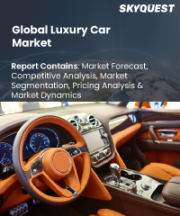
고급차 시장 규모는 2024년에 6,644억 달러로 평가되었으며, 2025년 7,281억 8,000만 달러에서 2033년까지 1조 5,160억 9,000만 달러로 성장할 전망입니다. 예측 기간(2026-2033년) 동안 CAGR은 9.6%로 예측됩니다.
고급차 시장은 고급 엔터테인먼트 시스템, 통합형 시트 마사지 기능, 첨단 안전 기술 등 첨단 기능에 대한 소비자 수요에 힘입어 변화하고 있습니다. 고급 소재와 장인정신이 이들 차량의 특징인 반면, 사회학적 트렌드의 진화는 고급차 제조업체들 사이에서 명확한 브랜드 아이덴티티의 필요성을 강조하고 있습니다. 대중의 인식이 구매 행동에 미치는 영향이 커지고 있으며, 브랜드는 변화하는 사회적 가치와 일치해야 하는 상황에 직면해 있습니다. 또한, 환경에 대한 인식이 높아지고 엄격한 배출가스 규제가 강화되면서 전기자동차와 지속가능한 교통수단에 대한 수요가 증가하고 있습니다. 가처분 소득이 증가함에 따라 소비자의 취향은 점점 더 고급 브랜드로 옮겨가고 있습니다. 기술 혁신, 특히 전기자동차 충전을 위한 IoT와 실시간 정보 시스템은 사용자 경험을 향상시키고 있지만, 높은 비용과 수입 관세가 시장 성장의 걸림돌로 작용하고 있습니다.
고급차 시장 촉진요인
고급차 시장은 세계 각국 정부의 환경의식 고취와 자동차 배기가스 규제 강화 움직임에 큰 영향을 받고 있습니다. 이러한 변화로 인해 소비자들이 보다 친환경적인 대안을 찾는 가운데, 특히 전기자동차를 비롯한 친환경적이고 지속가능한 교통수단에 대한 수요가 증가하고 있습니다. 또한, 각국 정부가 전기자동차 구매를 촉진하기 위해 막대한 보조금과 우대정책을 도입하고 있어 소비자의 접근성이 향상되고 있습니다. 동시에 개인의 가처분 소득과 전체 자산이 증가함에 따라 소비자의 취향이 고급품으로 뚜렷하게 이동하여 고급 자동차 부문의 확장을 더욱 촉진하고 있습니다.
고급차 시장 억제요인
고급차 시장은 이러한 고급 차량에 수반되는 엄청난 가격 책정으로 인해 심각한 도전에 직면해 있습니다. 이는 주로 프리미엄 기능과 우수한 소재에 기인합니다. 고급차 생산비용은 첨단 기술과 전용장비를 탑재하기 때문에 일반 모델보다 현저히 높은 편입니다. 또한, 이 분야는 판매량이 제한적이기 때문에 소매 가격의 상당 부분이 조사개발비로 사용됩니다. 그 결과, 고급차 가격 상승이 시장 성장의 제약요인으로 작용하여 더 많은 계층이 접근하기 어려운 상황이 발생했습니다.
고급차 시장 동향
고급차 시장은 눈에 띄는 상승세를 보이고 있으며, 개인 소득 증가에 따라 고급 차량에 대한 소비자 수요가 급증하고 있는 것이 그 배경입니다. 이러한 성장은 지속가능성에 대한 관심 증가와 함께 배출가스 규제 강화로 인해 전기 고급차로의 전환이 가속화되고 있습니다. 중고 고급차 부문도 쉬운 융자 옵션과 매력적인 유지보수 계획의 혜택을 받아 호황을 누리고 있습니다. 또한, 주요 제조사들은 자율주행 기술, 개인 음성 비서, 생체인식 보안 기능 등 첨단 스마트 모빌리티 기술을 적극적으로 도입하여 혁신의 최전선에 서고 있습니다. 인공지능(AI)과 머신러닝에 대한 대규모 투자는 이 역동적인 시장의 변화를 더욱 촉진하고 지속적인 확장을 위한 토대를 마련하고 있습니다.
Luxury Car Market size was valued at USD 664.4 Billion in 2024 and is poised to grow from USD 728.18 Billion in 2025 to USD 1516.09 Billion by 2033, growing at a CAGR of 9.6% during the forecast period (2026-2033).
The luxury car market is witnessing a transformation fueled by consumer demand for advanced features like high-end entertainment systems, integrated seat massagers, and sophisticated safety technologies. High-quality materials and craftsmanship characterize these vehicles, while evolving sociological trends emphasize the need for distinct brand identities among luxury manufacturers. Public perception increasingly influences purchasing behavior, compelling brands to align with shifting social values. Additionally, growing environmental awareness and stringent emission regulations are bolstering the demand for electric and sustainable transportation options. As disposable incomes rise, consumer preferences increasingly shift toward luxury brands. Technological advancements, particularly in IoT and real-time information systems for electric vehicle charging, are enhancing user experiences, although high costs and import duties pose challenges for market growth amidst these shifting dynamics.
Top-down and bottom-up approaches were used to estimate and validate the size of the Luxury Car market and to estimate the size of various other dependent submarkets. The research methodology used to estimate the market size includes the following details: The key players in the market were identified through secondary research, and their market shares in the respective regions were determined through primary and secondary research. This entire procedure includes the study of the annual and financial reports of the top market players and extensive interviews for key insights from industry leaders such as CEOs, VPs, directors, and marketing executives. All percentage shares split, and breakdowns were determined using secondary sources and verified through Primary sources. All possible parameters that affect the markets covered in this research study have been accounted for, viewed in extensive detail, verified through primary research, and analyzed to get the final quantitative and qualitative data.
Luxury Car Market Segments Analysis
Global Luxury Car Market is segmented by Vehicle, Drive Type, Fuel Type, Price Category, Vehicle Class and region. Based on Vehicle, the market is segmented into Hatchback, Sedan, Sports Utility Vehicle and Multi-Purpose Vehicle. Based on Drive Type, the market is segmented into Internal Combustion (IC) Engine and Electric and Hybrid Vehicle. Based on Fuel Type, the market is segmented into Gasoline, Diesel and Electric. Based on Price Category, the market is segmented into USD 80,000 to USD 149,000, USD 150,000 to USD 299,000, USD 300,000 to USD 500,000 and Above USD 500,000. Based on Vehicle Class, the market is segmented into Entry-Level Luxury, Mid-Level Luxury and Ultra-Luxury. Based on region, the market is segmented into North America, Europe, Asia Pacific, Latin America and Middle East & Africa.
Driver of the Luxury Car Market
The Luxury Car market is significantly influenced by heightened environmental awareness and the push for stricter vehicle emission standards enforced by governments globally. This shift has sparked a rising demand for eco-friendly and sustainable transportation options, particularly electric vehicles, as consumers seek greener alternatives. In addition, various governments are introducing substantial subsidies and incentives to encourage the purchase of electric vehicles, making them more accessible to consumers. Concurrently, as individuals experience growth in disposable income and overall wealth, there is a noticeable shift in consumer preferences towards luxury products, further driving the expansion of the luxury automotive sector.
Restraints in the Luxury Car Market
The luxury car market faces significant challenges due to the exorbitant prices associated with these high-end vehicles, which are largely a result of their premium features and superior materials. The production costs for luxury cars are considerably higher than those for standard models, as they incorporate advanced technology and exclusive amenities. Additionally, the limited sales volume in this sector means that a considerable portion of the retail price is allocated to research and development expenses. Consequently, the elevated costs of luxury vehicles serve as a constraint on market growth, making them less accessible to a broader audience.
Market Trends of the Luxury Car Market
The luxury car market is experiencing a notable upward trend, fueled by a surge in consumer demand for high-end vehicles as personal incomes rise. This growth is complemented by an increasing focus on sustainability, with stricter emissions regulations prompting a shift toward electric luxury vehicles. The pre-owned luxury segment also thrives, benefiting from accessible financing options and attractive maintenance plans. Additionally, leading manufacturers are at the forefront of innovation, incorporating advanced smart mobility technologies such as autonomous driving, personal voice assistants, and biometric security features. Significant investment in artificial intelligence and machine learning further supports the transformation of this dynamic market, positioning it for continued expansion.