


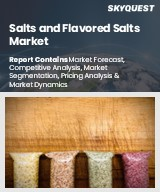
세계의 소금 및 맛소금 시장 규모는 2024년에 89억 6,000만 달러로 평가되었고, 2025년 92억 5,000만 달러에서 2033년까지 120억 달러로 성장할 전망이며, 예측 기간(2026-2033년) CAGR은 3.3%를 보일 것으로 예측됩니다.
소금 및 맛소금 시장은 괄목할 만한 성장세를 보이고 있으며, 그 배경에는 세계 각국의 요리에서 탄생한 특제 소금, 맛소금 등 독특한 조미료 경험을 원하는 미식가 여행객 증가가 있습니다. 소비자들의 건강에 대한 인식이 높아지면서 식탁용 소금에서 천일염, 히말라야 핑크솔트 등 천연 대체품으로 전환이 진행되고 있습니다. 살롱 스타일 요리의 부상도 소비자들이 다양한 맛을 추구하는 가운데 시장 확대를 더욱 촉진하고 있습니다. 진화하는 고객 취향에 맞는 새로운 맛의 블렌드를 개발할 수 있는 혁신의 기회는 풍부하게 존재합니다. 브랜드는 유기농 및 지속 가능한 조달 제품에 대한 트렌드를 활용할 수 있으며, 전자상거래의 급격한 성장으로 접근성이 향상되고 있습니다. 또한, 레스토랑들이 자체 개발한 소금 블렌드로 메뉴를 업그레이드하고 있는 것도 시장의 관심을 더욱 높이고 있습니다.
세계 소금 및 맛소금 시장 성장 촉진요인
미식 요리와 독특한 맛 체험에 대한 소비자의 관심이 높아지면서 프리미엄 맛소금에 대한 수요가 크게 증가하고 있습니다. 훈제 바다 소금, 트러플 소금, 감귤 향 소금 등 장인정신과 이국적인 소금을 찾는 사람들이 늘어남에 따라, 브랜드는 이러한 관심을 반영하여 제품 라인을 확장하고 있습니다. 이러한 추세는 요리 경험을 향상시키는 혁신적인 식재료로의 전환을 의미하며, 기업들은 모험적인 미각에 부응하는 새로운 맛과 블렌딩을 탐구하도록 장려하고 있습니다. 그 결과, 요리 실력을 연마하고자 하는 소비자들의 다양한 취향을 반영하여 활기찬 시장의 발전을 볼 수 있습니다.
세계 소금 및 맛소금 시장 성장 억제요인
세계 향이 첨가된 소금 및 특수 소금 시장은 일반 식탁용 소금에 비해 높은 가격대로 인해 중저소득층 소비자의 접근성이 제한되는 심각한 문제에 직면해 있습니다. 선진국의 부유한 도시지역에서는 미식가 소금에 대한 도입 의지가 높지만, 가격 차이가 가격에 민감한 시장으로의 침투를 가로막고 있습니다. 동남아시아나 아프리카 일부 지역 등에서는 대다수의 소비자들이 독특한 맛이나 강화된 미네랄 함량보다 저렴한 가격을 우선시하기 때문에 프리미엄 소금 제품이 이들 지역에서 널리 받아들여지기 어렵습니다.
세계 소금 및 맛소금 시장 동향
세계 소금 및 맛소금 시장에서는 소비자들이 환경 친화적인 선택을 점점 더 중요시하는 가운데, 포장 및 조달에 있어 지속가능성에 대한 큰 추세를 볼 수 있습니다. 각 브랜드는 친환경 포장 솔루션을 채택하고 윤리적 조달 관행을 강조하는 등 구매 제품이 생태계에 미치는 영향을 우려하는 소비자 증가에 부응하고 있습니다. 그 결과, 환경에 미치는 영향을 최소화한 자연채취 방식이 인기를 끌고 있습니다. 이러한 변화는 정보에 정통한 소비자의 요구에 부응할 뿐만 아니라 소금 제품의 프리미엄 매력을 높여 지속가능성과 책임감 있는 소비를 중시하는 경쟁 환경 속에서 기업이 성장할 수 있는 토대를 마련하고 있습니다.
Global Salts and Flavored Salts Market size was valued at USD 8.96 Billion in 2024 and is poised to grow from USD 9.25 Billion in 2025 to USD 12 Billion by 2033, growing at a CAGR of 3.3% during the forecast period (2026-2033).
The salts and flavored salts market is experiencing significant growth, fueled by the increasing number of culinary tourists seeking unique seasoning experiences, including specialty and infused salts from various global cuisines. Consumers are becoming more health-conscious, prompting a shift from table salt to natural alternatives like sea salt and Himalayan pink salt due to perceived health benefits. The rise of salon-style cuisine has further stimulated market expansion as consumers explore diverse flavor profiles. Opportunities for innovation abound in developing new taste blends that cater to evolving customer preferences. Brands can capitalize on the trend towards organic and sustainably sourced products, while the surge in e-commerce enhances accessibility. Additionally, restaurants are elevating their menus with unique salt blends, further driving interest in the market.
Top-down and bottom-up approaches were used to estimate and validate the size of the Global Salts and Flavored Salts market and to estimate the size of various other dependent submarkets. The research methodology used to estimate the market size includes the following details: The key players in the market were identified through secondary research, and their market shares in the respective regions were determined through primary and secondary research. This entire procedure includes the study of the annual and financial reports of the top market players and extensive interviews for key insights from industry leaders such as CEOs, VPs, directors, and marketing executives. All percentage shares split, and breakdowns were determined using secondary sources and verified through Primary sources. All possible parameters that affect the markets covered in this research study have been accounted for, viewed in extensive detail, verified through primary research, and analyzed to get the final quantitative and qualitative data.
Global Salts and Flavored Salts Market Segments Analysis
Global Salts and Flavored Salts Market is segmented by Product Type, Source, Distribution Channel, End-use and region. Based on Product Type, the market is segmented into Table Salt and Flavored and Seasoned Salt. Based on Source, the market is segmented into Mined Salt and Sea Salt. Based on Distribution Channel, the market is segmented into Supermarkets/Hypermarkets, Convenience/Grocery Stores, Online Retail Stores and Other Distribution Channels. Based on End-use, the market is segmented into Food & Beverage, Retail/Household and Foodservice. Based on region, the market is segmented into North America, Europe, Asia Pacific, Latin America and Middle East & Africa.
Driver of the Global Salts and Flavored Salts Market
The growing consumer fascination with gourmet cooking and distinctive flavor experiences is significantly driving the demand for premium flavored salts. As individuals increasingly seek artisanal and exotic options, such as smoked sea salt, truffle salt, and citrus-infused varieties, brands are adapting by broadening their product offerings to capture this interest. This trend highlights a shift toward innovative culinary ingredients that enhance the cooking experience, prompting companies to explore new flavors and blends that cater to adventurous palates. Consequently, we see a vibrant market evolution that reflects a diverse range of preferences among consumers eager to elevate their culinary endeavors.
Restraints in the Global Salts and Flavored Salts Market
The global market for flavored and specialty salts faces significant challenges due to their higher price points compared to regular table salt, which limits accessibility for middle and lower-income consumers. Although affluent urban areas in developed regions are eager to adopt gourmet salts, the cost disparity poses a barrier to penetrating price-sensitive markets. In regions such as Southeast Asia and certain parts of Africa, the majority of consumers prioritize affordability over the appeal of unique flavors or enhanced mineral content, making it difficult for premium salt products to gain widespread acceptance in these areas.
Market Trends of the Global Salts and Flavored Salts Market
The Global Salts and Flavored Salts market is witnessing a significant trend towards sustainability in packaging and sourcing as consumers increasingly prioritize environmentally conscious choices. Brands are responding by adopting eco-friendly packaging solutions and emphasizing ethical sourcing practices, which appeal to the growing number of consumers who are concerned about the ecological impact of their purchases. As a result, natural harvesting methods with minimal environmental disruption are gaining popularity. This shift not only meets the demands of informed consumers but also enhances the premium appeal of salt products, positioning companies to thrive amidst a competitive landscape that values sustainability and responsible consumption.