


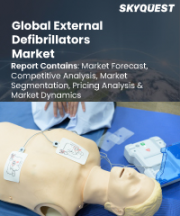
세계의 체외식 제세동기(AED) 시장 규모는 2024년에 31억 달러로 평가되며, 2025년 33억 1,000만 달러에서 2033년까지 56억 달러로 성장할 전망입니다. 예측 기간(2026-2033년)의 CAGR은 6.8%로 예측됩니다.
세계 외부 제세동기 시장은 자동 체외식 제세동기(AED)의 중요성에 대한 인식이 높아짐에 따라 심정지 환자의 생존율 향상에 대한 인식이 높아짐에 따라 성장할 것으로 예측됩니다. 이 소형 휴대용 장치는 갑작스런 심장마비시 정상적인 심장 리듬을 회복하기 위해 생명을 구하는 전기 충격을 공급하도록 설계되었습니다. 시장 확대를 촉진하는 요인으로는 다양한 분야에서 공공 접근형 제세동기(PAD)의 도입 추진 증가와 제세동기 장치의 기술적 진보를 들 수 있습니다. 또한 심혈관 질환에 취약한 고령 인구 증가와 심장병 유병률 증가는 수요를 더욱 촉진하고 있습니다. 관상동맥 질환과 뇌혈관 질환을 포함한 심혈관 질환의 전 세계 발생률 증가는 시장 전망 궤도를 크게 형성하고 있습니다.
세계 외부 제세동기 시장 성장 촉진요인
세계 외부 제세동기 시장의 성장을 이끄는 중요한 요인은 제세동기에 대한 대중의 접근성 향상에 대한 관심이 높아지고 있다는 점입니다. 이 움직임은 공항, 쇼핑몰, 스포츠 경기장 등 다양한 공공시설에서 제세동기를 쉽게 구할 수 있도록 하여 갑작스러운 심장질환 발생시 신속한 대응 가능성을 높이는 것을 목표로 하고 있습니다. 정부 기관과 의료 기관은 자동 체외식 제세동기(AED)가 생명을 구하는 데 있으며, 중요한 역할을 한다는 것을 점점 더 많이 인식하고 있습니다. 이러한 수요 증가는 제세동기의 보급을 촉진할 뿐만 아니라, 장비의 디자인과 사용 편의성을 향상시켜 의료 훈련이 부족한 사람들도 응급상황에서 효과적으로 조작할 수 있도록 돕고 있습니다.
세계 체외 제세동기 시장 성장 억제요인
세계 외부 제세동기 시장이 직면한 가장 큰 과제는 이러한 중요한 기기의 효과적인 사용에 대한 접근성 및 교육 강화가 필요하다는 점입니다. 다양한 공공장소에 자동 체외식 제세동기(AED)를 설치하려는 노력은 진전되고 있지만, 응급상황에서 AED를 사용하는 방법에 대한 개인에 대한 충분한 교육 부족은 여전히 시급한 과제입니다. AED를 효과적으로 활용하기 위해서는 사용자가 조작법을 명확히 이해하고 심정지 발생시 적절히 대응할 수 있는 자신감을 갖는 것이 필수적입니다. 낮은 인지도, 훈련 자원 부족, AED 설치에 대한 소극적인 태도는 AED의 효과적인 사용을 방해하고 응급 상황에서 인명 구조의 가능성을 저해할 수 있습니다.
세계 체외 제세동기 시장 동향
세계 체외 제세동기 시장에서는 첨단 연결 기능에 대한 두드러진 추세를 볼 수 있습니다. 각 제조업체들이 무선 기술, 클라우드 기반 데이터 저장, 원격 모니터링 기능을 디바이스에 내장하고 있기 때문입니다. 이러한 진화를 통해 의료진과 구급대원들은 기기의 상태, 사용 이력, 환자 결과에 대한 중요한 정보를 실시간으로 확인할 수 있으며, 응급상황에 대한 대응 시간을 단축할 수 있습니다. 원격으로 상황을 평가할 수 있는 능력은 정보에 입각한 의사결정을 촉진하고 효율적인 개입 전략을 지원합니다. 또한 수집된 데이터를 분석하여 사용 패턴을 파악하고 기기 성능을 최적화하여 궁극적으로 교육 프로그램 강화, 응급 상황에서의 환자 치료 및 치료 결과 개선으로 이어질 수 있습니다.
Global External Defibrillators Market size was valued at USD 3.1 Billion in 2024 and is poised to grow from USD 3.31 Billion in 2025 to USD 5.6 Billion by 2033, growing at a CAGR of 6.8% during the forecast period (2026-2033).
The global market for external defibrillators is poised for growth, driven by heightened recognition of the importance of automated external defibrillators (AEDs) in improving survival rates from cardiac arrest. These compact, portable devices are designed to deliver life-saving electric shocks to restore normal heart rhythms in cases of sudden cardiac arrest. Factors propelling market expansion include increased advocacy for public access defibrillators (PADs) by various sectors, along with technological advancements in defibrillator devices. Additionally, the rising elderly population, which is more vulnerable to cardiovascular conditions, coupled with a growing prevalence of cardiac diseases, further fuels demand. The escalating global rates of cardiovascular issues, including coronary and cerebrovascular diseases, significantly shape the market's future trajectory.
Top-down and bottom-up approaches were used to estimate and validate the size of the Global External Defibrillators market and to estimate the size of various other dependent submarkets. The research methodology used to estimate the market size includes the following details: The key players in the market were identified through secondary research, and their market shares in the respective regions were determined through primary and secondary research. This entire procedure includes the study of the annual and financial reports of the top market players and extensive interviews for key insights from industry leaders such as CEOs, VPs, directors, and marketing executives. All percentage shares split, and breakdowns were determined using secondary sources and verified through Primary sources. All possible parameters that affect the markets covered in this research study have been accounted for, viewed in extensive detail, verified through primary research, and analyzed to get the final quantitative and qualitative data.
Global External Defibrillators Market Segments Analysis
Global External Defibrillators Market is segmented by Product, End User and region. Based on Product, the market is segmented into Manual External Defibrillators, Automated External Defibrillators and Wearable Cardioverter Defibrillators. Based on End User, the market is segmented into Hospital, Pre-Hospital, Public Access Market, Alternate Care Market and Home Healthcare. Based on region, the market is segmented into North America, Europe, Asia Pacific, Latin America and Middle East & Africa.
Driver of the Global External Defibrillators Market
A significant factor driving the expansion of the global external defibrillators market is the increasing focus on enhancing public access to defibrillation. This movement aims to make defibrillators readily available in various public venues, such as airports, shopping malls, and sports arenas, thereby improving the likelihood of prompt intervention during sudden cardiac events. Both governments and healthcare organizations are increasingly acknowledging the essential role that automated external defibrillators (AEDs) play in lifesaving efforts. This growing demand is not only spurring the adoption of more defibrillators but also fostering advancements in device design and ease of use, enabling individuals with limited medical training to operate them effectively in emergencies.
Restraints in the Global External Defibrillators Market
A significant challenge facing the global external defibrillators market is the need for enhanced accessibility and training regarding the effective use of these critical devices. Although initiatives to position automated external defibrillators (AEDs) in various public spaces have progressed, the lack of adequate training for individuals on how to use them in emergencies continues to be a pressing issue. For AEDs to be utilized successfully, users must have a clear understanding of their operation and be confident in responding appropriately during a cardiac event. Limited awareness, insufficient training resources, and the reluctance to deploy AEDs can impede their effective use and diminish their potential to save lives in urgent situations.
Market Trends of the Global External Defibrillators Market
The Global External Defibrillators market is witnessing a significant trend towards advanced connectivity features, as manufacturers incorporate wireless technology, cloud-based data storage, and remote monitoring capabilities into their devices. This evolution empowers healthcare providers and emergency responders with real-time access to critical information regarding device status, usage history, and patient outcomes, thereby expediting response times during emergencies. The ability to remotely assess situations facilitates informed decision-making and supports efficient intervention strategies. Furthermore, the analysis of collected data helps identify usage patterns and optimize device performance, ultimately leading to enhanced training programs and improved patient care and outcomes in critical situations.