


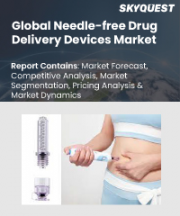
무바늘 약물전달 디바이스 시장 규모는 2024년에 150억 7,000만 달러로 평가되었고, 2025년 161억 1,000만 달러에서 2033년까지 274억 8,000만 달러로 성장할 전망이며, 예측 기간(2026-2033년) CAGR은 6.9%를 보일 것으로 예측됩니다.
무바늘 약물 투여 장치 세계 시장은 혁신적인 솔루션으로 의료 분야에 혁명을 가져올 것으로 예측됩니다. 기존의 바늘을 제거함으로써 바늘 사용에 따른 위험을 줄이고 환자의 불편함을 크게 줄일 수 있습니다. 특히 자가면역질환, 당뇨병 등 만성질환 관리에서 통증 없는 환자 중심의 약물 투여에 대한 수요가 증가하고 있는 것이 시장 성장을 견인하고 있습니다. 또한, 고령화 사회와 자가 주사제의 필요성도 성장 요인으로 작용하고 있습니다. 경피 패치, 제트주사기 등의 혁신기술은 편리성과 정확성을 높여 보급을 촉진하고 있습니다. 의료시설은 환자의 편안함을 최우선시하는 주요 시장 부문으로 남아 있지만, 재택치료 환경에서의 사용이 빠르게 증가하고 있습니다. 그러나 높은 개발 비용과 규제 이슈는 유망한 성장 궤도에도 불구하고 시장 확대에 걸림돌이 될 수 있습니다.
무침 약물 전달 디바이스시장을 주도하는 요인들
무바늘 약물 전달 디바이스시장은 정확성과 효율성을 높인 혁신적인 장치의 등장으로 괄목할 만한 성장을 거듭하고 있습니다. 이러한 발전은 주로 무바늘 약물 전달 기술의 지속적인 발전에 기인합니다. 경피 패치, 마이크로니들, 제트 인젝터와 같은 첨단 솔루션의 출현은 이러한 진보를 상징하며, 다양한 의료 시나리오에서 다양한 응용을 가능하게 하고 있습니다. 기술의 발전과 함께 이러한 장치들은 점점 더 정밀해져 더 다양한 치료 요구를 충족시키고, 기존의 바늘을 사용하는 방법에 따른 불편함을 줄여 환자의 전반적인 경험을 개선하는 데 기여하고 있습니다.
비침습적 약물 전달 디바이스시장의 저해요인
무바늘 약물 전달 디바이스시장은 의료기기 산업을 규제하는 엄격한 요구 사항으로 인해 심각한 문제에 직면해 있습니다. 이러한 혁신적인 제품의 승인 절차는 종종 길고 복잡하여 제조업체에게 장벽이 되고 있습니다. 이러한 규제는 환자의 안전과 약물 전달의 효과를 보장하기 위해 필수적이지만, 개발 비용 증가와 생산 및 유통의 장기화를 초래할 수 있습니다. 기업들이 컴플라이언스의 복잡성을 극복하는 과정에서 제품 출시가 지연될 가능성은 업계의 성장과 혁신에 큰 제약 요인으로 작용하고 있습니다.
무바늘 약물 전달 디바이스시장 동향
무바늘 약물 전달 디바이스시장은 인슐린, 백신과 같은 기존 용도를 넘어 기술 발전에 따라 전문 치료제 및 생물학적 제제에 대한 적용이 확대되며 괄목할 만한 성장을 거듭하고 있습니다. 이러한 시장 동향은 통제되고 정확한 약물 투여를 보장하는 혁신적인 솔루션에 대한 수요가 증가하고 있음을 반영합니다. 무바늘 장치의 범용성이 점점 더 인정받고 있으며, 통증 최소화 및 환자 순응도 향상이 중요한 만성질환 관리 및 소아 의료를 포함한 다양한 치료 영역에서 채택이 가능해졌습니다. 이해관계자들이 혁신을 지속하고 새로운 응용 분야를 모색하는 가운데, 진화하는 의료 수요와 선호도에 힘입어 시장은 큰 폭으로 성장할 것으로 보입니다.
Needle-free Drug Delivery Devices Market size was valued at USD 15.07 Billion in 2024 and is poised to grow from USD 16.11 Billion in 2025 to USD 27.48 Billion by 2033, growing at a CAGR of 6.9% during the forecast period (2026-2033).
The global market for needle-free drug delivery devices is poised to revolutionize the healthcare sector with its innovative solutions. By eliminating traditional needles, these devices mitigate the risks associated with needle use and significantly reduce patient discomfort. Rising demand for pain-free and patient-centric drug administration, particularly in managing chronic conditions like autoimmune disorders and diabetes, is driving market growth. Furthermore, the aging population and the need for self-injected drugs are contributing factors. Innovations, such as transdermal patches and jet injectors, enhance convenience and precision, boosting their popularity. While healthcare facilities remain the primary market segment prioritizing patient comfort, homecare settings are rapidly gaining ground. However, high development costs and regulatory challenges may pose barriers to market expansion, despite its promising trajectory.
Top-down and bottom-up approaches were used to estimate and validate the size of the Needle-free Drug Delivery Devices market and to estimate the size of various other dependent submarkets. The research methodology used to estimate the market size includes the following details: The key players in the market were identified through secondary research, and their market shares in the respective regions were determined through primary and secondary research. This entire procedure includes the study of the annual and financial reports of the top market players and extensive interviews for key insights from industry leaders such as CEOs, VPs, directors, and marketing executives. All percentage shares split, and breakdowns were determined using secondary sources and verified through Primary sources. All possible parameters that affect the markets covered in this research study have been accounted for, viewed in extensive detail, verified through primary research, and analyzed to get the final quantitative and qualitative data.
Needle-free Drug Delivery Devices Market Segments Analysis
Global Needle-free Drug Delivery Devices Market is segmented by Type, Application and region. Based on Type, the market is segmented into Inhaler technology, Transdermal patch technology and Novel needle-free technologies. Based on Application, the market is segmented into Vaccine delivery, Pain management, Insulin delivery for diabetes, Pediatric injections and Others. Based on region, the market is segmented into North America, Europe, Asia Pacific, Latin America and Middle East & Africa.
Driver of the Needle-free Drug Delivery Devices Market
The Needle-free Drug Delivery Devices market is experiencing significant growth, driven by the advent of innovative devices characterized by enhanced precision and efficiency. This evolution is largely attributed to ongoing advancements in needle-free drug delivery technologies. The emergence of sophisticated solutions such as transdermal patches, micro-needles, and jet injectors exemplifies this progress, allowing for versatile applications across various medical scenarios. As technology continues to advance, these devices are becoming increasingly precise, catering to a broader range of therapeutic needs and improving the overall patient experience by reducing the discomfort associated with traditional needle-based methods.
Restraints in the Needle-free Drug Delivery Devices Market
The needle-free drug delivery devices market faces significant challenges due to stringent regulatory requirements that govern the medical device industry. The process of obtaining approval for these innovative products is often lengthy and complex, creating hurdles for manufacturers. While these regulations are essential for ensuring patient safety and the efficacy of drug delivery, they can also lead to increased development costs and protracted timelines for production and distribution. As companies navigate the intricacies of compliance, the potential for delays in bringing products to market poses a considerable restraint on industry growth and innovation.
Market Trends of the Needle-free Drug Delivery Devices Market
The Needle-free Drug Delivery Devices market is experiencing significant expansion beyond traditional applications like insulin and vaccines, as advancements in technology broaden their use in specialized therapeutics and biologics. This market trend reflects a growing demand for innovative solutions that ensure controlled and accurate drug administration. The versatility of needle-free devices is being increasingly recognized, enabling their adoption in various therapeutic areas, including chronic disease management and pediatric care, where minimizing pain and enhancing patient compliance are crucial. As industry stakeholders continue to innovate and explore new applications, the market is poised for substantial growth, driven by evolving healthcare needs and preferences.