


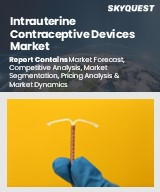
세계 자궁내 피임 기구(IUD) 시장 규모는 2024년 46억 달러로 평가되었으며, 2025년 48억 1,000만 달러에서 2033년까지 69억 달러로 성장할 전망입니다. 예측기간(2026-2033년) CAGR은 4.6%를 나타낼 전망입니다.
자궁내 피임 기구 세계 시장은 가족계획과 생식건강에 대한 의식의 고조를 배경으로 현저한 성장을 이루고 있습니다. IUD는 그 효능과 낮은 유지 보수성이 인정되고 있으며, 매일 번거로움 없이 장기적인 임신 방지 효과를 기재하고 있습니다. 합리적인 가격과 안전성이 다양한 여성층에 지지되고 있으며, 모체 건강 이니셔티브에 대한 정부와 조직의 지원이 시장을 뒷받침하고 있습니다. 호르몬 프리 제품 수요 증가도 시장을 견인하고 있으며, 사용자 경험을 향상시키는 기술 혁신이 이를 보완하고 있습니다. 특정 지역에서는 문화적 저항감과 안전성에 대한 오해가 보급의 장벽이 되는 경우도 있지만, 개발도상국에서의 의료 접근의 확대가 새로운 기회를 창출하고 있습니다. 비용이나 다른 피임법과의 경쟁과 같은 문제는 있지만 신뢰할 수 있는 피임 수단을 요구하는 많은 여성들에게 IUD는 여전히 선호되는 선택입니다.
세계의 자궁내 피임 기구 시장은 유형, 제품 유형, 연령대, 최종 용도, 지역별로 구분됩니다. 유형별로는 호르몬형 자궁내 피임 기구와 구리제 자궁내 피임 기구로 분류됩니다. 제품 유형별로는 미레나, 스카일라, 파라가드, 에셔, 레보서트 등으로 구분됩니다. 연령층별로는 15-24세, 25-34세, 35-44세, 45세 이상으로 구분됩니다. 최종 용도별로는 병원, 부인과 클리닉, 지역 의료 센터 등으로 분류됩니다. 지역별로는 북미, 유럽, 아시아태평양, 라틴아메리카, 중동, 아프리카로 구분됩니다.
세계의 자궁내 피임 기구 시장 성장 촉진요인
세계의 자궁내 피임 기구 시장은 특히 자궁내 피임 기구(IUD)를 비롯한 장기간 작용형 가역성 피임법(LARC)에 대한 수요 증가에 의해 크게 견인되고 있습니다. 높은 피임 효과, 최소한의 유지 보수 및 장기간의 임신 예방 효과에서 여성들이 이러한 옵션을 점점 더 선택되고 있습니다. 99% 이상의 피임 효과와 3년에서 10년의 지속 기간을 가진 IUD는 단기 피임법을 대체하는 편리한 옵션을 제공합니다. 게다가, 의료 종사자가 이러한 장기간 작용형 가역성 피임법을 제1 선택지로서 추천하는 경우가 증가하고 있어, 보급을 더욱 촉진하고 있습니다. 이러한 장치의 장점과 신뢰성을 강조하는 계발 활동의 강화로 다양한 인구층과 지역에서의 수용이 널리 퍼지고 있습니다.
세계 자궁내 피임 기구 시장 억제
자궁내 피임 기구 세계 시장은 그 채택을 방해하는 문화 및 사회적 요인에 의해 중대한 과제에 직면하고 있습니다. 의료 이점이 있음에도 불구하고, 많은 지역에서는 안전성, 생식 능력에 미치는 영향, 삽입 시 잠재적인 불편함에 대한 근본적인 잘못된 정보로 인해 IUD를 받아들이기를 주저하고 있습니다. 다양한 문화권에서 피임은 여전히 섬세한 주제이며 여성이 IUD와 같은 효과적인 피임 수단에 접근하기가 어렵습니다. 또한 심각한 부작용에 대한 우려와 종교적 반대 의견이 수용을 더욱 복잡하게 만듭니다. 시장 침투율을 향상시키기 위해서는 대상을 좁힌 교육 활동이나 지역사회에의 계발 프로그램이 불가결하며, 주저하고 있는 층에 있어서의 IUD의 인지도 향상과 수용 촉진이 요구됩니다.
세계 자궁내 피임 기구 시장 동향
세계의 자궁내 피임 기구 시장에서는 호르몬 프리 제품에 대한 소비자 선호도 증가를 배경으로 비호르몬계 피임법으로의 현저한 이행이 진행되고 있습니다. 호르몬계 피임법과 관련된 잠재적인 부작용에 대한 인식이 높아지는 가운데, 구리 IUD 등의 제품은 호르몬 균형을 방해하지 않는 장기적인 해결책을 요구하는 건강 의식이 높은 여성들 사이에서 지지를 모으고 있습니다. 이 추세는 편안함과 사용자 친화적인 디자인을 제공하는 비 침습적 피임법에 대한 수요 증가를 뒷받침합니다. 그 결과, 제조업체는 비호르몬계 IUD의 매력과 기능성을 높이기 위한 혁신을 추진하고 있어 세계의 피임법 시장에서 경쟁 구도를 형성하는 경쟁 대체품으로 자리매김하고 있습니다.
Global Intrauterine Contraceptive Devices Market size was valued at USD 4.6 Billion in 2024 and is poised to grow from USD 4.81 Billion in 2025 to USD 6.9 Billion by 2033, growing at a CAGR of 4.6% during the forecast period (2026-2033).
The global market for Intrauterine Contraceptive Devices (IUDs) is experiencing significant growth driven by heightened awareness of family planning and reproductive health. IUDs are recognized for their effectiveness and low maintenance, providing extended pregnancy protection without daily attention. Their affordability and safety profile appeal to a diverse female demographic, further fueled by governmental and organizational support for maternal health initiatives. The rising demand for hormone-free options has also propelled the market, complemented by technological advancements that enhance user experience. While cultural resistance and myths concerning safety can hinder adoption, particularly in specified regions, the increasing access to healthcare in developing countries presents new opportunities. Despite challenges such as cost and competition from other contraceptives, IUDs remain a preferred choice for many women seeking reliable birth control solutions.
Top-down and bottom-up approaches were used to estimate and validate the size of the Global Intrauterine Contraceptive Devices market and to estimate the size of various other dependent submarkets. The research methodology used to estimate the market size includes the following details: The key players in the market were identified through secondary research, and their market shares in the respective regions were determined through primary and secondary research. This entire procedure includes the study of the annual and financial reports of the top market players and extensive interviews for key insights from industry leaders such as CEOs, VPs, directors, and marketing executives. All percentage shares split, and breakdowns were determined using secondary sources and verified through Primary sources. All possible parameters that affect the markets covered in this research study have been accounted for, viewed in extensive detail, verified through primary research, and analyzed to get the final quantitative and qualitative data.
Global Intrauterine Contraceptive Devices Market Segments Analysis
The Global Intrauterine Contraceptive Devices Market is segmented by Type, Product Type, Age Group, End Use and region. Based on Type, the market is segmented into Hormonal Intrauterine Device and Copper Intrauterine Device. Based on Product Type, the market is segmented into Mirena, Skyla, Paragard, Essure, Levosert and Others. Based on Age Group, the market is segmented into 15-24 years, 25-34 years, 35-44 years and Above 44 years. Based on End Use, the market is segmented into Hospitals, Gynecology Clinics, Community Health Care Centers and Others. Based on region, the market is segmented into North America, Europe, Asia Pacific, Latin America and Middle East & Africa.
Driver of the Global Intrauterine Contraceptive Devices Market
The Global Intrauterine Contraceptive Devices market is significantly driven by the rising preference for long-acting reversible contraceptives, particularly intrauterine devices (IUDs). Women are increasingly choosing these options due to their high efficacy, minimal maintenance, and prolonged effectiveness in pregnancy prevention. With over 99% effectiveness and the ability to last between three to ten years, IUDs offer a convenient alternative to short-term contraceptives. Additionally, healthcare providers frequently recommend these long-acting reversible contraceptive methods as a primary option, further boosting their adoption. Enhanced awareness initiatives highlighting the advantages and reliability of these devices are fostering broader acceptance across diverse populations and regions.
Restraints in the Global Intrauterine Contraceptive Devices Market
The global market for intrauterine contraceptive devices faces significant challenges due to cultural and social factors that hinder their adoption. Despite their medical benefits, many regions remain hesitant to embrace IUDs, largely due to persistent misinformation regarding their safety, impact on fertility, and potential discomfort during insertion. In various cultures, contraception remains a sensitive topic, making it difficult for women to access effective birth control options like IUDs. Additionally, fears surrounding severe side effects and religious objections further complicate acceptance. To improve market penetration, targeted educational initiatives and community outreach programs are essential to raise awareness and enhance acceptance of IUDs among hesitant populations.
Market Trends of the Global Intrauterine Contraceptive Devices Market
The Global Intrauterine Contraceptive Devices market is experiencing a notable shift towards non-hormonal contraceptives, driven by an increasing consumer preference for hormone-free options. As awareness of potential side effects associated with hormonal birth control rises, products like the Copper IUD are gaining traction among health-conscious women seeking long-term solutions that do not disrupt hormonal balance. This trend underscores a growing appetite for non-invasive contraceptive methods that offer comfort and user-friendly designs. Consequently, manufacturers are innovating to enhance the appeal and functionality of non-hormonal IUDs, positioning them as competitive alternatives in the global contraceptive landscape.