


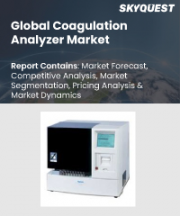
세계의 응고 분석기 시장 규모는 2024년에 44억 4,000만 달러로 평가되었으며, 2025년 47억 달러에서 2033년까지 73억 7,000만 달러로 성장할 전망입니다. 예측 기간(2026-2033년) 동안 CAGR은 5.8%로 예측됩니다.
세계 응고 분석기 시장은 응고 장애 및 심혈관질환의 유병률 증가를 배경으로 괄목할 만한 성장을 보이고 있습니다. 이러한 분석기는 항응고 치료의 효과적인 모니터링과 관리에 있어 매우 중요한 역할을 하고 있습니다. 이 시장의 주요 촉진요인으로는 신속하고 정확한 결과를 제공하는 기술 발전과 의료비 지출 증가를 들 수 있습니다. 휴대가 간편하고 조작이 쉬운 장비에 대한 수요가 증가하고 있으며, 주요 기업들은 환자 치료 결과를 개선하기 위한 혁신적인 솔루션에 집중하고 있습니다. 북미와 유럽은 가격 압박과 엄격한 규제 요건과 같은 도전에 직면하고 있음에도 불구하고 여전히 시장 점유율에서 우위를 유지하고 있으며, 아시아태평양은 유망한 성장 잠재력을 보여주고 있습니다. 효율적인 응고 모니터링 솔루션에 대한 수요가 증가함에 따라 전반적인 전망은 지속적으로 확대될 것으로 보입니다.
세계 응고 분석기 시장 촉진요인
전 세계적으로 고령화 인구가 증가함에 따라, 특히 응고장애를 비롯한 질병의 유병률이 증가하고 있습니다. 이러한 인구통계학적 변화로 인해 심부정맥혈전증, 혈우병 등의 문제를 효과적으로 진단하고 모니터링하기 위한 응고 분석기 수요가 급증하고 있습니다. 고령화가 진행됨에 따라 의료 서비스 제공자는 이러한 복잡한 질병에 대처하기 위해 첨단 진단 도구에 대한 의존도가 높아질 것입니다. 이는 시장에서 혁신적인 응고 분석기에 대한 수요를 촉진할 것입니다. 이러한 추세는 응고 장애의 위험이 있는 노인의 건강 상태를 관리하는 데 있어 이러한 장치가 중요한 역할을 할 수 있다는 점을 강조합니다.
세계 응고 분석기 시장 억제요인
세계 응고 분석기 시장은 주로 이러한 첨단 장비의 구매 및 유지보수와 관련된 높은 비용으로 인해 제약에 직면해 있습니다. 소규모 의료시설이나 자원이 한정된 지역에 위치한 시설의 경우, 초기 투자비용이 많이 드는 데다 유지관리비, 시약비, 정기적인 교정 비용 등 지속적인 지출이 겹쳐 어려움을 겪는 경우가 많습니다. 이러한 재정적 부담은 의료 서비스 제공자의 응고 분석기 도입을 방해하는 요인으로 작용하여 보급을 제한하고 환자 치료의 진전을 저해할 수 있습니다. 그 결과, 시장은 가격 책정 및 자원 배분과 관련된 문제에 직면할 수 있으며, 이는 응고 분석 기술의 전반적인 성장과 보급에 영향을 미칠 수 있습니다.
세계 응고 분석기 시장 동향
세계 응고 분석기 시장에서는 기술 발전과 자동화 고도화 추세가 두드러지게 나타나고 있습니다. 각 제조사들은 뛰어난 정확도와 효율성, 그리고 사용자 친화적인 인터페이스를 갖춘 분석기 개발에 우선순위를 두고 있습니다. 바코드 스캔 기능, 자동 검체 로딩 기능, 검사 정보 시스템과의 원활한 연동 등의 기능 통합이 점점 더 널리 보급되고 있습니다. 이러한 혁신은 검사 워크플로우를 최적화하고, 인적 오류를 최소화하며, 검사실 전체의 생산성을 향상시키는 것을 목표로 합니다. 의료 서비스 제공자들이 진단 능력과 업무 효율성을 향상시키기 위해 첨단 응고 분석기로의 전환 추세는 검사실 업무의 변화와 환자 치료의 향상을 가져올 것으로 예상됩니다.
Global Coagulation Analyzer Market size was valued at USD 4.44 Billion in 2024 and is poised to grow from USD 4.7 Billion in 2025 to USD 7.37 Billion by 2033, growing at a CAGR of 5.8% during the forecast period (2026-2033).
The global coagulation analyzer market is experiencing notable growth, fueled by the rising prevalence of coagulation disorders and cardiovascular diseases. These analyzers play a vital role in effectively monitoring and managing anticoagulant therapies. Key drivers of this market include technological advancements that provide rapid and precise results, alongside increasing healthcare expenditure. The demand for portable and user-friendly devices is also on the rise, with major players focusing on innovative solutions to improve patient outcomes. Despite facing challenges from price pressures and stringent regulatory requirements, North America and Europe remain dominant in market share, while the Asia-Pacific region is exhibiting promising growth potential. The overall outlook indicates sustained expansion due to the escalating need for efficient coagulation monitoring solutions.
Top-down and bottom-up approaches were used to estimate and validate the size of the Global Coagulation Analyzer market and to estimate the size of various other dependent submarkets. The research methodology used to estimate the market size includes the following details: The key players in the market were identified through secondary research, and their market shares in the respective regions were determined through primary and secondary research. This entire procedure includes the study of the annual and financial reports of the top market players and extensive interviews for key insights from industry leaders such as CEOs, VPs, directors, and marketing executives. All percentage shares split, and breakdowns were determined using secondary sources and verified through Primary sources. All possible parameters that affect the markets covered in this research study have been accounted for, viewed in extensive detail, verified through primary research, and analyzed to get the final quantitative and qualitative data.
Global Coagulation Analyzer Market Segments Analysis
Global Coagulation Analyzer Market is segmented by Product, Test, Technology, End User and region. Based on Product, the market is segmented into Clinical Laboratory Analyzers andPoint-Of-Care TestingAnalyzers. Based on Test, the market is segmented into Prothrombin Time Testing, D-Dimer Testing, Fibrinogen Testing, Activated Clotting Time Testing, Activated Partial Thromboplastin Time Testing, Platelet Function Tests, Anti-Factor XA Tests, Heparin & Protamine Dose Response Tests for Act and OtherCoagulation Tests.Based on Technology, the market is segmented into Optical Technology, Mechanical Technology, Electrochemical Technology and Other Technologies. Based on End User, the market is segmented into Hospitals, Clinical Laboratories and Other End Users. Based on region, the market is segmented into North America, Europe, Asia Pacific, Latin America and Middle East & Africa.
Driver of the Global Coagulation Analyzer Market
The rising global population of older adults is leading to a higher prevalence of medical conditions, particularly coagulation disorders. This demographic shift creates an escalating need for coagulation analyzers to effectively diagnose and monitor issues like deep vein thrombosis and hemophilia. As the elderly population continues to expand, healthcare providers will increasingly rely on advanced diagnostic tools to address these complex conditions, thereby driving the demand for innovative coagulation analyzers in the market. This trend underscores the vital role that these devices play in managing health outcomes for aging individuals at risk for clotting disorders.
Restraints in the Global Coagulation Analyzer Market
The Global Coagulation Analyzer market faces constraints primarily due to the high costs associated with purchasing and maintaining these sophisticated devices. Smaller healthcare facilities and those situated in resource-limited areas often struggle with the substantial initial investment required, which is compounded by ongoing expenses for maintenance, necessary reagents, and regular calibration. This financial burden can deter healthcare providers from adopting coagulation analyzers, limiting their accessibility and potentially hindering advancements in patient care. Consequently, the market may experience challenges related to affordability and resource allocation, which could impact the overall growth and adoption of coagulation analysis technologies.
Market Trends of the Global Coagulation Analyzer Market
The global coagulation analyzer market is experiencing a significant trend toward technological advancements and enhanced automation, as manufacturers prioritize the development of analyzers that offer superior accuracy and efficiency along with user-friendly interfaces. The integration of features like barcode scanning, automated sample loading, and seamless compatibility with laboratory information systems is becoming increasingly prevalent. These innovations are designed to optimize testing workflows, minimize human error, and elevate overall laboratory productivity. As healthcare providers seek to improve diagnostic capabilities and operational efficiency, the trend towards advanced coagulation analyzers is set to reshape laboratory practices and enhance patient care.