


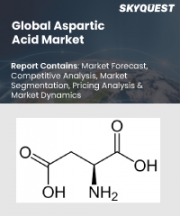
세계의 아스파르트산 시장 규모는 2024년에 1억 991만 달러로 평가되었으며, 2025년 1억 1,705만 달러에서 2033년까지 1억 9,372만 달러로 성장할 전망입니다. 예측 기간(2026-2033년) 동안 CAGR은 6.5%로 예측됩니다.
화석연료 자원의 고갈을 배경으로 한 생분해성 제품에 대한 세계 수요 증가는 아스파르트산 시장을 크게 견인할 것으로 예상됩니다. 이 다용도 화합물은 수처리, 석유 추출, 세제, 농업 등 다양한 산업에 적용되는 폴리아스파르트산 제조에 필수적입니다. 폴리 아스파르트 산의 수요 확대는 아스파르트 산 시장의 성장을 직접적으로 촉진합니다. 또한, 아스파르트산은 아스파탐 생산에 필수적인 역할을 합니다. 아스파탐은 시럽, 베이커리 제품, 음료 등 다양한 식품에 사용되는 비당류 감미료입니다. 가공 식품 및 음료에 대한 소비자 트렌드의 증가는 아스파탐의 인기를 더욱 높여 아스파르트산 수요를 견인하고 시장의 큰 성장을 촉진하고 있습니다.
세계 아스파르트산 시장 촉진요인
세계 건강보조식품에 대한 수요 증가는 아스파르트산 시장의 성장을 촉진하는 주요 요인입니다. 이러한 수요는 건강기능식품이 제공하는 다양한 건강 효과에 대한 인식이 높아지면서 소비자들이 일상 생활에 필수적인 요소로 인식하고 있기 때문입니다. 아스파르트산은 남성과 여성을 불문하고 근육량 증가와 테스토스테론 수치 향상에 효과적이기 때문에 많은 건강기능식품의 배합에 중요한 역할을 하고 있습니다. 또한, 인구 증가는 영양 보충제에 대한 관심 증가에 기여하여 시장에서 아스파르트산 수요를 놀라운 속도로 증가시키고 있습니다.
세계 아스파르트산 시장 억제요인
세계 아스파르트산 시장은 특히 식음료 산업을 비롯한 다양한 분야에서의 사용을 규제하는 정부의 엄격한 규제로 인해 심각한 도전에 직면해 있습니다. 이러한 규제는 아스파르트산의 적용 범위와 혁신적인 사용법을 제한함으로써 시장 성장을 저해할 수 있습니다. 또한, 푸마르산 등 생산에 필요한 원재료의 높은 비용도 추가적인 장벽으로 작용하고 있습니다. 이러한 재정적 제약은 제조업체가 경쟁력 있는 가격을 유지할 수 있는 능력을 약화시켜 궁극적으로 시장의 전반적인 확장 및 발전 가능성에 영향을 미칠 수 있습니다. 이러한 요인들이 결합되어 아스파르트산 시장은 더욱 어려운 상황에 직면하고 있습니다.
세계 아스파르트산 시장 동향
세계 아스파르트산 시장은 특히 피트니스 애호가 및 운동선수 계층의 스포츠 영양 제품 수요 확대에 힘입어 강력한 성장세를 보이고 있습니다. 이러한 추세는 건강을 중시하는 소비자층에서 인기를 끌고 있는 단백질 파우더, 에너지 드링크, 건강보조식품의 보급이 뒷받침하고 있습니다. 또한, 가처분 소득의 증가와 도시화의 가속화는 시장 성장을 더욱 촉진하고 있으며, 소비자들은 건강 및 웰빙 제품에 더 적극적으로 투자하고 있습니다. 이러한 요인들이 복합적으로 작용하여 아스파르트산 시장은 역동적인 상황에 처해 있으며, 진화하는 영양 및 보충제 산업에서 중요한 성분으로 자리매김하고 있습니다.
Global Aspartic Acid Market size was valued at USD 109.91 Million in 2024 and is poised to grow from USD 117.05 Million in 2025 to USD 193.72 Million by 2033, growing at a CAGR of 6.5% during the forecast period (2026-2033).
The increasing global demand for biodegradable products, driven by diminishing fossil fuel reserves, is poised to significantly boost the aspartic acid market. This versatile compound is crucial in producing polyaspartic acid, which finds applications across diverse industries, including water treatment, petroleum extraction, detergents, and agriculture. As the need for polyaspartic acid escalates, it directly stimulates the growth of aspartic acid. Additionally, aspartic acid plays a vital role in producing aspartame, a widely-used non-saccharide sweetener found in various food items such as syrups, bakery goods, and beverages. The rising consumer trend towards packaged food and beverages further enhances aspartame's popularity, consequently driving demand for aspartic acid and fostering substantial market growth.
Top-down and bottom-up approaches were used to estimate and validate the size of the Global Aspartic Acid market and to estimate the size of various other dependent submarkets. The research methodology used to estimate the market size includes the following details: The key players in the market were identified through secondary research, and their market shares in the respective regions were determined through primary and secondary research. This entire procedure includes the study of the annual and financial reports of the top market players and extensive interviews for key insights from industry leaders such as CEOs, VPs, directors, and marketing executives. All percentage shares split, and breakdowns were determined using secondary sources and verified through Primary sources. All possible parameters that affect the markets covered in this research study have been accounted for, viewed in extensive detail, verified through primary research, and analyzed to get the final quantitative and qualitative data.
Global Aspartic Acid Market Segments Analysis
Global Aspartic Acid Market is segmented by product, application, end use and region. Based on product, the market is segmented into L-Aspartic Acid, D-Aspartic Acid, DL-Aspartic Acid. Based on application, the market is segmented into Feed Supplements, Medicine, Polyaspartic Acid, Aspartame, L-Alanine, Others. Based on end use, the market is segmented into food and beverage industries, bakeries, confectioneries, drink mix, jams, chocolates, jellies, dairy products, pharmaceutical industries and dietary supplements. Based on region, the market is segmented into North America, Europe, Asia Pacific, Latin America and Middle East & Africa.
Driver of the Global Aspartic Acid Market
The increasing global demand for dietary supplements is a key factor fueling the growth of the aspartic acid market. This demand stems from a heightened awareness of the various health benefits these supplements offer, leading consumers to view them as essential components of their daily routines. Aspartic acid plays a crucial role in many dietary formulations due to its effectiveness in promoting muscle mass and boosting testosterone levels in both men and women. Moreover, the expanding population contributes to the rising interest in dietary supplements, consequently driving the demand for aspartic acid at an impressive rate in the market.
Restraints in the Global Aspartic Acid Market
The global aspartic acid market faces significant challenges due to stringent government regulations governing its use across various sectors, particularly in the food and beverage industry. These regulations could hinder market growth by limiting applications and innovative uses of aspartic acid. Furthermore, the high costs associated with raw materials required for its production, such as fumaric acid, present an additional barrier. This financial constraint may dampen the ability of manufacturers to maintain competitive pricing, ultimately impacting the market's overall expansion and development potential. As a result, these factors collectively contribute to a more challenging landscape for the aspartic acid market.
Market Trends of the Global Aspartic Acid Market
The global aspartic acid market is witnessing a robust surge driven by the escalating demand for sports nutrition products, particularly among fitness enthusiasts and athletes. This trend is underscored by the rising popularity of protein powders, energy drinks, and health supplements, which are gaining traction in health-conscious consumer segments. Additionally, an increase in disposable income and accelerated urbanization is further propelling market growth, as consumers are more willing to invest in health and wellness products. This convergence of factors indicates a dynamic landscape for aspartic acid, positioning it as a crucial ingredient in the evolving nutrition and supplement industry.