


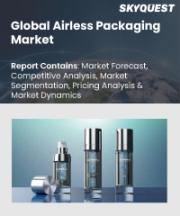
에어리스 포장 시장 규모는 2024년에 77억 2,000만 달러로 평가되었고, 2025년 81억 7,000만 달러에서 2033년까지 128억 2,000만 달러로 성장할 전망입니다. 예측 기간(2026-2033년)에 있어서 CAGR은 5.8%를 나타낼 것으로 예상됩니다.
에어리스 포장 시장은 화장품, 의약품, 식품 및 음료 등 다양한 분야에서의 보급을 배경으로 급속히 진화하고 있습니다. 소비자는 편의성과 사용 편의성을 더욱 강조하고 있으며, 에어리스 포장은 사용자 친화적인 디자인과 정확한 분주 기능을 통해이를 실현합니다. 이 혁신은 소비자 경험을 향상시키고 제품의 무결성을 보장함으로써 안전성과 위생 측면에 대한 우려 증가에 대응합니다. 초기 비용의 높이나 전문적인 제조의 필요성과 같은 과제는 있는 것, 제품의 수명 연장이나 소비자 만족도의 향상 등 장기적인 이점이 우세합니다. 지속 가능한 소재로의 전환과 에어리스 펌프와 같은 첨단 기술에 대한 동향은 성장 기회를 시사합니다. 프리미엄 제품과 전자상거래에 대한 수요가 증가함에 따라 이 시장의 확대가 더욱 촉진되고 업계 관계자들에게 큰 전망이 되고 있습니다.
에어리스 포장 시장 성장 촉진요인
에어리스 포장 시장을 견인하는 중요한 요인은 우수한 제품 보호에 대한 수요 증가입니다. 에어리스 포장 시스템은 제품과 주변 공기 간의 접촉을 크게 줄이거 나 없애도록 설계되어 산화, 오염, 열화 등의 문제를 효과적으로 방지합니다. 이 특성은 특히 피부 관리, 화장품, 의약품, 식품 등의 분야에서 민감한 제품에 매우 중요합니다. 소비자가 제품의 무결성과 품질에 대한 필요성을 보다 잘 이해함에 따라 이러한 제품의 효능과 수명을 유지하기 위한 에어리스 포장의 사용이 현저하게 증가하고 있습니다. 스킨 케어 분야에서 많은 활성 성분이 공기, 빛 또는 오염 물질과 접촉하면 쉽게 열화되기 때문에 브랜드는 미용액, 크림 및 로션에 에어리스 포장을 채택합니다. 에어리스 펌프 병과 같은 솔루션은 이러한 외부 요인으로부터 제제를 보호하고 효과를 유지하며 보존 안정성을 높이기 위해 업계 수요를 뒷받침하고 있습니다.
에어리스 포장 시장 성장 억제요인
에어리스 포장 시장에서 현저한 과제는 기존 포장 옵션과 비교할 때 에어리스 포장 시스템에 필요한 초기 투자 금액이 높다는 것입니다. 첨단 기술, 전용 설비 및 맞춤형 설계의 도입은 제조자에게 엄청난 초기 비용을 수반하지 않습니다. 이 재정적 장벽은 특히 예산 제약에 직면할 수 있는 중소기업(SME)에서 에어리스 포장 솔루션의 보급을 방해하는 요인이 될 수 있습니다. 이러한 제약은 이러한 기업들이 에어리스 포장으로의 전환을 망설일 수 있으며, 궁극적으로 시장 성장과 산업 내 혁신에 영향을 미칩니다. 비용 관련 고려 사항은 시장 도입 동향의 중요한 요소로 계속되고 있습니다.
에어리스 포장 시장 동향
에어리스 포장 시장은 특히 미용·퍼스널케어 분야에서 현저한 성장을 보이고 있습니다. 브랜드가 제품의 품질 유지와 소비자 체험을 중시하는 가운데, 에어리스 포장 솔루션은 보존 기간의 연장, 배합 성분의 유효성 유지, 사용자 위생성의 향상 등의 점에서 널리 채용되고 있습니다. 이 트렌드는 스킨케어, 헤어케어, 화장품 등 다양한 분야에서 두드러지며, 에어리스 펌프와 튜브는 정확한 분주를 가능하게 하고 오염을 최소화합니다. 고품질의 효율적인 포장에 대한 소비자 수요는 지속가능성에 대한 관심 증가와 훌륭하게 일치하고 있으며 제조업체는 경쟁 구도에서 자사 제품을 차별화하기 위해 에어리스 시스템의 도입과 혁신을 촉진하고 있습니다.
Airless Packaging Market size was valued at USD 7.72 Billion in 2024 and is poised to grow from USD 8.17 Billion in 2025 to USD 12.82 Billion by 2033, growing at a CAGR of 5.8% during the forecast period (2026-2033).
The airless packaging market is rapidly evolving, driven by its widespread adoption across diverse sectors like cosmetics, pharmaceuticals, and food and beverages. Consumers increasingly value convenience and ease of use, which airless packaging delivers through user-friendly designs and precise dosage capabilities. This innovation enhances the consumer experience and ensures product integrity, thereby addressing growing concerns about safety and hygiene. While the market faces challenges such as high initial costs and the need for specialized manufacturing, the long-term advantages, including increased product lifespan and consumer satisfaction, prevail. Trends showcasing a shift toward sustainable materials and advanced technologies like airless pumps suggest opportunities for growth. The rising demand for premium products and e-commerce further fuels this market's expansion, presenting significant prospects for industry players.
Top-down and bottom-up approaches were used to estimate and validate the size of the Airless Packaging market and to estimate the size of various other dependent submarkets. The research methodology used to estimate the market size includes the following details: The key players in the market were identified through secondary research, and their market shares in the respective regions were determined through primary and secondary research. This entire procedure includes the study of the annual and financial reports of the top market players and extensive interviews for key insights from industry leaders such as CEOs, VPs, directors, and marketing executives. All percentage shares split, and breakdowns were determined using secondary sources and verified through Primary sources. All possible parameters that affect the markets covered in this research study have been accounted for, viewed in extensive detail, verified through primary research, and analyzed to get the final quantitative and qualitative data.
Airless Packaging Market Segments Analysis
Global Airless Packaging Market is segmented by Material, Packaging Type, Dispenser type, End Use and region. Based on Material, the market is segmented into Plastic, Glass and Others. Based on Packaging Type, the market is segmented into Bottles & Jars, Bags & Pouches and Tubes. Based on Dispenser type, the market is segmented into Pumps, Dropper and Twist & Click. Based on End Use, the market is segmented into Personal Care & Home Care, Pharmaceutical and Food & Beverages. Based on region, the market is segmented into North America, Europe, Asia Pacific, Latin America and Middle East & Africa.
Driver of the Airless Packaging Market
A significant factor propelling the airless packaging market is the rising need for superior product protection. Airless packaging systems are engineered to significantly reduce or eliminate exposure between the product and ambient air, effectively preventing issues such as oxidation, contamination, and deterioration. This aspect is crucial for sensitive items, particularly in sectors like skincare, cosmetics, pharmaceuticals, and food. As consumers become more informed about the necessity of product integrity and quality, there is a marked increase in the use of airless packaging to maintain the effectiveness and lifespan of these products. In the skincare realm, brands are adopting airless packaging for serums, creams, and lotions, as many active ingredients are vulnerable to degradation when they encounter air, light, or contaminants. Solutions such as airless pump bottles safeguard these formulations from such external threats, preserving their potency and extending shelf stability, thus bolstering the demand in this industry.
Restraints in the Airless Packaging Market
A notable challenge for the airless packaging market is the elevated initial investment required for airless packaging systems when contrasted with conventional packaging options. The incorporation of advanced technology, specialized equipment, and tailored designs often leads to significant upfront costs for manufacturers. This financial barrier can hinder the widespread acceptance of airless packaging solutions, especially among small and medium-sized enterprises (SMEs) that may face budget limitations. Such constraints can deter these businesses from transitioning to airless packaging, ultimately impacting market growth and innovation within the sector. The cost-related considerations remain a key factor in the dynamics of market adoption.
Market Trends of the Airless Packaging Market
The airless packaging market is experiencing a notable surge, particularly within the beauty and personal care sector. As brands prioritize product integrity and consumer experience, airless packaging solutions are widely embraced for their ability to extend shelf life, preserve formulation potency, and enhance user hygiene. This trend is evident in various segments, including skincare, haircare, and cosmetics, where airless pumps and tubes facilitate precise dispensing and minimize contamination. Consumer demand for high-quality, efficient packaging aligns seamlessly with the growing emphasis on sustainability, prompting manufacturers to innovate and adopt airless systems to differentiate their products in a competitive landscape.