


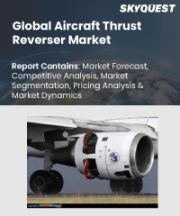
세계의 항공기 역추력장치 시장 규모는 2024년에 27억 3,000만 달러로 평가되었고, 2025년 28억 3,000만 달러에서 2033년까지 37억 2,000만 달러로 성장할 전망이며, 예측 기간(2026-2033년) CAGR은 3.5%를 보일 것으로 예측됩니다.
세계 항공기용 역추력 장치 시장은 몇 가지 주요 동향에 힘입어 괄목할 만한 성장세를 보이고 있습니다. 주요 요인으로는 항공업계의 연료 효율성 향상과 이산화탄소 배출량 감소에 대한 집중을 꼽을 수 있습니다. 역추력 장치는 착륙 거리 단축과 감속 성능 향상에 필수적이며, 연료 절감과 환경 부하 감소로 이어집니다. 항공기 제작사 및 항공사는 운영 효율성 향상을 지속적으로 추구하고 있습니다. 또한, 보잉 787, 에어버스 A350 등 첨단 역추력 장치 시스템을 탑재한 차세대 항공기에 대한 수요가 증가함에 따라 성능 향상과 유지보수 감소를 실현하는 혁신적인 소재 및 설계의 트렌드가 부각되고 있습니다. 항공산업에 대한 외부 요인의 영향, 연구개발에 따른 높은 비용, 환경 규제 대응을 위한 지속적인 혁신 수요 등을 꼽을 수 있습니다.
세계 항공기 역추력 장치 시장 성장 촉진요인
특히 신흥 시장에서 연료 효율이 뛰어난 최신형 항공기로 항공사의 기종이 확대되고 있으며, 이는 세계 항공기용 역추력장치 시장의 괄목할 만한 성장을 견인하고 있습니다. 항공사가 운영 효율성 향상과 환경 기준 달성을 목표로 하는 가운데, 첨단 역추력 장치 시스템에 대한 수요가 증가하고 있습니다. 이러한 혁신적인 기술을 현대 항공기에 통합하는 것은 성능을 최적화하고 승객의 안전을 보장하는 데 필수적입니다. 항공기 업그레이드 및 현대화를 위한 이러한 움직임은 항공사 전체의 경쟁력 향상을 목표로 하고 있으며, 그 결과 첨단 역추력 장치 솔루션에 대한 추가 투자를 촉진하고 있습니다. 따라서 이러한 시스템 시장은 크게 확대될 것으로 예측됩니다.
세계 항공기 역추력 장치 시장 성장 억제요인
세계 항공기 역추력 장치 시장은 이러한 부품의 개발 및 제조에 많은 자본이 소요되는 특성으로 인해 심각한 문제에 직면해 있습니다. 이러한 재정적 부담은 이미 항공 산업과 관련된 높은 비용이 투자 결정을 더욱 복잡하게 만들기 때문에 신규 시장 진출기업들이 항공 산업에서 기회를 추구하는 것을 방해할 수 있습니다. 또한, 첨단 항공기용 역추력 장치와 관련된 막대한 비용이 전체 시장 성장을 저해할 수 있습니다. 기존 주요 기업들은 혁신과 경제성의 균형을 맞추는 데 어려움을 겪고 있으며, 이는 결국 해당 부문의 확장 가능성에 영향을 미치고 새로운 기술 및 솔루션의 도입을 제한할 수 있습니다.
세계 항공기용 역추력 장치 시장 동향
세계 항공기 역추력 장치 시장, 특히 역추력 장치에서 전기 시스템 채택이 증가함에 따라 지속가능성으로의 큰 전환이 일어나고 있습니다. 각 제조업체들은 항공업계의 친환경 기술에 대한 요구에 부응하여 전기 모터를 통합함으로써 효율성 향상뿐만 아니라 경량화 및 탄소 배출량 감소에 기여하고 있습니다. 이러한 추세는 항공 분야의 환경 친화적 관행에 대한 광범위한 노력과 일치하며, 투자를 유치하고 전동식 역추력 시스템의 혁신을 촉진하고 있습니다. 항공사와 제조업체가 지속가능성을 우선시함에 따라 이러한 첨단 전기식 역추력 장치에 대한 수요가 증가하여 시장 역학 및 운영 효율성을 재구성할 것으로 예측됩니다.
Global Aircraft Thrust Reverser Market size was valued at USD 2.73 Billion in 2024 and is poised to grow from USD 2.83 Billion in 2025 to USD 3.72 Billion by 2033, growing at a CAGR of 3.5% during the forecast period (2026-2033).
The global aircraft thrust reverser market is experiencing significant growth driven by several key trends. A primary factor is the aviation industry's increasing emphasis on fuel efficiency and reducing carbon emissions, as thrust reversers are essential for achieving shorter landing distances and enhanced deceleration, leading to fuel savings and a lower environmental footprint. Aircraft manufacturers and airlines continuously pursue operational efficiency advancements. Additionally, the rising preference for next-generation aircraft equipped with advanced thrust reverser systems, such as the Boeing 787 and Airbus A350, highlights the trend towards innovative materials and designs that improve performance and require less maintenance. Challenges include the impact of external factors on the aviation sector and the high costs associated with research and development, along with a persistent demand for innovation to meet environmental regulations.
Top-down and bottom-up approaches were used to estimate and validate the size of the Global Aircraft Thrust Reverser market and to estimate the size of various other dependent submarkets. The research methodology used to estimate the market size includes the following details: The key players in the market were identified through secondary research, and their market shares in the respective regions were determined through primary and secondary research. This entire procedure includes the study of the annual and financial reports of the top market players and extensive interviews for key insights from industry leaders such as CEOs, VPs, directors, and marketing executives. All percentage shares split, and breakdowns were determined using secondary sources and verified through Primary sources. All possible parameters that affect the markets covered in this research study have been accounted for, viewed in extensive detail, verified through primary research, and analyzed to get the final quantitative and qualitative data.
Global Aircraft Thrust Reverser Market Segments Analysis
Global Aircraft Thrust Reverser Market is segmented by Type, Component, Aircraft Type, System Mechanism, Application, End Use and region. Based on Type, the market is segmented into Forward and Reverse. Based on Component, the market is segmented into Electromechanical Actuators, Hydraulic Actuators, Pneumatic Actuators and Mechanical Systems. Based on Aircraft Type, the market is segmented into Commercial Aircraft, Military Aircraft, Cargo Aircraft and Business Jets. Based on System Mechanism, the market is segmented into Single-Acting Thrust Reversers, Double-Acting Thrust Reversers and Cascade Thrust Reversers. Based on Application, the market is segmented into Commercial, Military, Business Jets and Others. Based on End Use, the market is segmented into Original Equipment Manufacturer and Aftermarket. Based on region, the market is segmented into North America, Europe, Asia Pacific, Latin America and Middle East & Africa.
Driver of the Global Aircraft Thrust Reverser Market
The expansion of airline fleets with state-of-the-art, fuel-efficient aircraft, particularly in emerging markets, is driving significant growth in the Global Aircraft Thrust Reverser market. As airlines seek to enhance operational efficiency and meet environmental standards, the demand for advanced thrust reverser systems is escalating. The integration of these innovative technologies into modern aircraft is essential for optimizing performance and ensuring passenger safety. This shift towards upgrading and modernizing fleets aims to improve overall airline competitiveness, thus catalyzing further investments in advanced thrust reverser solutions. As a result, the market for these systems is poised for substantial expansion.
Restraints in the Global Aircraft Thrust Reverser Market
The Global Aircraft Thrust Reverser market faces significant challenges due to the capital-intensive nature of developing and manufacturing these components. This financial burden can deter new entrants from pursuing opportunities within the industry, as the already high expenses associated with aviation further complicate investment decisions. Additionally, the substantial costs linked to advanced aircraft thrust reversers may hinder the overall growth of the market, as established players might find it challenging to balance innovation with affordability, ultimately impacting the sector's potential for expansion and limiting the introduction of new technologies and solutions.
Market Trends of the Global Aircraft Thrust Reverser Market
The Global Aircraft Thrust Reverser market is witnessing a significant shift towards sustainability, driven by the increasing adoption of electric systems, particularly in thrust reversers. Manufacturers are responding to the aviation industry's push for greener technologies by integrating electric motors, which not only enhance efficiency but also contribute to weight reduction and lower carbon emissions. This trend aligns with a broader commitment to environmentally friendly practices in aviation, attracting investments and fostering innovation in electric thrust reversal systems. As airlines and manufacturers prioritize sustainability, the demand for these advanced electric thrust reversers is expected to escalate, reshaping market dynamics and operational efficiencies.