인도의 바이오시밀러 시장 : 업계 동향, 세계 예측 - 의약품 클래스별, 치료 영역별, 제조업체 유형별, 유통 채널별, 지역별, 주요 기업별
India Biosimilars Market: Industry Trends and Global Forecasts - Distribution by Drug Class, Therapeutic Area, Type of Manufacturer, Distribution Channel, Geographical Regions and Leading Players
상품코드:1932845
리서치사:Roots Analysis
발행일:On Demand Report
페이지 정보:영문 100+ Pages
라이선스 & 가격 (부가세 별도)
한글목차
인도의 바이오시밀러 시장 : 개요
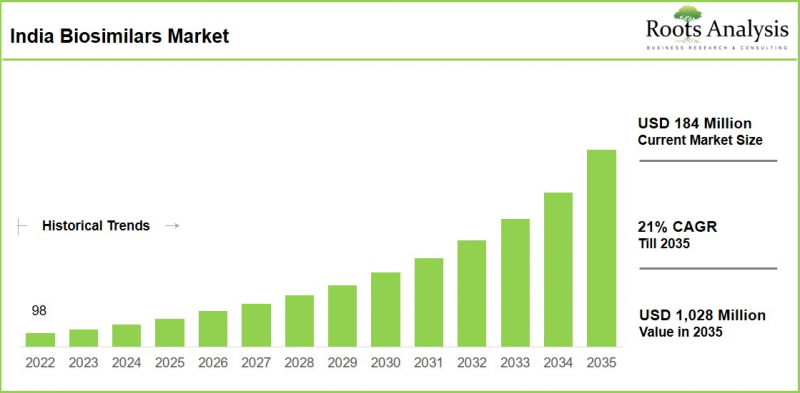
인도의 바이오시밀러 시장 규모는 현재 1억 8,400만 달러에서 2035년까지 10억 2,800만 달러에 달할 것으로 추정되며, 2026-2035년의 예측 기간에 CAGR로 21%의 성장이 전망되고 있습니다.
인도의 바이오시밀러 시장 : 성장과 동향
향후 10년간 바이오시밀러 시장의 성장은 생물제제 특허 만료를 계기로 레퍼런스 생물제제에 근접한 대체 바이오시밀러의 개발이 진행되면서 촉진될 것으로 예측됩니다.
최근 생물제제 부문은 만성질환 관리의 효과 향상에 힘입어 큰 폭의 성장세를 보이고 있습니다. 그러나 생물제제와 관련된 높은 비용은 재정적, 의료적 측면에서 큰 도전이 되고 있습니다. 생물제제에 대한 수요가 증가함에 따라 개발사들은 투자 매출을 최적화하기 위해 동등한 안전성과 효능을 유지하면서 보다 비용 효율적인 생물제제를 창출할 수 있는 혁신적인 방법을 모색하고 있습니다.
지난 수년간 바이오시밀러 개발 기업의 투자와 협력 활동이 증가하고 있습니다. 또한 규제 발전, 승인 과정의 효율화, 연구 활성화로 인해 암 치료제를 포함한 바이오시밀러의 개발이 촉진되고 있습니다.
2026년 인도 바이오시밀러 시장은 전략적 인수, 파이프라인 확장, 규제 변화, 국제 제휴 등 활발한 움직임을 보이며 두 자릿수 성장이 예상됩니다.
비용 효율적인 대안으로 바이오시밀러 시장이 확대되는 가운데, 인도에서는 자체 개발 및 아웃소싱 서비스 운영이 확대될 것으로 예측됩니다. 이러한 추세는 바이오시밀러 개발 기업에게 매력적인 성장 전망을 가져다 줄 것으로 보입니다.
성장 촉진요인 : 시장 확대의 전략적 원동력
인도 바이오시밀러 시장은 암, 당뇨병, 자가면역질환 등 만성질환의 유병률 증가와 합리적인 가격의 생물제제 대체품에 대한 수요 증가 등 여러 요인으로 인해 견고한 성장세를 보이고 있습니다. 또한 Central Drugs Standard Control Organization(CDSCO)의 규제 프로세스 간소화, 생물제제에 대한 PLI(Production Linked Incentive) 제도와 같은 정부 정책도 시장 성장을 가속하고 있습니다. 시장 성장을 촉진하고 있습니다. 또한 허셉틴(Herceptin), 리툭산(Rituxan) 등 주요 의약품의 특허가 만료됨에 따라 현지 제조업체들은 제품 포트폴리오를 빠르게 확장할 수 있게 되었습니다. 세계 기업과의 전략적 제휴, 저비용 제조 능력, 숙련된 노동력으로 인도는 주요 수출국으로서의 입지를 더욱 강화하고 있습니다.
시장 과제: 진보를 가로막는 심각한 장애물
시장 성장이 지속되는 가운데, 인도 바이오시밀러 시장에는 여전히 과제가 존재하여 보급 가속화를 저해하는 요인이 있습니다. 높은 개발 비용, 엄격한 품질관리가 필요한 복잡한 제조 공정, 면역원성 및 구조적 변동성의 위험은 이 시장 공간에서 중소기업의 진입장벽을 높이고 있습니다. 또한 진화하는 가이드라인과 비교 임상시험의 필요성을 포함한 규제적 장애물이 승인 지연을 초래하고 있습니다. 브랜드 제네릭 의약품과의 경쟁, 가격 압력, 오리지널 제약사의 특허 소송 등 시장 진입 문제도 성장을 저해하고 있습니다.
모노클로널 항체: 주요 시장 부문
현재 모노클로널 항체 부문은 인도 전체 시장의 약 55%를 차지하고 있습니다. 이러한 장점은 주로 암, 류마티스 관절염, 기타 자가면역질환과 같은 만성질환 치료에 광범위하게 사용되고 있기 때문입니다. 그러나 예측 기간 중 펩티드 부문은 더 높은 CAGR로 성장할 것으로 예측됩니다.
종양 질환: 지배적인 시장 부문
현재 인도 바이오시밀러 시장 점유율의 대부분(약 40%)은 암 발병률 증가로 인해 종양 질환이 차지하고 있습니다. 고령 인구 증가, 생활습관의 변화, 진단 기술의 향상으로 인해 특히 고가의 모노클로널 항체 치료에서 비용 효율적인 치료법이 요구되고 있는 것이 이를 촉진하고 있습니다. 이는 바이오시밀러 개발 기업에게 매력적인 성장 기회를 제공할 것으로 보입니다. 또한 예측 기간 중 혈액 질환 부문은 더 높은 CAGR로 성장할 것으로 예측됩니다.
인도의 바이오시밀러 시장에 대해 조사했으며, 시장 규모 추산과 기회의 분석, 경쟁 구도, 기업 개요 등의 정보를 제공하고 있습니다.
목차
제1장 서문
제2장 조사 방법
제3장 시장 역학
제4장 거시경제 지표
제5장 개요
제6장 서론
제7장 시장 구도
제8장 기업 경쟁력 분석
제9장 기업 개요 : 인도의 바이오시밀러 시장
챕터 개요
Avesthagen
Biocon Biologics
Biosimilar Sciences India
Cipla
Clonz Biotech
CuraTeQ Biologics
Enzene Biosciences
GeneSys
Glenmark Pharmaceuticals
Intas Pharmaceuticals
제10장 원가 분석
제11장 수요 분석
제12장 시장의 영향 분석
제13장 인도의 바이오시밀러 시장
제14장 인도의 바이오시밀러 시장 : 의약품 클래스별
제15장 인도의 바이오시밀러 시장 : 치료 영역별
제16장 인도의 바이오시밀러 시장 : 제조업체 유형별
제17장 인도의 바이오시밀러 시장 : 유통 채널별
제18장 결론
제19장 부록 I : 표형식 데이터
제20장 부록 II : 기업과 조직 리스트
KSA
영문 목차
영문목차
India Biosimilars Market: Overview
As per Roots Analysis, the India biosimilars market is estimated to grow from USD 184 million in the current year to USD 1,028 million by 2035 at a CAGR of 21% during the forecast period, 2026-2035.
India Biosimilars Market: Growth and Trends
The growth of the biosimilars market in the coming decade is projected to be fueled by the expiration of biologics patents, resulting in the development of alternative biosimilars that closely resemble their reference biologics.
In recent times, the biologics sector has experienced significant growth, largely attributed to its improved efficacy in managing chronic illnesses. Nonetheless, the elevated expenses linked to biologics present considerable financial and healthcare challenges. With the increasing demand for biologics, developers are exploring innovative approaches to create more cost-effective biologic products that maintain comparable safety and efficacy profiles to optimize their investment returns.
Over the past few years, the field has seen a rise in investments and cooperative initiatives from the biosimilar developers. Additionally, regulatory progress, more efficient approval processes, and increased research have bolstered the development of biosimilars, including those for oncology.
In 2026, India's biosimilars market demonstrates strong activity characterized by strategic acquisitions, pipeline growth, regulatory changes, and international partnerships, with expected double-digit growth
With the expanding market for biosimilars as a cost-effective option, the operations for in-house development and outsourcing services are anticipated to rise in India. This trend is set to offer appealing growth prospects for developers of biosimilars.
Growth Drivers: Strategic Enablers of Market Expansion
The India biosimilars market experiences robust growth driven by several key factors, including rising prevalence of chronic diseases like cancer, diabetes, and autoimmune disorders and increased demand for affordable biologic alternatives. In addition, government initiatives such as streamlined regulatory pathways via the Central Drugs Standard Control Organization (CDSCO) and incentives under the PLI (Production Linked Incentive) Scheme for biologics also propel market growth. Further, patent expiries of major drugs like Herceptin and Rituxan, enable local manufacturers to expand portfolios rapidly. Strategic partnerships with global firms, low-cost manufacturing capabilities, and a skilled workforce further position India as a leading exporter.
Challenges persist in the India biosimilars market despite the ongoing market growth, hindering faster adoption. High development costs, complex manufacturing processes requiring stringent quality controls, and risks of immunogenicity or structural variability raise entry barriers for smaller players in this market space. Further, regulatory hurdles, including evolving guidelines and the need for comparative clinical trials, result in delayed approvals. Market access issues, such as competition from branded generics, pricing pressures, and patent litigations from originator companies, also constrain growth.
Monoclonal Antibodies: Leading Market Segment
Currently, monoclonal antibodies segment captures nearly 55% of the overall market share in India. This dominance can be primarily attributed to their extensive use in treating chronic conditions like cancer, rheumatoid arthritis, and other autoimmune disorders. However, the peptide segment is likely to grow at a higher CAGR during the forecast period.
Oncological Disorders: Dominating Market Segment
At present, majority (~40%) of the market share of biosimilars in India is held by oncological disorders, due to the increasing cancer burden. This is further fueled by rising aging population, lifestyle changes, and enhanced diagnostic methods, which need cost-effective treatments, especially for expensive monoclonal antibody therapies. This is likely to offer appealing growth prospects for developers of biosimilars. Further, the hematological disorders segment is likely to grow at a higher CAGR during the forecast period.
India Biosimilars Market: Key Segments
By Drug Class
Monoclonal Antibodies
Proteins
Peptides
Others
By Therapeutic Area
Oncological Disorders
Autoimmune and Inflammatory Disorders
Hematological Disorders
Metabolic Disorders
Other Disorders
By Type of Manufacturer
Contract Manufacturers
In-house Developers
By Distribution Channel
Hospital Pharmacies
Retail Pharmacies
Online Pharmacies
Example Players in India Biosimilars Market
Avesthagen
Biocon Biologics
Biosimilar Sciences India
Cipla
Clonz Biotech
CuraTeQ Biologics (Subsidiary of Aurobindo Pharma)
Enzene Biosciences
GeneSys
Glenmark Pharmaceuticals
Intas Pharmaceuticals
Jodas Expoim
Levim Lifetech
Lupin
Sayre Therapeutics
Shilpa Biologicals
Stelis Biopharma
VITANE Biologics
Zydus Cadila
Key Questions Answered in this Report
How many India biosimilars providers are currently engaged in this market?
Which are the leading companies in this market?
Which country dominates the India biosimilars market?
What are the key trends observed in the India biosimilars market?
What factors are likely to influence the evolution of this market?
What are the primary challenges faced by biosimilars providers in India?
What is the current and future India biosimilars market size?
What is the CAGR of India biosimilars market?
How is the current and future market opportunity likely to be distributed across key market segments?
Reasons to Buy this Report
The report provides a comprehensive market analysis, offering detailed revenue projections of the overall market and its specific sub-segments. This information is valuable to both established market leaders and emerging entrants.
The report offers stakeholders a comprehensive overview of the market, including key drivers, barriers, opportunities, and challenges. This information empowers stakeholders to stay abreast of market trends and make data-driven decisions to capitalize on growth prospects.
The report can aid businesses in identifying future opportunities in any sector. It also helps in understanding if those opportunities are worth pursuing.
The report helps in identifying customer demand by understanding the needs, preferences, and behavior of the target audience in order to tailor products or services effectively.
The report equips new entrants with requisite information regarding a particular market to help them build successful business strategies.
The report allows for more effective communication with the audience and in building strong business relations.
Complementary Benefits
Complimentary PPT Insights Packs
Complimentary Excel Data Packs for all Analytical Modules in the Report
15% Free Content Customization
Detailed Report Walkthrough Session with Research Team
Free Updated report if the report is 6-12 months old or older
TABLE OF CONTENTS
1. PREFACE
1.1. Introduction
1.2. Market Share Insights
1.3. Key Market Insights
1.4. Report Coverage
1.5. Key Questions Answered
1.6. Chapter Outlines
2. RESEARCH METHODOLOGY
2.1. Chapter Overview
2.2. Research Assumptions
2.2.1. Market Landscape and Market Trends
2.2.2. Market Forecast and Opportunity Analysis
2.2.3. Comparative Analysis
2.3. Database Building
2.3.1. Data Collection
2.3.2. Data Validation
2.3.3. Data Analysis
2.4. Project Methodology
2.4.1. Secondary Research
2.4.1.1. Annual Reports
2.4.1.2. Academic Research Papers
2.4.1.3. Company Websites
2.4.1.4. Investor Presentations
2.4.1.5. Regulatory Filings
2.4.1.6. White Papers
2.4.1.7. Industry Publications
2.4.1.8. Conferences and Seminars
2.4.1.9. Government Portals
2.4.1.10. Media and Press Releases
2.4.1.11. Newsletters
2.4.1.12. Industry Databases
2.4.1.13. Roots Proprietary Databases
2.4.1.14. Paid Databases and Sources
2.4.1.15. Social Media Portals
2.4.1.16. Other Secondary Sources
2.4.2. Primary Research
2.4.2.1. Types of Primary Research
2.4.2.1.1. Qualitative Research
2.4.2.1.2. Quantitative Research
2.4.2.1.3. Hybrid Approach
2.4.2.2. Advantages of Primary Research
2.4.2.3. Techniques for Primary Research
2.4.2.3.1. Interviews
2.4.2.3.2. Surveys
2.4.2.3.3. Focus Groups
2.4.2.3.4. Observational Research
2.4.2.3.5. Social Media Interactions
2.4.2.4. Key Opinion Leaders Considered in Primary Research
2.4.2.4.1. Company Executives (CXOs)
2.4.2.4.2. Board of Directors
2.4.2.4.3. Company Presidents and Vice Presidents
2.4.2.4.4. Research and Development Heads
2.4.2.4.5. Technical Experts
2.4.2.4.6. Subject Matter Experts
2.4.2.4.7. Scientists
2.4.2.4.8. Doctors and Other Healthcare Providers
2.4.2.5. Ethics and Integrity
2.4.2.5.1. Research Ethics
2.4.2.5.2. Data Integrity
2.4.3. Analytical Tools and Databases
2.5. Robust Quality Control
3. MARKET DYNAMICS
3.1. Chapter Overview
3.2. Forecast Methodology
3.2.1. Top-down Approach
3.2.2. Bottom-up Approach
3.2.3. Hybrid Approach
3.3. Market Assessment Framework
3.3.1. Total Addressable Market (TAM)
3.3.2. Serviceable Addressable Market (SAM)
3.3.3. Serviceable Obtainable Market (SOM)
3.3.4. Currently Acquired Market (CAM)
3.4. Forecasting Tools and Techniques
3.4.1. Qualitative Forecasting
3.4.2. Correlation
3.4.3. Regression
3.4.4. Extrapolation
3.4.5. Convergence
3.4.6. Sensitivity Analysis
3.4.7. Scenario Planning
3.4.8. Data Visualization
3.4.9. Time Series Analysis
3.4.10. Forecast Error Analysis
3.5. Key Considerations
3.5.1. Demographics
3.5.2. Government Regulations
3.5.3. Reimbursement Scenarios
3.5.4. Market Access
3.5.5. Supply Chain
3.5.6. Industry Consolidation
3.5.7. Pandemic / Unforeseen Disruptions Impact
3.6. Limitations
4. MACRO-ECONOMIC INDICATORS
4.1. Chapter Overview
4.2. Market Dynamics
4.2.1. Time Period
4.2.1.1. Historical Trends
4.2.1.2. Current and Forecasted Estimates
4.2.2. Currency Coverage
4.2.2.1. Major Currencies Affecting the Market
4.2.2.2. Factors Affecting Currency Fluctuations on the Industry
4.2.2.3. Impact of Currency Fluctuations on the Industry
4.2.3. Foreign Currency Exchange Rate
4.2.3.1. Impact of Foreign Exchange Rate Volatility on the Market
4.2.3.2. Strategies for Mitigating Foreign Exchange Risk
4.2.4. Recession
4.2.4.1. Assessment of Current Economic Conditions and Potential Impact on the Market
4.2.4.2. Historical Analysis of Past Recessions and Lessons Learnt
4.2.5. Inflation
4.2.5.1. Measurement and Analysis of Inflationary Pressures in the Economy
4.2.5.2. Potential Impact of Inflation on the Market Evolution
4.2.6. Interest Rates
4.2.6.1. Interest Rates and Their Impact on the Market
4.2.6.2. Strategies for Managing Interest Rate Risk
4.2.7. Commodity Flow Analysis
4.2.7.1. Type of Commodity
4.2.7.2. Origins and Destinations
4.2.7.3. Value and Weights
4.2.7.4. Modes of Transportation
4.2.8. Global Trade Dynamics
4.2.8.1. Import Scenario
4.2.8.2. Export Scenario
4.2.8.3. Trade Policies
4.2.8.4. Strategies for Mitigating the Risks Associated with Trade Barriers
4.2.8.5. Impact of Trade Barriers on the Market
4.2.9. War Impact Analysis
4.2.9.1. Russian-Ukraine War
4.2.9.2. Israel-Hamas War
4.2.10. COVID Impact / Related Factors
4.2.10.1. Global Economic Impact
4.2.10.2. Industry-specific Impact
4.2.10.3. Government Response and Stimulus Measures
4.2.10.4. Future Outlook and Adaptation Strategies
4.2.11. Other Indicators
4.2.11.1. Fiscal Policy
4.2.11.2. Consumer Spending
4.2.11.3. Gross Domestic Product (GDP)
4.2.11.4. Employment
4.2.11.5. Taxes
4.2.11.6. Stock Market Performance
4.2.11.7. Cross-Border Dynamics
4.3. Conclusion
5. EXECUTIVE SUMMARY
6. INTRODUCTION
6.1. Chapter Overview
6.2. Overview of Biologics
6.3. Overview of Biosimilars and Biobetters
6.4. Difference between Innovator Biologics, Biosimilars and Generics
6.5. Advantages of Biosimilars
6.6. Manufacturing of Biosimilars
6.7. Development Timeline of Biosimilars
6.8. Future Perspectives
7. MARKET LANDSCAPE
7.1. Chapter Overview
7.2. Biosimilars: Developers Landscape
7.2.1. Analysis by Year of Establishment
7.2.2. Analysis by Company Size
7.2.3. Analysis by Location of Headquarters (Region)
7.2.4. Analysis by Location of Headquarters (Country)
7.3. Biosimilars: Overall Market Landscape
7.3.1. Analysis by Stage of Development
7.3.2. Analysis by Therapeutic Area
7.3.3. Analysis by Drug Class
8. COMPANY COMPETITIVENESS ANALYSIS
8.1. Chapter Overview
8.2. Assumptions and Key Parameters
8.3. Methodology
8.4. Biosimilars Providers in Japan: Company Competitiveness Analysis
8.4.1. Small Biosimilar Developers (Peer Group I)
8.4.2. Mid-sized Biosimilar Developers (Peer Group II)
8.4.3. Large Biosimilar Developers (Peer Group III)
8.5. Capability Benchmarking of top Biosimilar Developers
9. COMPANY PROFILES: INDIA BIOSIMILARS MARKET
9.1. Chapter Overview
9.2. Avesthagen
9.2.1. Company Overview
9.2.2. Product Portfolio
9.2.3. Financial Information
9.2.4. Recent Developments and Future Outlook
9.3. Biocon Biologics
9.4. Biosimilar Sciences India
9.5. Cipla
9.6. Clonz Biotech
9.7. CuraTeQ Biologics
9.8. Enzene Biosciences
9.9. GeneSys
9.10. Glenmark Pharmaceuticals
9.11. Intas Pharmaceuticals
10. COST PRICE ANALYSIS
10.1. Chapter Overview
10.2. Factors Contributing to High Price of Novel Biologics
10.3. Pricing of Biosimilars
10.3.1. Price Comparison of Different Biosimilars with its Reference Biologic
10.4. Concluding Remarks
11. DEMAND ANALYSIS
11.1. Chapter Overview
11.2. Key Assumptions and Methodology
11.2.1. Global Annual Demand for Biosimilars
11.2.1.1. Analysis by Drug Class
11.2.1.2. Analysis by Therapeutic Area
11.2.1.3. Analysis by Type of Manufacturer
11.2.1.4. Analysis by Distribution Channel
11.2.1.5. Analysis by Geographical Regions
12. MARKET IMPACT ANALYSIS
12.1. Chapter Overview
12.2. Market Drivers
12.3. Market Restraints
12.4. Market Opportunities
12.5. Market Challenges
12.6. Conclusion
13. INDIA BIOSIMILARS MARKET
13.1. Chapter Overview
13.2. Key Assumptions and Methodology
13.3. Global Biosimilars Market, Historical Trends (Since 2019) and Forecasted Estimates (Till 2035)
13.4. Roots Analysis Perspective on Market Growth
13.5 Scenario Analysis
13.5.1. Conservative Scenario
13.5.2. Optimistic Scenario
13.6. Key Market Segmentations
14. INDIA BIOSIMILARS MARKET, BY DRUG CLASS
14.1. Chapter Overview
14.2. Key Assumptions and Methodology
14.3. Biosimilars Market: Distribution by Drug Class
14.3.1. Biosimilars Market for Monoclonal Antibodies, Historical Trends (since 2019) and Forecasted Estimates (till 2035)
14.3.2. Biosimilars Market for Proteins, Historical Trends (since 2019) and Forecasted Estimates (till 2035)
14.3.3. Biosimilars Market for Peptides, Historical Trends (since 2019) and Forecasted Estimates (till 2035)
14.3.4. Biosimilars Market for Others, Historical Trends (since 2019) and Forecasted Estimates (till 2035)
14.4. Data Triangulation and Validation
15. INDIA BIOSIMILARS MARKET, BY THERAPEUTIC AREA
15.1. Chapter Overview
15.2. Assumptions and Methodology
15.3. Biosimilars Market: Distribution by Therapeutic Area
15.3.1. Biosimilars Market for Oncological Disorders, Historical Trends (since 2019) and Forecasted Estimates (till 2035)
15.3.2. Biosimilars Market for Autoimmune and Inflammatory Disorders, Historical Trends (since 2019) and Forecasted Estimates (till 2035)
15.3.3. Biosimilars Market for Hematological Disorders, Historical Trends (since 2019) and Forecasted Estimates (till 2035)
15.3.4. Biosimilars Market for Metabolic Disorders, Historical Trends (since 2019) and Forecasted Estimates (till 2035)
15.3.5. Biosimilars Market for Other Disorders, Historical Trends (since 2019) and Forecasted Estimates (till 2035)
15.4. Data Triangulation and Validation
16. INDIA BIOSIMILARS MARKET, BY TYPE OF MANUFACTURER
16.1. Chapter Overview
16.2. Assumptions and Methodology
16.3. Biosimilars Market: Distribution by Type of Manufacturer
16.3.1. Biosimilars Market for Contract Manufacturers, Historical Trends (since 2019) and Forecasted Estimates (till 2035)
16.3.2. Biosimilars Market for In-house Developers, Historical Trends (since 2019) and Forecasted Estimates (till 2035)
16.4. Data Triangulation and Validation
17. INDIA BIOSIMILARS MARKET, BY DISTRIBUTION CHANNEL
17.1. Chapter Overview
17.2. Assumptions and Methodology
17.3. Biosimilars Market: Distribution by Distribution Channel
17.3.1. Biosimilars Market for Hospital Pharmacies, Historical Trends (since 2019) and Forecasted Estimates (till 2035)
17.3.2. Biosimilars Market for Retail Pharmacies, Historical Trends (since 2019) and Forecasted Estimates (till 2035)
17.3.3. Biosimilars Market for Online Pharmacies, Historical Trends (since 2019) and Forecasted Estimates (till 2035)
17.4. Data Triangulation and Validation
18. CONCLUDING REMARKS
19. APPENDIX I: TABULATED DATA
20. APPENDIX II: LIST OF COMPANIES AND ORGANIZATIONS