전자부품용 접착제 시장 : 전자부품용 접착제 유형별, 수지 유형별, 형상 유형별, 응용 분야별, 기업 유형별, 최종 용도 산업별, 지역별, 업계 동향, 예측(-2035년)
Electronic Adhesives Market: Distribution by Type of Electronic Adhesives, Type of Resin, Type of Form, Application Area, Type of Enterprise, End-Use Industry, and Geographical Regions: Industry Trends and Global Forecasts, Till 2035
상품코드:1895181
리서치사:Roots Analysis
발행일:On Demand Report
페이지 정보:영문 211 Pages
라이선스 & 가격 (부가세 별도)
한글목차
전자부품용 접착제 시장 전망
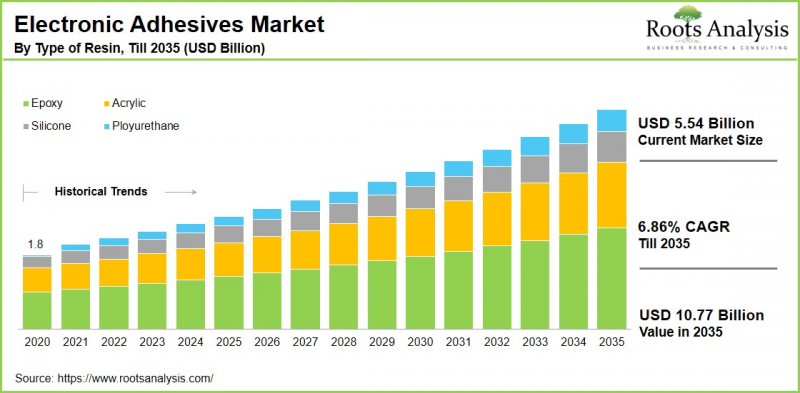
세계의 전자부품용 접착제 시장 규모는 2025년 55억 4,000만 달러에서 2035년까지 107억 7,000만 달러에 달할 것으로 추정되어 예측 기간(2025-2035년)에 CAGR로 6.86%의 성장이 전망됩니다.
전자부품용 접착제는 전자부품 및 장비의 조립, 보호, 기능 향상을 목적으로 설계된 특수 접착 재료입니다. 기계적 지지력, 전기적 전도성/절연성, 환경적 스트레스로부터의 보호 기능을 제공함으로써 전자기기 제조에서 매우 중요한 역할을 하고 있습니다. 이러한 접착제가 재료를 결합하는 방법에는 기계적 결합, 상호 확산, 표면 흡착 및 반응, 정전기 인력을 포함하여 현대 전자 제품 조립의 다양한 요구를 충족시킬 수 있습니다.
전자기기 부문의 발전과 함께 접착제에 대한 요구는 점점 더 복잡해지고 있습니다. 스마트폰, 웨어러블 기술, 의료용 센서 등 소형, 고밀도 기기의 등장으로 더 작은 전자부품용 접착제가 요구되고 있습니다. 이러한 접착제는 제한된 공간에서 우수한 성능을 발휘하는 동시에 온도 변화, 진동, 환경적 요인에 대한 노출을 견뎌내야 합니다. 위의 요인을 고려할 때, 세계 전자 부품용 접착제 시장은 예측 기간 중 상당한 성장을 보일 것으로 예측됩니다.
고위 경영진을 위한 전략적 인사이트
경쟁 구도: 전자부품용 접착제 시장에 진출하는 기업
현재 3M, Arkema, BASF, Dow, Henkel 등 다양한 주요 기술 기업, 전문 스타트업, 현지 기업이 시장에서 활동하고 있으며, 업계의 경쟁 역학을 활성화하고 있습니다. 이들 기업은 연구개발(R&D)에 많은 자원을 적극적으로 투입하여 새로운 용도(소형 전자제품, 플렉서블 가젯, 자동차 전기화 등)를 위한 혁신적인 고성능 접착제를 개발하는 데 주력하고 있습니다.
전자부품용 접착제 시장 : 주요 성장 촉진요인
전자부품용 접착제 시장은 통신, 가전제품, 자동차 등 다양한 부문에서 전자제품의 생산 및 사용 증가에 힘입어 성장하고 있습니다. 전자부품의 소형화 추세와 소형 고성능 기기에 대한 수요 증가는 견고한 접착력과 내구성을 제공하는 첨단 접착제에 대한 수요를 촉진하고 있습니다. 전기자동차 생산의 급증과 반도체 패키징 기술의 성장이 이러한 수요를 더욱 촉진하고 있습니다. 또한 환경 규제와 지속가능한 접착제 제조법으로의 전환도 시장 성장에 영향을 미치고 있습니다.
미국 관세의 영향: 비용 상승과 전략적 전환으로 산업 역학을 재정의합니다.
전자부품용 접착제 시장에 대한 미국의 관세 부과가 전자부품용 접착제 시장에 미치는 영향은 매우 크며, 주로 한국, 대만 등에서 에폭시 수지, 실리콘계 접착제 등 수입 원자재에 의존하는 제조업체의 생산 비용 상승을 초래하고 있습니다. 이러한 관세는 미국 시장에서의 가격 상승을 유발하여 반도체 및 PCB 조립 산업에 영향을 미치고 있으며, 원자재 비용 상승으로 인해 이익률을 압박하고 있습니다. 또한 보복관세와 세계 무역 마찰로 인해 공급망의 혼란과 불확실성이 증가하여 투자 및 제품 출시가 지연되고 있습니다. 이에 대응하기 위해 기업은 공급업체 다변화, 생산의 현지화, 바이오 접착제 및 고성능 접착제의 연구개발비 증액 등을 통해 이러한 문제를 완화하기 위해 노력하고 있습니다.
전자 부품용 접착제의 진화: 업계의 새로운 동향
소형화, 플렉서블 일렉트로닉스, 지속가능한 소재에 대한 수요 증가와 같은 중요한 동향으로 인해 시장은 빠르게 진화하고 있습니다. 나노테크놀러지과 저온 경화 기술을 활용한 혁신적인 접착제는 접합 효과를 향상시키는 동시에 보다 빠른 조립 공정을 실현하고 있습니다. 또한 전도성 및 열 전도성 접착제는 자동차용 일렉트로닉스, 5G, IoT 기기에서 열 관리 및 내열성 강화에 필수적인 요소로 자리 잡고 있습니다.
또한 전기자동차 및 스마트 웨어러블의 성장은 자동차 산업 내에서 큰 수요를 촉진하고 있습니다. 제조업체는 세계 환경 기준을 준수하기 위해 지속가능하고 무연, 저 VOC(휘발성 유기화합물) 접착제를 개발하는 것을 우선시하고 있습니다. 이러한 추세는 차세대 전자제품 제조의 요구에 맞추어 고성능, 친환경 솔루션으로 전환하는 업계의 변화를 잘 보여줍니다.
세계의 전자부품용 접착제 시장에 대해 조사했으며, 시장 규모 추산과 기회의 분석, 경쟁 구도, 기업 개요 등의 정보를 제공하고 있습니다.
목차
섹션 1 : 리포트 개요
제1장 서문
제2장 조사 방법
제3장 시장 역학
제4장 거시경제 지표
섹션 2 : 정성적 인사이트
제5장 개요
제6장 서론
제7장 규제 시나리오
섹션 3 : 시장 개요
제8장 주요 기업의 종합적 데이터베이스
제9장 경쟁 구도
제10장 화이트 스페이스 분석
제11장 기업 경쟁력 분석
제12장 전자부품용 접착제 시장의 스타트업 에코시스템
섹션 4 : 기업 개요
제13장 기업 개요
챕터 개요
3M
Alent
Arkema
Atom Adhesives
Avery Dennison
BASF SE
Bondline Electronic Adhesives
Boyd Corporation
Covestro
Cytec Industries
Delo
Dow
Dymax Corporation
Ellsworth Adhesives
Element Solutions
Evonik Industries
Henkel
Hitachi Chemical
Huntsman International
Indium Corporation
Jowat
LG Chemical
Loctite
Master Bond
Mitsui Chemicals
Nagase
Panasonic
Parker Hannifin
Permabond
Pidilite
Rogers
Sika
Shin-Etsu Chemical
Synthomer
ThreeBond
Toyo Polymer
Wacker Chemie
Xiamen Weldbond New Material
섹션 5 : 시장 동향
제14장 메가트렌드 분석
제15장 미충족 요구 분석
제16장 특허 분석
제17장 최근 발전
섹션 6 : 시장 기회 분석
제18장 세계의 전자부품용 접착제 시장
제19장 시장 기회 : 전자부품용 접착제 유형별
제20장 시장 기회 : 수지 유형별
제21장 시장 기회 : 형상 유형별
제22장 시장 기회 : 응용 분야별
제23장 시장 기회 : 기업 유형별
제24장 시장 기회 : 최종 용도 산업별
제25장 북미의 전자부품용 접착제의 시장 기회
제26장 유럽의 전자부품용 접착제의 시장 기회
제27장 아시아의 전자부품용 접착제의 시장 기회
제28장 중동·북아프리카(MENA)의 전자부품용 접착제의 시장 기회
제29장 라틴아메리카의 전자부품용 접착제의 시장 기회
제30장 기타 지역의 전자부품용 접착제의 시장 기회
제31장 시장 집중 분석 : 주요 기업별
제32장 인접 시장 분석
섹션 7 : 전략적 툴
제33장 주요 승리 전략
제34장 Porter's Five Forces 분석
제35장 SWOT 분석
제36장 밸류체인 분석
제37장 Roots의 전략적 제안
섹션 8 : 기타 독점적 인사이트
제38장 1차 조사로부터의 인사이트
제39장 리포트 결론
섹션 9 : 부록
KSA
영문 목차
영문목차
Electronic Adhesives Market Outlook
As per Roots Analysis, the global electronic adhesives market size is estimated to grow from USD 5.54 billion in 2025 to USD 10.77 billion by 2035, at a CAGR of 6.86% during the forecast period, from 2025 to 2025. The new study provides a comprehensive global electronic adhesive industry analysis, mega trends, patent analysis, porter's five forces, SWOT analysis, value chain analysis and other strategic frameworks.
Electronic adhesives are specialized bonding materials engineered to assemble, safeguard, and improve the functionality of electronic components and devices. They play a vital role in manufacturing electronics by offering mechanical support, electrical conductivity / insulation, and protection against environmental stressors. The ways these adhesives bond materials include mechanical interlocking, interdiffusion, surface adsorption and reaction, and even electrostatic attraction, enabling them to meet the varied needs of contemporary electronic assemblies.
As the electronics sector advances, the expectations for adhesives have grown increasingly intricate. The emergence of compact, high-density devices (such as smartphones, wearable technology, and medical sensors) necessitates smaller electronic adhesives. These adhesives provide outstanding performance in confined spaces while enduring thermal fluctuations, vibrations, and exposure to environmental factors. Considering the above mentioned factors, the global electronic adhesives market is expected to grow at a significant pace during the forecast period.
Strategic Insights for Senior Leaders
Competitive Landscape: Companies Involved in Electronic Adhesives Market
Currently, a variety of major technology companies, specialized startups, and local businesses, such as 3M Company, Arkema., BASF, Dow, Henkel among others, are active in the market, enhancing the competitive dynamics of the industry. These firms actively allocate significant resources to research and development (R&D), focusing on creating innovative high-performance adhesives designed for new applications (including compact electronics, flexible gadgets, and automotive electrification).
The electronic adhesives market is driven by the rise in production and usage of electronic devices across various sectors, such as telecommunications, consumer electronics, and automotive. The trend towards smaller electronic components and the increasing need for compact, high-performance devices drive the demand for cutting-edge adhesives that provide robust bonding and durability. The boom in electric vehicle production and the growth of semiconductor packaging capabilities further enhance this demand. Moreover, environmental regulations and the transition towards sustainable adhesive formulations are influencing market growth.
Impact of US Tariffs: Rising Costs and Strategic Shifts Redefine Industry Dynamics
The impact of US tariffs on the electronic adhesives market has been significant, primarily leading to heightened production expenses for manufacturers who depend on imported raw materials, such as epoxy and silicone adhesives from nations like South Korea and Taiwan. These tariffs raise prices in the US market, affecting semiconductors and PCB assembly industry, and squeeze profit margins due to escalated raw material costs. Additionally, reciprocal tariffs and global trade tensions have introduced supply chain disruptions and increased uncertainty, which delays investment and product rollouts. In response, companies are diversifying suppliers, localizing production, and increasing R&D spending on bio-based and high-performance adhesives to mitigate these challenges.
Electronic Adhesives Evolution: Emerging Trends in the Industry
This market is rapidly evolving with important trends including miniaturization, flexible electronics, and an increasing demand for sustainable materials. Innovative adhesives that utilize nanotechnology and low-temperature curing are improving bonding effectiveness while enabling quicker assembly processes. Additionally, adhesives that are electrically and thermally conductive are becoming essential for automotive electronics, 5G, and IoT devices, enhancing thermal management and resilience.
Further, the growth of electric vehicles and smart wearables is driving substantial demand within the automotive industry. Manufacturers are prioritizing the creation of sustainable, lead-free, and low-VOC (volatile organic compounds) adhesives to comply with global environmental standards. These trends highlight industry's transition towards high-performance and eco-friendly solutions that align with the manufacturing needs of next-generation electronics.
Which Type of Electronic Adhesive Will Dominate the Market?
Based on the type of electronic adhesive, the global market is segmented into electrically conductive, thermally conductive, UV curing and other adhesives. According to our estimates, currently, electrically conductive adhesives capture majority market share. This growth is due to the rapid growth of sectors, such as consumer electronics, electric vehicles, and renewable energy, where these adhesives are utilized for applications including battery connections, heat sinks, and flexible electronics.
How is the Epoxy Resin Segment Leading the Market?
Based on the type of resin, the global market is segmented into acrylic, epoxy, polyurethane and silicone. According to our estimates, currently, epoxy resins capture majority market share. This growth can be attributed to their remarkable thermal stability, superior cohesive strength, and exceptional electrical insulation, making them the preferred option for a wide array of electronic applications.
Regional Analysis: Asia to hold the Largest Share in the Market
Based on our estimates, Asia holds the largest share of the electronic adhesives market, leading the way with advancements in electronic adhesives technologies. This growth can be linked to various factors, such as the region's vast and swiftly expanding electronics sector, which encompasses producers of consumer electronics, automotive electronics, and industrial electronics. Notably, China stands out as a key market for electronic adhesives, driven by its extensive electronics manufacturing landscape.
Example Players in Electronic Adhesives Market
3M Company
Arkema
Ashland Global Holdings
DELO Adhesives
Dow Inc.
H.B. Fuller Company
Henkel
Huntsman International
Pidilite Industries
Sika AG
Electronic Adhesives Market: Report Coverage
The report on the electronic adhesives market features insights on various sections, including:
Market Sizing and Opportunity Analysis: An in-depth analysis of the electronic adhesives market, focusing on key market segments, including [A] type of electronic adhesives, [B] type of resin, [C] type of form, [D] application area, [E] type of enterprise, [F] end-use industry, and [G] geographical regions.
Competitive Landscape: A comprehensive analysis of the companies engaged in the electronic adhesives market, based on several relevant parameters, such as [A] year of establishment, [B] company size, [C] location of headquarters and [D] ownership structure.
Company Profiles: Elaborate profiles of prominent players engaged in the electronic adhesives market, providing details on [A] location of headquarters, [B] company size, [C] company mission, [D] company footprint, [E] management team, [F] contact details, [G] financial information, [H] operating business segments, [I] portfolio, [J] recent developments, and an informed future outlook.
Megatrends: An evaluation of ongoing megatrends in the electronic adhesives industry.
Patent Analysis: An insightful analysis of patents filed / granted in the electronic adhesives domain, based on relevant parameters, including [A] type of patent, [B] patent publication year, [C] patent age and [D] leading players.
Recent Developments: An overview of the recent developments made in the electronic adhesives market, along with analysis based on relevant parameters, including [A] year of initiative, [B] type of initiative, [C] geographical distribution and [D] most active players.
Porter's Five Forces Analysis: An analysis of five competitive forces prevailing in the electronic adhesives market, including threats of new entrants, bargaining power of buyers, bargaining power of suppliers, threats of substitute products and rivalry among existing competitors.
SWOT Analysis: An insightful SWOT framework, highlighting the strengths, weaknesses, opportunities and threats in the domain. Additionally, it provides Harvey ball analysis, highlighting the relative impact of each SWOT parameter.
Value Chain Analysis: A comprehensive analysis of the value chain, providing information on the different phases and stakeholders involved in the electronic adhesives market.
Key Questions Answered in this Report
What is the current and future market size?
Who are the leading companies in this market?
What are the growth drivers that are likely to influence the evolution of this market?
What are the key partnership and funding trends shaping this industry?
Which region is likely to grow at higher CAGR till 2035?
How is the current and future market opportunity likely to be distributed across key market segments?
Reasons to Buy this Report
Detailed Market Analysis: The report provides a comprehensive market analysis, offering detailed revenue projections of the overall market and its specific sub-segments. This information is valuable to both established market leaders and emerging entrants.
In-depth Analysis of Trends: Stakeholders can leverage the report to gain a deeper understanding of the competitive dynamics within the market. Each report maps ecosystem activity across partnerships, funding, and patent landscapes to reveal growth hotspots and white spaces in the industry.
Opinion of Industry Experts: The report features extensive interviews and surveys with key opinion leaders and industry experts to validate market trends mentioned in the report.
Decision-ready Deliverables: The report offers stakeholders with strategic frameworks (Porter's Five Forces, value chain, SWOT), and complimentary Excel / slide packs with customization support.
Additional Benefits
Complimentary Dynamic Excel Dashboards for Analytical Modules
Exclusive 15% Free Content Customization
Personalized Interactive Report Walkthrough with Our Expert Research Team
Free Report Updates for Versions Older than 6-12 Months
TABLE OF CONTENTS
SECTION I: REPORT OVERVIEW
1. PREFACE
1.1. Introduction
1.2. Market Share Insights
1.3. Key Market Insights
1.4. Report Coverage
1.5. Key Questions Answered
1.6. Chapter Outlines
2. RESEARCH METHODOLOGY
2.1. Chapter Overview
2.2. Research Assumptions
2.3. Database Building
2.3.1. Data Collection
2.3.2. Data Validation
2.3.3. Data Analysis
2.4. Project Methodology
2.4.1. Secondary Research
2.4.1.1. Annual Reports
2.4.1.2. Academic Research Papers
2.4.1.3. Company Websites
2.4.1.4. Investor Presentations
2.4.1.5. Regulatory Filings
2.4.1.6. White Papers
2.4.1.7. Industry Publications
2.4.1.8. Conferences and Seminars
2.4.1.9. Government Portals
2.4.1.10. Media and Press Releases
2.4.1.11. Newsletters
2.4.1.12. Industry Databases
2.4.1.13. Roots Proprietary Databases
2.4.1.14. Paid Databases and Sources
2.4.1.15. Social Media Portals
2.4.1.16. Other Secondary Sources
2.4.2. Primary Research
2.4.2.1. Introduction
2.4.2.2. Types
2.4.2.2.1. Qualitative
2.4.2.2.2. Quantitative
2.4.2.3. Advantages
2.4.2.4. Techniques
2.4.2.4.1. Interviews
2.4.2.4.2. Surveys
2.4.2.4.3. Focus Groups
2.4.2.4.4. Observational Research
2.4.2.4.5. Social Media Interactions
2.4.2.5. Stakeholders
2.4.2.5.1. Company Executives (CXOs)
2.4.2.5.2. Board of Directors
2.4.2.5.3. Company Presidents and Vice Presidents
2.4.2.5.4. Key Opinion Leaders
2.4.2.5.5. Research and Development Heads
2.4.2.5.6. Technical Experts
2.4.2.5.7. Subject Matter Experts
2.4.2.5.8. Scientists
2.4.2.5.9. Doctors and Other Healthcare Providers
2.4.2.6. Ethics and Integrity
2.4.2.6.1. Research Ethics
2.4.2.6.2. Data Integrity
2.4.3. Analytical Tools and Databases
3. MARKET DYNAMICS
3.1. Forecast Methodology
3.1.1. Top-Down Approach
3.1.2. Bottom-Up Approach
3.1.3. Hybrid Approach
3.2. Market Assessment Framework
3.2.1. Total Addressable Market (TAM)
3.2.2. Serviceable Addressable Market (SAM)
3.2.3. Serviceable Obtainable Market (SOM)
3.2.4. Currently Acquired Market (CAM)
3.3. Forecasting Tools and Techniques
3.3.1. Qualitative Forecasting
3.3.2. Correlation
3.3.3. Regression
3.3.4. Time Series Analysis
3.3.5. Extrapolation
3.3.6. Convergence
3.3.7. Forecast Error Analysis
3.3.8. Data Visualization
3.3.9. Scenario Planning
3.3.10. Sensitivity Analysis
3.4. Key Considerations
3.4.1. Demographics
3.4.2. Market Access
3.4.3. Reimbursement Scenarios
3.4.4. Industry Consolidation
3.5. Robust Quality Control
3.6. Key Market Segmentations
3.7. Limitations
4. MACRO-ECONOMIC INDICATORS
4.1. Chapter Overview
4.2. Market Dynamics
4.2.1. Time Period
4.2.1.1. Historical Trends
4.2.1.2. Current and Forecasted Estimates
4.2.2. Currency Coverage
4.2.2.1. Overview of Major Currencies Affecting the Market
4.2.2.2. Impact of Currency Fluctuations on the Industry
4.2.3. Foreign Exchange Impact
4.2.3.1. Evaluation of Foreign Exchange Rates and Their Impact on Market
4.2.3.2. Strategies for Mitigating Foreign Exchange Risk
4.2.4. Recession
4.2.4.1. Historical Analysis of Past Recessions and Lessons Learnt
4.2.4.2. Assessment of Current Economic Conditions and Potential Impact on the Market
4.2.5. Inflation
4.2.5.1. Measurement and Analysis of Inflationary Pressures in the Economy
4.2.5.2. Potential Impact of Inflation on the Market Evolution
4.2.6. Interest Rates
4.2.6.1. Overview of Interest Rates and Their Impact on the Market
4.2.6.2. Strategies for Managing Interest Rate Risk
4.2.7. Commodity Flow Analysis
4.2.7.1. Type of Commodity
4.2.7.2. Origins and Destinations
4.2.7.3. Values and Weights
4.2.7.4. Modes of Transportation
4.2.8. Global Trade Dynamics
4.2.8.1. Import Scenario
4.2.8.2. Export Scenario
4.2.9. War Impact Analysis
4.2.9.1. Russian-Ukraine War
4.2.9.2. Israel-Hamas War
4.2.10. COVID Impact / Related Factors
4.2.10.1. Global Economic Impact
4.2.10.2. Industry-specific Impact
4.2.10.3. Government Response and Stimulus Measures
4.2.10.4. Future Outlook and Adaptation Strategies