



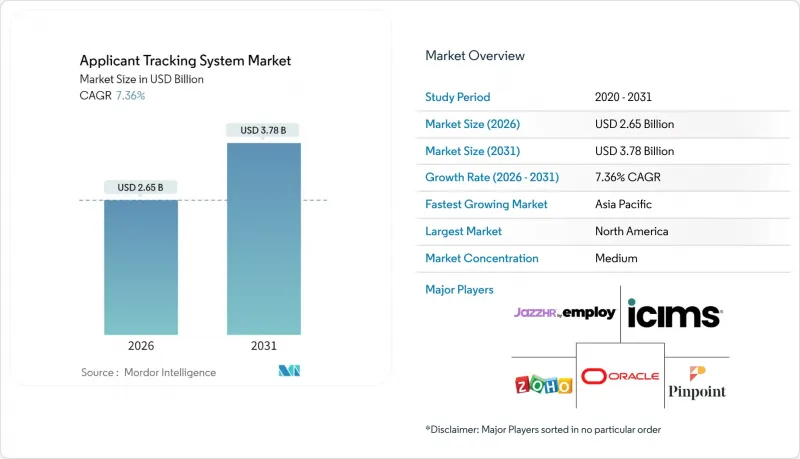
2026년 지원자 추적 시스템 시장 규모는 26억 5,000만 달러로 추정되며, 2025년 24억 7,000만 달러에서 성장하여 2031년에는 37억 8,000만 달러에 달할 것으로 예측됩니다.
2026년부터 2031년까지 CAGR 7.36%로 확대될 것으로 예상됩니다.
이러한 성장 궤적은 기업들이 수동 채용 프로세스를 자동화된 워크플로우로 대체하여 채용 시간을 단축하고 후보자의 경험을 개선하고 있는 현실을 반영하고 있습니다. 이러한 수요의 배경에는 인력 부족, 컴플라이언스 비용의 상승, 그리고 원격 근무의 급격한 증가로 인해 원격 근무를 전략적 우선순위로 삼고 있는 기업들이 있습니다. 클라우드 도입이 이러한 확장을 뒷받침하고 있으며, 구독형 라이선스는 소규모 팀의 진입장벽을 낮추는 동시에 24시간 가동이 필요한 대규모 세계 배포를 지원합니다. 이력서 분석, 대화형 챗봇, 바이어스 스크리닝 등 인공지능(AI)의 추가 기능은 기업이 비즈니스 사이클에 따라 확장 가능한 데이터 기반 채용을 추구하면서 벤더 선택의 결정적 요소로 작용하고 있습니다. 그 결과, 지원자 추적 시스템(ATS) 시장은 틈새 인사 소프트웨어에서 기업 디지털 아키텍처의 핵심 축으로 이동하고 있으며, ATS, HCM, 인재 인텔리전스를 단일 플랫폼으로 통합하는 벤더에게 새로운 기회를 제공하고 있습니다.
채용 건수의 증가가 수동 스크리닝의 처리 능력을 넘어섰고, 기업은 의사결정 주기를 몇 주에서 며칠로 단축할 수 있는 워크플로우 자동화를 도입해야 하는 상황에 처해 있습니다. 워크데이의 구독 매출이 전년 대비 16.9% 증가한 것은 고객이 일정 조정, 신원조회, 온보딩을 통합한 엔드투엔드 인재 파이프라인을 원했기 때문입니다. 의료 제공 기관은 이러한 변화를 몸소 보여주고 있습니다. 미국의 한 대형 의료 시스템은 규칙 기반 필터링과 자동 메시징을 도입하여 후보자에게 각 단계별 진행 상황을 알려줌으로써 채용 대행사에 지불하는 비용을 7,300만 달러 절감했습니다. 결원 비용의 상승으로 경영진은 ATS의 지연을 인사상의 불편함이 아닌 대차대조표상의 문제로 인식하게 되었습니다. 따라서 지원자 추적 시스템 시장에서는 이력서 선별을 자동화하고, 즉각적인 커뮤니케이션을 실현하며, 머신러닝 스코어링을 통해 최적의 후보자를 추출할 수 있는 벤더가 평가받고 있습니다.
다양성 프로그램은 컴플라이언스 대응에서 수익과 직결되는 우선순위로 전환되었습니다. 왜냐하면, 다양한 팀이 혁신 지표에서 우수한 성과를 내기 때문입니다. Greenhouse의 고객사는 구조화된 직무 평가와 익명화된 피드백 루프를 도입한 후 2024년 DEI 목표 달성률이 56% 상승했습니다. HireVue는 비디오 평가에 알고리즘적 편향성 감지 기능을 도입하여 영국 은행이 남녀 비율을 50:50으로 균등화하도록 지원함으로써, 기술을 통한 공정성과 브랜드 가치의 연관성을 입증했습니다. 따라서 채용 담당자는 ATS 플랫폼에 지원자 층의 모니터링, 편견이 있는 질문의 지적, 감사용 면접관 피드백 기록 등을 기대합니다. 규제가 강화되는 가운데, 지원자 추적 시스템 시장에서는 AI 모델이 차별을 피하는 메커니즘을 규제 당국에 설명하는 '설명가능성 대시보드'가 차별화 요소로 작용하고 있습니다.
기업들은 ATS 워크플로우를 급여 시스템, ERP, ID 관리 시스템과 연동하는 데 필요한 리소스를 과소평가하는 경향이 있습니다. 그 결과, 도입이 정체되거나 기능이 충분히 활용되지 못하는 경우가 많습니다. Atlas Medstaff는 NetSuite와 Bullhorn을 연동하기 위해 전문 미들웨어를 계약해야 했고, 데이터 모델의 비호환성이 예산을 압박하고 ROI 달성을 지연시킨 사례로 꼽힙니다. 벤더들이 지속적인 조정과 편향성 감사가 필요한 AI 알고리즘을 통합함에 따라 기술 격차는 더욱 심화되고 있습니다. 전담 기술 인력이 없는 중소기업에게 복잡한 플랫폼은 너무 부담스러워 장기적인 확장성을 지원하지 않는 단순화된 도구로 전환을 유도하고, 이는 지원자 추적 시스템 시장의 성장을 저해하는 요인으로 작용하고 있습니다.
2025년에는 솔루션 카테고리가 61.20%의 점유율로 시장을 주도했습니다. 기업들은 채용, 인재 발굴, 평가, 온보딩을 포괄적으로 아우르는 풀 기능 제품군을 선택했기 때문입니다. 그러나 서비스 분야는 CAGR 11.02%로 가장 빠른 성장세를 보이고 있으며, 이는 통합 노하우와 변경 관리 기술의 격차가 확대되고 있음을 반영합니다. 도입 및 지원 분야의 시장 규모는 2031년까지 라이선스 수익보다 더 크게 성장할 것으로 예상됩니다. 이는 기업들이 규제 대응, 브랜딩, 분석 목표에 부합하는 설정을 구현하는 파트너의 전문성을 중요시하게 되었기 때문입니다. 벤더들은 데이터 클렌징, 알고리즘 검증, 지속적인 UX 테스트 등 서비스 라인을 확장하여 고객이 AI 애드온을 통해 측정 가능한 결과를 얻을 수 있도록 지원하고 있습니다. 대륙을 넘나들며 도입이 확대되면서 24시간 365일 관리형 서비스는 필수 조건이 되었고, 제품 중심의 공급자라 할지라도 서비스의 깊이가 입찰을 따내는 기준이 되고 있습니다.
중견 제조기업과 비영리단체를 포함한 제2의 구매층은 IT 병목현상을 완화하기 위해 다년간의 매니지드 서비스 계약을 체결합니다. 이를 통해 마이그레이션 로드맵, 인력 자문, 지역 컴플라이언스 패키지를 번들로 제공하는 ATS 벤더와 세계 시스템 통합업체 간의 새로운 파트너십이 탄생하고 있습니다. 한편, AI 바이어스 감사 및 GDPR 갭 분석을 전문으로 하는 순수 컨설팅 업체들이 부상하고 있으며, 리스크 회피 성향이 강한 금융 및 의료 분야 고객을 타겟으로 삼고 있습니다. 그 결과, 지원자 추적 시스템 시장에서는 복잡한 도입 리스크를 줄이고 경영진의 KPI 달성을 보장하는 서비스 부문에 대한 지출 비중이 증가하는 추세입니다.
클라우드는 77.35%의 점유율을 차지하며 CAGR 9.68%로 가장 빠르게 성장하고 있으며, 구독형 호스팅이 현대의 표준임을 입증하고 있습니다. 기업은 즉각적인 프로비저닝, 자동 패치 적용, 시차가 있는 지역에 분산된 채용 담당자의 모바일 액세스를 중요하게 생각합니다. 하이브리드 근무와 원격 근무가 보편화되면서 클라우드 구독과 연계된 지원자 추적 시스템 시장 규모가 확대될 것으로 예상됩니다. 지속적인 딜리버리 파이프라인을 통해 벤더는 분기별로 AI 업데이트를 추진할 수 있으며, 고객은 내부 업그레이드 프로젝트 없이도 컴플라이언스 요구 사항을 계속 충족할 수 있습니다.
온프레미스 도입은 데이터 주권법에 묶여 있는 국방, 공공부문, 금융기관에서 지속되고 있지만, 암호화 기술과 지역별 호스팅이 클라우드 도입 장벽을 낮추면서 이 부문은 축소되는 추세입니다. 멀티 테넌트 설계를 통해 대기업의 예산으로 제한되었던 고급 분석 기능도 민주화되어 중소기업이 지원자 추적 시스템 시장에 진입할 수 있게 되었습니다. 레거시 ATS의 갱신 시기가 다가옴에 따라, 조달팀은 서버, 패치, 전문 인력 인건비 등 평생 비용을 클라우드 구독 패키지와 비교 검토하여 전환에 박차를 가하고 있습니다.
지원자 추적 시스템 시장은 제공 형태(솔루션, 서비스(통합 및 유지보수)), 도입 모드(클라우드, 온프레미스), 최종사용자 산업(운송 및 물류(창고 포함), BFSI(은행·금융·보험), 기타), 조직 규모(중소기업, 대기업), 지역별로 세분화되어 있습니다. 시장 예측은 금액(달러)으로 제공됩니다.
북미는 2025년 37.45%의 점유율로 1위를 유지했습니다. 미국 및 캐나다 기업들이 일찌감치 클라우드 인사관리 스위트를 도입하고, AI를 활용한 채용을 표준으로 삼고 있기 때문입니다. Fortune 500대 기업 통계에 따르면, Workday Recruiting이 Taleo를 제치고 가장 많이 채택된 ATS가 되었으며, 지속적 제공 아키텍처에 중점을 둔 업데이트 주기가 진행 중임을 알 수 있습니다. 콜로라도주 AI법 등의 규제로 인해 알고리즘의 투명성에 대한 관심이 높아지면서 동의서, 설명가능성 보고서, 데이터 보존 관리 기능을 내장한 업그레이드가 추진되고 있습니다. 그 결과, 지원자 추적 시스템 시장에서는 신규 도입 증가세가 둔화되고 있음에도 불구하고 라이선스 갱신 및 모듈 추가가 꾸준히 이루어지고 있습니다.
유럽에서는 GDPR과 EU AI법, 국가별 공정채용법에 대한 대응이 진행되면서 한 자릿수 중반의 성장세를 기록하고 있습니다. 각 벤더들은 다국어 인터페이스, 문서 보존 규칙, 규제 당국의 검사를 견딜 수 있는 감사 추적 등으로 차별화를 꾀하고 있습니다. 영국 브렉시트 이후 기업 구조조정이 역내 ATS 시장 규모를 견인하고 있습니다. 국경 간 인력 이동이 복잡해짐에 따라 고용주들은 자격 확인 자동화를 추진하고 있습니다. 영국의 한 소매은행이 평가 편향을 90% 줄인 사례와 같이 컴플라이언스 준수와 성과 개선이 결합된 편향성 감소 성공사례를 통해 투자 효과를 입증하고 있습니다.
아시아태평양은 세계에서 가장 빠른 11.62%의 CAGR로 성장할 것으로 예상됩니다. 디지털 전환 계획과 비약적인 클라우드 인프라 도입은 지원자 추적 시스템 시장에 큰 성장 여지를 제공하고 있습니다. 싱가포르 소재 은행은 대화형 AI를 통해 채용 주기를 절반으로 줄여 효율성을 높였습니다. HR테크 스타트업에 대한 740만 달러의 벤처 캐피털 투자는 지역 수요에 대한 투자자들의 확신을 보여줍니다. 중국과 인도에서는 모바일 퍼스트 워크플로우를 통한 캠퍼스 채용의 현대화가 진행되고 있으며, 일본에서는 인구 구조의 변화로 인한 인력 부족을 완화하기 위해 AI 스케줄링이 활용되고 있습니다. 동남아시아의 중소기업은 국경 간 E-Commerce의 급격한 성장에 따라 SaaS형 ATS 도입이 빠르게 확대되고 있으며, 2031년까지 아시아태평양이 주요 성장 동력으로 자리매김할 것으로 전망하고 있습니다.
The applicant tracking system market size in 2026 is estimated at USD 2.65 billion, growing from 2025 value of USD 2.47 billion with 2031 projections showing USD 3.78 billion, growing at 7.36% CAGR over 2026-2031.
This trajectory captures how enterprises are replacing manual hiring with automated workflows that cut time-to-fill and improve candidate experiences. Demand stems from talent shortages, rising compliance costs, and the surge in remote work that makes location-agnostic recruitment a strategic priority. Cloud deployment anchors this expansion because subscription licensing lowers barriers for small teams while supporting large global rollouts that need round-the-clock uptime. Artificial-intelligence add-ons-resume parsing, conversational chatbots, bias screening-now decide vendor selection as companies look for data-driven hiring that scales with business cycles. As a result, the applicant tracking system market is moving from niche HR software to a core pillar of enterprise digital architecture, creating room for vendors that combine ATS, HCM, and talent intelligence on a single platform.
Recruiting volumes are outpacing the capacity of manual screens, prompting firms to embed workflow automation that shortens decision cycles from weeks to days. Subscription revenue at Workday climbed 16.9% year-on-year in fiscal 2025 because clients demanded end-to-end talent pipelines that integrate scheduling, background checks, and onboarding. Healthcare providers illustrate the shift: a major US system cut agency fees by USD 73 million after introducing rules-based filtering and automated messaging that kept candidates informed at each stage. With vacancy costs rising, executives now view ATS latency as a balance-sheet issue rather than an HR inconvenience. Accordingly, the applicant tracking system market rewards vendors that can automate resume triage, communicate instantly, and surface best-fit applicants with machine-learning scoring.
Diversity programs have transitioned from compliance exercises to revenue-linked priorities because heterogeneous teams outperform on innovation metrics. Greenhouse clients recorded a 56% rise in DEI target achievement in 2024 after adopting structured job scoring and anonymized feedback loops. HireVue helped a UK bank equalize gender splits to 50/50 by embedding algorithmic bias detection in video assessments, proving the link between tech-enabled fairness and brand equity. Buyers therefore expect ATS platforms to monitor demographic pipelines, flag biased questions, and log interviewer feedback for audit. As legislation tightens, the applicant tracking system market differentiates on explainability dashboards that show regulators how AI models avoid discrimination.
Enterprises underestimate the resources needed to mesh ATS workflows with payroll, ERP, and identity-management systems, leading to stalled rollouts and underused features. Atlas Medstaff had to contract specialist middleware to bridge NetSuite with Bullhorn, highlighting how data-model mismatches can drain budgets and delay ROI. Skills gaps intensify as vendors embed AI algorithms that demand continuous tuning and bias audits. For SMEs without dedicated tech staff, complex platforms can prove overwhelming, pushing them toward stripped-down tools that may not support long-term scalability, thus tempering applicant tracking system market expansion.
Other drivers and restraints analyzed in the detailed report include:
For complete list of drivers and restraints, kindly check the Table Of Contents.
The solutions category dominated 2025 with 61.20% share as firms selected full-function suites to cover requisition creation, sourcing, assessment, and onboarding. Services, however, post the quickest rise at 11.02% CAGR, reflecting widening gaps in integration know-how and change-management skills. The applicant tracking system market size for implementation and support is projected to grow faster than license revenue through 2031 because enterprises now value partner expertise that aligns configuration with regulatory, branding, and analytics objectives. Vendors extend service lines to cover data cleansing, algorithm validation, and continuous UX testing, ensuring customers extract measurable outcomes from AI add-ons. As deployments stretch across continents, 24/7 managed services become non-negotiable, making service depth a tender-winning criterion even for product-centric providers.
Second-wave buyers, including mid-market manufacturers and non-profit organizations, sign multi-year managed-service contracts to mitigate IT bottlenecks. This sparks new alliances between ATS vendors and global system integrators that bundle migration roadmaps, talent advisory, and local compliance packs. Meanwhile, pure-play consultants specializing in AI bias audits and GDPR gap analyses appear, targeting risk-averse finance and healthcare accounts. Consequently, the applicant tracking system market funnels a growing share of spend toward service units that de-risk complex rollouts and guarantee executive KPIs.
Cloud owns 77.35% share and still grows the quickest at 9.68% CAGR, confirming that subscription hosting is the modern default. Firms value instant provisioning, automatic patching, and mobile access for hiring managers scattered across time zones. The applicant tracking system market size tied to cloud subscriptions is forecast to widen as hybrid and remote workforces cement location-independent recruitment norms. Continuous delivery pipelines let vendors push AI updates quarterly, ensuring clients keep pace with compliance mandates without internal upgrade projects.
On-premises deployments persist in defense, public sector, and financial institutions bound by data-sovereignty statutes, yet the segment is declining as encryption and regional hosting ease cloud objections. Multitenant designs also democratize advanced analytics once limited to top-tier corporate budgets, pulling SMEs into the applicant tracking system market. As legacy ATS renewals arise, procurement teams benchmark the lifetime cost of servers, patches, and specialized staff against cloud subscription packages, accelerating migration momentum.
Applicant Tracking System Market Segmented by Offering (Solutions, Services (Integration and Maintenance)), Deployment Mode (Cloud, On-Premise), End-User Industry (Transportation and Logistics (incl. Warehouse), BFSI, and More), Organization Size (SMEs, Large Enterprises), and Geography. The Market Forecasts are Provided in Terms of Value (USD).
North America led with 37.45% share in 2025 because US and Canadian enterprises embraced cloud HR suites early and now treat AI-enabled hiring as standard practice. Fortune 500 statistics show Workday Recruiting overtaking Taleo as the most adopted ATS, evidencing a replacement cycle favouring continuous-delivery architectures. Legislation such as Colorado's AI Act heightens focus on algorithmic transparency, driving upgrades that embed consent forms, explainability reports, and data-retention controls. The applicant tracking system market consequently sees steady license renewals and module add-ons even though new-logo growth moderates in this mature region.
Europe posts mid-single-digit growth as firms align with GDPR, the EU AI Act, and country-specific fair-hiring statutes. Vendors differentiate on multilingual interfaces, document retention rules, and audit trails that withstand regulator inspections. The applicant tracking system market size across the region is bolstered by corporate restructuring after Brexit, which complicates cross-border talent flow and prompts employers to automate eligibility checks. Bias-reduction success stories-such as a UK retail bank cutting evaluation bias by 90%-illustrate how compliance and performance converge to justify investment.
Asia-Pacific is projected to expand at 11.62% CAGR, the fastest worldwide. Digital transformation programs and leapfrogging cloud infrastructure adoption give the applicant tracking system market an outsized runway. Singapore-based banks demonstrate efficiency gains from conversational AI that halves hiring cycles, while venture capital funding-USD 7.4 million for an HR tech start-up-signals investor belief in regional demand. China and India modernize campus hiring via mobile-first workflows, and Japan leans on AI scheduling to mitigate demographic labour shortages. Southeast Asian SMEs rapidly adopt SaaS ATS as cross-border e-commerce booms, cementing APAC as the prime growth engine through 2031.