



DaaS(Data As A Service) 시장은 2025년 248억 9,000만 달러에서 2026년에는 297억 2,000만 달러로 성장하며, 2026-2031년에 CAGR 19.4%로 추이하며, 2031년까지 720억 7,000만 달러에 달할 것으로 예측됩니다.
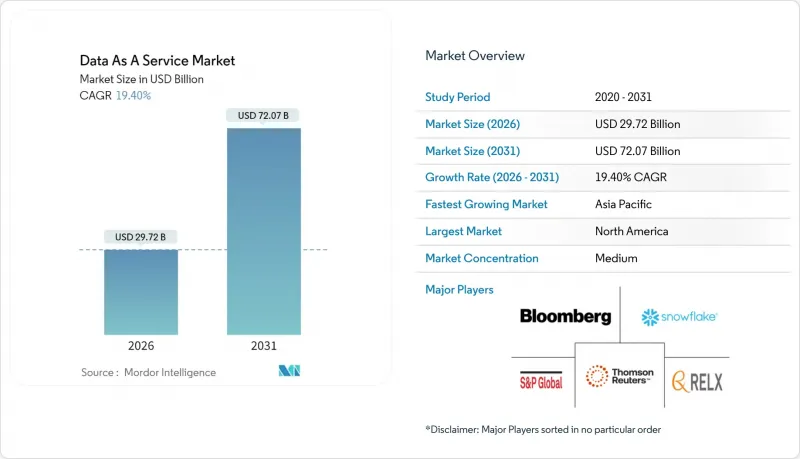
기업은 자체 데이터 수익화, API 우선 제공 방식 채택, 업데이트 가능한 외부 데이터세트를 필요로 하는 AI 모델 지원을 위해 지출을 가속화하고 있습니다. 실시간 분석에 대한 기대, 클라우드 스토리지의 단가 하락, 나노 데이터세트 시장의 부상과 함께 대상 시장 기회가 확대되고 있습니다. 경영진은 측정 가능한 성과를 보고하고 있으며, 91%의 기업이 분석 투자를 통해 효율성과 의사결정 속도가 구체적으로 개선되었다고 응답했습니다. 산업 성장은 여전히 고르지 않다: BFSI(은행, 금융, 보험)가 초기 도입을 주도하고, 의료 분야가 가장 빠른 성장 궤도를 기록했습니다. 조직이 데이터 주권과 비용 관리의 균형을 맞추기 위해 하이브리드 도입 모델이 급증하고 있습니다. 북미가 가장 큰 수입원이지만, 데이터 현지화법과 디지털 전환 계획이 맞물리면서 아시아태평양이 성장을 주도하고 있습니다.
통합 데이터 플랫폼을 도입한 조직에서는 정보 검색 주기가 3-5배 빨라지고, 응답 정확도가 50-70% 향상되었습니다. 금융기관들은 사기 방지 프로그램의 강력한 이익률을 강조하는 한편, 고급 AI 이용 사례에 대한 역량 부족을 인정하고 강력한 데이터 인프라에 대한 추가 투자를 장려하고 있습니다. 경영진이 데이터를 IT 제품별이 아닌 전략적 기업 자산으로 인식하면서 도입이 가속화되고 있습니다. 따라서 투자는 내부 기록과 외부 프리미엄 피드를 실시간으로 통합할 수 있는 통합 계층으로 이동하고 있습니다. 이러한 촉진요인은 산업별로 확장 가능하고 스키마 독립적인 서비스에 대한 지속적인 수요를 지원하고 있습니다.
비정형 컨텐츠는 이미 기업 데이터의 80%를 차지하고 있지만, 예산 배분은 현저히 낮아 아직 개발되지 않은 수익화 잠재력을 드러내고 있습니다. AI 지원 데이터 파이프라인을 위한 4,000만 달러의 자금 조달로 대표되는 비정형 데이터 툴에 대한 벤처 자금 조달은 전문 처리 플랫폼에 대한 신뢰를 보여줍니다. 밀리초 단위로 측정되는 실시간 분석은 마케팅 실행을 전환율 향상을 초래하는 하이퍼 개인화로 전환하고 있습니다. 검색 확장 생성 프레임워크를 도입한 조직에서는 AI의 환각 현상이 70-90% 감소했다고 보고되어 지속적인 데이터 업데이트의 비즈니스 사례가 강화되고 있습니다. 이러한 추세와 맞물려 DaaS(Data As A Service) 시장의 범위가 확대되고, 벡터 데이터베이스와 스트리밍 파이프라인에 대한 투자가 촉진되고 있습니다.
2024년 중반까지 미국 20개 주에서 종합적인 개인정보 보호법을 제정하고, 연방정부 법안안에서는 컴플라이언스 비용을 증가시키는 전국적인 표준을 도입할 것을 제안하고 있습니다. 기업의 46%가 데이터 품질 목표 달성에 있으며, 프라이버시를 주요 장애물로 꼽았습니다. 산업별 규제가 복잡해지고 있습니다. 의료기관은 클라우드 배포을 확대하는 동시에 환자 데이터 관리를 HIPAA를 준수해야 합니다. 관할권에 따른 데이터 거주 의무로 인해 공급자는 여러 지역의 사본을 유지해야 하므로 운영 비용이 증가하게 됩니다. 이러한 요인들은 특히 규제가 엄격한 산업에서 자동화 및 정책-코드 툴이 성숙하기 전까지는 도입을 억제할 수 있습니다.
BFSI(은행, 금융 및 보험) 부문은 엄격한 규정 준수 요건과 첨단 사기 감지 워크로드로 인해 2025년 전체 매출의 28.30%를 차지하며 DaaS(Data As A Service) 시장을 촉진할 것으로 예측됩니다. 의료 분야는 21.8%의 연평균 복합 성장률(CAGR)을 보이고, 업계에서 가장 높은 성장률을 보였습니다. 병원이 AI 지원 진단과 집단 건강 분석을 도입하고 있기 때문입니다. IT 및 통신 기업은 네트워크 최적화를 위해 데이터세트를 통합하고, 정부는 안전한 데이터 교환에 의존하는 전자 서비스를 확장하고 있습니다. 제조 및 에너지 산업의 기존 기업은 지속적인 센서 데이터 공급을 필요로 하는 예지보전 모델을 도입하고 있습니다.
의료기관은 2024년 클라우드 서비스에 평균 3,800만 달러를 지출할 것이며, 전환 성과에 대한 만족도는 72%로 나타났습니다. 전자 건강 기록, 이미지 저장소, 유전체학의 융합이 비정형 데이터 파이프라인에 대한 수요를 주도하고 있습니다. 유통업체는 실시간 피드를 활용한 개인화 추천으로 장바구니 규모를 확대하고, 교육기관은 AI 융합형 학습 플랫폼의 시범 운영을 진행하고 있습니다. 이러한 다양한 이용 사례는 DaaS(Data As A Service) 시장의 전략적 중요성을 지원합니다.
퍼블릭 클라우드는 2025년 매출의 53.40%를 차지할 것으로 예상되며, 성숙한 보안 인증과 풍부한 관리형 서비스 툴키트의 혜택을 누릴 수 있습니다. 그러나 조직이 데이터 배치를 최적화하여 데이터 전송 비용을 절감하고 거주 요건을 충족하기 위해 하이브리드 및 멀티 클라우드 접근 방식이 22.2%의 연평균 복합 성장률(CAGR)로 가장 높은 성장세를 보이고 있습니다. 금융이나 국방 분야와 같이 지연과 주권이 중요한 역할을 하는 영역에서는 여전히 프라이빗 클라우드의 선택지가 존재합니다.
워크로드의 특성에 따라 탄력성과 기밀성의 차이가 있다는 것이 널리 인식되고 있으며, 2027년까지 90%의 기업이 하이브리드 전략 운영을 계획하고 있습니다. 데이터 패브릭 아키텍처와 크로스 플레인 제어 레이어의 인기가 높아지면서 벤더에 종속되지 않고 유동적인 데이터 마이그레이션이 가능해졌습니다. 비용 계산 툴이 데이터 전송 비용을 정량화하는 가운데, 재무 책임자는 분석 테이블을 AI 런타임에 근접하게 배치하는 정책을 추진하고 있습니다. 이러한 추세는 배포 중립성을 표방하는 DaaS(Data As A Service) 시장 플랫폼의 잠재적 고객 기반을 확대할 것입니다.
북미는 2025년 매출의 38.95%를 차지할 것으로 예상되며, 자본력 있는 구매자와 데이터 인프라 혁신을 심화시키는 심도 있는 벤처 생태계가 지원하고 있습니다. AWS만 해도 전 세계 약 4억 2천만 명의 고객에게 서비스를 제공하고 있으며, 이는 이 지역의 클라우드 성숙도를 보여줍니다. 미국의 데이터센터 전력 소비량은 2023년 176TWh에 달할 것으로 예상되며, AI 워크로드 급증에 따라 2028년까지 325-580TWh로 증가할 가능성이 있습니다. 캐나다는 주권을 중시하고 거주지법에 따라 국내 마켓플레이스 노드에 대한 수요를 불러일으키고 있습니다. 지역의 정책 믹스는 안전한 다자간 분석을 지원하는 프라이버시 강화 기술을 촉진하고, DaaS(Data As A Service) 시장 확대에 기여하고 있습니다.
아시아태평양이 가장 빠르게 성장하고 있으며, 정부가 디지털 회랑과 클라우드 존에 자본을 투자하면서 24.0%의 연평균 복합 성장률(CAGR)로 성장하고 있습니다. 인도는 '디지털 인디아' 계획과 하이퍼스케일러의 지역적 확장의 혜택을 누리고 있으며, 일본은 마이크로소프트와 AWS로부터 차세대 시설에 대한 수십억 달러 규모의 투자 확약을 받았습니다. 모바일 서비스는 지역 GDP에 5.3%의 부가가치를 창출하고 있으며, 현지화 중심의 방대한 데이터세트를 생성하고 있습니다. 데이터 거주 규칙에 따라 로컬 데이터 시장이 번창하고, 전 세계 공급자의 배치 선택을 형성하고 있습니다.
유럽에서는 GDPR(EU 개인정보보호규정) 프레임워크와 지속가능성 요구사항이 아키텍처 결정에 영향을 미치고 있으며, 꾸준한 성장세를 보이고 있습니다. 세계 스위치 업체들은 2030년까지 100% 재생에너지 사용을 약속하며, 데이터센터 확장을 친환경 에너지 목표와 일치시키고 있습니다. 프랑스, 독일, 북유럽 국가들은 PUE 비율을 낮추는 내결함성 전력망과 서늘한 기후로 인해 용량을 모으고 있습니다. 남미의 성장은 브라질에 집중되어 있으며, 재정적 인센티브가 클라우드 사업자를 유치하고 있습니다. 반면, 중동 및 아프리카에서는 핀테크 거점에 집중된 선택적 도입이 진행되고 있습니다. 입지 전략은 여전히 주요 구매 기준이며, 미국 데이터센터 부하의 80%가 15개 주에 집중되어 있으며, 집중화 리스크가 뚜렷하게 나타나고 있습니다.
The Data as a Service market is expected to grow from USD 24.89 billion in 2025 to USD 29.72 billion in 2026 and is forecast to reach USD 72.07 billion by 2031 at 19.4% CAGR over 2026-2031.
Enterprises accelerate spending to monetize proprietary data, adopt API-first delivery, and support AI models that demand refreshable external datasets. Real-time analytics expectations, falling unit costs for cloud storage, and the rise of nanodataset marketplaces collectively widen the addressable opportunity. Leadership teams report measurable gains, with 91% of firms citing tangible improvements in efficiency and decision speed from analytics investments. Sector growth remains uneven: BFSI anchors early adoption, healthcare records the fastest trajectory, and hybrid deployment models surge as organizations balance data sovereignty with cost control. North America supplies the largest revenue pool, yet Asia-Pacific leads in growth as data-localization laws and digital transformation agendas converge.
Organizations that embed unified data platforms record information-retrieval cycles that are three to five times faster and response-accuracy improvements of 50-70% . Finance institutions highlight strong returns from anti-fraud programs yet acknowledge capability gaps in advanced AI use cases, spurring incremental spending on robust data infrastructure. Adoption accelerates as executives treat data as a strategic corporate asset rather than an IT by-product. Investment therefore shifts toward integration layers able to blend internal records with premium external feeds in real time. The driver supports sustained demand for scalable, schema-agnostic services across verticals.
Unstructured content already represents 80% of enterprise data while attracting disproportionately low budgets, underscoring an untapped monetization pool. Venture financing in unstructured-data tooling-exemplified by a USD 40 million round for AI-ready data pipelines-signals confidence in specialized processing platforms . Live-time analytics, measured in milliseconds, has shifted marketing execution toward hyper-personalization that raises conversion metrics. Organisations adopting retrieval-augmented generation frameworks report 70-90% reductions in AI hallucinations, reinforcing the business case for continuous data refresh. Collectively these trends widen the scope of the Data as a Service market and encourage investment in vector databases and streaming pipelines.
Twenty US states enacted comprehensive privacy statutes by mid-2024, and a proposed federal bill would introduce nationwide standards that raise compliance costs. Forty-six percent of enterprises cite privacy as their primary impediment to data-quality goals. Sector-specific rules add complexity: healthcare organisations must align patient-data controls with HIPAA while scaling cloud adoption. Jurisdiction-based residency mandates force providers to maintain multiple in-region copies, increasing operational overhead. These factors temper uptake, especially in highly regulated verticals, until automation and policy-as-code tooling mature.
Other drivers and restraints analyzed in the detailed report include:
For complete list of drivers and restraints, kindly check the Table Of Contents.
The BFSI sector retained 28.30% of overall revenue in 2025, anchoring the Data as a Service market through stringent compliance mandates and sophisticated fraud-detection workloads. Healthcare logged a 21.8% CAGR, the fastest among industries, as hospitals embrace AI-supported diagnostics and population-health analytics. IT and telecommunications firms integrate datasets for network optimisation, while governments expand e-services that depend on secure data exchanges. Manufacturing and energy incumbents deploy predictive-maintenance models requiring continuous sensor feeds.
Healthcare organisations spent an average USD 38 million on cloud services in 2024 and reported 72% satisfaction with migration outcomes. The convergence of electronic health records, imaging repositories, and genomics drives demand for unstructured-data pipelines. Retailers leverage real-time feeds for personalised recommendations that raise basket sizes, whereas education institutions pilot AI-infused learning platforms. These varied use cases reinforce the strategic relevance of the Data as a Service market.
Public-cloud instances captured 53.40% of 2025 revenue, benefiting from mature security certifications and rich managed-service toolkits. Hybrid and multi-cloud approaches, however, post the strongest growth at 22.2% CAGR as organisations optimise data placement to mitigate egress fees and satisfy residency requirements. Private-cloud options persist where latency and sovereignty hold sway, notably in finance and defence.
Ninety percent of enterprises intend to run hybrid strategies by 2027, reflecting widespread recognition that workload characteristics vary in elasticity and sensitivity. Data-fabric architectures and cross-plane control layers thus rise in popularity, enabling fluid movement without vendor lock-in. As cost calculators quantify egress liabilities, finance chiefs lobby for placement policies that keep analytic tables close to AI runtimes. These developments enlarge the addressable base for Data as a Service market platforms that advertise deployment neutrality.
Data As A Service Market Report is Segmented by End-User Industry (BFSI, IT and Telecommunications, and More), Deployment Model (Public Cloud, Private Cloud, Hybrid/Multi-cloud), Data Type (Structured Data, Unstructured Data, Semi-Structured Data), End-User Enterprise Size (Large Enterprises, and More), Application (Real-Time Operational Analytics, and More), and Geography. The Market Forecasts are Provided in Terms of Value (USD).
North America held 38.95% of 2025 revenue, sustained by well-capitalised buyers and deep venture ecosystems that refine data-infrastructure innovations. AWS alone serves an estimated 4.2 million global customers, illustrating the region's cloud maturity. United States data-centre consumption reached 176 TWh in 2023 and could rise to 325-580 TWh by 2028 as generative-AI workloads proliferate. Canada emphasises sovereignty, stimulating demand for in-country marketplace nodes that comply with residency statutes. The regional policy mix encourages privacy-enhancing technologies that underpin secure multi-party analytics and broaden the Data as a Service market.
Asia-Pacific records the fastest expansion, advancing at a 24.0% CAGR as governments channel capital toward digital corridors and cloud zones. India benefits from the Digital India programme and hyperscaler region launches, while Japan secures multi-billion-dollar commitments from Microsoft and AWS for next-generation facilities. Mobile services add 5.3% to regional GDP, creating a vast stream of localisation-driven datasets . Local data-marketplaces thrive under residency rules, shaping deployment choices for global providers.
Europe posts steady gains as the GDPR framework and sustainability mandates steer architectural decisions. Providers like Global Switch commit to 100% renewable electricity usage by 2030, aligning data-centre expansions with green-energy goals. France, Germany, and the Nordics attract capacity through resilient grids and cool climates that trim PUE ratios. South America's growth concentrates in Brazil where fiscal incentives entice cloud operators, whereas the Middle East and Africa see selective uptake clustered in fintech hubs. Location strategy remains a core purchase criterion as 80% of US data-centre load resides in just 15 states, revealing concentration risks.