



남미의 연체동물 살충제 시장은 2025년 1억 2,000만 달러에서 2026년에는 1억 2,702만 달러로 성장하고, 2026-2031년 CAGR 5.83%로 성장을 지속하여, 2031년까지 1억 6,862만 달러에 이를 것으로 예측되고 있습니다.

남미의 연체동물 살충제 시장은 기후 변화로 인한 습도 상승으로 복족류의 번식 주기가 빨라지고, 보다 안전한 인산철 기반 활성 성분으로 빠르게 전환하고, 통합적 해충 관리(IPM) 준수를 장려하는 공공 보조금 프로그램의 혜택을 누리고 있습니다. 브라질은 대규모 원예 수출의 선도적 지위, 견조한 커피 및 사탕수수 재배 면적, 지속 가능한 해충 방제 프로토콜과 연계된 정부 신용 한도를 유지하고 있습니다. 콜롬비아의 특수 작물 붐과 칠레의 수출 품질 기준은 프리미엄 내우성 펠릿 기술 혁신을 촉진하는 동시에 지역 수요를 더욱 강화하고 있습니다. 경쟁의 강도는 중간 정도이며, 5개 공급업체가 큰 매출 점유율을 차지하고 있지만, 틈새 시장인 현지 제제 제조업체들은 미기후 및 저항성 관리 요구에 맞는 제품 개발로 여전히 중요한 역할을 하고 있습니다.
기온 상승과 강우량 증가로 인해 델로케라스와 포마세아의 휴면 기간이 짧아져 콩, 커피, 채소의 복족류 피해가 심각해지고 있습니다. 현지 조사에 따르면, 기온 2℃ 상승과 강수량 20% 증가가 겹치면 번식률이 3배로 급증해 생산자는 수확기까지 방제 기간을 연장할 수밖에 없습니다. 브라질 세라도 지역에서는 조생 원예작물 보호를 위해 1시즌에 두 번 추가 펠릿을 살포하는 농장이 증가하고 있습니다. 콜롬비아 안데스 산맥의 계곡에서도 비슷한 추세를 볼 수 있는데, 이슬이 장시간 남아 있어 기존에는 건조했던 달에서도 달팽이가 밤에도 먹이를 먹을 수 있게 되었다고 합니다. 이러한 피해 확대로 인해 1헥타르당 연체동물 살충제 지출이 증가하고 있으며, 특히 반복적인 강우에 견딜 수 있는 고효능 펠렛을 중심으로 지출이 증가하고 있습니다.
브라질의 '가족 농업 강화 국가 프로그램'은 생산자가 메타알데히드보다 인산철을 우선시하는 종합적인 해충 관리 계획을 문서화하는 경우에만 보조금 융자를 제공합니다. 콜롬비아의 커피 산업 현대화 보조금은 GPS 유도 살포기를 사용할 경우 연체동물 살충제 비용의 최대 30%를 상환하여 가변 비율 펠릿 도입을 촉진하고 있습니다. 아르헨티나는 2025년 지속가능한 농업 세제를 확대하고, 살충제 내성 관리 계획을 세액공제 대상에 추가합니다. 이로 인해 간접적으로 이중 작용형 미끼제 수요가 확대되었습니다. 이러한 재정적 인센티브로 인해 구매 결정은 최저가 제품에서 잔류감사를 통과한 안전성이 높은 제제로 이동했습니다. 보조금이 융자 조건과 연동되어 있기 때문에 상품 가격의 하락에도 불구하고 수요는 견조하게 유지되고 있습니다.
브라질 ANVISA는 2024년 잔류 기준치를 유럽 기준에 맞추었습니다. 이로 인해 생산자들은 수출용 농산물의 경우 살포량을 줄이거나 인산철로 전환할 수밖에 없는 상황입니다. 아르헨티나의 SENASA는 완충지역과 시기에 대한 규정을 추가하여 우기 시 메타알데히드 살포 계획을 복잡하게 만들었습니다. 컴플라이언스 감사는 수확 성수기와 겹치는 경우가 많아 잔류물 처벌로 인한 출하 중단이 발생할 경우 경제적 리스크를 증폭시킵니다. 커피와 베리류가 주요 작물인 지역에서는 메타알데히드 취급량이 15% 감소했다고 유통업체들은 보고하고 있습니다. 따라서 규제의 걸림돌은 비용 우위에도 불구하고 기존 화학물질의 확대를 억제하고 있습니다.
메타알데히드는 대두, 옥수수, 원예 작물에서 수십년동안 비용 대비 높은 성과를 거둔 덕분에 2025년 기준 남미의 연체동물 살충제제 시장 점유율 59.35%를 차지했습니다. 그러나 수출 인증 기관 및 국내 규제 당국의 잔류 규제 강화에 따라 인산철 매출은 CAGR 9.26%로 증가하고 있습니다. 인산철 제품의 남미의 연체동물 살충제 시장 규모는 2031년까지 거의 두 배로 증가할 것으로 예측됩니다. 고부가가치 과일, 채소, 관상용 식물 부문이 프리미엄 수요를 흡수할 것으로 예측됩니다. 메티오카브와 같은 2세대 유효성분은 특히 도시 소매점에 출하하기 전에 신속한 방제 효과가 필요한 관상용 식물 분야에서 여전히 중요한 위치를 차지하고 있습니다.
연속재배 시스템에서 내성 출현에 따라 여러 작용기전을 결합한 복합작용 제품이 주목받고 있습니다. 니클로사미드와 카바릴을 결합한 특허 출원은 진화하는 안전 기준을 충족시키면서 화학적 압력을 다양화하려는 업계의 노력을 보여줍니다. 공급업체들은 또한 기호성을 향상시키고 사료의 수분을 조절하여 습한 미기후에서 야외 수명을 연장하는 생물학적 공제제를 모색하고 있습니다. 이러한 혁신은 남미의 연체동물 살충제 시장에서 향후 유효성분 채택 트렌드가 철저한 관리와 안전 기준 준수에 따라 결정될 것이라는 인식을 강화시키고 있습니다.
접촉식 제제는 입증된 광범위한 살상력, 간편한 조정성, 기존 펠릿 살포기와의 호환성으로 인해 2025년 기준 남미의 연체동물 살충제 시장 규모의 40.75%를 차지했습니다. 현재 마케팅의 초점은 최소한의 재진입 간격으로 2-3주 동안 보호 장벽을 형성하는 차세대 기피제 화학 기술로 옮겨가고 있으며, 높은 인건비를 부담하는 특수 작물 재배자들에게 어필하고 있습니다. 기피제 매출은 2031년까지 연평균 복합 성장률(CAGR) 8.87%로 확대될 것으로 예측됩니다.
섭식형 독극물은 온실 주변 경계 방어의 주축을 이루고 있으며, 전신성 약제는 용해흡수를 통해 침입성 달팽이를 억제하는 틈새 수생 용도로 활용되고 있습니다. 브라질과 아르헨티나의 규제 당국은 내성 위험을 줄이기 위해 접촉형, 기피형, 섭식형 약제를 번갈아 사용할 것을 점점 더 권장하고 있습니다. 종합적 해충관리(IPM)가 주류로 자리 잡으면서 작용기작 그룹을 명확하게 표시한 제품에 대한 수요가 증가하고 있으며, 생산자는 전체 시즌의 로테이션 계획을 세우기 쉬워졌습니다.
The South America molluscicides market is expected to grow from USD 120 million in 2025 to USD 127.02 million in 2026 and is forecast to reach USD 168.62 million by 2031 at 5.83% CAGR over 2026-2031.
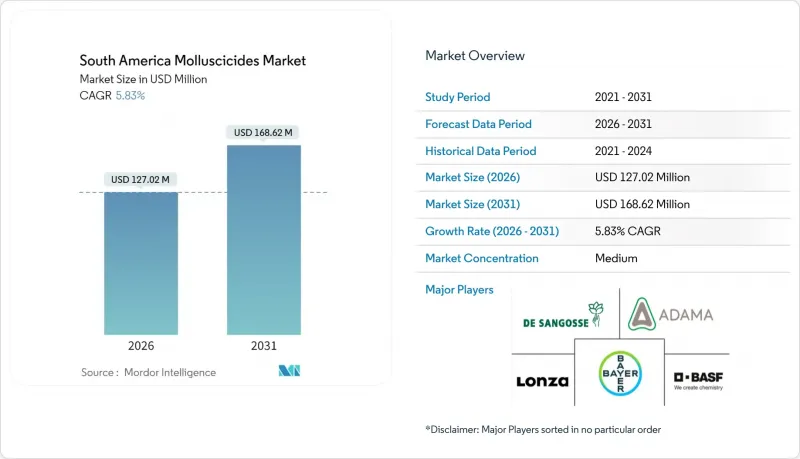
The South America molluscicides market is benefiting from climate-induced humidity spikes that accelerate gastropod breeding cycles, a swift transition toward safer iron-phosphate actives, and public subsidy programs that reward integrated pest management compliance. Brazil retains leadership in large-scale horticulture exports, robust coffee and sugarcane acreage, and government credit lines that link loan eligibility to sustainable pest-control protocols. Colombia's specialty-crop boom and Chile's export-quality mandates further reinforce regional demand while favoring premium, rain-fast pellet innovations. Competitive intensity is moderate, with five suppliers capturing significant revenue share, yet niche local formulators remain relevant by tailoring products to micro-climates and resistance-management needs.
Warmer temperatures and heavier rainfall shorten the dormancy period for Deroceras and Pomacea species, intensifying gastropod attacks in soybeans, coffee, and vegetables. Field studies show that a 2 °C temperature increase combined with 20% more precipitation can triple reproductive rates, forcing growers to extend baiting windows well into harvest. Brazilian Cerrado farms now schedule two additional pellet applications per season to protect early-maturing horticulture crops. Similar trends surface in Colombia's Andean valleys, where persistent dew films allow slugs to feed overnight even during traditionally dry months. The expanded pressure elevates per-hectare molluscicide spending, especially on high-potency pellets that survive recurring rain events.
Brazil's National Program for Strengthening Family Agriculture offers subsidized credit only when growers document integrated pest-management plans that favor ferric-phosphate over metaldehyde. Colombia's coffee-sector modernization grants reimburse up to 30% of molluscicide costs if GPS-guided spreaders are used, spurring adoption of variable-rate pellets. Argentina widened its sustainable-farming tax code in 2025 to credit molluscicide resistance-management plans, indirectly lifting demand for dual-mode baits. These financial carrots shift purchasing decisions away from lowest-cost options toward safer formulations that pass residue audits. As subsidies tie compliance to loan terms, demand remains resilient even when commodity prices soften .
Brazil's ANVISA harmonized maximum-residue limits with European thresholds in 2024, forcing growers to lower field rates or pivot to ferric-phosphate for export-bound produce. Argentina's SENASA added buffer-zone and timing rules that complicate metaldehyde scheduling during rainy seasons. Compliance audits often coincide with peak harvest, magnifying economic risk if residue fines suspend shipments. Distributors report a 15% drop in metaldehyde volume where coffee and berries are dominant. Regulatory drag, therefore, tempers the expansion of legacy chemistries despite their cost advantage.
Other drivers and restraints analyzed in the detailed report include:
For complete list of drivers and restraints, kindly check the Table Of Contents.
Metaldehyde held 59.35% of South America's molluscicides market share in 2025, due to decades of cost-effective performance across soybeans, maize, and horticulture. Even so, iron-phosphate revenue is climbing at a 9.26% CAGR as export-certification bodies and domestic regulators impose stricter residue controls. The South America molluscicides market size for iron-phosphate products is forecast to almost double by 2031, with high-value fruit, vegetable, and ornamental segments absorbing the premium. Second-tier actives such as methiocarb maintain pockets of relevance in ornamentals, especially where rapid knockdown is required before shipment to urban retailers.
Combination products linking multiple modes of action are gaining traction as resistance emerges in continuous-cropping systems. Patent filings that pair niclosamide with carbaryl illustrate industry efforts to diversify chemical pressure while meeting evolving safety thresholds . Suppliers also explore biological co-formulants that improve palatability and regulate bait moisture, extending field life in humid micro-climates. These innovations collectively reinforce the perception that robust stewardship and safety compliance will dictate future active-ingredient adoption trajectories across the South America molluscicides market.
Contact formulations generated 40.75% of the South America molluscicides market size in 2025 due to proven broad-spectrum lethality, simple calibration, and compatibility with existing pellet spreaders. Marketing focus now pivots to next-generation repellent chemistries that create protective barriers for 2-3 weeks with minimal re-entry intervals, appealing to specialty-crop growers with high labor costs. Repellent revenues are forecast to expand at a 8.87% CAGR through 2031.
Ingestive baits remain a staple for perimeter defense around greenhouses, while systemic options serve niche aquatic uses where dissolved uptake curbs invasive snails. Regulatory agencies in Brazil and Argentina increasingly encourage rotation among contact, repellent, and ingestive modes to reduce resistance risk. As integrated pest management becomes mainstream, demand tilts toward labeled products that clearly specify mode-of-action groups, enabling growers to plan season-long rotation calendars.
The South America Molluscicides Market Report is Segmented by Active Ingredient (Metaldehyde, Iron Phosphate and More), by Mode of Action (Contact, Ingestive and More), by Formulation (Pellets, Liquids and More), by Crop Type (Cereals and Grains, and More), by Application Method (Agricultural Fields and More), and by Geography (Brazil, Argentina, and More). The Market Forecasts are Provided in Terms of Value (USD).