



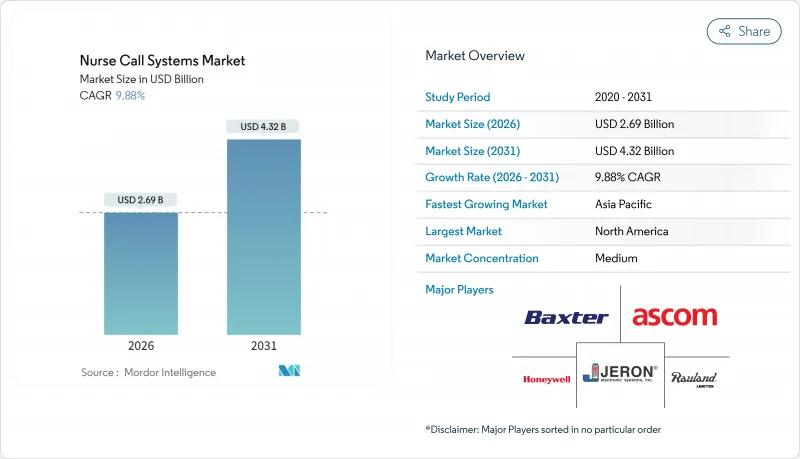
간호사 호출 시스템 시장은 2025년 24억 5,000만 달러로 평가되었고, 2026년 26억 9,000만 달러로 성장할 것으로 추정되며, 2026-2031년 CAGR 9.88%로 성장을 지속하여 2031년까지 43억 2,000만 달러에 달할 것으로 예측됩니다.
간호사 호출 시스템 시장의 견조한 확대는 병원에서의 디지털 우선 커뮤니케이션 추진, 성과 연동형 보상 제도의 의무화, 실시간 위치 분석의 꾸준한 통합에 기인하고 있습니다. 고령화 사회의 발전, 엄격한 문서화 요구 사항 및 예측 의료로의 전환으로 인해 이러한 시스템은 침대 옆 버튼에서 워크 플로우 자동화 허브로 진화하고 있습니다. 기술면에서의 양극화는 분명합니다. 2024년 수익의 절반 이상을 무선 플랫폼이 차지하는 한편, 시설이 전자 건강 기록과의 상호 운용성을 우선시하는 동안 IP 기반 및 모바일 아키텍처는 더욱 빠르게 성장하고 있습니다. 지역별로는 북미가 최대의 수익 공헌 지역으로 계속되고 있는 한편, 아시아태평양은 스마트 병원에 대한 관민 지출에 의해 가장 빠른 성장을 보이고 있습니다. 확립된 디바이스 기업이 소프트웨어 혁신 기업을 인수하고, 간호사 호출, 가상 모니터링, 환경 지능을 단일 스택으로 통합하는 움직임이 가속화됨에 따라 경쟁이 치열해지고 있습니다.
2025-2050년 세계 평균 수명이 늘어남에 따라 65세 이상 인구가 두 배로 늘어나 전복과 허약화 위험이 급격히 높아집니다. 간병 제공업체는 단순한 대응이 아닌 사고 예방을 목적으로 움직임과 생체 사인을 분석하는 예측형 간호사 호출 기능을 도입하고 있습니다. 연율 11.09%로 성장하는 장기 요양 시설에서는 입주자가 위험한 보행을 시도하기 전에 간호사에게 경고하는 센서 집적형 시스템을 도입하고 있습니다. 이 전환은 입원 회피를 평가하는 가치 기반 보상 제도를 지원합니다. 벤더 각 회사는 개인의 이동 기준치를 학습하고 조기 개입을 촉구하는 AI 알고리즘을 통합해, 파일럿 프로그램에서는 긴급 반송을 최대 3분의 1 삭감하고 있습니다.
병원의 CIO는 간호사 호출 네트워크를 대응 시간, 직원 부하 및 환자 만족도를 추적하는 운영 대시 보드의 주요 데이터 소스로 자리 매김합니다. IP 기반 아키텍처는 실시간 경보를 전자 건강 기록과 연계하여 각 버튼 조작마다 시간이 지정된 품질 지표를 생성합니다. 직원의 스마트폰에서 작동하는 모바일 클라이언트는 하드웨어 비용을 줄이고 소프트웨어 전개를 가속화합니다. 이는 클라우드 지원 플랫폼의 10.98% CAGR 성장을 이끌고 있습니다. 조기 도입 시설에서는 임상 커뮤니케이션 앱을 통한 상황에 따른 경보 전달으로 알람 피로가 40% 감소한 것으로 보고되었습니다. 이 데이터는 메디케어 성과 평가 점수의 기반이 되며, 통화 대응 효율과 수익을 직접 연결합니다.
2000년대 아날로그 배선을 카테고리 6 네트워크로 업데이트하는 경우, 150층 규모의 병원에서는 10만 달러를 초과하는 비용이 발생하여 프로젝트가 정체될 수 있습니다. 구조 개조는 임상 워크플로우를 방해하고, 단계적인 도입을 강요하며, 일정이 장기화합니다. 개발 도상국의 의료 제공업체는 연간 변동하는 기부금 예산에 의존하기 때문에 레거시 장비의 사용이 장기화됩니다. 가동 개시 후에도, 계속적인 라이선스료 및 전지 교환 비용이, 종래의 유선 부저에는 존재하지 않았던 경상 비용으로서 발생합니다. 재정적 제약은 기능의 도입을 선택적으로 하고, 예측 분석 모듈은 자금이 확보될 때까지 휴면 상태를 유지합니다.
모바일 및 클라우드 지원 제품은 2031년까지 연평균 복합 성장률(CAGR) 10.65%로 간호사 호출 시스템 시장에서 가장 급성장하는 분야로 계속되고 있습니다. 시설 측은 앱 기반 알림, 보안 텍스트 전송 및 소비자 메시징의 간편함을 반영하는 기기 내 에스컬레이션 규칙을 높이 평가합니다. 기존의 베드사이드 호출 버튼은 2025년 수익의 39.35%를 차지하는 기반으로 계속되고 있습니다. 이는 모든 침대에 신뢰할 수 있는 유선 트리거를 제공해야 하기 때문입니다. 그러나, 버튼 하드웨어의 진화는 드물기 때문에 교환시에는 모바일 대시보드와 연동 가능한 IP 대응 버전이 선택되는 경향이 있습니다. 인터콤 패널은 임상의가 핸즈프리 음성 통신을 필요로 하는 수술실용으로 설계되었으며, 기본적인 음성 및 영상 유닛은 예산 제약이 있는 병동의 요구를 충족하고 있습니다.
플랫폼 공급업체는 현재 응답 병목 현상을 지적하고 돔 라이트 고장 이전에 유지보수를 예측하는 분석 구독을 번들로 제공합니다. 이러한 지식이 상환 보고서와 직접 연계되므로 업그레이드의 정당성이 향상됩니다. 간호사 호출 시스템 시장은 하드웨어 소프트웨어 서비스를 단일 라이선스로 통합하고 구매자의 통합 위험을 줄이는 공급업체를 지속적으로 평가했습니다. 신규 참가 기업은 표준 SIP 전화와 호환되는 소프트웨어 전용 오버레이를 제안하고 가격 경쟁을 격화시키면서 하위층 병원에도 혁신을 보급하고 있습니다.
2025년 시점에서 무선 도입은 간호사 호출 시스템 시장의 57.11%를 차지하였고, 10.55%의 연평균 복합 성장률(CAGR)로 성장을 지속하고 있습니다. 임상 지역 전체에 설치된 액세스 포인트를 통해 직원 배지 및 환자용 웨어러블 장비의 실 레벨 위치를 확인할 수 있습니다. 벽 추가 작업을 피할 수 있는 설치 방법은 석면 위험이 있는 기존 시설에서 특히 중요합니다. 배터리 풀 코드와 베개 스피커는 리노베이션을 단순화하지만 유지 보수 부담이 증가합니다. 이에 대해 벤더는 6년 보증의 리튬 전지 팩이나 충전 저하시의 클라우드 통지로 대응하고 있습니다.
전자 간섭 내성과 생명 안전 기준이 엄격한 ICU에서는 유선 접속이 계속 채용되고 있습니다. 많은 의료 네트워크는 현재 NFPA 99의 명확화에 따라 일상 업무에는 무선, 긴급 사태에는 중복된 유선 루프를 병용하는 듀얼 모드 아키텍처를 요구하고 있습니다. 이 하이브리드 방식은 두 레이어를 모니터링하고 보안 패치를 통합하는 통합 관리 콘솔에 대한 수요를 촉진합니다. Wi-Fi 7의 등장으로 지연과 로밍 문제가 줄어들었고, 기존에는 구리선이 필요했던 알람 음성 스트림의 전환이 촉진되고 있습니다.
북미는 2025년에도 세계 수익의 41.05%를 차지하여 주도권을 유지했습니다. 메디케어가 상환을 문서화된 응답 시간에 연동시켜 시스템 업그레이드가 필수적이기 때문입니다. UL 1069와 같은 미국 표준 프레임워크는 승인 프로세스를 효율화하고 의료 제공업체가 IP 마이그레이션을 가속화할 수 있도록 합니다. 간호사 호출 데이터와 RTLS를 연계시킨 병원에서는 평균 응답 시간을 40% 단축하고, 호출에서 도착까지의 지표로 95%의 컴플라이언스를 달성하고 있습니다. 캐나다에서는 팬데믹 시대의 가상 회진을 지원하기 위해 지방의 디지털 건강 보조금을 클라우드 기반 플랫폼에 투입하고 있습니다.
유럽에서는 각국 의료 시스템이 인프라 근대화를 진행하면서 데이터 프라이버시를 보호하는 꾸준한 길을 따라가고 있습니다. GDPR(EU 개인정보보호규정) 규격에 따라 통신 중 암호화 의무화가 추진되어 ISO 27001 감사 인증을 취득할 수 있는 벤더가 우위입니다. 스칸디나비아의 병원에서는 간호사 호출 트리거를 전자 처방전 차트와 연동시켜, 투약 누설 위험의 저감을 실증하고 있습니다. 에너지 절약형 PoE 설계는 EU의 환경 지령에 적합하여 기존 기종 대비 25%의 전력 절감과 라이프 사이클 비용의 대폭 절감을 실현하고 있습니다.
아시아태평양은 가장 역동적인 성장을 보이며 2031년까지 연평균 복합 성장률(CAGR) 10.85%를 기록할 전망입니다. 중국의 '트리니티' 계획에서는 스마트 등급 인증의 전제조건으로 모든 병동에 간호사 호출 노드를 설치해야 합니다. 인도의 국가 의료 시스템은 FHIR 기반 상호 운용성을 요구하고 있으며, 콜 벤더는 RESTful API의 공개를 강요받고 있습니다. 일본의 의료 센터에서는 콜 후의 감사 추적을 자동화해, AI 환자 플로우 엔진에 제휴합니다. 시험 운용에서는 평균 퇴원 시간을 12분 단축했습니다. ASEAN 국가들은 세계은행 자금을 활용하여 지방도시에서 모듈식 간호사 호출 전개를 진행하고 있어 수요를 점증시키고 있습니다. 이러한 프로젝트가 결합되어 아시아태평양의 간호사 호출 시스템 시장은 다른 지역을 능가하는 속도로 성장하고 있습니다.
The nurse call systems market is expected to grow from USD 2.45 billion in 2025 to USD 2.69 billion in 2026 and is forecast to reach USD 4.32 billion by 2031 at 9.88% CAGR over 2026-2031.
Robust expansion in the nurse call systems market is rooted in hospitals' push for digital-first communication, pay-for-performance mandates, and the steady integration of real-time location analytics. Aging societies, stringent documentation requirements, and the shift toward predictive care elevate these systems from bedside buttons to workflow automation hubs. Technology polarization is clear: wireless platforms accumulate more than half of 2024 revenue, yet IP-based and mobile architectures grow even faster as facilities prioritize interoperability with electronic health records . Regionally, North America remains the largest revenue contributor, while Asia-Pacific delivers the swiftest growth thanks to public-private spending on smart hospitals. Competitive intensity rises as established device firms acquire software innovators to bundle nurse call, virtual monitoring, and ambient intelligence in one stack.
Global life-expectancy gains double the 65-plus cohort between 2025 and 2050, sharply elevating fall and frailty risks. Care providers adopt predictive nurse call features that analyze movement and vitals to prevent incidents rather than merely respond. Long-term care facilities, growing at an 11.09% CAGR, deploy sensor-rich systems that alert nurses before a resident attempts unsafe ambulation. The pivot supports value-based reimbursement that rewards avoided hospitalizations. Vendors embed AI algorithms that learn individual mobility baselines and trigger early interventions, reducing emergency transfers by up to one-third in pilot programs.
Hospital CIOs view nurse call networks as key data sources for operational dashboards that track response times, staff load, and patient satisfaction. IP-based architecture feeds real-time alerts into electronic health records, turning every button press into a time-stamped quality metric. Mobile clients running on staff smartphones trim hardware overhead and speed software rollouts, a driver behind the 10.98% CAGR in cloud-enabled platforms. Early adopters report 40% declines in alarm fatigue by funneling contextual alerts through clinical communication apps. The same data underpin Medicare performance scores, directly linking call-response efficiency with revenue.
Replacing 2000-era analog cabling with category-6 networks can surpass USD 100,000 in a 150-bed hospital, stalling projects. Structural renovations disrupt clinical workflow, forcing phased installations that extend timelines. Developing-world providers rely on donor budgets that fluctuate yearly, prolonging legacy use. Even after go-live, ongoing license fees and battery replacements add recurring costs absent in old wired buzzers. Financial constraints encourage selective feature adoption, leaving predictive analytics modules dormant until capital frees up.
Other drivers and restraints analyzed in the detailed report include:
For complete list of drivers and restraints, kindly check the Table Of Contents.
Mobile and cloud-enabled products remain the fastest-rising slice of the nurse call systems market at a 10.65% CAGR through 2031. Facilities value app-based alerts, secure texting, and on-device escalation rules that mirror consumer messaging simplicity. Traditional bedside call buttons still anchor 39.35% of 2025 revenue because every bed must offer a reliable hardwired trigger. Yet button hardware rarely evolves, so replacements lean toward IP-ready versions that pair with mobile dashboards. Intercom panels cater to operating theaters where clinicians need hands-free voice, while basic audio-visual units satisfy budget-constrained wards.
Platform vendors now bundle analytics subscriptions that flag response bottlenecks and predict maintenance before a dome-light fails. As these insights connect directly to reimbursement reports, upgrade justification strengthens. The nurse call systems market continues to reward suppliers that converge hardware, software, and services under one license, shrinking integration risk for buyers. Emerging entrants pitch software-only overlays compatible with standard SIP phones, intensifying price competition but spreading innovation to lower-tier hospitals .
Wireless deployments commanded 57.11% nurse call systems market share in 2025 and are tracking a 10.55% CAGR. Access points blanket clinical zones, offering room-level positioning for staff badges and patient wearables. Installation avoids wall chasing, crucial for heritage facilities with asbestos risks. Battery-powered pull cords and pillow speakers simplify retrofits but raise maintenance; vendors answer with six-year lithium packs and cloud alerts when charge drops.
Hardwired links endure in ICUs where electromagnetic interference tolerance and life-safety codes remain stringent. Many health networks now insist on dual-mode architecture: wireless for everyday workflow and redundant cabled loops for code events, aligning with NFPA 99 clarity. This hybrid philosophy fuels demand for unified management consoles that supervise both layers and integrate security patching. As Wi-Fi 7 emerges, latency and roaming issues weaken, encouraging migration of alarm audio streams that once required copper.
The Nurse Call Systems Market Report is Segmented by Product (Nurse Call Buttons, Intercom Nurse Call Systems, and More), Modality (Wired Systems, Wireless Systems), Application (Emergency Medical Alarms, Workflow & Staff Optimization, and More), End User (Hospitals and Specialty Clinics, and More), and Geography (North America, Europe, and More). The Market Forecasts are Provided in Terms of Value (USD).
North America retained leadership with 41.05% of global revenue in 2025 as Medicare ties reimbursement to documented response times, compelling system upgrades. United States code frameworks such as UL 1069 streamline approvals, allowing providers to fast-track IP transitions. Hospitals pairing nurse call data with RTLS cut average response by 40% and hit 95% compliance on call-to-door metrics. Canada channels provincial digital-health grants toward cloud-based platforms to support pandemic-era virtual rounding.
Europe follows a steady path as national health systems modernize infrastructure while guarding data privacy. GDPR compliance pushes encryption-in-transit mandates, favoring vendors that can attest to ISO 27001 audits. Scandinavian hospitals link nurse call triggers to electronic medication charts, demonstrating risk reductions in omission errors. Energy-efficient PoE designs align with EU green directives, reducing power draw by 25% against legacy units and slashing lifecycle costs.
Asia-Pacific proves the most dynamic, charting an 10.85% CAGR through 2031. China's Trinity blueprint embeds nurse call nodes in every ward as a prerequisite for smart-grade certification. India's national health stack demands FHIR-based interoperability, prompting call vendors to open RESTful APIs. Japanese medical centers automate post-call audit trails to feed AI patient-flow engines that shaved 12 minutes off average discharge time in trials. ASEAN nations tap World Bank funds for modular nurse call rollouts in tier-2 cities, creating incremental demand. Collectively, these projects lift the nurse call systems market in Asia-Pacific faster than any other region.