


실내 농업 시장 규모는 2025년에 408억 달러로 평가되었고 예측기간 중 CAGR은 13.60%를 나타낼 것으로 예측되며, 2030년에 771억 8,000만 달러로 성장할 전망입니다.

도시들이 탄력적인 식량 시스템을 모색하고 재배자들이 기상 충격으로부터 격리된 예측 가능한 수확량을 추구함에 따라 채택이 가속화되고 있습니다. LED 효율성의 급속한 개선으로 고압 나트륨 조명에 비해 조명 에너지 사용량이 최대 40%까지 감소했습니다. 인공지능 제어 시스템은 이제 전체 시설 에너지 소비량을 추가로 25% 절감하여 많은 프로젝트가 수명 주기 초기에 손익분기점에 도달하도록 합니다. 유럽은 네덜란드의 온실 기술 노하우를 바탕으로 33.9%의 최대 실내 농업 시장 점유율을 차지하고 있으며, 아시아태평양 지역은 토지 부족과 식량 안보 우려가 심화되면서 18.20%의 연평균 성장률(CAGR)로 가장 빠르게 확장 중입니다. 수경재배가 여전히 주류 재배 방식이지만, 가뭄 취약 시장에서 매력적인 공식을 제공하는 에어로포닉스(공기재배)가 적은 물로 더 높은 수확량을 내며 빠르게 확산되고 있습니다. 온실은 여전히 전 세계 설치 시설의 3분의 2 이상을 차지하지만, 도시 부동산 경제성이 공간 효율성을 보상하는 지역에서는 다층 수직 농장이 확산되고 있습니다.
밀집된 도시에 거주하는 소비자들은 오염 위험이 사실상 제거되고 “오늘 수확, 내일 판매”라는 신선도를 달성할 수 있는 통제된 환경에서 재배된 농산물로 관심을 돌리고 있습니다. 이에 따라 샘스클럽과 같은 주요 유통업체들은 안정적인 공급과 유통기한 연장을 보장하기 위해 재배자와 직접 계약을 체결하여 매장 내 손실과 운송 배출량을 줄이고 있습니다. 통제 환경 농장은 영양분, 습도, 공기 흐름을 정밀하게 조절하여 일관된 맛과 시각적 매력을 구현함으로써 프리미엄 가격을 요구할 수 있게 합니다. 코로나19 팬데믹은 추적 가능한 식품 시스템에 대한 수요를 강화시켜 슈퍼마켓 경영진이 지역에서 재배된 실내 작물에 더 많은 진열 공간을 할당하도록 설득했습니다. 정부도 대응하고 있습니다. 아랍에미리트의 ‘플랜트 더 에미레이트(Plant the Emirates)’ 프로그램은 5년 내 국내 제어 환경 생산량을 20% 증가시키는 것을 목표로 합니다. 이러한 변화들은 종합적으로 핵심 소비 거점에서의 실내 농업 시장 꾸준한 확장을 뒷받침합니다.
광전자 기술과 열 관리 기술의 혁신이 단위 경제성을 재정의하고 있습니다. 그로단(Grodan)과 시그니파이(Signify)의 현장 시험 결과, 프리미엄 토마토 수확량을 유지하면서 난방 요구량을 40% 절감할 수 있음이 입증되었습니다. 현대식 조명 장비는 작물 형태를 개선하고 영양소 밀도를 높이는 스펙트럼 튜닝 기능을 탑재하고 있습니다. 머신러닝 기반 HVAC 시스템은 외부 기상 조건과 식물 생장 단계를 기반으로 최적 설정점을 예측하여 총 에너지 수요를 추가로 15% 감소시킵니다. 유틸리티 리베이트 프로그램과 수요 반응 시장 참여를 통해 운영자는 피크 가격 시간대의 부하를 전환하고 미사용 용량을 수익화할 수 있습니다. 재생에너지 통합이 가속화되고 있습니다. 라트비아 시범 사이트는 연간 수요의 30%를 충당하는 지붕형 태양광으로 흑자 현금 흐름을 달성했습니다. 운영 비용 절감은 실내 농업 시장의 확대와 심화 직결됩니다.
정교한 조명, 관개, 자동화 시스템을 갖춘 다층 농장 건설 비용은 기존 온실의 수배에 달하며, 전기 요금은 지속적 지출의 40%를 차지할 수 있습니다. 9억 4,100만 달러의 자금 조달에도 불구하고 플렌티(Plenty)의 최근 파산 신청은 엄격한 비용 통제 없이 공격적인 확장이 어떻게 지급 능력을 위태롭게 하는지 보여줍니다. 대마초 같은 고부가가치 작물을 재배하는 운영자들은 소비를 40% 이상 절감하는 LED로 고압 나트륨 램프에서 전환 중이지만, 초기 설비 비용은 여전히 상당합니다. 수요 반응 참여는 전력 요금을 부분적으로 상쇄하지만, 고급 스케줄링 소프트웨어와 탄력적인 작물 계획이 필요합니다. 요금 변동성이 높은 시장에서는 재생에너지 전력 구매 계약과 계량기 뒤 배터리(behind-the-meter batteries)가 표준적인 위험 완화 수단으로 자리 잡고 있습니다.
수경 재배는 입증된 확장성, 광범위한 공급망, 중간 수준의 기술적 복잡성 덕분에 2024년 실내 농업 시장에서 58.3% 점유율을 유지했습니다. 많은 성숙한 온실 운영자들은 대량 잎채소 생산에 예측 가능한 수확량을 제공하는 컴퓨터화된 영양액막(NFT) 시스템을 사용합니다. 에어로포닉스는 재배자들이 물 절약과 빠른 뿌리 산소 공급에 주목하면서 24.30%의 연평균 성장률(CAGR)로 발전하고 있습니다. 이는 뿌리 질병에 취약한 프리미엄 딸기나 덩굴 작물을 재배할 때 중요한 특성입니다. 아쿠아포닉스는 더 작은 틈새 시장을 차지하지만 지속가능성을 중시하는 지자체의 관심을 끌며, 어류와 채소 생산을 함께 배치하는 순환 경제 모델을 창출하고 있습니다. AI 기반 센서 시스템은 용존 산소와 영양분 공급량을 최적화하여 모든 시스템의 낭비를 줄이고, 대규모 수경 재배 시설의 전기 요금을 25% 절감합니다.
시스템 선택은 기술적 선호도보다 작물 경제성을 반영하는 경향이 점점 더 강해지고 있습니다. 잎채소는 영양액 순환 방식과 부합하는 얕은 뿌리 영역과 빠른 회전율을 요구합니다. 고수익 베리류는 공기 흐름 증가가 우수한 과실 경도와 색상을 제공해 프리미엄 가격을 가능케 하므로 에어로포닉의 복잡성을 정당화합니다. 운영자들은 종종 기술을 혼합하여 장주기 토마토에는 심수양식 침대를, 정교한 풍미 프로파일이 필요한 허브에는 적층형 에어로포닉 타워를 전용합니다. 이러한 하이브리드 전략은 각 작물의 생리학적 특성에 맞춰 환경을 조정함으로써 시설당 실내 농업 시장 규모를 극대화합니다.
유럽은 네덜란드의 첨단 온실 클러스터, 기후 제어에 능숙한 인력, 저배출 농업 채택을 촉진하는 탄소세 인센티브를 바탕으로 전 세계 지출의 33.9%를 차지합니다. 한편 독일과 스페인 소매업체들은 운송 거리를 단축하고 연중 재고를 확보하기 위해 중형 수직 농장을 포함하는 조달 계약을 확대하고 있습니다. 에너지 가격 변동성은 장애물이지만, 광범위한 지역 난방 네트워크와 재생에너지 전력 구매 계약의 증가가 비용 위험을 상쇄합니다.
아시아태평양 지역은 토지 제약과 안전하고 추적 가능한 농산물을 찾는 상당한 규모의 도시 중산층에 힘입어 가장 빠른 18.20%의 연평균 성장률(CAGR)을 기록하고 있습니다. 싱가포르 정부는 옥상 농장에 보조금과 연면적 감면 혜택을 제공하지만, 여러 유명 업체의 폐업 사례는 자본 집약도와 현지 수요 간 조화의 어려움을 드러낸다. 중국 연안 지방은 대학과 벤처 투자자를 연계한 신규 ‘농업기술단지’ 내에 환경 제어형 허브를 구축하며 모범 사례 확산을 가속화하고 있습니다. 일본에서는 지방 공기업이 야간 전력망 부하 안정화를 위해 LED 설비 도입을 지원해 간접적으로 생산 비용을 절감합니다.
북미는 성숙 단계임에도 대규모 온실 면적을 계속 확장 중입니다. 브라이트팜스의 텍사스 150만 평방피트(약 13만㎡) 단지는 증발식 냉각 시스템을 통해 여름철 잎 온도를 화씨 77도(약 25℃) 이하로 유지해 지역 식료품점과 연중 공급 계약을 체결했습니다. 멕시코는 유리한 일조량과 인건비 이점을 활용해 국경 주 수출용 차광 하우스 채소 생산을 확대 중입니다. 중동은 식량 안보 효과와 담수화 수요 감소를 약속하는 수직형 프로젝트에 국부펀드를 적극 투자하고 있습니다. 아프리카는 초기 도입 단계로, 특히 케냐와 남아프리카공화국에서 태양광 컨테이너 농장이 불안정한 전력 공급을 보완하고 있습니다. 종합적으로 이러한 동향은 공공 정책, 에너지 가격, 도시 수요가 조화를 이루는 곳에서 실내 농업 시장이 가장 빠르게 확장됨을 입증합니다.
The Indoor Farming Market size is estimated at USD 40.80 billion in 2025 and is projected to reach USD 77.18 billion by 2030, at a CAGR of 13.60% during the forecast period.
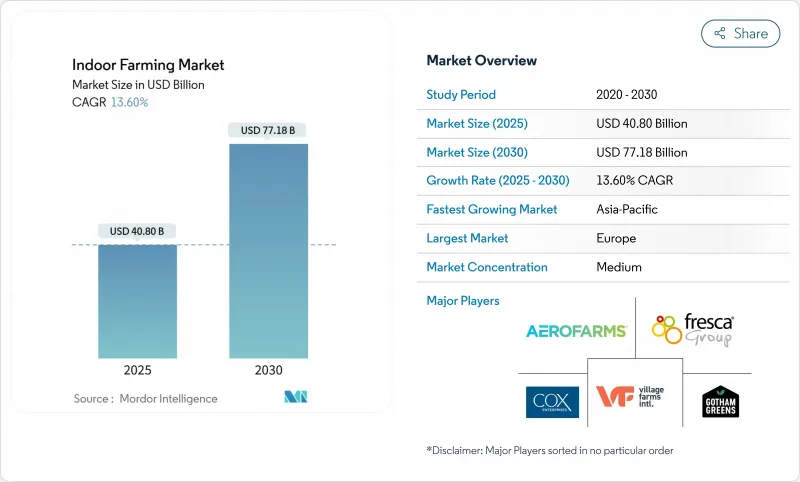
Adoption is gaining momentum as cities search for resilient food systems and growers look for predictable yields that are insulated from weather shocks. Rapid improvements in LED efficacy have cut lighting energy use by up to 40% compared with high-pressure sodium fixtures. Artificial intelligence controls now trim overall facility energy consumption by another 25%, which pushes many projects into breakeven territory earlier in their lifecycles. Europe holds the largest indoor farming market share at 33.9% on the strength of Dutch greenhouse know-how, while Asia-Pacific is expanding the fastest at an 18.20% CAGR as land scarcity and food security concerns intensify. Hydroponics remains the dominant growing method, yet aeroponics is scaling quickly because it delivers higher yields with less water-an attractive formula in drought-prone markets. Greenhouses still account for more than two-thirds of global installations, although multilevel vertical farms are proliferating where urban real-estate economics reward space efficiency.
Consumers living in dense cities are gravitating toward produce grown in controlled environments where contamination risks are virtually eliminated and "picked today, sold tomorrow" freshness is achievable. Major retailers such as Sam's Club have, therefore, signed direct grower agreements to guarantee a reliable supply and extend shelf life, reducing store-level shrinkage and transport emissions. Controlled-environment farms meet these expectations by fine-tuning nutrients, humidity, and airflow, leading to consistent taste and visual appeal that command premium pricing. The COVID-19 pandemic reinforced demand for traceable food systems, persuading supermarket executives to dedicate more shelf space to locally grown indoor crops. Governments are responding as well. The United Arab Emirates' "Plant the Emirates" program targets a 20% jump in domestic controlled-environment output within five years. Collectively, these shifts underpin the steady expansion of the indoor farming market in core consumption hubs.
Breakthroughs in photonics and thermal management technology are redefining unit economics. Field trials by Grodan and Signify validated a 40% cut in heating requirements while preserving premium tomato yields. Modern fixtures now incorporate spectral tuning that enhances crop morphology and boosts nutrient density. Machine-learning HVAC systems predict optimal setpoints based on external weather and plant growth phase, dropping total energy needs by a further 15%. Utility rebate programs plus participation in demand-response markets allow operators to shift load away from peak-price periods and monetize unused capacity. Renewable integration is accelerating. Latvian demonstration sites have reached positive cash flow using roof-mounted photovoltaics that cover 30% of annual demand. Lower operating costs translate directly into wider adoption and deeper penetration of the indoor farming market.
Building a multilevel farm with sophisticated lighting, irrigation, and automation often costs multiples of a conventional greenhouse, and electricity can represent 40% of ongoing expenses. A recent Chapter 11 filing by Plenty, despite USD 941 million in funding, underscores how aggressive scaling without disciplined cost control jeopardizes solvency. Operators cultivating highlight crops such as cannabis are migrating from high-pressure sodium lamps to LEDs that cut consumption by more than 40%, yet upfront fixture costs remain material. Demand-response participation partially offsets power bills but requires advanced scheduling software and resilient crop plans. In markets with high tariff volatility, renewable power purchase agreements, and behind-the-meter batteries are becoming standard risk-mitigation tools.
Other drivers and restraints analyzed in the detailed report include:
For complete list of drivers and restraints, kindly check the Table Of Contents.
Hydroponics retained a 58.3% share of the indoor farming market in 2024 because of its proven scalability, extensive supplier network, and moderate technical complexity. Many mature greenhouse operators use computerized nutrient-film systems that deliver predictable yields for high-volume leafy greens. Aeroponics is advancing at a 24.30% CAGR as growers focus on water savings and faster root oxygenation, attributes that are critical when cultivating premium strawberries or vine crops prone to root diseases. Aquaponics occupies a smaller niche but is attracting sustainability-minded municipalities, creating circular-economy models that co-locate fish and vegetable production. AI-driven sensor suites now optimize dissolved oxygen and nutrient dosing, cutting waste across all systems and trimming electricity bills by 25% in large hydroponic setups.
The choice between systems increasingly reflects crop economics rather than technical preference. Leafy greens require shallow root zones and quick turnover that align with nutrient-film methods. High-margin berries justify aeroponic complexity because increased airflow delivers superior fruit firmness and color that command premiums. Operators often blend techniques, reserving deep-water culture beds for long-cycle tomatoes while dedicating stacked aeroponic towers to herbs demanding exacting flavor profiles. Such hybrid strategies help maximize the indoor farming market size per facility by tailoring conditions to each crop's physiology.
The Indoor Farming Market Report is Segmented by Growing System (Aeroponics, Hydroponics, Aquaponics, and More), by Facility Type (Glass or Poly Greenhouses, Indoor Vertical Farms, Container Farms, and More), by Crop Type (Fruits and Vegetables, Herbs and Microgreens, and More), and by Geography (North America, Europe, South America, Asia-Pacific, and More). The Market Forecasts are Provided in Terms of Value (USD).
Europe boasts a 33.9% portion of global spending, anchored by the Netherlands' cluster of high-tech greenhouses, a workforce skilled in climate control, and carbon-tax incentives that speed the adoption of low-emission agriculture. German and Spanish retailers, meanwhile, broaden sourcing contracts to include mid-sized vertical farms that shorten truck routes and ensure year-round inventory. Energy-price volatility is a hurdle, but widespread district-heating networks and the growing availability of renewable power purchase agreements counterbalance cost risk.
Asia-Pacific records the fastest 18.20% CAGR, propelled by land constraints and a sizeable urban middle class seeking safe, traceable produce. Singapore's government offers grants and floor-area concessions for rooftop farms, although several high-profile closures reveal the difficulty of matching capital intensity with local demand. China's coastal provinces are establishing controlled-environment hubs within new "agri-tech parks" that pair universities with venture investors, accelerating best-practice diffusion. In Japan, municipal utilities subsidize LED deployment to stabilize night-time grid load, indirectly lowering production costs.
North America, while mature, continues to add large greenhouse acreage. BrightFarms' 1.5 million square feet Texas complex features evaporative cooling that keeps summer leaf temperatures below 77 degrees Fahrenheit, enabling year-round supply contracts with regional grocers. Mexico is scaling shade-house vegetables for export into border states, leveraging favorable sunlight and labor cost advantages. The Middle East invests aggressively in sovereign funds back vertical projects that promise food-security dividends and reduced desalination demand. Africa exhibits early-stage adoption, most notably in Kenya and South Africa, where solar-powered container farms mitigate unreliable grid supply. Collectively, these dynamics confirm that the indoor farming market expands fastest wherever public policy, energy prices, and urban demand align.