인도의 전기자동차 시장 : 시장 점유율 분석, 산업 동향 및 통계, 성장 예측(2025-2030년)
India Electric Car - Market Share Analysis, Industry Trends & Statistics, Growth Forecasts (2025 - 2030)
상품코드:1693620
리서치사:Mordor Intelligence
발행일:2025년 03월
페이지 정보:영문
라이선스 & 가격 (부가세 별도)
ㅁ Add-on 가능: 고객의 요청에 따라 일정한 범위 내에서 Customization이 가능합니다. 자세한 사항은 문의해 주시기 바랍니다.
ㅁ 보고서에 따라 최신 정보로 업데이트하여 보내드립니다. 배송기일은 문의해 주시기 바랍니다.
한글목차
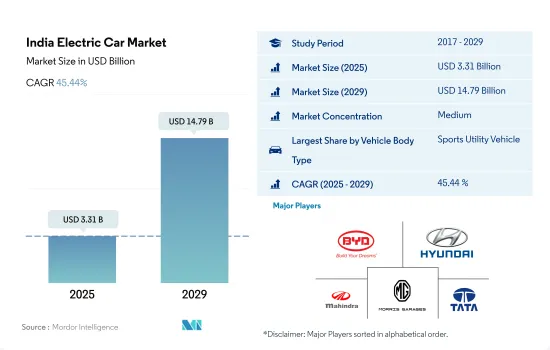
인도의 전기자동차 시장 규모는 2025년에 33억 1,000만 달러로 추정되고, 2029년에는 147억 9,000만 달러에 이를 것으로 예측되며, 예측 기간 중(2025-2029년) CAGR은 45.44%를 나타낼 것으로 예측됩니다.
인도에서는 전기 모빌리티에 대한 관심이 급증하고 있으며, 이는 소비자의 요구와 주행 조건에 맞춰 차량 구성이 진화하고 있는 것을 통해 알 수 있습니다.
전기 해치백은 인도 전기차 시장의 진입점 역할을 하며, 주로 작고 저렴하며 효율적인 차량을 찾는 도시 통근자들을 끌어들이고 있습니다.
인도 전기차 시장에서는 고급스러움, 넓은 공간, 성능을 모두 갖춘 전기 세단과 SUV가 인기를 얻고 있습니다. 이러한 모델은 프리미엄 기능, 확장된 주행거리, 강력한 성능을 우선시하는 소비자에게 적합합니다. 인도 시장에서 SUV의 기존 인기를 고려할 때 전기 SUV의 출시는 특히 주목을 받고 있습니다. 소비자들은 다목적성과 공간뿐만 아니라 전기 SUV가 부여하는 지위 때문에 점점 더 전기 SUV에 매력을 느끼고 있습니다. 또한 낮은 운영 비용과 환경에 미치는 영향 감소라는 매력도 그 매력을 더욱 강화합니다.
MPV는 전기차 시장에서 차지하는 비중은 작지만, 특히 가족 수가 많거나 단체 여행 또는 상업적 목적의 차량을 찾는 소비자들 사이에서 상당한 성장 잠재력을 지니고 있습니다. 전기 MPV는 넓은 공간과 효율성이라는 장점을 제공하지만, 현재 높은 초기 비용과 충전 인프라 개발 등의 요인으로 인해 도입이 저해되고 있습니다.
인도의 전기자동차 시장 동향
정부 노력과 엄격한 규범으로 인도 전기차 시장의 빠른 성장 견인
인도의 전기자동차(EV) 시장은 성장 단계에 있으며, 정부가 환경 오염을 막기 위한 전략을 적극적으로 수립하고 있습니다. 2015년에 시작된 페임 인디아 제도는 차량 전기화를 촉진하는 데 중추적인 역할을 해왔습니다.
인도 전역의 주 정부는 내연기관(ICE) 버스에서 전기 버스로 전환하기 위해 점점 더 많은 전기 버스를 차량에 도입하고 있습니다. 이러한 움직임은 운영 비용을 절감할 뿐만 아니라 탄소 배출을 억제하고 대기 질을 개선하는 효과도 있습니다. 주목할 만한 움직임으로 델리 정부는 2021년 3월에 300대의 새로운 저상 전기(AC) 버스 조달을 승인했으며, 이 중 100대는 2022년 1월에 도로에 투입될 예정입니다.
최근 인도 정부의 엄격한 규범 도입으로 전기자동차에 대한 수요가 급증하고 있습니다. 2021년 8월, 인도 정부는 연식에 관계없이 공해를 유발하고 부적합한 차량을 단계적으로 퇴출하는 것을 목표로 하는 차량 폐기 정책을 발표했습니다. 2024년까지 시행될 예정인 이 정책은 소비자들이 전기자동차로 이동하도록 유도하고 있습니다. 또한 인도 정부는 2030년까지 인도 내 모든 자동차의 30%를 전기화한다는 야심찬 목표를 세웠습니다.
인도의 전기자동차 산업 개요
인도의 전기자동차 시장은 적당히 통합되어 있으며 상위 5개 기업이 44.21%를 점유하고 있습니다. 이 시장의 주요 업체는 BYD India Private Limited, Hyundai Motor India Limited, Mahindra & Mahindra Limited, MG Motor India Private Limited and Tata Motors Limited(알파벳 순 정렬)입니다.
기타 혜택
엑셀 형식 시장 예측(ME) 시트
3개월의 애널리스트 지원
목차
제1장 주요 요약과 주요 조사 결과
제2장 보고서 제안
제3장 소개
조사의 전제조건과 시장 정의
조사 범위
조사 방법
제4장 주요 산업 동향
인구
1인당 GDP
차량 구매를 위한 소비자 지출(CVP)
인플레이션율
자동차 대출 금리
공유 차량 서비스
전기화의 영향
EV 충전소
배터리 팩 가격
Xev 신모델 발표
연료 가격
OEM 생산 통계
규제 프레임워크
밸류체인과 유통채널 분석
제5장 시장 세분화
차량 구성
승용차
해치백
다목적 차량
세단
SUV
연료 카테고리
BEV
FCEV
HEV
PHEV
제6장 경쟁 구도
주요 전략적 움직임
시장 점유율 분석
기업 상황
기업 프로파일
BMW India Private Limited
BYD India Private Limited
Daimler AG(Mercedes-Benz AG)
현대자동차 India Limited
Kia Corporation
Mahindra & Mahindra Limited
Maruti Suzuki India Limited
MG Motor India Private Limited
Tata Motors Limited
Toyota Kirloskar Motor Pvt. Ltd.
Volvo Auto India Private Limited
제7장 CEO에 대한 주요 전략적 질문
제8장 부록
세계 개요
개요
Five Forces 분석 프레임워크
세계의 밸류체인 분석
시장 역학(DROs)
출처 및 참고문헌
도표 일람
주요 인사이트
데이터 팩
용어집
HBR
영문 목차
영문목차
The India Electric Car Market size is estimated at 3.31 billion USD in 2025, and is expected to reach 14.79 billion USD by 2029, growing at a CAGR of 45.44% during the forecast period (2025-2029).
India is witnessing a burgeoning interest in electric mobility, evident from the evolving vehicle configurations that align with consumer demands and driving conditions
Electric hatchbacks serve as the entry point to India's EV market, primarily attracting urban commuters seeking compact, affordable, and efficient vehicles. Their appeal is bolstered by their lower price tag relative to other electric models, making them especially enticing for first-time EV buyers and those with city-centric driving habits. Government initiatives like FAME India, which offer subsidies and tax benefits, further amplify the attractiveness of electric hatchbacks as cost-effective and eco-friendly mobility options.
Electric sedans and SUVs are gaining traction in India's EV market, offering a mix of luxury, spaciousness, and performance. These models cater to consumers who prioritize premium features, extended range, and robust performance. The introduction of electric SUVs has garnered particular attention, given the existing popularity of SUVs in the Indian market. Consumers are increasingly drawn to electric SUVs not only for their versatility and space but also for the status they confer. Additionally, the allure of lower operating costs and reduced environmental impact further bolsters their appeal.
While MPVs constitute a smaller segment of the electric car market, they hold significant growth potential, especially among consumers with larger families or those seeking vehicles for group travel or commercial purposes. Electric MPVs offer the advantages of spaciousness and efficiency, although their adoption is currently hindered by factors such as higher upfront costs and a developing charging infrastructure.
India Electric Car Market Trends
Government initiatives and stringent norms drive rapid growth in the electric vehicle market in India
India's electric vehicle (EV) market is in a growth phase, with the government actively formulating strategies to combat pollution. The Fame India scheme, launched in 2015, has played a pivotal role in driving vehicle electrification. Building on its success, Fame Phase 2, active till April 2022, further bolstered EV sales, especially in 2021, with the government offering subsidies like INR 10,000 grants for electric cars with battery capacities up to 15 kWh.
State governments across India are increasingly incorporating electric buses into their fleets, aiming to transition from internal combustion engine (ICE) buses. This move not only cuts operational costs but also curbs carbon emissions and improves air quality. In a notable move, the Delhi government greenlit the procurement of 300 new low-floor electric (AC) buses in March 2021, with 100 of them hitting the roads in January 2022. These initiatives contributed to a significant 62.58% surge in demand for electric commercial vehicles in India in 2022 over 2021.
The demand for electric cars has surged in recent times, driven by the government's introduction of stringent norms. In August 2021, the Indian government unveiled the Vehicle Scrappage Policy, targeting the phasing out of polluting and unfit vehicles, irrespective of their age. This policy, set to be implemented by 2024, is steering consumers toward electric cars. Additionally, the government has set an ambitious target of having 30% of all cars in India electrified by 2030. These initiatives are poised to propel electric car sales during the 2024-2030 period in India.
India Electric Car Industry Overview
The India Electric Car Market is moderately consolidated, with the top five companies occupying 44.21%. The major players in this market are BYD India Private Limited, Hyundai Motor India Limited, Mahindra & Mahindra Limited, MG Motor India Private Limited and Tata Motors Limited (sorted alphabetically).
Additional Benefits:
The market estimate (ME) sheet in Excel format
3 months of analyst support
TABLE OF CONTENTS
1 EXECUTIVE SUMMARY & KEY FINDINGS
2 REPORT OFFERS
3 INTRODUCTION
3.1 Study Assumptions & Market Definition
3.2 Scope of the Study
3.3 Research Methodology
4 KEY INDUSTRY TRENDS
4.1 Population
4.2 GDP Per Capita
4.3 Consumer Spending For Vehicle Purchase (cvp)
4.4 Inflation
4.5 Interest Rate For Auto Loans
4.6 Shared Rides
4.7 Impact Of Electrification
4.8 EV Charging Station
4.9 Battery Pack Price
4.10 New Xev Models Announced
4.11 Used Car Sales
4.12 Fuel Price
4.13 Oem-wise Production Statistics
4.14 Regulatory Framework
4.15 Value Chain & Distribution Channel Analysis
5 MARKET SEGMENTATION (includes market size in Value in USD and Volume, Forecasts up to 2029 and analysis of growth prospects)