중국의 LED 조명 시장 : 시장 점유율 분석, 산업 동향 및 통계, 성장 예측(2025-2030년)
China LED Lighting - Market Share Analysis, Industry Trends & Statistics, Growth Forecasts (2025 - 2030)
상품코드:1683936
리서치사:Mordor Intelligence
발행일:2025년 03월
페이지 정보:영문
라이선스 & 가격 (부가세 별도)
ㅁ Add-on 가능: 고객의 요청에 따라 일정한 범위 내에서 Customization이 가능합니다. 자세한 사항은 문의해 주시기 바랍니다.
ㅁ 보고서에 따라 최신 정보로 업데이트하여 보내드립니다. 배송기일은 문의해 주시기 바랍니다.
한글목차
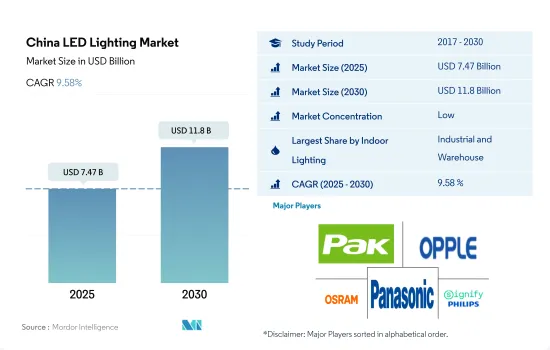
중국의 LED 조명 시장 규모는 2025년에 74억 7,000만 달러로 추정되고, 2030년에는 118억 달러에 이를 전망이며, 예측 기간 2025년부터 2030년까지 CAGR 9.58%로 성장할 것으로 예측됩니다.
스타업 기업 증가, 제조 시설 증가, 소매 판매 증가가 실내 조명 수요를 높일 것으로 예상됩니다.
2023년에는 산업 및 창고(I&W)가 점유율의 대부분(79.6%)을 차지하였고 상업, 농업, 주택이 이어졌습니다. 시장 점유율은 향후 몇 년동안 모든 용도에서 최소한의 감소에 머물며(I&W)에서 증가할 것으로 예상됩니다. 중국 산업은 국내 소비 침체, 체감경기 감소, COVID-19의 급증으로 인한 공급망 혼란 등 여러 안팎의 역풍에 직면했습니다. 또한 중국은 2021년 산업 생산을 유지했습니다. 2021년 중국의 총 생산액은 4조 8,658억 달러로 2020년 대비 26.04% 증가했습니다. 따라서 산업 생산 증가는 향후 몇 년동안 실내 조명에 대한 수요를 창출할 전망입니다.
중국 전역에서 자동차 제조 공장과 창고 수요가 높아지고 있는데, 이는 세계 자동차 시장이 저렴한 부품이나 완성차 공급원 등의 이유로 중국에 의존하고 있기 때문입니다. 이러한 사례로부터 조사 기간 동안 실내용 LED에 대한 요구가 높아질 것으로 예상됩니다. BMW는 심양시에 신공장을 개설하고, 아우디는 창춘시의 신EV공장에서 생산을 시작했습니다.
중국의 소매 부문은 여전히 강력한 성장 징후를 보이고 있으며 2023년 5월 소매 매출은 전년 대비 12.7% 증가했습니다. 온라인 쇼핑 이용자의 급증으로 이 지역에서는 새로운 창고의 필요성이 더욱 높아져 실내 조명 수요가 높아질 것으로 예상됩니다.
중국은 10억 달러 규모의 신흥 기업을 창출하는 최고 기업 중 하나입니다. 2022년 중국은 새롭게 74개의 유니콘을 배출해 미국에 뒤를 잡았습니다. 새로운 유니콘의 약 70%는 의료 및 스마트 물류 분야에서 태어났으며 상업 공간 수요가 급증하고 있습니다. 이상과 같은 사례로부터 내년에는 실내용 LED 수요가 높아질 것으로 예상됩니다.
중국의 LED 조명 시장 동향
안정적인 출생률은 주택 소유자, 중소기업, 전기자동차의 플러스 성장을 보완
2022년 중국의 총 인구는 14억 1,175만 명이었습니다. 중국에서는 2022년 성인 1,000명당 6.77명의 어린이가 태어났습니다. 젊은이들의 꾸준한 성장과 함께 중국에서는 2021년 매년 약 1억 4,105만 평방미터의 상업용 부동산이 건설되었습니다. 2022년 3월에는 산업정보화부가 3,000개 규모의 소규모 거대기업의 인큐베이션을 지원했습니다. 2025년까지 중국은 1,000개의 단일 제품 챔피언 기업과 10,000개의 작은 거대 기업을 갖고 싶습니다. 더 많은 LED를 사용하는 수요는 비즈니스와 기업의 성장으로 이어집니다.
중국의 저사회 경제층에서는 2019년 당시 주민의 60% 이상이 집을 소유했습니다. 대도시 시민과 비교하면 소유율은 상당히 높습니다. 저층시와 마을에서는 집의 41%가 주택 융자를 받지 않았습니다. 2019년 농촌과 도시 지역의 평균 가구 면적은 각각 48.9제곱미터와 39.8제곱미터였습니다. LED 사용 증가는 주택 구매 증가에 영향을 받을 수 있습니다.
인구 증가에 따라 2021년 9월 당시 중국의 자동차 보유 대수는 2억 9,700만 대가 되었습니다. 2021년 3분기 자동차 등록 대수는 883만 대였습니다. 2021년에는 전기자동차 판매의 85% 이상이 중국에서 이루어졌습니다. 2021년 중국은 전 세계 기타 지역(300만 대)보다 330만 대 더 많은 전기자동차를 판매했습니다. 중국의 전기자동차 보유 대수는 780만 대로 2021년에도 계속해서 세계 최대였습니다. LED 추가 수요는 EV 대수 증가로 인해 중국의 LED 조명 시장 상승으로 촉진됩니다.
1인당 소득 증가가 가구 성장을 보완
중국의 평균 가구 인원수는 2017년 3.03명을 기록했습니다. 2021년에는 2.7명으로 감소하여 개인가구 및 주택소유 증가를 나타냈습니다. 1998년 이후 기존의 공공 주택이 민영화되어 주택 소유자를 중심으로 한 민간 주택이 대량으로 공급되게 되었기 때문에 중국은 공적 임대 주택이 대부분을 차지하는 나라에서 소지율이 가장 높은 국가가 되었습니다. 2020년까지 중국에서는 90% 이상의 가구가 주택을 소유하게 되었습니다(도시 지역에서는 87%, 농촌 지역에서는 96%). 대부분의 국가와는 대조적으로 중국 가구의 20% 이상이 여러 부동산을 소유하고 있습니다. 따라서 부동산 수가 증가함에 따라 국내 조명 요구에 대한 LED의 보급이 진행될 것으로 예상됩니다.
중국에서는 가처분 소득이 증가하고 있으며, 그 결과 새로운 거주 공간에 더 많은 돈을 소비하는 개인의 소비력이 높아지고 있습니다. 중국 1인당 소득은 2021년 12월 12,615.7달러에 비해 2022년 12월 12,732.5달러에 달했습니다. 인도 1인당 소득은 2022년 3월 기준 2,301.4달러로 중국보다 낮습니다.
중국에서는 농촌 지역의 1인당 주택건축지면적이 2019년 48.900㎡로 보고되어 전년 47.300㎡에서 증가했습니다. 도시 지역에서는 소규모 아파트 및 원룸 아파트에 대한 투자가 증가했기 때문에 2020년에는 38.600㎡로 2019년 39.800㎡에서 감소했습니다. 이것은 국내 LED 조명의 성장을 뒷받침하고 있습니다. 예를 들어, 중국 사람들은 중국의 작은 도시의 저가 아파트에 투자하고 있습니다. 2012년 중국 가정은 에너지 절약 전구 및 LED 사용에 대해 22억 위안(3억 1,000만 달러) 프로그램을 제공했습니다. 이러한 사례는 이 나라에서 LED 조명 수요를 증가시킬 것으로 예상됩니다.
중국의 LED 조명 산업 개요
중국의 LED 조명 시장은 세분화되어 상위 5개사에서 26.92%를 차지하고 있습니다. 이 시장 주요 기업은 다음과 같습니다. Guangdong PAK Corporation, OPPLE Lighting, OSRAM GmbH., Panasonic Holdings Corporation and Signify(Philips)(알파벳순 정렬).
기타 혜택
엑셀 형식 시장 예측(ME) 시트
3개월의 애널리스트 서포트
목차
제1장 주요 요약 및 주요 조사 결과
제2장 보고서 제안
제3장 서문
조사 전제조건 및 시장 정의
조사 범위
조사 방법
제4장 주요 산업 동향
자동차 생산 대수
인구
1인당 소득
자동차 대출 금리
충전소 수
자동차 보유 대수
LED 총 수입량
조명 소비 전력
#가구수
도로망
LED 보급률
#경기장수
원예 면적
규제 프레임워크
실내 조명
중국
옥외 조명
중국
자동차용 조명
중국
밸류체인 및 유통채널 분석
제5장 시장 세분화
실내 조명별
농업용 조명
상업용 조명
사무실
소매
기타
산업 및 창고
주택 조명
옥외 조명별
공공시설
도로
기타
자동차용 유틸리티 조명별
데이터임 러닝 라이트(DRL)
방향 지시기
헤드라이트
리버스 라이트
스톱라이트
테일 라이트
기타
자동차용 조명별
이륜차
상용차
승용차
제6장 경쟁 구도
주요 전략 동향
시장 점유율 분석
기업 상황
기업 프로파일(세계 수준 개요, 시장 수준 개요, 주요 사업 부문, 재무, 직원 수, 주요 정보, 시장 순위, 시장 점유율, 제품 및 서비스, 최근 동향 분석 포함)
ACUITY BRANDS, INC.
Guangdong PAK Corporation Co.,Ltd.
HELLA GmbH & Co. KGaA(FORVIA)
KOITO MANUFACTURING CO., LTD.
OPPLE Lighting Co., Ltd
OSRAM GmbH.
Panasonic Holdings Corporation
Signify(Philips)
Stanley Electric Co., Ltd.
Valeo
제7장 CEO에 대한 주요 전략적 질문
제8장 부록
세계의 개요
개요
Porter's Five Forces 분석 프레임워크
세계 밸류체인 분석
시장 역학(DROs)
정보원 및 참고문헌
도표 일람
주요 인사이트
데이터 팩
용어집
AJY
영문 목차
영문목차
The China LED Lighting Market size is estimated at 7.47 billion USD in 2025, and is expected to reach 11.8 billion USD by 2030, growing at a CAGR of 9.58% during the forecast period (2025-2030).
Growing star-ups, rising manufacturing facilities, and increasing retail sales are expected to raise the demand for indoor lighting
In 2023, industrial and warehouse (I&W) accounted for the majority of the share (79.6%), followed by commercial, agricultural, and residential. The market share is expected to have a minimal reduction in all applications and a gain in (I&W) in the coming years. Chinese industries faced several internal and external headwinds, such as weak domestic consumption, declining business confidence, and supply chain disruptions caused by the surge of COVID-19. Further, China sustained its industrial production in 2021. In 2021, China produced a total of USD 4865.8 billion, an increase of 26.04% compared to 2020. Thus, the growing industrial production will create demand for Indoor lighting in the coming years.
The demand for automotive manufacturing plants and warehouses across China is rising, and this is due to the global auto market relying on China because of its cheap components, source of finished cars, and others. Such instances necessitate more requirements for Indoor LEDs during the study period. BMW opened a new factory in the city of Shenyang, and Audi started production at a new EV factory in the city of Changchun.
China's retail sector continues to show signs of robust growth, with retail sales surging by 12.7% in May 2023 from a year earlier. The rapid increase in online shoppers is further expected to boost the need for new warehouses in the region, resulting in more demand for indoor lighting.
China is one of the top players in creating billion-dollar start-ups. In 2022, China added 74 new unicorns, falling behind the United States. Around 70% of its new unicorns come from the healthcare and smart logistics sectors, which surges the demand for commercial spaces. The above instances are expected to drive the demand for Indoor LEDs in the coming year.
China LED Lighting Market Trends
A steady birth rate is complementing the positive growth of homeowners, small and medium-sized businesses, and electric vehicles
In 2022, China had a total population of 1,411.75 million. In China, 6.77 children were born for every 1,000 adults in 2022. With the steady growth of the youth, around 141.05 million sq. m of commercial real estate was being built each year in China in 2021. The incubation of an additional 3,000 small giant enterprises in the year was supported by the Ministry of Industry and Information Technology in March 2022. By 2025, China wants to have 1,000 single-product champion enterprises and 10,000 tiny giant businesses. The demand to use more LEDs will be driven by the growth in businesses and enterprises.
In China's lower socioeconomic strata, as of 2019, more than 60% of residents were homeowners. In comparison to citizens of big cities, the ownership rate was substantially greater. In lower-tier cities and towns, 41% of homeowners did not have a mortgage on their home. In 2019, the average household size in rural and urban areas was 48.9 sq. m and 39.8 sq. m, respectively. The increased use of LEDs may be influenced by the rise in home purchases.
Owing to the growing population, China had 297 million cars as of September 2021. Motor vehicle registrations totaled 8.83 million in the third quarter of 2021. In 2021, more than 85% of all electric vehicle sales took place in China. In 2021, China sold 3.3 million more electric vehicles than the rest of the world (3.0 million). With 7.8 million vehicles, China's electric car fleet continued to be the largest in the world in 2021. The requirement for additional LEDs will be facilitated by the rise in the LED lighting market in China due to the rise in the number of EVs.
The rising per capita income complements the growth of households
The average household size in China registered 3.03 persons in 2017. By 2021, it reduced to 2.7, indicating an increase in private households/housing ownerships. After 1998, China went from being a nation dominated by public renters to one with the highest homeownership rates, owing to the privatization of existing public housing and the vast provision of private housing, primarily in the ownership sector. By 2020, more than 90% of households in China owned their homes (87% in urban areas and 96% in rural areas). In contrast to many affluent countries, more than 20% of Chinese households own several properties. Thus, the increase in the number of properties is expected to create more LED penetration for the need for illumination in the country.
In China, disposable income is growing, resulting in the rising spending power of individuals who spend more money on new residential spaces. China's per capita income reached USD 12,732.5 in December 2022 compared to USD 12,615.7 in December 2021. India's per capita income was USD 2,301.4 as of Mar 2022, which is lower than China's.
In China, the floor area of residential buildings per capita for rural areas was reported at 48.900 sq. m in 2019, an increase from the previous year of 47.300 sq. m. In urban areas, it was 38.600 sq. m in 2020, a decrease from 39.800 sq. m in 2019 due to an increase in the investment in small-size apartments/studio apartments. This is propelling the growth of LED lighting in the country. For instance, people in China invested in low-cost apartments in small Chinese cities. In 2012, households in China were offered a program of CNY 2.2 billion (USD 0.31 billion) for the use of energy-conserving light bulbs and LEDs. Such instances are expected to increase the demand for LED lighting in the country.
China LED Lighting Industry Overview
The China LED Lighting Market is fragmented, with the top five companies occupying 26.92%. The major players in this market are Guangdong PAK Corporation Co.,Ltd., OPPLE Lighting Co., Ltd, OSRAM GmbH., Panasonic Holdings Corporation and Signify (Philips) (sorted alphabetically).
Additional Benefits:
The market estimate (ME) sheet in Excel format
3 months of analyst support
TABLE OF CONTENTS
1 EXECUTIVE SUMMARY & KEY FINDINGS
2 REPORT OFFERS
3 INTRODUCTION
3.1 Study Assumptions & Market Definition
3.2 Scope of the Study
3.3 Research Methodology
4 KEY INDUSTRY TRENDS
4.1 Automotive Production
4.2 Population
4.3 Per Capita Income
4.4 Interest Rate For Auto Loans
4.5 Number Of Charging Stations
4.6 Number Of Automobile On-road
4.7 Total Import Of Leds
4.8 Lighting Electricity Consumption
4.9 # Of Households
4.10 Road Networks
4.11 Led Penetration
4.12 # Of Stadiums
4.13 Horticulture Area
4.14 Regulatory Framework
4.14.1 Indoor Lighting
4.14.1.1 China
4.14.2 Outdoor Lighting
4.14.2.1 China
4.14.3 Automotive Lighting
4.14.3.1 China
4.15 Value Chain & Distribution Channel Analysis
5 MARKET SEGMENTATION (includes market size in Value in USD and Volume, Forecasts up to 2030 and analysis of growth prospects)
5.1 Indoor Lighting
5.1.1 Agricultural Lighting
5.1.2 Commercial
5.1.2.1 Office
5.1.2.2 Retail
5.1.2.3 Others
5.1.3 Industrial and Warehouse
5.1.4 Residential
5.2 Outdoor Lighting
5.2.1 Public Places
5.2.2 Streets and Roadways
5.2.3 Others
5.3 Automotive Utility Lighting
5.3.1 Daytime Running Lights (DRL)
5.3.2 Directional Signal Lights
5.3.3 Headlights
5.3.4 Reverse Light
5.3.5 Stop Light
5.3.6 Tail Light
5.3.7 Others
5.4 Automotive Vehicle Lighting
5.4.1 2 Wheelers
5.4.2 Commercial Vehicles
5.4.3 Passenger Cars
6 COMPETITIVE LANDSCAPE
6.1 Key Strategic Moves
6.2 Market Share Analysis
6.3 Company Landscape
6.4 Company Profiles (includes Global level Overview, Market level overview, Core Business Segments, Financials, Headcount, Key Information, Market Rank, Market Share, Products and Services, and analysis of Recent Developments)