일본의 종이 포장 : 시장 점유율 분석, 산업 동향과 통계, 성장 예측(2025-2030년)
Japan Paper Packaging - Market Share Analysis, Industry Trends & Statistics, Growth Forecasts (2025 - 2030)
상품코드:1637895
리서치사:Mordor Intelligence
발행일:2025년 01월
페이지 정보:영문
라이선스 & 가격 (부가세 별도)
ㅁ Add-on 가능: 고객의 요청에 따라 일정한 범위 내에서 Customization이 가능합니다. 자세한 사항은 문의해 주시기 바랍니다.
ㅁ 보고서에 따라 최신 정보로 업데이트하여 보내드립니다. 배송기일은 문의해 주시기 바랍니다.
한글목차
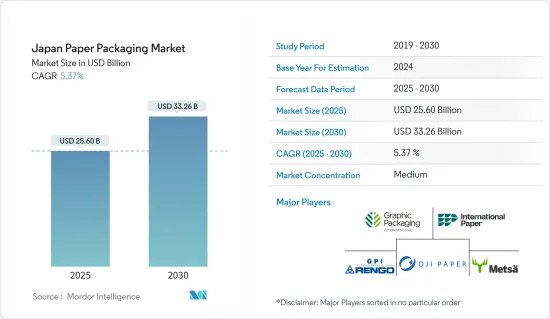
일본 종이 포장 시장 규모는 2025년에 256억 달러로 추계되어 예측 기간 중(2025-2030년) CAGR은 5.37%로, 2030년에는 332억 6,000만 달러에 달할 것으로 예측됩니다.
주요 하이라이트
일본은 미국에 이어 국민 1인당 플라스틱 폐기물 배출량이 세계 2위입니다. 일본 내 엄격한 국제적 규제는 다양한 산업에서 환경적으로 지속가능한 포장재료, 특히 종이 포장재료에 대한 수요 증가에 대응하기 위해 제조업체를 뒷받침할 것으로 예상됩니다.
일본은 신문용지, 포장, 인쇄 및 통신, 위생, 기타 다양한 용도를 포함한 다업종에 걸친 종이 기반 제품의 주요 소비국입니다. 이 지역의 식품 제조업체는 플라스틱 포장의 단점을 인식하여 종이 포장으로의 전환을 준비하고 있습니다.
후쿠스케 공업과 같은 이 지역의 대형 봉투 업체는 식료품점에서 봉투 수요 감소를 체감하고 있습니다. 이 감소는 고객이 봉투에 대해 명시적으로 지불해야 하는 법적 의무에 기인합니다. 이 회사는 가까운 미래에 주문이 3분의 1로 줄어들 것으로 예상했습니다. 후쿠스케 산업은 환경에 미치는 영향과 생산 비용을 줄이기 위해 소재 개발에 대한 투자를 발표했습니다.
일본 제지 등 일본의 주요 제지 기업은 플라스틱 수요 감소를 이용하는 것을 목표로 하고 있습니다. 일본 제지는 제품을 공기나 물로부터 지키는 종이 베이스 배리어 소재의 확대를 발표했습니다. 이 회사에 따르면 플라스틱을 대체하는 종이 및 판지로 만든 패키징 자재에 대한 수요가 해마다 증가하고 있습니다. 종이 기반 포장 재료는 일본 제지의 총 매출의 70%를 차지합니다.
지속가능성과 폐기물 감축이 주목되고 있는 반면, 종이 포장 산업은 과제에 직면하고 있습니다. 종이 포장 재료는 대체 소재에 비해 환경 친화적이지 않다는 인식으로 인해 수요가 줄어들 수 있습니다. 또한 플라스틱, 금속, 유리 등 내구성과 비용면에서 유리한 소재와의 경쟁에도 직면하고 있습니다. 또한 펄프 및 종이와 같은 원재료 가격의 변동은 종이 포장 제조업체의 수익성에 영향을 줄 수 있습니다.
일본 종이 포장 시장 동향
판지가 큰 성장을 이룰 전망
일본의 종이 및 판지 포장 시장은 견고한 성장을 이루고 있습니다. 음식과 가공 식품의 성장은 일본 골판지 포장 수요를 촉진하고 있습니다. 일본의 가공식품산업의 성장도 판지 포장 시장의 중요한 촉진요인 중 하나가 될 것으로 기대되고 있습니다.
플라스틱 사용량 감소와 그에 따른 개별적인 전략적 개발에 대응하여 종이 포장의 채용이 대폭 증가하고 있다는 점이 시장을 견인하고 있습니다. 또한 이 지역의 주요 제지회사가 시장 개척을 추진하고 있으며, 이는 시장의 성장을 지원할 것으로 기대되고 있습니다.
또한, 네슬레 일본이 2025년까지 100% 재활용 가능한 포장을 사용한다는 계획을 발표함에 따라, 네슬레 일본은 유명한 킷캣 초콜릿 바 미니어처의 새로운 포장을 발표했습니다. 또한, 이 새로운 종이 포장은 산림 관리 협의회의 인증을 받아 완전히 재활용 가능합니다.
유기농트레이드협회에 따르면 2021년 일본의 유기농 포장 식품 시장 소매액은 4억 1,660만 달러였으나 2025년 시장 규모는 4억 2,710만 달러에 달할 것으로 예상됩니다.
유기농 식품은 환경 친화적인 이미지에 맞춘 포장이 필요합니다. 재활용 가능하고 생분해 가능한 판지는 이런 제품에 자주 사용됩니다. 유기 포장 식품 시장이 성장함에 따라 지속가능한 포장에 대한 소비자의 선호도에 부응하기 위해 판지를 사용하는 기업이 늘어날 것으로 예상됩니다.
현저한 성장을 이루는 소매업
일본은 세계에서 가장 급성장하고 있는 E-Commerce 시장이며, 지속적인 개발 혁신이 이루어지고 라쿠텐이나 아마존과 같은 세계적 대기업이 분포하고 있습니다. 또한 이토요카도 등 슈퍼마켓의 전자상거래 플랫폼도 존재하여 종이 포장의 이용을 촉진하고 있습니다.
전자상거래 성장으로 인해 포장재에 대한 수요가 크게 증가하고 있습니다. 많은 전자상거래 사업자들은 환경 친화성과 비용 효율성을 높이기 위해 종이 포장을 선호합니다.
종이 포장은 일반적으로 플라스틱이나 유리와 같은 재료보다 재활용 비용이 낮습니다. 게다가 재생지 시장은 이미 성장해있고 포장은 재생지 제품을 널리 사용하는 많은 산업 중 하나입니다.
재생지는 수요가 높기 때문에 대체 소재보다 저렴합니다. 종이 패키지는 재활용 비용이 낮기 때문에 지속가능한 성장을 지원하면서 포장 비용 절감을 목표로 하는 전자상거래 및 소매 업체에게 매력적인 선택입니다.
일본 경제산업성에 따르면 2023년 12월 소매 업계 매출은 1,106억 7,000만 달러로 2023년 4월 940억 1,000만 달러에서 약간 증가하였습니다. 이 매출 증가는 소매업체의 제품 라인업 확대로 이어질 수 있으며, 맞춤형 디자인 상자 및 친환경 소재와 같은 특수 종이 포장 옵션을 포함한 다양한 포장 솔루션에 대한 수요를 잠재적으로 증가시킵니다.
일본 종이 포장 산업 개요
시장은 부분적으로 분산되어 있으며 그래픽 패키징, 인터내셔널 페이퍼 컴퍼니, 렌고와 같은 기업은 플라스틱 포장 수요 감소와 종이 기반 포장에 대한 고객 선호도를 활용하여 수요 증가 확대에 중요한 역할을 하고 있습니다. 시장 점유율을 확보하기 위해 공급업체는 지속가능성에 중점을 두면서 제품 라인을 강화하고 제휴 및 인수를 통해 비즈니스 모델을 전략화하고 있습니다.
기타 혜택
엑셀 형식 시장 예측(ME) 시트
3개월간의 애널리스트 지원
목차
제1장 서론
조사 전제조건과 시장 정의
조사 범위
제2장 조사 방법
제3장 주요 요약
제4장 시장 인사이트
시장 개요
산업 가치사슬 분석
업계의 매력도 - Porter's Five Forces 분석
공급기업의 협상력
구매자의 협상력
신규 참가업체의 위협
대체품의 위협
경쟁 기업간 경쟁 관계
제5장 시장 역학
촉진요인
식음료 분야 수요 증가
플라스틱 포장 제품에 대한 규제가 수요 증가에 기여
억제요인
원재료 비용 상승 및 아웃소싱
제6장 시장 세분화
제품별
판지
컨테이너 보드
골판지
기타 제품
최종 사용자 산업별
음식
퍼스널케어
홈케어
헬스케어
소매
기타 최종 사용자 산업
제7장 경쟁 구도
기업 프로파일
Graphic Packaging International Corporation
International Paper Company
Rengo Co. Ltd
Oji Paper Co. Ltd
Metsa Group
Amcor Group GmbH
Daio Paper Corporation
THE PACK CORPORATION
제8장 시장 기회와 앞으로의 동향
CSM
영문 목차
영문목차
The Japan Paper Packaging Market size is estimated at USD 25.60 billion in 2025, and is expected to reach USD 33.26 billion by 2030, at a CAGR of 5.37% during the forecast period (2025-2030).
Key Highlights
Japan ranks as the world's second-largest producer of plastic waste per capita, following the United States. Stringent international regulations in Japan are expected to drive manufacturers toward meeting the increasing demand for environmentally sustainable packaging materials, particularly paper packaging, across various industries.
Japan is a significant consumer of paper-based products across multiple industries, including newsprint, packaging, printing and communication, sanitary, and other miscellaneous applications. Food manufacturers in the region have begun to recognize the disadvantages of plastic wrapping and are preparing to transition to paper packaging.
Major plastic bag suppliers in the region, such as Fukusuke Kogyo, are experiencing decreased demand for plastic bags at grocery stores. This decline is attributed to customers being legally required to pay explicitly for bags. The company anticipates a one-third decrease in orders in the near future. Fukusuke Kogyo has announced investments in materials development to reduce environmental impacts and production costs.
Leading paper manufacturing companies in Japan, such as Nippon Paper, are aiming to capitalize on the decreasing demand for plastic. Nippon Paper has announced the expansion of paper-based barrier materials that protect products from air and water. According to the company, the demand for paper and paperboard packaging materials has increased over the years as a replacement for plastics. Paper-based packaging materials account for 70% of Nippon Paper's total sales.
While sustainability and waste reduction have gained prominence, the paper packaging industry faces challenges. There is a potential decline in demand due to perceptions of paper packaging being less environmentally friendly than alternative materials. The industry also faces competition from materials like plastic, metal, and glass, which offer advantages in durability and cost. Additionally, fluctuating prices of raw materials such as pulp and paper potentially impact the profitability of paper packaging producers.
Japan Paper Packaging Market Trends
Paperboard is Anticipated to Witness Significant Growth
The paper and paperboard packaging market in Japan is experiencing healthy growth. Beverages and packaged food growth have fueled the demand for corrugated packaging in the country. Japan's growing processed food industry is also expected to act as one of the critical drivers for the paperboard packaging market.
The market is led by the massively growing adoption of paper packaging in response to reduced plastic usage and the respective strategic developments. Furthermore, major paper manufacturing companies in the region aiming to capitalize on developments to cater to the market are expected to support market growth.
Also, in line with the announcement of Nestle Japan's plan to use 100% recyclable packaging by 2025, Nestle Japan released new packaging for its famous miniature KitKat Chocolate bars featuring origami paper instead of plastic materials. Also, the new paper packaging is set to receive the Forest Stewardship Council certification and is fully recyclable.
According to the Organic Trade Association, in 2021, the retail value of the organic packaged food market in Japan accounted for USD 416.6 million. The market size is expected to reach USD 427.1 million in 2025.
Organic food products often require packaging that aligns with their eco-friendly image. Recyclable and biodegradable paperboard is a popular choice for such products. As the organic packaged food market grows, more companies are expected to use paperboard to meet consumer preferences for sustainable packaging.
Retail is Observing Notable Growth
Japan boasts one of the world's fastest-growing e-commerce markets, with consistent development and the presence of global giants like Rakuten and Amazon. The country also hosts supermarket e-commerce platforms such as Ito-Yokado and Markets, which promote paper packaging use.
The growth of e-commerce has significantly increased demand for packaging materials. Many e-commerce businesses prefer paper packaging due to its environmental friendliness and cost-effectiveness.
Paper packaging typically has lower recycling costs than materials like plastics and glass. Additionally, there is a substantial market for recycled paper, with packaging being one of many industries extensively using recycled paper products.
The high demand for recycled paper makes it less expensive than alternative materials. Paper packaging's lower recycling cost makes it an attractive option for e-commerce and retail businesses aiming to reduce packaging expenses while supporting sustainable practices.
According to the Ministry of Economy, Trade and Industry, commercial sales in the retail industry accounted for USD 110.67 billion in December 2023, a slight increase from USD 94.01 billion in April 2023. This rise in sales may lead retailers to expand their product ranges, potentially increasing demand for diverse packaging solutions, including specialized paper packaging options such as custom-designed boxes and eco-friendly materials.
Japan Paper Packaging Industry Overview
The market is semi-fragmented, with the presence of players like Graphic Packaging, International Paper Company, and Rengo Co. Ltd, which play vital roles in upscaling the rise in the demand, leveraging the declining demand for plastic packaging and customers' preference for paper-based packaging. To capture the market share, vendors are strategizing their business models by enhancing their product lines and engaging in collaborations and acquisitions, with a core focus on sustainability.
Additional Benefits:
The market estimate (ME) sheet in Excel format
3 months of analyst support
TABLE OF CONTENTS
1 INTRODUCTION
1.1 Study Assumption and Market Definition
1.2 Scope of the Study
2 RESEARCH METHODOLOGY
3 EXECUTIVE SUMMARY
4 MARKET INSIGHTS
4.1 Market Overview
4.2 Industry Value Chain Analysis
4.3 Industry Attractiveness - Porter's Five Forces Analysis
4.3.1 Bargaining Power of Suppliers
4.3.2 Bargaining Power of Buyers
4.3.3 Threat of New Entrants
4.3.4 Threat of Substitute Products
4.3.5 Intensity of Competitive Rivalry
5 MARKET DYNAMICS
5.1 Market Drivers
5.1.1 Increasing Demand from the Food and Beverage Sector
5.1.2 Regulations on Plastic-based Packaging Products Contributes to Higher Demand
5.2 Market Restraints
5.2.1 Increasing Raw Material Costs and Outsourcing