스마트 홈 플랫폼 시장 전망 : 시장 점유율 분석, 산업 동향 및 통계, 성장 예측(2025-2030년)
Smart Home Platforms - Market Share Analysis, Industry Trends & Statistics, Growth Forecasts (2025 - 2030)
상품코드:1636202
리서치사:Mordor Intelligence
발행일:2025년 01월
페이지 정보:영문
라이선스 & 가격 (부가세 별도)
ㅁ Add-on 가능: 고객의 요청에 따라 일정한 범위 내에서 Customization이 가능합니다. 자세한 사항은 문의해 주시기 바랍니다.
ㅁ 보고서에 따라 최신 정보로 업데이트하여 보내드립니다. 배송기일은 문의해 주시기 바랍니다.
한글목차
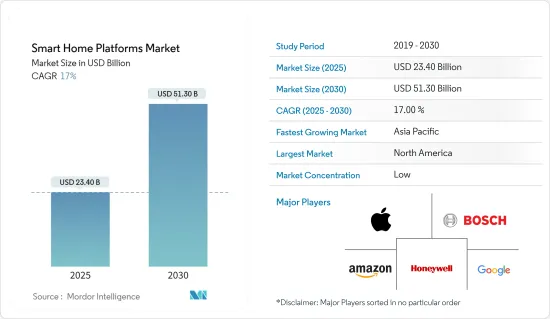
스마트홈 플랫폼 시장 규모는 2025년에 234억 달러로 추정되며, 예측기간 중(2025-2030년) 연평균 성장율(CAGR)은 17%로, 2030년에는 513억 달러에 달할 것으로 예측됩니다.
주요 하이라이트
생활 공간에 대한 통제권을 원하는 소비자가 늘어나면서 스마트 홈 기술의 도입이 증가하고 있습니다. 스마트 온도 조절기, 조명, 잠금 장치, 보안 시스템과 같은 기기가 보편화되고 있습니다. 35세 미만의 개인이 이러한 기술 채택을 주도하고 있지만, 스마트 홈 기술이 보편화됨에 따라 고령층의 채택도 증가할 것으로 예상됩니다.
스마트 홈 플랫폼은 인공 지능(AI)과 머신 러닝을 접목하여 개인화 및 예측 기능으로 서비스를 향상시키고 있습니다. 이러한 발전 덕분에 기기는 사용자 선호도에 따라 자율적으로 적응할 수 있습니다. 특히 구글은 스마트홈 솔루션에 독자적인 AI를 탑재하고 있습니다. 2024년 8월, 구글은 스마트 홈 플랫폼의 대대적인 개편을 발표하며 제너레이티브 AI 모델인 Gemini 제품군의 통합을 강조했습니다.
스마트 홈 기기의 증가와 함께 사이버 보안에 대한 우려도 급증하고 있습니다. 이에 따라 기업들은 사용자 데이터와 개인정보를 보호하기 위해 보안 조치를 강화하는 데 상당한 자원을 투입하고 있습니다. 이러한 노력을 강화하기 위해 가젯 보안 강화를 위한 제품 라벨링 시스템 등 새로운 사이버 보안 표준이 만들어지고 있습니다. 주목할 만한 노력은 연결 표준 연합(CSA)에서 진행 중입니다.
CSA의 IoT 디바이스 보안 사양은 기본적인 사이버 보안 표준 및 인증 프로그램 역할을 합니다. 이 규격의 목표는 소비자 IoT 디바이스에 대해 전 세계적으로 인정받는 통합된 보안 인증을 구축하는 것입니다. 이 사양을 준수하고 인증을 완료한 제조업체는 CSA의 PSV(제품 보안 검증) 마크를 자랑스럽게 표시할 수 있습니다. 이러한 분위기를 반영하여 FCC는 2024년 3월 미국 소비자 IoT 디바이스를 위한 자체 사이버 보안 라벨링 지원을 승인했습니다.
구글 어시스턴트, 아마존 알렉사, 애플 시리 같은 음성 비서가 점점 더 널리 보급되면서 사용자는 자연어를 사용하여 스마트 홈 시스템과 소통할 수 있게 되었습니다. 기업들은 음성 기술 채택을 촉진하기 위해 연구 개발에 막대한 투자를 하고 있으며, 이러한 음성 비서를 더욱 인간과 비슷하게 만드는 것을 목표로 하고 있습니다. 2023년 9월, 아마존은 제품 출시 행사에서 알렉사 음성 비서가 자연스러운 대화를 모방한 직관적인 의사 결정 능력을 자랑한다고 밝히며 발전된 기능을 선보였습니다.
기업들은 다양한 스마트 홈 디바이스를 하나의 플랫폼으로 통합하여 전체적인 생태계를 구축하고 있습니다. 이러한 통합은 사용자 상호 작용을 간소화할 뿐만 아니라 각 기기의 기능을 증폭시킵니다. 서로 다른 제조업체의 디바이스 간 상호 운용성을 달성하기 위한 주목할 만한 진전이 있었습니다. Z-Wave, Zigbee, Matter와 같은 프로토콜과 표준은 디바이스 간의 원활한 협업을 보장하는 데 핵심적인 역할을 합니다. Matter는 오픈 소스 프로토콜로 여러 브랜드 플랫폼에서 다양한 디바이스를 관리할 수 있는 것이 특징입니다.
이러한 발전에도 불구하고 시장은 보안 취약성, 개인정보 보호 문제, 다양한 제조업체의 복잡한 디바이스 통합과 같은 과제를 안고 있습니다. 보안 조치를 강화하고 데이터 프라이버시에 대한 소비자의 우려를 완화하는 것이 무엇보다 중요합니다. 스마트 홈 기술이 이제 막 자리를 잡기 시작한 신흥 시장에는 엄청난 성장 기회가 있습니다. 또한 기술이 발전하고 소비자 인식이 높아짐에 따라 제품 혁신과 시장 성장에 대한 새로운 전망이 떠오르고 있습니다.
스마트 홈 플랫폼 시장 동향
스마트 홈 소프트웨어 플랫폼 수요 증가
다양한 스마트 홈 디바이스를 하나의 통합된 시스템으로 통합하는 소프트웨어 플랫폼에 대한 수요가 증가하고 있습니다. 소비자와 기업 모두 제조업체가 다르더라도 다양한 기기를 관리하고 제어할 수 있는 소프트웨어 솔루션을 선호하고 있습니다. 특히 다양한 생산업체의 디바이스 간의 상호 운용성을 보장하기 위한 진전이 이루어지고 있습니다. Z-Wave, Zigbee, Matter와 같은 표준과 프로토콜은 디바이스 간의 원활한 협업을 보장하는 데 중추적인 역할을 하며 스마트 홈 플랫폼의 도입을 가속화하고 있습니다.
오픈 소스 프로토콜인 Matter는 여러 브랜드의 다양한 디바이스를 손쉽게 제어할 수 있도록 지원합니다. 연결 표준 연합이 주도하는 Matter는 다양한 업계 플레이어의 지지를 받고 있습니다. 이 연합에는 애플, 구글, 아마존과 같은 거대 기술 기업은 물론 삼성, LG와 같은 선도적인 제조업체와 나노리프, 이브, TP-Link와 같은 틈새 액세서리 브랜드가 포함되어 있습니다. 업계에서 전례 없는 이러한 단결력은 Matter의 성공 가능성을 더욱 높여줍니다. 이에 따라 관련 서비스의 매출도 급증하고 있습니다. 대표적인 사례로 구글은 구독, 플랫폼, 디바이스를 통해 346억 8,000만 달러의 매출을 기록하며 수년 동안 꾸준한 상승세를 보이고 있습니다.
Amazon Alexa, Apple Home, Google Home, Samsung SmartThings와 같은 주요 스마트 홈 플랫폼에 시장 역학이 통합되어 시장 역학에 큰 변화가 일어나고 있습니다. 디바이스는 더 이상 플랫폼별로 별도의 인증을 필요로 하지 않으므로 프로세스가 간소화되고 시장 성장이 촉진됩니다.
구독 기반 소프트웨어 모델은 기업의 안정적인 수익원을 확보할 뿐만 아니라 지속적인 업데이트 및 지원을 용이하게 하고 소프트웨어 솔루션 수요 증가에 박차를 가하고 있습니다. 국제전자제품박람회(CES)에서 올리버 IQ는 혁신적인 서비스형 스마트홈(SHaaS) 플랫폼을 공개했습니다. 이 출시는 스마트 홈 업계에서 중요한 순간으로, 무제한 지원을 자랑하는 구독 모델과 사용자 친화적인 앱을 도입하여 오늘날의 주요 스마트 홈 기기를 위한 진정한 자동화를 가능하게 했습니다.
OliverIQ는 광범위한 제품 지원, 무제한 온라인 및 전화 지원, 가정 내 서비스, 철저한 보안 시스템 모니터링을 제공하는 SHaaS 플랫폼을 빠르게 확장할 준비가 되어 있습니다. 이러한 혁신적인 접근 방식을 통해 올리버아이큐의 SHaaS 플랫폼은 소비자의 스마트 홈 기기 상호운용성을 간소화하는 선구자로 자리매김하고 있습니다. 이러한 발전은 스마트 홈 소프트웨어의 매력을 향상시킬 뿐만 아니라 최첨단 스마트 홈 솔루션에 대한 수요를 증폭시키고 있습니다.
북미가 시장을 주도
스마트 홈 기술은 미국과 캐나다에서 가장 널리 채택되고 있습니다. 미국과 캐나다 소비자들은 홈 자동화, 향상된 편의성, 강력한 보안, 효율적인 에너지 관리 기능을 제공하는 솔루션을 점점 더 많이 찾고 있습니다. 스마트 보안 카메라, 센서 및 알람의 채택이 눈에 띄게 증가하면서 스마트 홈 플랫폼의 사용을 촉진하는 스마트 홈 기기를 하나 이상 소유하고 있는 미국인이 점점 더 많아지고 있습니다.
이 지역에서는 스마트 홈 플랫폼을 서비스로 제공하는 경향이 증가하고 있습니다. 구독 모델을 통해 소비자는 프리미엄 기능, 정기 업데이트 등을 이용할 수 있습니다. Control4와 같은 기업은 조명, 오디오, 비디오, 온도 조절, 인터콤, 보안 등 연결된 장치를 자동화하고 제어할 수 있는 개인화되고 통합된 스마트 홈 시스템을 제공하는 기업 및 가정용 자동화 시스템을 선도하고 있습니다.
아마존 알렉사, 구글 어시스턴트, 애플 시리 등의 음성 비서가 보편화되었습니다. 음성 인식 및 자연어 처리와 같은 AI 기반 기능이 발전하면서 스마트 홈 시스템과 더욱 직관적인 상호 작용이 가능해졌습니다. 2024년에 18세 이상의 미국인 1,947명을 대상으로 실시한 설문조사에 따르면 보어하우스 어드바이저(Vorhaus Advisors)의 데이터에 따르면 61%가 커넥티드 스마트 TV를, 26%가 음성 인식 기기를, 16%가 스마트 조명 솔루션을 소유하고 있는 것으로 나타났습니다.
에너지 효율성과 지속 가능성에 대한 관심이 높아지면서 스마트 기기에 대한 수요가 급증하고 있습니다. 여기에는 에너지 소비를 줄일 뿐만 아니라 공공요금도 절감할 수 있는 온도 조절기, 조명, 가전제품 등이 포함됩니다. 그 선두에 있는 Google의 Nest 학습 온도조절기와 같은 기기는 미국 가정의 에너지 효율을 혁신하고 스마트 홈 플랫폼의 채택을 촉진하고 있습니다.
기존의 프로그래밍 가능한 온도 조절기와 달리 이러한 첨단 장치는 실시간 데이터를 활용하여 날씨, 사용자 선호도, 에너지 가격 등의 변수를 고려하여 에너지 사용량을 미세 조정합니다. 슈나이더 일렉트릭 캐나다의 설문 조사에 따르면 캐나다 주택 소유자의 79%가 스마트 홈 기술을 인지하고 있으며 78%가 전기 요금 절감에 도움이 될 수 있다고 생각하는 것으로 나타났습니다.
업계 리더들은 다양한 스마트 홈 디바이스를 원활하게 통합하고 제어할 수 있는 고급 소프트웨어 플랫폼을 개발하고 있습니다. 이러한 플랫폼 중 상당수는 클라우드 기반 서비스를 갖추고 있어 원격 액세스와 정교한 데이터 분석이 가능합니다. 또한, 스마트 홈 기술을 구독 기반으로 제공하여 소비자가 다양한 기능에 액세스할 수 있도록 하는 트렌드가 급성장하고 있어 시장의 성장에 더욱 박차를 가하고 있습니다.
스마트 홈 플랫폼 산업 개요
스마트 홈 플랫폼 시장은 기존 거대 기술 기업부터 혁신적인 스타트업에 이르기까지 수많은 플레이어가 세분화되어 있으며, 그 특징이 뚜렷합니다. 아마존, 구글, 애플과 같은 주요 기업들은 종합적인 생태계와 통합 솔루션으로 시장을 선도하고 있습니다. AI와 IoT를 포함한 급속한 기술 진보가 경쟁을 격화시키고 지속적인 혁신과 차별화를 촉진하고 있습니다.
2024년 7월 : LG전자가 네덜란드에 본사를 둔 홈 오토메이션 기업 Athom BV 인수를 발표했습니다. 이번 인수는 스마트홈 생태계를 강화하기 위한 LG의 전략의 일환입니다. LG는 다양한 가전제품, 센서, 조명 기기를 연결하는 Athom의 방대한 연결 기능을 자체 AI 기반 LG 씽큐 플랫폼과 통합할 계획입니다. 이러한 통합을 통해 LG는 고객이 제너레이티브 AI를 활용하여 가전제품과 IoT 기기를 관리함으로써 개인의 취향에 맞는 개인화된 생활 환경을 조성할 수 있도록 지원하는 AI 중심 홈을 구상하고 있습니다.
2024년 2월 : 스마트 홈 경험을 향상시키기 위한 전략적 움직임의 일환으로 스마트 홈 플랫폼 제공업체인 Ayla Networks는 카메라 및 비디오 제품 제조 분야의 글로벌 리더인 Meari Technology와 제휴를 맺었습니다. 이 제휴를 통해 최고 수준의 비디오 솔루션으로 Ayla의 광범위한 제품 라인업을 강화했습니다. 이 파트너십은 최첨단 비디오 기술과 다양한 스마트 기기를 결합하여 보다 응집력 있고 향상된 홈 오토메이션 경험을 제공하는 것을 목표로 합니다.
기타 혜택
엑셀 형식 시장 예측(ME) 시트
3개월간의 애널리스트 지원
목차
제1장 서론
조사의 전제조건과 시장 정의
조사 범위
제2장 조사 방법
제3장 주요 요약
제4장 시장 인사이트
시장 개요
업계의 매력도 - Porter's Five Forces 분석
공급기업의 협상력
소비자의 협상력
신규 참가업체의 위협
대체품의 위협
경쟁 기업간 경쟁 관계의 강도
거시 경제 동향이 시장에 미치는 영향 평가
제5장 시장 역학
시장 성장 촉진요인
소비자 수요 증가
기술의 진보
시장 성장 억제요인
보안 및 프라이버시에 대한 우려
상호 운용성 문제
제6장 시장 세분화
용도별
조명 제어
보안 및 액세스 제어 관리
에어컨 제어
엔터테인먼트 제어
기타 용도
커넥티비티별
Wi-Fi
Zigbee
Z-Wave
Bluetooth
지역별
북미
유럽
아시아
호주 및 뉴질랜드
라틴아메리카
중동 및 아프리카
제7장 경쟁 구도
기업 프로파일
Amazon.com Inc
Apple Inc.
Google LLC(Alphabet Inc.)
Microsoft Corporation
Philips Hue
ADT Security
Honeywell International Inc.
Robert Bosch Smart Home GmbH
Arlo Technologies
Inter IKEA Systems BV
Lutron Electronics Co. Inc.
SimpliSafe Inc.
Vivint Inc.
Crestron Electronics Inc.
Netatmo(Legrand)
Xiaomi
Ecobee
Insteon
Savant Systems Inc
Leviton Manufacturing Co. Inc.
Brilliant
제8장 투자 분석
제9장 시장의 미래
HBR
영문 목차
영문목차
The Smart Home Platforms Market size is estimated at USD 23.40 billion in 2025, and is expected to reach USD 51.30 billion by 2030, at a CAGR of 17% during the forecast period (2025-2030).
Key Highlights
As consumers increasingly seek control over their living spaces, the adoption of smart home technologies is on the rise. Devices like smart thermostats, lights, locks, and security systems are becoming commonplace. While individuals under 35 are leading the charge in adopting these technologies, there is an anticipated uptick in adoption among older demographics as smart home tech becomes ubiquitous.
Smart home platforms are weaving in artificial intelligence (AI) and machine learning, enhancing their offerings with personalized and predictive features. These advancements allow devices to adapt to user preferences autonomously. Notably, Google is embedding its proprietary AI into its smart home solutions. In August 2024, Google unveiled a significant revamp of its smart home platform, spotlighting the integration of its Gemini suite of generative AI models.
With the rise of smart home devices, cybersecurity concerns have surged. In response, companies are channeling significant resources into fortifying security measures to safeguard user data and privacy. New cybersecurity standards are being crafted to bolster these efforts, including a product labeling system for enhanced gadget security. A notable initiative is underway by the Connectivity Standards Alliance (CSA).
The CSA's IoT Device Security Specification serves as a foundational cybersecurity standard and certification program. Its goal is to establish a unified, globally acknowledged security certification for consumer IoT devices. Manufacturers who comply with this specification and complete the certification can proudly display the CSA's Product Security Verified (PSV) Mark. Echoing this sentiment, the FCC greenlit its own cybersecurity labeling initiative for consumer IoT devices in the United States with a March 2024 approval.
Voice assistants such as Google Assistant, Amazon Alexa, and Apple's Siri are becoming increasingly prevalent, allowing users to engage with their smart home systems using natural language. Companies are heavily investing in research and development to boost the adoption of voice technology, aiming to make these voice assistants more human-like. In September 2023, Amazon showcased its advancements during a product launch, revealing that its Alexa voice assistant boasted intuitive decision-making capabilities, mimicking natural conversation.
Companies are building holistic ecosystems, merging diverse smart home devices into a singular platform. This cohesive integration not only streamlines user interactions but also amplifies the capabilities of each device. Noteworthy strides have been made toward achieving interoperability among devices from different manufacturers. Protocols and standards like Z-Wave, Zigbee, and Matter are pivotal in ensuring seamless collaboration between devices. Matter stands out as an open-source protocol, allowing diverse devices to be managed across multiple brand platforms.
Despite the advancements, the market grapples with challenges like security vulnerabilities, privacy issues, and the intricacies of device integration across various manufacturers. It is paramount to fortify security measures and alleviate consumer apprehensions regarding data privacy. Emerging markets where smart home technology is just beginning to take root present vast growth opportunities. Furthermore, as technology evolves and consumer awareness heightens, fresh prospects for product innovation and market growth are surfacing.
Smart Home Platforms Market Trends
Smart Home Software Platforms are Experiencing Demand
There is a rising demand for software platforms that unify various smart home devices into a single, cohesive system. Both consumers and businesses are gravitating toward software solutions capable of managing and controlling a diverse array of devices, even if they are from different manufacturers. Notably, strides have been made to ensure interoperability among devices from various producers. Standards and protocols, such as Z-Wave, Zigbee, and Matter, are playing pivotal roles in guaranteeing seamless collaboration between devices, thereby accelerating the adoption of smart home platforms.
Matter, an open-source protocol, facilitates the control of diverse devices across multiple brands. Spearheaded by the Connectivity Standards Alliance, Matter boasts backing from a vast array of industry players. This coalition spans tech giants like Apple, Google, and Amazon, as well as leading manufacturers such as Samsung and LG, as well as niche accessory brands like Nanoleaf, Eve, and TP-Link. This unprecedented unity in the industry bolsters Matter's potential for success. Correspondingly, these companies have seen a surge in revenue from their related services. A case in point is Google, which reported a robust USD 34.68 billion from its subscriptions, platforms, and devices, showcasing a consistent upward trajectory over the years.
With the Matter standard now embedded in all leading smart home platforms-Amazon Alexa, Apple Home, Google Home, and Samsung SmartThings-there is a significant shift in the market dynamics. Devices no longer require individual certification for each platform, streamlining the process and propelling the market's growth.
Subscription-based software models not only ensure a steady revenue stream for companies but also facilitate continuous updates and support, fueling the rising demand for software solutions. At the Consumer Electronics Show (CES) 2024, Oliver IQ unveiled its revolutionary Smart Home as a Service (SHaaS) platform. This launch was a pivotal moment in the smart home industry, introducing a subscription model that boasts unlimited support and a user-friendly app, enabling genuine automation for today's leading smart home devices.
OliverIQ is poised to swiftly expand its SHaaS platform, providing extensive product support, unlimited online and phone assistance, in-home services, and vigilant security system monitoring. This innovative approach positions OliverIQ's SHaaS platform as a trailblazer, streamlining smart home device interoperability for consumers. Such advancements are not only enhancing the appeal of smart home software but are also amplifying the demand for cutting-edge smart home solutions.
North America is Driving the Market
Smart home technologies are most widely adopted in the United States and Canada. US and Canadian consumers are increasingly turning to solutions that offer home automation, enhanced convenience, robust security, and efficient energy management. A growing number of Americans now own at least one smart home device, with notable upticks in the adoption of smart security cameras, sensors, and alarms, which is driving the use of smart home platforms.
There is a growing trend toward offering smart home platforms as a service within the region. Subscription models allow consumers to access premium features, regular updates, etc. Companies like Control4 are leading automation systems for businesses and homes, offering smart home systems that are personalized and unified to automate and control connected devices, including lighting, audio, video, climate control, intercom, and security.
Voice assistants, including Amazon Alexa, Google Assistant, and Apple Siri, have become commonplace. AI-driven features, such as voice recognition and natural language processing, are evolving, allowing for more intuitive interactions with smart home systems. Data from Vorhaus Advisors, based on a survey conducted in 2024 of 1,947 US respondents aged 18 and older, revealed that 61% owned a connected smart TV, 26% possessed a voice-activated device, and 16% had smart lighting solutions.
As energy efficiency and sustainability gain prominence, there is a surge in demand for smart devices. These include thermostats, lighting, and appliances that not only curtail energy consumption but also trim down utility bills. Leading the charge, devices like Google's Nest Learning Thermostat are revolutionizing energy efficiency in US homes, subsequently propelling the adoption of smart home platforms.
Unlike conventional programmable thermostats, these advanced devices harness real-time data to fine-tune energy usage, taking into account variables such as weather, user preferences, and energy pricing. A Schneider Electric Canada survey revealed that 79% of Canadian homeowners recognize smart home technology, and 78% believe it can help them cut electricity bills.
Industry leaders are crafting advanced software platforms that ensure seamless integration and control over a multitude of smart home devices. Many of these platforms come equipped with cloud-based services, allowing remote access and sophisticated data analytics. In addition, there is a burgeoning trend of offering smart home technologies on a subscription basis, enabling consumers to access a suite of functionalities, further fueling the market's growth.
Smart Home Platforms Industry Overview
The smart home platforms market is fragmented and characterized by numerous players, ranging from established technology giants to innovative startups. Major tech companies like Amazon, Google, and Apple lead the market with comprehensive ecosystems and integrated solutions. Rapid technological advancements, including AI and IoT, intensify the competition, driving continuous innovation and differentiation.
July 2024: LG Electronics Inc. announced its acquisition of Athom BV, a home automation firm based in the Netherlands. This move was part of LG's strategy to bolster its smart home ecosystem. LG intends to merge Athom's vast connectivity capabilities, which connect a multitude of appliances, sensors, and lighting devices, with its own AI-driven LG ThinQ platform. Through this integration, LG envisions an AI-centric home, empowering customers to utilize generative AI for managing their appliances and IoT devices, thereby crafting a personalized living environment that aligns with their individual preferences.
February 2024: In a strategic move to elevate the smart home experience, Ayla Networks, a leading smart home platform provider, partnered with Meari Technology, a global leader in camera and video product manufacturing. This alliance bolstered Ayla's extensive product lineup with top-tier video solutions. By merging cutting-edge video technology with a diverse array of smart devices, the partnership aims to provide a more cohesive and enhanced home automation experience.
Additional Benefits:
The market estimate (ME) sheet in Excel format
3 months of analyst support
TABLE OF CONTENTS
1 INTRODUCTION
1.1 Study Assumptions and Market Definition
1.2 Scope of the Study
2 RESEARCH METHODOLOGY
3 EXECUTIVE SUMMARY
4 MARKET INSIGHTS
4.1 Market Overview
4.2 Industry Attractiveness - Porter's Five Forces Analysis
4.2.1 Bargaining Power of Suppliers
4.2.2 Bargaining Power of Consumers
4.2.3 Threat of New Entrants
4.2.4 Threat of Substitutes
4.2.5 Intensity of Competitive Rivalry
4.3 An Assessment of the Impact of Macroeconomic Trends on the Market